| FHC Info | |
Hours of Operation:
Mon: Closed
Fri: 9:30 am-1:00 pm
Saturday:
9:30 am-4:30 pm
Tues, Wed, Thurs:
9:30am-4:30pm, & 7-9:30 pm
Directors: Linda & Kurt Christensen Washington DC Stake Carol & Gary Petranek, Silver Spring MDStake |
| Join Our List |
 |
|
|
|
WDC FHC News
| | |
Saturday Classes
Saturday, September 19, 9:30 a.m. (rescheduled from June)
Linda White, Co-Author: Back There, Then, a Historical and Genealogical Memoir
Linda will share her insights into composing a family narrative and organizing the myriads of pieces of information into a meaningful and well-written memoir.
Saturday, October 17, 9:30 a.m.
Charles Howard: City Directories
Often overlooked by researchers, city directories can offer more than just an address. Charles will demonstrate the many hidden clues found in this record collection.
Saturday, November 21, 9:30 a.m.
Denise Nelson: Precious Heirlooms, a Voice from the Past.
Items our ancestors treasured can tell us surprising facs about who they were, who hey associated with, their status, their ethnicity, their surroundings and their personal thoughts. Often neglected as a research tool, examining Gems and Jewelry owned by our ancestors provide us with a rather personal glimpse at our ancestors and their stories.
We invite you to join us! No registration is required. For further information, call the FHC at 301-587-0042 or email: info@wdcfhc.org
|
|
WDC FHC Focus Group Schedule
| | |
Join a Focus Group to Enhance Your Research Skills
African-American: Meets weekly on Monday mornings at 10:00
. Every 2nd Monday, there is special training to learn how to index Freedmen's Bureau records.
Beginning Genealogy: Meets weekly on Tuesday mornings at 10:00. Contact Lorraine Minor at ldgene@verizon.net for further information.
DNA Group: Meets bi-weekly the 2nd and 4th Wednesdays of the month at 7:00. Next meetings will be September 9 and 23.
Eastern European Group: Meets monthly on the 4th Saturday at noon; focus countries: Czech Republic, Poland, Slovakia, Hungary, Lithuania, Latvia, Estonia, Slovenia, Ukraine, and Belarus.
Irish Group: Meets bi-weekly on the 1st, 3rd & 5th Tuesday evenings at 7:00.
RootsMagic Users Group: Meets monthly on the 2nd Saturday at 9:30 a.m.
All are welcome - no registration needed.
|
| WDC FHC Oral History Room | | |
Fall Special!
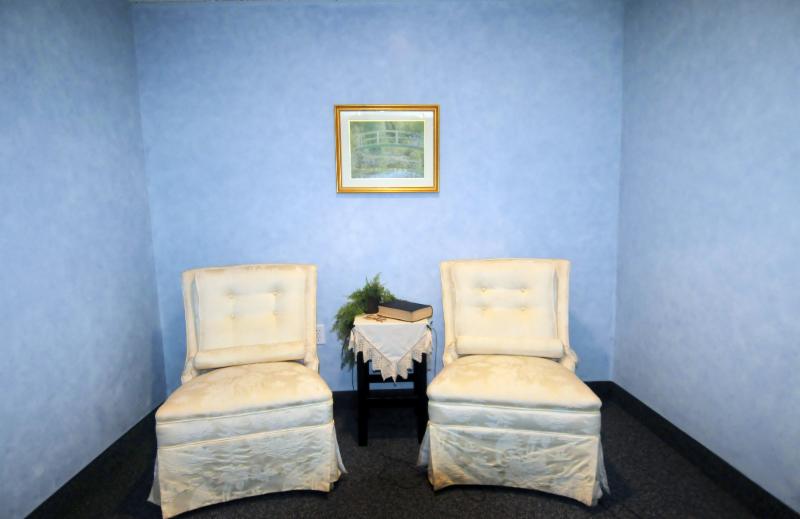
Have you been looking for a way to record the stories of a friend or family member? For the months of September - October - November, use of the Oral History Room at the WDC FHC will be only one dollar ($1.00).
We will send you a list of questions to consider asking your subject. Professional video and audio equipment is used. At the conclusion of the interview, you will leave with a DVD video of the interview.
Please contact Linda Christensen to schedule the Oral History Room or to receive further information: 301-587-0042.
|
|
| | |
by Kimberly Powell
When we think of tracing our family tree, we often envision following our family surname back thousands of years to the first bearer of the name. In our neat and tidy scenario, each successive generation bears the same surname - spelled exactly the same way in each and every record - until we reach the dawn of man.
In reality, however, the last name we bear today may have existed in its present form for only a few generations.
For the majority of human existence, people were identified only by a single name. Hereditary surnames (a surname passed down from a father to his children) were not in common use in the British Isles prior to about the fourteenth century. Patronymic naming practices, in which a child's surname was formed from the given name of his father, were in use throughout much of Scandinavia well into the 19th century-resulting in each generation of a family bearing a different last name.
Read the full article here to learn more about the main reasons for name changes: illiteracy, simplification, necessity, mispronunciation, desire to fit in, desire to break with the past, fear of discrimination. |
| When You Can't Find a Marriage Record | |
|
| | When You Can't Find a Marriage Record |
|
|
| | |
by Jim Bartlett, DNA Specialist
[Note: To help readers better understand the use of DNA in genealogy research, this newsletter will feature extracts of monthly posts from Jim Bartlett's new blog, Segment-ology.]
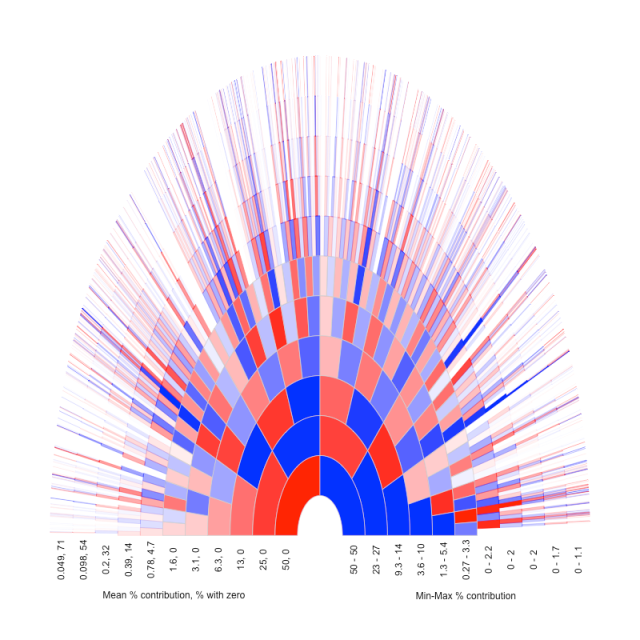
Genetic Ancestors - The Porcupine Chart
First let me define Genetic Ancestors. These are the ancestors who passed DNA down to you. Your DNA includes some DNA from each genetic ancestor. But, as we'll see, not all of your ancestors contributed to your DNA. Some of your distant ancestors passed DNA down to their descendants, but that DNA never made it all the way to you. So let's delve a little more into this concept, so you'll know what to expect as you form Triangulated Groups, work with your Matches to find Common Ancestors, and fill out your chromosome map.
You get exactly 1/2 of your autosomal DNA (chromosomes 1-22) from each parent. Each parent has used the two chromosomes they got from their parents (your grandparents) to create one chromosome for you....
So, since you got exactly 1/2 of your atDNA from each parent, and they each got exactly 1/2 of their atDNA from their parent's, wouldn't you be getting exactly 1/4 of your DNA from each grandparent? Well... no!
To read Jim's detailed article, click here.
|
Tips for Preserving and Storing Documents
| | |
by Emma, MyHeritage Blog
It's easy to forget about those precious documents scattered around your home. Photo albums are collecting dust, birth certificates and records are stuffed in boxes. All of them may well be lost, if they are not properly stored and preserved.
We've written before about the importance of organizing family history researchand scanning documents online, but it's also important to make sure those documents are still intact as primary history resources. They are valuable family heirlooms that should be passed down through the generations, not destroyed. Here are five easy tips to help preserve and store those old documents and to make sure your family legacy lives on:
- Use inexpensive document safes (depending on the number of documents to protect)
- Acid-free paper is your friend
- Create a perfect storage environment
- Binders are great but...
To read the full article, click here.
|
|
Native American Genealogy
|
|
by Steven Decker, FamilySearch
Some of the difficulties of Native American research include the definition and recognition of an "Indian." As of 1980 the United States federal government recognized 47 definitions of Indian. In the United States there are currently 566 federally recognized tribes and 530 unrecognized tribes. Canada recognizes 630 First Nations. Many more tribes are state recognized, but not federally recognized.
In addition to the sheer numbers of numbers of tribes, recognized or non-recognized, an Indian is generally considered Indian if he or she (1) has some Indian blood and (2) is accepted by the tribe or community. Records may be retained by several agencies and in several sorts of repositories. Bureaus of Indian Affairs (federal and state), the Department of Interior, the Department of War, the Bureau of the Census, populations schedules, cemeteries, newspapers, libraries and tribal houses and other venues may generate, may have generated, or may house vital and important records. In many cases, however, they are not digitized and may be accessed only by visiting the venue at which they are located. The core of Native American history is growing. Thanks in part to grants from philanthropist Doris Duke, thousands of Native American oral histories have been collected at select universities across the country: University of Arizona, University of Florida, University of Illinois at Urbana-Champaign, University of New Mexico, University of Oklahoma, University of South Dakota, and University of Utah. When searching Native American genealogy, be aware of the following guidelines: - Learn the ancestor's name. The name may have changed from record to record. For example someone with the name "Runs With Wolves" could get recorded as the shortened, Wolfrunner.
- Learn the ancestor's tribe. If a possible tribe is mentioned, assume it is correct unless proven otherwise; or if no tribe is mentioned, assume your ancestor is not Indian, unless proven otherwise.
- Learn approximately when and where your ancestor lived.
- Realize that state records, such as adoption records, might not contain information about the subject's tribe.
|
|
Don't Let Mythology Guide Your Research!
| |
"Genealogy without sources is mythology"
How can you tell if the information posted by individuals on internet genealogy sites is correct? Some sites have sources but others don't. How do you know what, and when, to believe what you read online??
A good rule of thumb is.... Don't trust anything you find on the internet (or elsewhere) if it doesn't have sources.
This article discusses the following topics:
- The Importance of Sources
- Verify the Information by Checking the Source
- Evaluate the Source
- Sources Can Be Misquoted
- Sources Can Be Misunderstood
To read the full article, click here.
|
|
10 Reasons You Can't Find Ancestors in Newspapers
| |
by Kenneth R. Marks
For those of us who research newspapers to find articles about our ancestors, there is one thing to keep in mind:
"Researching newspapers is a marathon, not a sprint"
OK, enough of the platitude, but why can't I find what I am looking for? Here are 10 reasons why you might be unsuccessful and what to do about it:- All newspapers are not online. Period. My guess is that it is in the 10 to 15% range, but that is just a guess. You may have to visit a library or archive and browse through microfilm and original newsprint.
- All newspapers online to search are not free. You might just need to invest in one of the subscription sites. I have done so and found articles and obituaries that are not in the free collections. There are often free trials available if you are strapped financially.
- You have found newspapers available but they don't have the dates that you are looking for. This happens all the time, so check the dates available in the collections before you search.
- Your search criteria is lacking. Please check the Newspapers! page on this site for tips and articles on how to search to produce the best results. Don't just search surnames. Vary your spelling. Etc.
- Are you Browsing? If the OCR process doesn't convert the dots on the newsprint to the proper text, then the word will not be indexed properly. But browsing through pages may find what you are looking for. More tedious? Yes. I have found a bunch of pertinent articles by browsing. Add browsing to your repertoire.
- Don't expect Chronicling America, or Google News Archive, or the subscription sites to always have what you need. Check out 15 Huge Lists of Free Online Newspaper Collections for Genealogy to find free online collections.
- For your geographical area of interest, check city, county, state, local public library, college and university websites for new online collections. Those 15 lists above can't keep track of every new collection immediately, so do a bit of research for new collections yourself in the targeted area.
- Ask for help. In the Genealogy and Newspapers Facebook Group, there are several librarians who have offered to look up newspapers for members in the collections that they have available, as just one example.
- Have a plan. Keep track of your searches and ancestors that you are searching for. Maybe in the future additional dates and/or collections will have the target newspaper that you are waiting for.
- Be patient. Don't give up. Educate yourself in the meantime. Become a patient researching machine.
|
|
Address Books
| | |
by Amanda, GeniBlog
Do you still keep a handwritten address book? In today's world, many people have forgone the old paper and pen for digital preservation of contacts either on the computer or a smartphone. But if you take a closer look at an old address book, you'll find that they may hold the key to unlocking your family history.
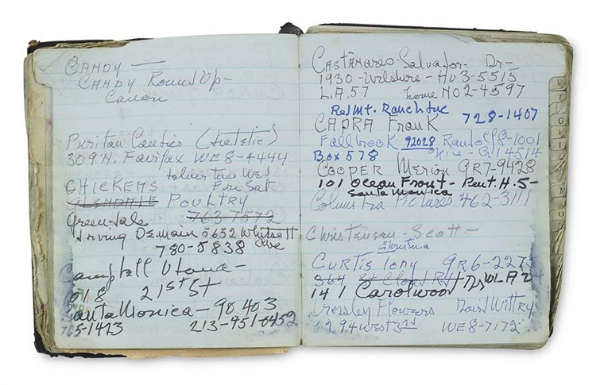
Before we carried all our contacts on our phones, we kept the names, addresses and phone numbers of our family, friends and acquaintances in address books. Today, if we must make an update to a contact, the old information is generally deleted once the new info is entered. However, take a look at an old address book and you'll often find them filled with a wide range of contacts with crossed out entries and even annotations as people moved, changed their numbers or passed away. It's a treasure trove of information at your fingertips! If you have inherited an old address book from your parents or grandparents, be sure to take a careful look at who is listed in the book. The names of distant cousins, perhaps some you never knew, may be found amongst the list of contacts. Their addresses will give you a place of residence and possibly your next clue to where you can continue your family history research. You may even have a chance to reconnect with cousins long forgotten.
Take a look at your old address books - you never know what genealogy gems await!
|
Tracing Orphans in Your Ancestry
| | by D. Joshua Taylor
Tracing an ancestor who is known to be an orphan can be a difficult and daunting process. Modern-day DNA research is beginning to unlock longstanding mysteries regarding orphans, yet there are historical records which tell the larger picture of a child's life in an orphanage. Understanding the history and development of local orphanages in the areas where your ancestor lived is crucial, as is locating any remands of records that might tell a more detailed story. Many children who ended up institutions or orphanages might not have truly been orphans, but instead might have required the support of an organization. Their father or mother might have passed away, they could be suffering from a variety of ailments, or their parents could simply not afford to be able to provide for them. As you look into the life and records of an orphan child, it is important to keep the history of America's orphanages in mind.
The development of orphanages and similar institutions in America can actually be traced to its British roots. In the early 1700s it was noted that orphaned and abandoned children 'swarmed like locusts in the street,' resulting in in the establishment of workhouses and working schools. One London workhouse, opened as early as 1698, and allowed children to work by spinning wool and repairing clothes. Children in the workhouses typically stayed until they reached the ages of twelve or fourteen, when they were fitted with an apprenticeship and left the institution. The records of England's workhouses are often available from local parish archives, on microfilm, or through online resources.
To access the full article, click here.
|
|
Genealogy Tip of the Day
| | | by Michael John Neill
Are You Pond Jumping Too Early?
For those with immigrant ancestors, it's tempting to start researching in the home country as soon as they learn the country from which their ancestor came. However often that is not the best approach. Completely researching the immigrant in the area of settlement may give additional clues as to the specific point of origin or the names of relatives and associates in the new country who also lived near the immigrant in the old country.
Child Born Before the Marriage
If a child is "born" before a couple married, consider several possibilities:
the date of marriage is incorrect
the date of birth for the child is incorrect
the wife/husband had a child out of wedlock
the "child" was adopted, etc.
Your first conclusion about the scenario may be correct. Or it may not be. Research the family as completely as possible, then see if a conclusion can be reached.
Was the Certificate Filed Late?
When you are searching for a birth, marriage or death certificate, remember: they are often filed in chronological order by the date that they are received in the clerk's office, not necessarily the date of the event. Be sure to search for several years after you believe the event occurred to make sure you find the certificate. Registrars often received "Delayed Registrations" years after the event occurred.
Make a Chart
When information is inconsistent or you are trying to sort out individuals, consider making a chart or table to summarize the information that is conflicting or does not make sense. Sometimes just the process of thinking about how to organize what you have and then organizing it will help you to notice things that you did not notice before.
Not Just the Siblings
Sometimes the only way to genealogical success is to get beyond your ancestor and to research her siblings. That may be enough to answer your question. Once in a while going further is necessary. I've been working on a family where the biggest leads to my ancestor were contained in the War of 1812 of his brother's father-in-law.
It's not always necessary to completely research people that far afield.
|
|
Research Tips & Resources
| |
Map of Quebec Catholic Parishes to 1912
The Maryland Genealogical Society's Fall Seminar
Saturday, October 3, 2015
Identifying Your Ancestors and Telling Their Stories Four Presentations by Dr. Thomas W. Jones
Holiday Inn-Laurel West 15101 Sweitzer Lane Laurel, MD 20707
Navigating German Language Records The Bremer Adressbücher 1794-1955 (Bremen Address Directories) database has been digitized by the State and University Library of Bremen, and can provide a wealth of information about your Bremen ancestors that might not be found in American records.
The 100 Most Common Surnames in Denmark
|
Thank you for subscribing to Generations. We hope this publication will motivate you to successfully begin or continue your family history research. We would like to hear from you! Please submit your questions, research tips, and favorite websites to us at info@wdcfhc.org
Sincerely,
Carol Petranek, Newsletter Editor
Linda & Kurt Christensen
Gary Petranek
Co-Directors, Washington DC Family History Center
10000 Stoneybrook Drive, PO Box 49
Kensington, MD 20895
|
|
|
|
|