2015 Issue 24  
new IHN logo 2012Noticias logo green font
   Advancing Hispanic leadership in local governance

Our Mission

         To prepare future Hispanic and Latino leaders for public service


To provide unique resources to government executives and public managers


  To advance the goals of an ethical profession

The Value of Professional Organizations
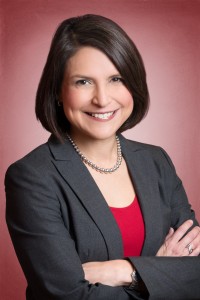
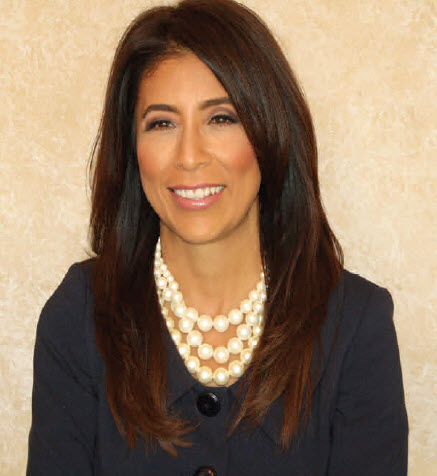
 Veronica Briseño Lara, President of IHN
Director of Small & Minority Business Resources Department, City of Austin, TX
 
In July, I assumed the position of President of IHN, a role I am honored to have in this professional organization.  Following my installation as President, the IHN Board held a retreat in Brighton, Adams County, Colorado and discussed priorities for the coming year.  The IHN Board is engaged, energized and ready to serve the organization.
 
A significant topic of discussion was the value of your IHN
Veronica Briseno Lara
President of IHN
membership - individual and local government memberships.  IHN members are the foundation of our organization and we want to continue to build upon that foundation.   Our goal is to build the IHN membership base of Hispanic/Latino local government professionals as well as provide insights and assistance to all professionals with growing Hispanic/Latino populations.   To do that, we must demonstrate that our organization adds value to the work you perform everyday and to your professional development.  Over the next several months, we will be reaching out to members and potential members to assess our goals and to get your input on how we can increase our relevance and our value to the local government profession.  I look forward to hearing your feedback.
 
In September, IHN renewed our affiliation agreement with ICMA for the years 2015-2019.  This agreement has been in place since 1991.  In our continued partnership with ICMA, we will be able to take advantage of the many programs they offer to members, and leverage their resources while providing our experiences in meeting the unique needs of Hispanic/Latino communities.  As you assess the value of professional organizations, I would ask that you consider the value of joint membership in ICMA and IHN.  As part of our priorities, the membership committee will be working with ICMA to identify affordable costs to be a member of both organizations.  Just two years ago we were critical that the ICMA board did not reflect the faces of our communities.  Then President Jim Bennett responded by establishing the ICMA Task Force on Strengthening Inclusiveness within the Profession.  Several IHN members served on this task force, and a survey was sent to all ICMA members for input into the process.  ICMA President Patricia Martel, an IHN member and IHN board member, has established the ICMA Strategic Planning Task Force 2015-2017, and we have representation on this task force as well.  Unfortunately, our participation numbers on these and other task forces and committees, as well as the ICMA Board are not as great as we would like to see.  To a significant degree, that is because our membership numbers in ICMA are low.  IHN has approximately 200 members and of those, fewer than 75 are also ICMA members.  This is a statistic we have to change if we expect to influence ICMA programs.  Part of our value discussion includes our partnership with ICMA.
 
Over the next several months, I will provide you with updates on our 2015-2016 priorities.  We will be asking for your support and input into this process through a survey, and I invite any member to respond to the updates we will provide in Noticias, e-blasts and other special communications.  Your comments are always welcome.  I also encourage you to serve on an IHN committee.  This is an excellent avenue to work with talented professionals across the country and contribute your time to the advancement of IHN.  If you would like additional information on IHN committees visit http://ihnonline.org/about-us/commitees/
 
Thank you for your continued support of IHN.  I look forward to working with you during my tenure as President.  

Hispanic Heritage Month
Veronica Briseño Lara, President of IHN
Director of Small & Minority Business Resources Department, City of Austin, TX

National Hispanic Heritage Month is September 15 - October 15. There are many ways local governments can recognize the many contributions of Latinos/Hispanics in your communities during this month.  Latinos/Hispanics are the nation's largest ethnic or race minority in the U.S. and make up approximately 17% of the population as of 2013. Many local governments have much larger and growing Latino/Hispanic populations.
 
Hispanic Heritage Week was initiated by President Lyndon Johnson in 1968 and expanded to a month by President Ronald Reagan in 1988.  The dates were chosen because September 15 is the anniversary of independence for five Latin American countries (Costa Rica, El Salvador, Guatemala, Honduras and Nicaragua), three other countries also celebrate their independence in the this month (Mexico, Chile and Belize), and Columbus Day or Día de La Raza is on October 12.
 
Local governments can celebrate the month in many ways including:

  • Inviting speakers to discuss the history of Latino/Hispanics in your local community,
  • Hosting cultural celebrations exhibiting the food and arts of Latin American countries,
  • Highlighting historical or famous Latino/Hispanics through communication methods such as websites and social media,
  • Supporting/partnering with local nonprofits hosting cultural celebrations,
  • Promoting a reading campaign in libraries highlighting Latino/Hispanic authors,
  • Displaying in community facilities art of Latino/Hispanic artists or historical photographs of Latinos/Hispanics in your community, and
  • Issuing a proclamation from the local governing body acknowledging the importance of the month.
As our population in the U.S. grows more diverse, our communities should find ways to embrace and celebrate our diversity throughout the year.
 
For more information and resources on National Hispanic Heritage Month visit www.hispanicheritagemonth.gov or contact the International Hispanic Network at www.ihnonline.org.
ICMA Executive Board Nomination Process is Now Open
 
ICMA has announced the 2015-2016 process for Regional Vice Presidents, which began in September.  The deadline for candidate materials, letters and petitions is December 11, 2015.  IHN would like to encourage its members to consider applying for a position on the board that will be seated in Kansas City in September 2016.  In the U.S. at least one Vice President position must be a non-manager / chief executive officer (non-CEO).  However, non-CEOs are eligible for consideration in all regions.  Based on agreements that were signed in 2012, the following five U.S seats will be open:
  • Midwest Region:  Non-CEO position (Minnesota, Michigan, Missouri, Wisconsin, Illinois, Iowa, Indiana, Ohio);
  • Mountain Plains Region: Vice President from Arizona, Arkansas, Colorado, Kansas, Nebraska, New Mexico, Oklahoma, Utah, GOSCMA (representing Idaho, Montana, North Dakota, South Dakota, Wyoming);
  • Northeast Region: Vice President from Delaware, District of Columbia, Maryland, New Jersey, New York, Pennsylvania;
  • Southeast Region: Vice President from Alabama, Florida, Georgia, Louisiana, Mississippi, South Carolina; and
  • West Coast Region: Vice President from Alaska, Hawaii, Nevada, Oregon, Washington.
Corporate (Full) Members who are currently working for a local government are eligible to serve on the ICMA Executive Board.  There are two ways for a person's name to appear on the election ballot - nomination by their Regional Nominating Committee, or qualification by petition.  The process for each of these, as well as submittal requirements and campaign guidelines are outlined in greater detail on the ICMA webpage. 

Affiliate associations, Including IHN, may suggest candidates for consideration to ensure that candidates not only represent the region, but also the diversity of the profession.   To ensure continued diversity on the board, it is imperative that IHN participates in this board nomination process and puts forth candidates for consideration.  If you are interested in applying for the 2016 ICMA Executive Board please contact Karen Davis, IHN Executive Director at 408-221-8458; kdavis@managementpartners.com or Jane Bais Disessa, City Manager of Berkley, MI and Chair of the IHN Nominating Committee at 248-658-3350; jbais-disessa@berkleymich.net
Preparing to Serve on the ICMA Board of Directors
 
Carlos Baía, Deputy City Manager, Concord NH and IHN Board Member
 and
Bert Lumbreras, Assistant City Manager, Austin, TX

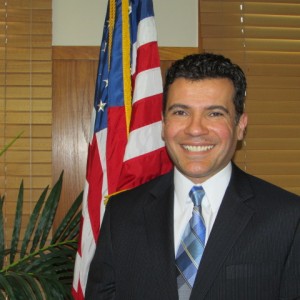
Carlos Baía and Bert Lumbreras have been elected to serve on the incoming ICMA Board of Directors.  As IHN members contemplate going through the ICMA nomination process, Carlos and Bert provided their insights and thoughts on the importance of serving on the board and what they did to prepare themselves to be competitive.
 Why did you want to serve on the ICMA Board of Directors?

Bert Lumbreras, Assistant City Manager, Austin TX
Bert: Public service has been a lifelong passion and I determined early on that it was  a profession that would elevate and carry me forward in an honorable way, especially being Hispanic.  I am proud of where I come from.  I was the first in my family to graduate from college, the first Hispanic Assistant City Manager in a mid-sized city, and the first City Manager in the smaller communities I served.  My Hispanic background is a big source of achieving a proud career.  


Carlos Baía, Deputy City Manager, Concord, NH and IHN Board Member
Carlos: One of my core principles is that everyone should have a
voice in the communities and organizations they serve.  This was particularly poignant to me as a first generation American and the first in my family to go to college.  As an organization, ICMA is confronting a wave of managers who will be retiring from the public sector over the next decade.  The ICMA board must continue to actively work to foster a new generation of quality leaders reflective of the diversity of our country. 
 
What advice do you have for members who are considering going through the ICMA nominating process?

Carlos: You have to make yourself known.  The most critical path is to get involved at the local level and grow that base through the county, regional, and state associations.  Get involved in state activities, and to the extent possible, multi-state activities.  By broadening your network you will broaden your base for endorsements from people who know you.   You should also get involved in an ICMA committee. By working on a committee, you will better understand what the ICMA is really about.  Attendance at the annual conference and regional summits will also increase the breadth of your knowledge of the organization.
 
Bert:  I agree wholeheartedly with everything Carlos said.  Start working at the local and regional level, and be involved in your state association - progressively work your way up. I was involved as a TCMA (Texas City Management Association) officer, got involved in the region and served as TCMA president. This gave me the opportunity to highlight my passion and commitment and showcase who I am.  Being involved in your state association puts you in a good position to be highly regarded among your peers regardless of your ethnicity.  People will have to take notice and give you support.
 
What do you see as the value of involvement in ICMA as well as IHN?

Carlos: ICMA provides opportunities to be mentored. ICMA has a membership of over 10,000 people who share the same core principles and values - we see the world similarly.  Often, our issues and problems seem to isolate us, and through ICMA we learn that our problems are not unique.  Colleagues come together to figure out solutions.  Through ICMA, IHN can get a greater voice to provide solutions to what is going on in our communities.  The organizations are symbiotic and, to me, we must belong to both.
 
Bert:  ICMA provides a platform to engage in a common perspective and a common vision.  City management is a unique field.  Colleagues can help you get through difficult situations. ICMA stands for leadership to improve communities through case studies, best practices, and credentialing.  These elevate you - you are among the best.  The overall training and professional development offered by ICMA is superior and the code of ethics is foundational to what we do. IHN adds tremendous value by helping to attract more Hispanics to leadership positions and identifying best practices for working with Hispanic communities.

IHN's Padrinos/Madrinas Program


Sponsored by the International Hispanic Network (IHN), the Padrinos/Madrinas Coaching Program builds on the Padrinos/Madrinas tradition in Hispanic/Latino culture.   Padrinos and Madrinas are an extension of family and provide a strong support system for family members.  Extending this concept to the professional realm, the IHN Padrinos/Madrinas Program creates the same support system for Hispanic/Latino emerging leaders working in local government.  


The IHN Padrinos and Madrinas are seasoned Latino leaders in local government who are committed to assisting emerging leaders who serve diverse populations.  These one-on-one coaches are available without charge in order to offer career advancement strategies,  assist in addressing local challenges when serving Hispanic/Latino communities, and/or share their experience and expertise on specific issues.  


To access a Padrino or Madrina, simply:

1.  GO to the IHN Website at  www.ihnonline.org  

2.  REVIEW the Coaches Profiles located on the Padrinos/Madrinas Coaching Program Button or under the Resources drop-down menu

3.  SELECT 1, 2 or 3 coaches

4.  CONTACT a Padrino or Madrina by email or phone


IHN's Padrinos/Madrinas Program Feature: 
Maria De Leon
 
Maria De Leon, Director of Recreation, City of Gilroy, CA
Maria De Leon has 20 years of experience in local government. She is currently the Director of the Recreation Department for the City of Gilroy, CA. Prior to this appointment, Maria held management positions with the City of Hollister, CA and the City of San Jose, CA. Maria's background and experience includes community organizing, neighborhood revitalization, planning and land use implementation, public administration and leadership development.

Maria has a BA from San Jose State University in Public Relations and a Minor in Sociology, along with a Planning and Land Use Certificate from UC Davis. Email: Maria.DeLeon@ci.gilroy.ca.us
Important Estate-Planning Documents
 
The following steps can help you control what happens to your assets and health care decisions if anything happens to you - and can also be very important if you're helping aging parents with their finances.
 
Update your beneficiary designations. The beneficiaries listed on your retirement accounts, pension, and life insurance determine who inherits those assets - even if your will says otherwise.
 
Update your will. Your will can specify who inherits assets that are not held jointly or don't have beneficiary designations. This can be particularly important if you're remarried and you want assets to go to your children from your first marriage. A will also lets you specify a guardian for minor children and gives you an opportunity to make other decisions about who inherits what. If you're helping aging parents with their finances, you may want to ask them to grant you their power of attorney. Check with their bank, brokerage firm, and other financial institutions to see if they require a distinct power of attorney.
 
Designate a health-care proxy. This document, also called a "durable power of attorney for health care" appoints someone to make medical decisions for you if you're incapacitated. Talk about your wishes for care with this person while you're healthy so they'll have guidance if they need to make key decisions. In some states, you may also need a separate form called a living will to specify your wishes about end-of-life treatment. Give copies of these documents to the person you specified and to your doctors.
For more information, see Estate Planning for Everyone in our RealizeRetirement® resource library. 

This article is intended for educational purposes only and is not to be construed or relied upon as investment advice. Except as expressly permitted by ICMA-RC, reproduction or redistribution of this content in its entirety or any portion thereof, is strictly prohibited without the prior written permission of ICMA-RC. For more information, contact ICMA-RC at 777 North Capitol Street, NE, Washington, DC 20002-4240. 800-669-7400. Copyright © 2015 ICMA-RC. All rights reserved.
The Post-Heroic Leader 
Dr. Benest kickstarts our leadership journey in 14 steps.


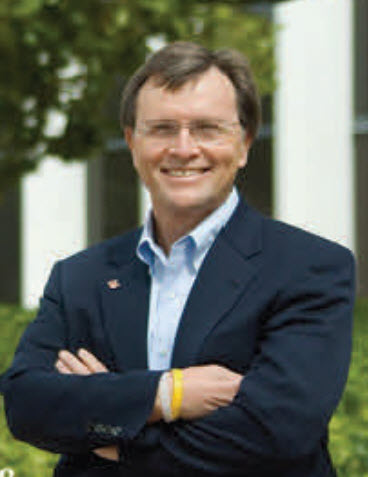
Dr. Frank Benest

I lead the Parks and Facilities Division in a large city government. We are faced with major challenges in addressing the drought. My division needs to help the city reduce city water consumption by a council mandate of 20 percent. Since our parks and public facilities use a lot of water, we have a big challenge. We have old irrigation and plumbing systems that leak; we need to invest in cost-effective technologies to help reduce water usage; and we must enlist the users of our parks and facilities in helping reduce consumption. At the same time, we have precious assets that must be preserved for the future - unique parks, an arboretum, and well-used and valued golf courses and sports complexes.


I recently went to a conference and the keynoter exhorted us local government managers to be great leaders and inspire others. My parks and recreation director wants me to "take charge" and come up with some big ideas to solve our drought-related challenge.


I want to respond but I'm not a take-charge kind of guy. In fact, I am an introvert. I don't have the charisma gene. Now, I think I do some things fairly well. I'm committed to public service and preserving our community's great park and public space resources. I support our team and the team members appreciate it.


I'd like to help solve the drought challenge. But I don't have enough authority or power to solve the problem. Moreover, I'm told I have to be a much better "out-there" leader if I want to move up in the organization. I don't know how to do this big leadership thing. Do I have what it takes?

"Why is everyone looking at me?

American culture unfortunately mythologizes leaders as bigger-than-life heroes who through the force of their personalities and ideas lead their teams to greatness. Not so. Heroic leaders do not create greatness which is sustainable over time.


In his book Good to Great, Jim Collins found that those corporations that are successful and sustain greatness are not led by charismatic leaders but rather by humble and committed executives. These humble leaders are committed to the enterprise, its mission, and certain enduring values, yet at the same time they help their organizations adapt to changing times and circumstances.
 

LEADERSHIP HAS MANY "VOICES"


You're a quiet guy. Do not despair! There is no one model of effective leadership. As Kevin Sharer, former Amgen CEO

noted, "leadership has many voices." Thankfully, different kinds of leaders have different "gifts" to give away and
make a positive difference. You are an introvert and can contribute a great deal given your strengths and attributes. The key is to be the best you can be. It is clear that you are committed to the mission of the parks and public facilities division. You are supportive of your team. You want to make a positive contribution. Therefore, the issue is how to become an even better leader. 


LEADERS CAN'T FORCE PEOPLE TO FOLLOW   


Management is based on one's positional or formal authority. By using their positional authority, managers can force a minimal level of performance by the employees who report to them.


In contrast, leadership is based on one's interpersonal attributes. Leadership is about winning the hearts and minds of people. It is about mobilizing people to do difficult work and take action when there is often no perfect solution.


As American author and poet Charles Lauer has said, "Leaders don't force people to follow. They invite them on a journey." I love the "journey" metaphor. The nature of a journey is that you know the general direction but not the precise destination.


So, with respect to addressing the drought, how do you invite employees in your division and department, other departments, as well as external stakeholders, on this journey of reducing water consumption and at the same time preserving your city assets? Is it a worthy and energizing journey for others? Are you passionate enough about the journey? If not, why should anyone follow? 


INTROVERTS CAN BE GREAT LEADERS TOO


Introverts like yourself can be very effective leaders, if they leverage their strengths. Introverts often exhibit some very positive behaviors:

  • They ask questions. (See Career Compass No. 24: Asking Powerful Questions) 
  • They encourage others to speak first
  • They listen before speaking

Because introverted leaders ask questions, listen, and generate ideas from others, their own ideas are better informed. More important, others are contributing to the ultimate plan and get their fingerprints on the plan. They "own" the plan because they helped create it.


You are likely to come up with a good drought response plan if you ask the right questions and listen to members of your team, other division and department groups, and external stakeholders, such as park and facility user groups.


HUMBLE SERVANT-LEADERS


Great leaders are "servant-leaders." In his classic essay "The Servant as Leader," Robert Greenleaf emphasized that servant- leaders are committed to the organization, their co-workers, and the people they serve. They are stewards of the people, resources, assets, and the organizations they serve. Servant-leaders are "other-centered," as opposed to "me-centered." They seek to influence (rather than increase their own power and status) so that they can better make a difference and serve others. It is not about their great ideas, but the best ideas that will come from everybody in an effort to address the problem, such as the drought challenge.


While great leaders are humble, they are still passionate. They just demonstrate their passion in a quiet manner. They are not boisterous about their commitments but they demonstrate their commitments every day in small ways. They exhibit their passion through their commitment to certain values and goals and through their persistence, tenacity, hard work, and ethical behavior. They don't ask of others what they are unwilling to do. They model the way. 


AN ADAPTIVE CHALLENGE


The drought response is not a "technical" challenge that can be addressed through technical solutions, but rather an "adaptive" challenge. As suggested by Ron Heifetz and his colleagues at Harvard, adaptive challenges usually involve many stakeholders, often with differing values, perspectives, and preferred solutions to the challenge.


Technical problems are "tame" problems that can be addressed by managers using their formal authority. Adaptive challenges are "wicked" problems that require leaders to bring together different groups, start conversations, and "figure it out" together, recognizing that there are no perfect solutions. The water crisis for your city is certainly an adaptive challenge. 


CROSS BOUNDARIES, START CONVERSATIONS AND AIM FOR SHARED LEADERSHIP


Yes, you do not have sufficient authority or power to successfully address the drought challenge. Rarely do leaders have sufficient authority or power to solve any significant problem.


Because responding to the drought is an adaptive challenge requiring leadership, you need to cross boundaries. Certainly you need to engage your division employees since they will have a lot of ideas about how to reduce water usage in your facilities and minimize the impact to the park assets and the public users. However, you cannot solve the problem solely in your division silo. You need to engage other groups and start conversations about everybody being part of the solution. These groups include:

  • Other divisions in the department (for example, recreation and cultural arts divisions) 
  • Other departments (for example, utilities)
  • External stakeholders (for example, park user groups)
  • The general public
Given the drought challenge, with whom do you and other team members need to start conversations? What is the nature and content of the conversations? As poet David Whyte has pointed out, "leadership is the art of conversation."

Once they cross boundaries and start conversations, humble leaders aim for shared leadership. They encourage leadership from wherever it may come. For instance, they encourage employees to contribute to the thinking and problem-solving and help create a better enterprise. Given the drought challenge, they ask:

  • How do we address the leakage problems in our old irrigation and plumbing systems? Where can we best invest limited financial resources?
  • How do we cut water usage in ways that have a minimum impact on the public (for example, stop washing the park maintenance vehicles)?
  • How do we explore technology responses to better use limited water (for example, using soil moisture meters to measure the moisture in our golf course turf and avoid over-watering)?
  • How do we communicate with the user groups and the general public about our department's response to the drought crisis and encourage the public to modify its behavior and become part of the solution (for example, let's conserve at home and at work so we can save our parks for the future)?
  • Which other groups (for example, neighborhood associations that are adjacent to parks) do we need to engage? 
AVOID SEEKING "BUY-IN"

We in local government often say that we need to get "buy-in." The term and the mindset suggest that we have a solution and therefore we need to convince/manipulate others to "buy it."
Humble leaders start conversations because they understand that they don't have the one perfect solution. Conversations help us understand people's hopes and dreams, their concerns and fears, and where they are in their current thinking.
 
Conversations are not about teaching but learning about different perspectives and generating additional ideas.
 
FOCUS ON THE "WHY"
 
In order for people to join you in addressing the water crisis in creative ways, they need to understand the "why." Typically, we start by discussing the "what" and the "how." Rather, we need to begin with the "why" which involves the meaning and purpose behind our endeavor.
 
What is the why of the drought response? Water is life. Water is required for functioning of the community. Water is needed to preserve certain park assets and amenities for the present and the future.
 
Once the meaning of the journey is explored, you and others can explore the what and how of your response.
 
DIRECTING vs. ENGAGING

When you gather staff and/or stakeholder groups to brainstorm ideas, people will not join you in the leadership journey if you have a command-and-control mindset and typically "suck all the air out of the room." Employees and other stakeholders won't share their best thinking and won't commit their discretionary effort. They need to be engaged in authentic ways.

"Taking charge" is not telling people how the department will respond to the drought. It is engaging people, talking
about the "why" behind the drought response, and supporting the team or teams involved. It is engaging people, yet letting go so they respond and own the problem with you. 
 
ASK FOR HELP

For employees and residents and other users to step up and contribute to a multi-prong solution, you must demonstrate not only humility ("I don't have all the answers"), but also some vulnerability. By asking for ideas and assistance, you exhibit vulnerability. People connect with leaders who are human and show that they are not all-knowing and all-powerful. When people connect with such leaders, they will contribute and decide to follow. 

ARE YOU A MULTIPLIER OR DIMINISHER?

Heroic leaders diminish the ideas and contributions of others. Because they do not share the problem and engage others in developing new approaches; they "own" the problem and no one struggles with them to solve it. Humble leaders open up the dimensions of the problem to others, ask for their ideas and help, and support the team in solving the problem with others.

As suggested by Liz Wiseman in her book Multipliers - How the Best Leaders Make Everyone Smarter, heroic leaders with big ideas and their own visions for the future diminish the talent and intellect of people around them, at precisely the point that we need to increase everybody's productivity and creativity to address adaptive challenges. 
 
In contrast, "Multiplers"
  • See the genius in others and amplify the smarts and capabilities of the team 
  • Shift from answers to questions
  • Extend the challenge to others
  • Stimulate debate about ideas before making decisions
  • Install ownership and accountability throughout the team
SHOW GRATITUDE

Humble leaders not only recognize the contributions of others, they demonstrate gratitude. They say "thank you" and "I'm grateful." Followers connect with grateful leaders and they too begin to feel grateful for the opportunity to serve and do great things together.

DON'T WORRY ABOUT BEING NOTICED

You don't have to be an "out-there" leader to move up the organization. As you begin to effectively address adaptive challenges by enlisting others, you will be seen as a highly valued leader, be given bigger opportunities to serve, and be promoted into more responsible positions in the organization. You may have been promoted into management because of your technical skills, but you will advance into senior management because of your leadership or "soft" people skills.

FIND THE LEADER WITHIN

In summary, as you confront the drought and other adaptive challenges, be your authentic self and use the "gifts" that make you special. Engage your team, convene others, start conversations, listen, and begin better defining the problem and possible responses. Then of course take action with others even when there is no perfect solution. Fix things up as you go along.

Through this kind of quiet leadership, you can help your organization decrease water consumption, and at the same time, preserve unique park assets for future generations. 

In This Issue
Employment Announcements
 

For details on open positions  click here. 

IHN Board of Directors


Veronica Briseño Lara

President


Manuel Esquibel

President-Elect


Magda Gonzalez 

Immediate

Past President


Rolando Fernandez 

Vice President
for Membership


Maria Hurtado 

Vice President
for Programs


At Large Directors


Carlos Baia

Yocelyn Galiano Gomez

Raymond Gonzales

Tommy Gonzalez

Ramiro Inguanzo 

Claudia Lujan

Daro Mott


Patricia E. Martel

Past ICMA

Board Member

___________


David Mora

ICMA Staff Liaison 


Bob Harrison

ICMA Board Liaison


Rod Alcázar

ICMA-RC Liaison


New & Returning Members


Karen Borkowski

David Castaneda 

Kristen Chernosky
Amy Coffey
Linda Gonzales
Ramiro Inguanzo
Michael Martinez
Marta Matsuno
Gary Montoya
Alexa Priddy
Robert Smith


IHN Corporate Partners Program


Mejorando


For more information on how to become an IHN
Corporate Partner, contact membership@ihnonline.org