2015 Issue 23 
new IHN logo 2012Noticias logo green font
   Advancing Hispanic leadership in local governance

Our Mission

         To prepare future Hispanic and Latino leaders for public service


To provide unique resources to government executives and public managers


  To advance the goals of an ethical profession


"Saving Pobre Pepito!"

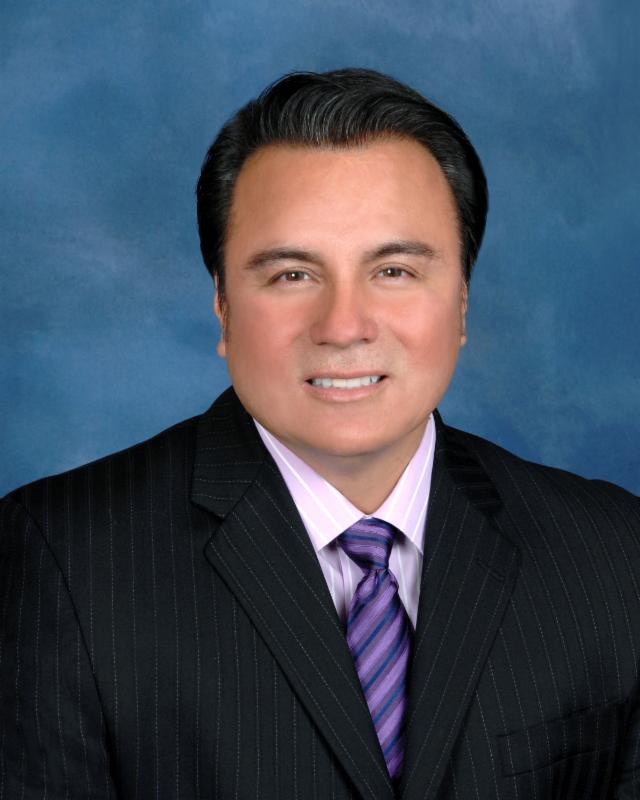
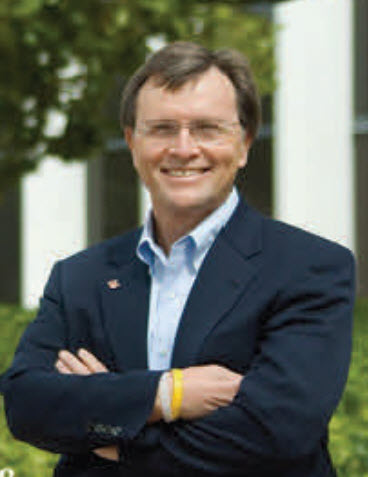
By: Jesus Nava, IHN Immediate Past President, Chief Administrative Officer, Santa Clara Valley Water District (California)


There were people who resided in my childhood neighborhood who were afflicted with strange and bizarre physical ailments.  Given the insensitivity of children, we called one "Crazy Joe."  Another was "El Frijole" because his head was truly shaped like a bean and his complexion was just as dark.  But the strangest for me was Pepito.


Pepito was deaf and mute and had palsy.  He communicated with flailing arms, rolling eyes, grunts and moans.  He would roam the neighborhood from place to place and I would wonder where he would go and what he did all day.


As a young boy, I was terrified of Pepito and clearly remember my first encounter with him in 1968.  It was a hot Saturday afternoon in Westside San Antonio and my father, having finished his "mandados" (his chores for the day), stopped at "La D and B Lounge" for a Lone Star beer.  I stayed in the back of our 1966 Chevy Biscayne station wagon to lay down for a bit and get relief from the sun.


Soon I heard commotion and raised my curious head only to be confronted by Pepito standing directly in front of me outside the car window.  He was highly emotional, almost hysterical.  I was scared stiff.  But as I sat there frozen staring into his eyes, I saw pain and anguish reflected in them.  He was not a threat.  He was in need of help.  I lowered the car window and said "hello."   My father, having heard Pepito, came out, calmed him and gave him some money.  I was never afraid of Pepito again.


Now I wonder how a police encounter with Pepito would go today.  What would be the response when the 911 call is received about a man "acting crazy and violently and scaring everyone?"  Add to the mixture that the police would be responding to the "Westside" or the "deep Westside" as I recently saw it labeled in a caricature of a San Antonio map.  Would the arriving officers know that Pepito was incapable of verbal communication?  Would they know that his "wild behavior" was illness due to his medical condition and a lifetime of suffering and alienation?

 
 How would the police subdue him?  Taser?  Non-lethal shotgun?  Baton and cuffs? 


I ask these questions because our jobs require us to think and make decisions about how law enforcement interacts with our communities.  Recent events have shown the chaotic aftermath of police decisions, whether judged good or bad.  As a local government manager of 30 years, I know our police forces are full of good people dedicated to serving the public.  I even lost my first city manager job defending the Las Cruces Police Chief.

However, I do question the paramilitary tactics and deployment strategies that have come to be seen as conventional in today's police forces.


First, they scare people, not make them feel safer.  Seeing military vehicles on city streets and local police dressed in SWAT and riot gear signals to the world that "we are on the verge of anarchy."  This type of police response is a blunt undiscerning sword.  Our citizens' reaction is to run and hide, to stay put at home afraid of becoming a victim or collateral damage.


Second, the show of overt military force is meant to coerce the citizenry into submission.  Fear is used to subdue dissent and opposition to the prevailing political authority which has a legal monopoly on the use of law enforcement.  Cities and counties manage the local police forces and citizens rely on us to make sure someone polices the police.

 
 It is also important to ask what created the conflict in the first place - the crime or the police response.  There was sufficient evidence that Michael Brown and Eric Garner had committed crimes.  Both men were known in their communities.  The arrests could have simply occurred later.  In the case of Eric Garner, a citation for selling loose cigarettes given by a code or parking enforcement officer may have sufficed.


Community oriented policing was the established norm in local law enforcement before September 11, 2001.  I can't recall how many neighborhood policing meetings I attended before the attack on the World Trade Center.  It was at these meetings in San Antonio, Santa Barbara, Denton, Laredo, Las Cruces and San José that trust and confidence was established and built between law enforcement and the community.  Each new neighborhood policing substation was a kept promise to work directly with our residents.


What role do we as local government managers have to ensure effective police interaction with our communities, not just with the prominent, well-known members of our society but also our more obscure fringe residents as well:  our communities of color; the extremely poor and homeless; the undocumented; political, religious and economic refugees, the mentally ill.


I venture to say that we have an important role to play and a responsibility to ensure that all residents feel safe during calm and troubled times.  But that work is done upfront with the community not after the damage has been inflicted and trust has been eroded.


I propose that we restart the discussion on community policing as a means to counteract the current views on police and in the process save not only our cities, but Pobre Pepito - may he rest in peace.


Highlights of Austin's Professional Development Session


By Rolando Fernandez, IHN Board Member, Assistant Director, Contract Management Department, City of Austin, TX.

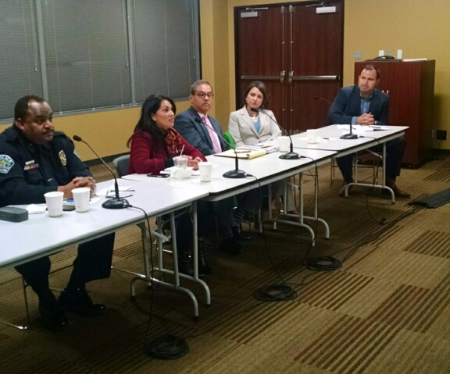
The Austin Hispanic Network held a professional development session on March 4, 2015 titled "Preparing and Managing Career Advancement." The goal of the session was to provide participants the opportunity to obtain knowledge and insight from a diverse and experienced panel on the actions they have taken to successfully manage the transition into the supervisor/manager/executive level position and navigate the associated challenges.


The panel consisted of:

  • Veronica Briseño Lara, Small and Minority Business Resource Department Director
  • Troy Officer, Austin Police Department Commander
  • Edward Campos, Contract Management Department Division Manager
  • Victoria Escobar, Austin Energy Electric Utility Customer Service Supervisor
  • Moderator -Rolando Fernandez, Contract Management Department Assistant Director


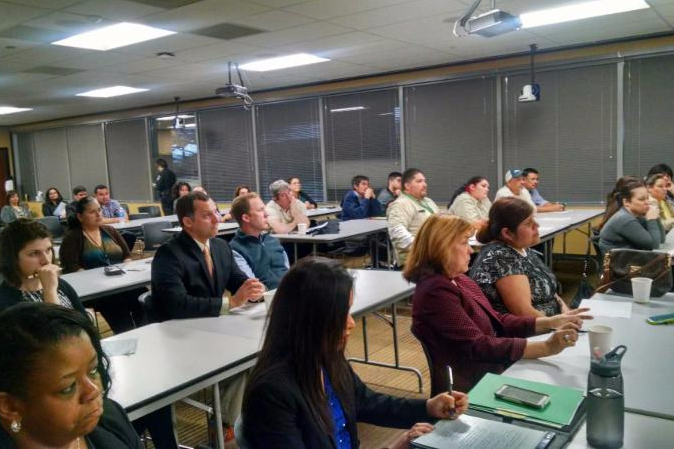
Over forty attendees engaged the panel with questions and lively discussion. Many participants voiced their favor of the AHN and the value placed on personal and professional development. Points made by the panel included:

  • Drive & Determination
  • Don't abandon your long-term professional pursuits based upon temporary personal challenges
  • Develop a communication style
  • If you want to tackle a problem be prepared to provide solutions
  • Define your leadership approach
  • Take risks
  • Do what is uncomfortable "stretch myself" but do recognize your limits
  • Seek mentors

The Austin Hispanic Network is comprised by City of Austin employees focused on providing professional development, celebrating our Hispanic Culture, and serving the Austin Hispanic community. For more information, contact the AHN Board at ahn@austintexas.gov.

IHN's Padrinos/Madrinas Program


Sponsored by the International Hispanic Network (IHN), the Padrinos/Madrinas Coaching Program builds on the Padrinos/Madrinas tradition in Hispanic/Latino culture.   Padrinos and Madrinas are an extension of family and provide a strong support system for family members.  Extending this concept to the professional realm, the IHN Padrinos/Madrinas Program creates the same support system for Hispanic/Latino emerging leaders working in local government.  


The IHN Padrinos and Madrinas are seasoned Latino leaders in local government who are committed to assisting emerging leaders who serve diverse populations.  These one-on-one coaches are available without charge in order to offer career advancement strategies,  assist in addressing local challenges when serving Hispanic/Latino communities, and/or share their experience and expertise on specific issues.  


To access a Padrino or Madrina, simply:

1.  GO to the IHN Website at  www.ihnonline.org  

2.  REVIEW the Coaches Profiles located on the Padrinos/Madrinas Coaching Program Button or under the Resources drop-down menu

3.  SELECT 1, 2 or 3 coaches

4.  CONTACT a Padrino or Madrina by email or phone


IHN's Padrinos/Madrinas Program Feature: 

Chris Zapata 


Chris Zapata, City Manager of San Leandro and IHN Board Member

Chris Zapata has been a City Manager since 1992 and has managed municipalities throughout Arizona and California. His public service includes work in the Arizona cities of Flagstaff, Eloy, Phoenix, Goodyear, Superior, and Glendale. In California, he has served the communities of National City and San Leandro where he currently serves as City Manager.


Chris is a former International Hispanic Network Board member and has served as President. He is a graduate of Northern Arizona University.

Member Oscar Murillo Appointed ICMA Fellow in Evanston, Illinois

By: Jesus Nava, IHN Immediate Past President, Chief Administrative Officer, Santa Clara Valley Water District (California)


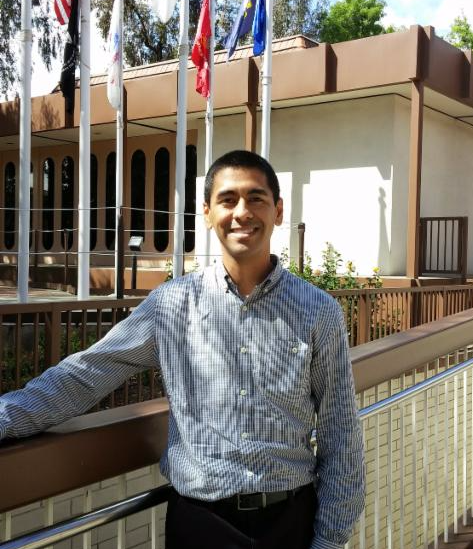
Oscar Murillo will join the city manager's staff of Evanston, Illinois this July 2015 as an ICMA Fellow.  Oscar is currently an MPA candidate at San José State University and will graduate in May.  He earned a Bachelor's of Arts in Comparative Literature from the University of California at Santa Barbara in 2011.  He currently serves as graduate student intern with the City of Campbell, CA.


Oscar's new gig will include:

  • Working with the Mayor, aldermen and citizenry to respond to requests for services and information.
  • Providing the council with a bi-weekly expense report called the "Bill List," a detailed justification of all city expenses approved by the council at each meeting.
  • Assisting the city manager with the special research and development projects.
  • Serving on the budget team and helping prepare the budget and performance measures.
  • Helping create an employee newsletter and develop ideas to improve communication.
  • Research and development of innovative, cost-saving ways to provide city services.
  • Serve as liaison to City Human Relations Commission.
  • Serve as liaison at City Council Meetings and prepare City Council Action Reports.
Oscar Murillo, ICMA Fellow

Oscar began his public sector career as a library assistant with the City of Santa Barbara, CA.  He also worked as an intern for the University of California Santa Barbara Library where he instructed students on the use of research databases.


Please join the IHN family in congratulating Oscar.  He can be reached at:  City Manager's Office, 2100 Ridge Avenue, Evanston, IL 60201-2798; starting July 1, 2015.


Evanston, IL is a city of 75,000 inhabitants located on the shores of Lake Michigan just minutes north of Chicago.  Mr. Wally Bobkiewicz is the city manager.


ICMA 2
Everyday Ways to Build Retirement Security 


Adding a little extra to your retirement savings every month can make a big difference over the long run. The following strategies can help.


Cut your insurance costs. Bundling auto and home coverage with one insurer can reduce premiums by up to 15 percent. Raising your car insurance deductible from $250 or $500 to $1,000 can cut premiums by up to 20 percent. Let your car insurer know if your young driver has at least a B average.

Don't miss key tax breaks, such as the Savers' Credit for 457 or IRA contributions, or the American Opportunity credit for college costs. If you missed a past deduction, you have three years to submit an amended return (1040X). See www.irs.gov.


Refinancing your home mortgage may be worthwhile even if you just took out the loan or refinanced within the past couple of years. See the Federal Reserve's Guide to Mortgage Refinancing (www.federalreserve.gov/pubs/refinancings).


Take advantage of catch-up contributions. If you'll be 50 or older by the end of the year, you can add an extra $6,000 to your 457 in 2015. Or you may be eligible for the "pre-retirement catch-up" provision. See www.icmarc.org/457 for details.


This article is intended for educational purposes only and is not to be construed or relied upon as investment advice. Except as expressly permitted by ICMA-RC, reproduction or redistribution of this content in its entirety or any portion thereof, is strictly prohibited without the prior written permission of ICMA-RC. For more information, contact ICMA-RC at 777 North Capitol Street, NE, Washington, DC 20002-4240. 800-669-7400. Copyright © 2015 ICMA-RC. All rights reserved.

Announcing the 2015 Coaching Program Webinars


Members of the International Hispanic Network (IHN) are encouraged to participate in the FREE webinars (noted below) that are presented by Cal-ICMA Coaching Program and its ICMA State Association Coaching Partners and sponsors. IHN is one of the sponsors of these webinars and encourages its members to invite their staff to participate. The webinars offer a great way to get helpful information without having to travel. Please consider registering for these FREE webinars today.

http://icma.org/en/ca/programs/coaching
 

The Post-Heroic Leader 
Dr. Benest kickstarts our leadership journey in 14 steps.


Dr. Frank Benest

I lead the Parks and Facilities Division in a large city government. We are faced with major challenges in addressing the drought. My division needs to help the city reduce city water consumption by a council mandate of 20 percent. Since our parks and public facilities use a lot of water, we have a big challenge. We have old irrigation and plumbing systems that leak; we need to invest in cost-effective technologies to help reduce water usage; and we must enlist the users of our parks and facilities in helping reduce consumption. At the same time, we have precious assets that must be preserved for the future - unique parks, an arboretum, and well-used and valued golf courses and sports complexes.


I recently went to a conference and the keynoter exhorted us local government managers to be great leaders and inspire others. My parks and recreation director wants me to "take charge" and come up with some big ideas to solve our drought-related challenge.


I want to respond but I'm not a take-charge kind of guy. In fact, I am an introvert. I don't have the charisma gene. Now, I think I do some things fairly well. I'm committed to public service and preserving our community's great park and public space resources. I support our team and the team members appreciate it.


I'd like to help solve the drought challenge. But I don't have enough authority or power to solve the problem. Moreover, I'm told I have to be a much better "out-there" leader if I want to move up in the organization. I don't know how to do this big leadership thing. Do I have what it takes?

"Why is everyone looking at me?

American culture unfortunately mythologizes leaders as bigger-than-life heroes who through the force of their personalities and ideas lead their teams to greatness. Not so. Heroic leaders do not create greatness which is sustainable over time.


In his book Good to Great, Jim Collins found that those corporations that are successful and sustain greatness are not led by charismatic leaders but rather by humble and committed executives. These humble leaders are committed to the enterprise, its mission, and certain enduring values, yet at the same time they help their organizations adapt to changing times and circumstances.
 

LEADERSHIP HAS MANY "VOICES"


You're a quiet guy. Do not despair! There is no one model of effective leadership. As Kevin Sharer, former Amgen CEO

noted, "leadership has many voices." Thankfully, different kinds of leaders have different "gifts" to give away and
make a positive difference. You are an introvert and can contribute a great deal given your strengths and attributes. The key is to be the best you can be. It is clear that you are committed to the mission of the parks and public facilities division. You are supportive of your team. You want to make a positive contribution. Therefore, the issue is how to become an even better leader. 


LEADERS CAN'T FORCE PEOPLE TO FOLLOW  

Management is based on one's positional or formal authority. By using their positional authority, managers can force a minimal level of performance by the employees who report to them.


In contrast, leadership is based on one's interpersonal attributes. Leadership is about winning the hearts and minds of people. It is about mobilizing people to do difficult work and take action when there is often no perfect solution.


As American author and poet Charles Lauer has said, "Leaders don't force people to follow. They invite them on a journey." I love the "journey" metaphor. The nature of a journey is that you know the general direction but not the precise destination.


So, with respect to addressing the drought, how do you invite employees in your division and department, other departments, as well as external stakeholders, on this journey of reducing water consumption and at the same time preserving your city assets? Is it a worthy and energizing journey for others? Are you passionate enough about the journey? If not, why should anyone follow? 


INTROVERTS CAN BE GREAT LEADERS TOO


Introverts like yourself can be very effective leaders, if they leverage their strengths. Introverts often exhibit some very positive behaviors:

  • They ask questions. (See Career Compass No. 24: Asking Powerful Questions) 
  • They encourage others to speak first.
  • They listen before speaking.

Because introverted leaders ask questions, listen, and generate ideas from others, their own ideas are better informed. More important, others are contributing to the ultimate plan and get their fingerprints on the plan. They "own" the plan because they helped create it.


You are likely to come up with a good drought response plan if you ask the right questions and listen to members of your team, other division and department groups, and external stakeholders, such as park and facility user groups.


HUMBLE SERVANT-LEADERS


Great leaders are "servant-leaders." In his classic essay "The Servant as Leader," Robert Greenleaf emphasized that servant- leaders are committed to the organization, their co-workers, and the people they serve. They are stewards of the people, resources, assets, and the organizations they serve. Servant-leaders are "other-centered," as opposed to "me-centered." They seek to influence (rather than increase their own power and status) so that they can better make a difference and serve others. It is not about their great ideas, but the best ideas that will come from everybody in an effort to address the problem, such as the drought challenge.


While great leaders are humble, they are still passionate. They just demonstrate their passion in a quiet manner. They are not boisterous about their commitments but they demonstrate their commitments every day in small ways. They exhibit their passion through their commitment to certain values and goals and through their persistence, tenacity, hard work, and ethical behavior. They don't ask of others what they are unwilling to do. They model the way. 


AN ADAPTIVE CHALLENGE


The drought response is not a "technical" challenge that can be addressed through technical solutions, but rather an "adaptive" challenge. As suggested by Ron Heifetz and his colleagues at Harvard, adaptive challenges usually involve many stakeholders, often with differing values, perspectives, and preferred solutions to the challenge.


Technical problems are "tame" problems that can be addressed by managers using their formal authority. Adaptive challenges are "wicked" problems that require leaders to bring together different groups, start conversations, and "figure it out" together, recognizing that there are no perfect solutions. The water crisis for your city is certainly an adaptive challenge. 


CROSS BOUNDARIES, START CONVERSATIONS AND AIM FOR SHARED LEADERSHIP


Yes, you do not have sufficient authority or power to successfully address the drought challenge. Rarely do leaders have sufficient authority or power to solve any significant problem.


Because responding to the drought is an adaptive challenge requiring leadership, you need to cross boundaries. Certainly you need to engage your division employees since they will have a lot of ideas about how to reduce water usage in your facilities and minimize the impact to the park assets and the public users. However, you cannot solve the problem solely in your division silo. You need to engage other groups and start conversations about everybody being part of the solution. These groups include:

  • Other divisions in the department (for example, recreation and cultural arts divisions) 
  • Other departments (for example, utilities)
  • External stakeholders (for example, park user groups)
  • The general public
Given the drought challenge, with whom do you and other team members need to start conversations? What is the nature and content of the conversations? As poet David Whyte has pointed out, "leadership is the art of conversation."

Once they cross boundaries and start conversations, humble leaders aim for shared leadership. They encourage leadership from wherever it may come. For instance, they encourage employees to contribute to the thinking and problem-solving and help create a better enterprise. Given the drought challenge, they ask:

  • How do we address the leakage problems in our old irrigation and plumbing systems? Where can we best invest limited financial resources?
  • How do we cut water usage in ways that have a minimum impact on the public (for example, stop washing the park maintenance vehicles)?
  • How do we explore technology responses to better use limited water (for example, using soil moisture meters to measure the moisture in our golf course turf and avoid over-watering)?
  • How do we communicate with the user groups and the general public about our department's response to the drought crisis and encourage the public to modify its behavior and become part of the solution (for example, let's conserve at home and at work so we can save our parks for the future)?
  • Which other groups (for example, neighborhood associations that are adjacent to parks) do we need to engage? 
AVOID SEEKING "BUY-IN"

We in local government often say that we need to get "buy-in." The term and the mindset suggest that we have a solution and therefore we need to convince/manipulate others to "buy it."
Humble leaders start conversations because they understand that they don't have the one perfect solution. Conversations help us understand people's hopes and dreams, their concerns and fears, and where they are in their current thinking.
 
Conversations are not about teaching but learning about different perspectives and generating additional ideas.
 
FOCUS ON THE "WHY"
 
In order for people to join you in addressing the water crisis in creative ways, they need to understand the "why." Typically, we start by discussing the "what" and the "how." Rather, we need to begin with the "why" which involves the meaning and purpose behind our endeavor.
 
What is the why of the drought response? Water is life. Water is required for functioning of the community. Water is needed to preserve certain park assets and amenities for the present and the future.
 
Once the meaning of the journey is explored, you and others can explore the what and how of your response.
 
DIRECTING VS. ENGAGING

When you gather staff and/or stakeholder groups to brainstorm ideas, people will not join you in the leadership journey if you have a command-and-control mindset and typically "suck all the air out of the room." Employees and other stakeholders won't share their best thinking and won't commit their discretionary effort. They need to be engaged in authentic ways.

"Taking charge" is not telling people how the department will respond to the drought. It is engaging people, talking
about the "why" behind the drought response, and supporting the team or teams involved. It is engaging people, yet letting go so they respond and own the problem with you. 
 
ASK FOR HELP

For employees and residents and other users to step up and contribute to a multi-prong solution, you must demonstrate not only humility ("I don't have all the answers"), but also some vulnerability. By asking for ideas and assistance, you exhibit vulnerability. People connect with leaders who are human and show that they are not all-knowing and all-powerful. When people connect with such leaders, they will contribute and decide to follow. 

ARE YOU A MULTIPLIER OR DIMINISHER?

Heroic leaders diminish the ideas and contributions of others. Because they do not share the problem and engage others in developing new approaches, they "own" the problem and no one struggles with them to solve it. Humble leaders open up the dimensions of the problem to others, ask for their ideas and help, and support the team in solving the problem with others.

As suggested by Liz Wiseman in her book Multipliers-How the Best Leaders Make Everyone Smarter, heroic leaders with big ideas and their own visions for the future diminish the talent and intellect of people around them, at precisely the point that we need to increase everybody's productivity and creativity to address adaptive challenges. 
 
In contrast, "Multiplers"
  • See the genius in others and amplify the smarts and capabilities of the team 
  • Shift from answers to questions
  • Extend the challenge to others
  • Stimulate debate about ideas before making decisions
  • Install ownership and accountability throughout the team
SHOW GRATITUDE

Humble leaders not only recognize the contributions of others, they demonstrate gratitude. They say "thank you" and "I'm grateful." Followers connect with grateful leaders and they too begin to feel grateful for the opportunity to serve and do great things together.

DON'T WORRY ABOUT BEING NOTICED

You don't have to be an "out-there" leader to move up the organization. As you begin to effectively address adaptive challenges by enlisting others, you will be seen as a highly valued leader, be given bigger opportunities to serve, and be promoted into more responsible positions in the organization. You may have been promoted into management because of your technical skills, but you will advance into senior management because of your leadership or "soft" people skills.

FIND THE LEADER WITHIN

In summary, as you confront the drought and other adaptive challenges, be your authentic self and use the "gifts" that make you special. Engage your team, convene others, start conversations, listen, and begin better defining the problem and possible responses. Then of course take action with others even when there is no perfect solution. Fix things up as you go along.

Through this kind of quiet leadership, you can help your organization decrease water consumption, and at the same time, preserve unique park assets for future generations. 

In This Issue
SAVE THE DATE
 Upcoming IHN Dinner

The annual International Hispanic Network (IHN) dinner will be held at the ICMA Conference in Seattle on Sunday, September 27. The event will be held at the Benaroya Symphony Event Hall, 200 University Street, Seattle. The cost of the dinner is $75.00 per person. The reception will begin at 6:00 p.m. and dinner will be at 7:00 p.m.
   
Additional details on the program and registration will be sent to IHN members through the ICMA conference information and future IHN e-blast updates.
Employment Announcements
 

For details on open positions  click here. 

IHN Board of Directors


Magda Gonzalez

President


Veronica Briseño Lara

President-Elect


Jesus Nava

Immediate

Past President


Erik Walsh

Vice President
for Membership


Tony Ojeda

Vice President
for Programs & Conference Planning 


At Large Directors


Maria Hurtado

Claudia Lujan

Nachie Marquez

Yocelyn Galiano Gomez

Emanuel Esquibel 

Vacant


Patricia E. Martel

Past ICMA

Board Member

___________

James Bennett

ICMA Executive Board Liaison


Rod Alcázar

ICMA-RC Liaison


IHN Committee Membership


Fund Development & Legacy Council

Jesus Nava - Chair 

Magda Gonzalez 

Veronica Briseño Lara

Chris Zapata

Esther Fifelski

David Mora

Membership Committee

Erik Walsh, Chair

Rolando Bono

Rolando Fernandez

Nico De Anda-Scaia

Communications Committee

Nachie Marquez, Chair

Angelita Marchante

Rod Alcazar

Niki Tapia

Monica Gutierrez

Manny Toribo

Victor Ramirez


Programs & Conference Planning Committee

Maria Hurtado - Chair 

Alex Diaz

Claudia Lujan

Mayola Miranda

Espiridion Borrego


Nominating Committee

Jesus Nava 

Pat Martel - Co-cahir 

Jane Bais-DiSessa - Co-chair 

New & Returning Members


Bobby Alcantar

Jennifer Auletta

Edward Belmares

Edward Benavides

Veronica Briseno Lara

Laura Cantu

Vanessa Carrera

Sylvia Chacon

Carlos Contreras

Ana Contereras

Rommel Cordova

David De La Torre

Frank DeSousa

Rich Dlugas

Rene Dominguez

Eric Engelbart

Di Galvan

Patrick W. Hait

Gloria A. Hurtado

Leticia Infante

Maria Lasday

Hermelinda Llamas

Octavio Lopaz

Lianne Marshall

David McCary

Luis Mejia

Abel Mendoza

Rogelio Munoz

Rafael Ortiz

Leah Powell

Luis Provencio

Jennifer Ramirez

Judy Ramos

Lydia Rodriguez

Rosemary Rosales

Leticia Saenz

Albert Santana

Sheryl L. Sculley

Sheree Sepulveda

Sandra Spagnoli

Tiffany Nicole Tapia

Luis Torres

Lorraine Trow

Xavier Urrutia

Leticia M. Vacek

Maria D. Villagomez

Erik Walsh

Chris Zapata 

IHN Corporate Partners Program

Signature Level


Oro/Gold Level


De La Rosa Logo

Compadre/Comadre

Magis Advisor 

For more information on how to become an IHN
Corporate Partner, contact membership@ihnonline.org