|
|
|
|
Subscribe
 |
|
|
Greetings!
In this first issue of the academic season we welcome our new President,
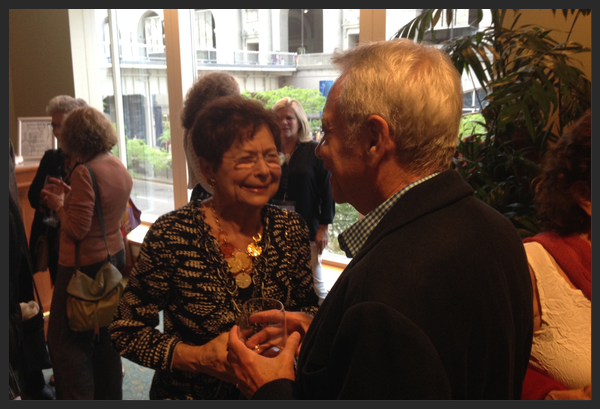
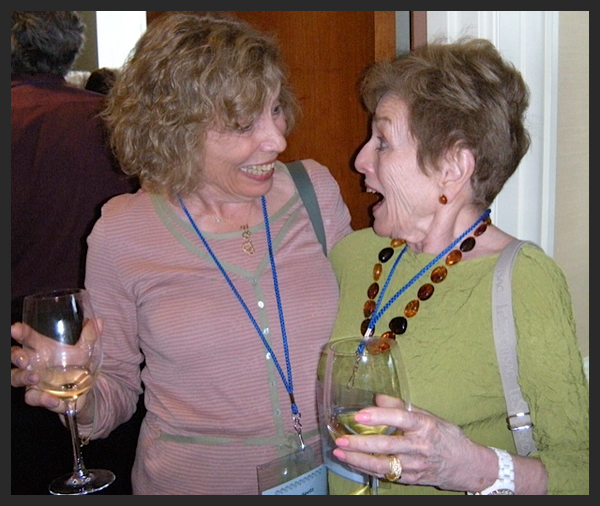
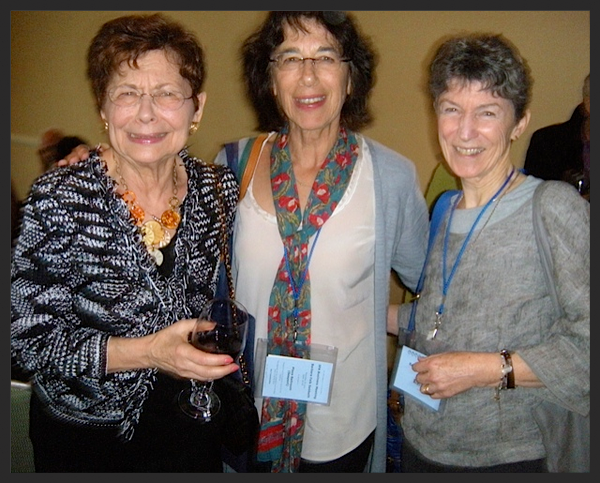
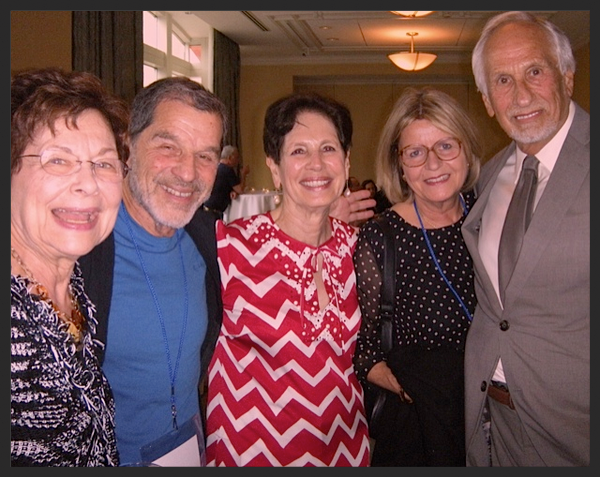
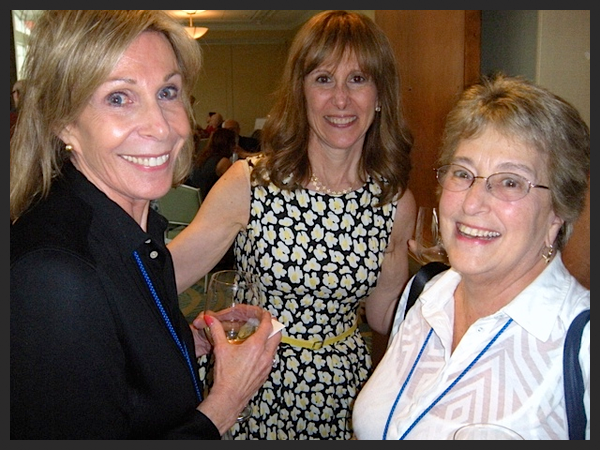
Phyllis Sloate. Many of you may have had the opportunity to meet Phyllis at the IPA Congress in Boston or at the CIPS cocktail party. Phyllis is a dynamic leader who has been involved with CIPS for many years. Her "Letter From The President" discusses her efforts toward board certification for psychoanalysts and is followed by some photos from the festive party hosted by CIPS at the congress.
Assistant Editor, Claudia Eskenazi, interviewed Fred Busch who shared his thoughts on his keynote address "Our Vital Profession" at the 49th IPA Congress, The Changing World. Also in this issue is the third installment of our feature "Institute Spotlight," which focuses this season on the Northwestern Psychoanalytic Society and Institute (NPSI) and its President, Caron Harang. The Institute Spotlight is intended to give the CIPS community an inside look at the leadership and culture of each of our member societies. President Harang's interview provides an inside look at a dynamic organization, its leadership and culture.
Finally, we say farewell with a tribute from Joseph Aguayo to treasured analyst, teacher, writer and mentor James Grotstein.
We want to thank everyone who contributed news to this issue. We are grateful to our wonderful news staff: Susan Mitchell (PCC), Jared Russell (IPTAR & DMS), Joseph Davis (LAISPS), Teresa Canal Meyer (VPS) and Caron Harrang (NPSI).
Lisa Halotek, PsyD, FIPA
Managing Editor
Claudia Eskenazi, PhD Assistant Managing Editor |
|
|
|
|
|
|
CIPS Board of Directors
|
Officers:
* President: Phyllis Sloate PhD (IPTAR)
* Past-President: Randi Wirth PhD (IPTAR)
* Vice President: Terrence McBride PsyD (LAISPS)
* Treasurer: Susan Light LCSW (IPTAR)
* Recording Secretary: Marilyn Rifkin LICSW (IPTAR)
* Special Assistant to the President: Beth Kalish, PhD (LAISPS)
Directors:
Directors represent the interests of their local society and institute on the CIPS Board of Directors and attend monthly teleconference meetings chaired by the President. Any candidate or member may attend a CIPS Board meeting (except when the board is in executive session) to learn more about the organization or how to become more involved. Contact your local society director(s) if you are interested.
|
|
Letter from the President
|
|
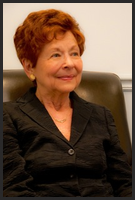
| | Phyllis Sloate, CIPS President |
While writing this column, I was again aware of feeling immensely honored to be entrusted with the stewardship of this collegial and vibrant organization. And stewardship it is, as the creative dreams and progressive initiatives of prior Presidents and Boards may only be realized over the course of succeeding administrative generations. Nowhere was this more evident than in our wide-ranging participation in the IPA Congress, Boston. Far from being the new kids on the block, struggling to establish ourselves as a vital presence within IPA, CIPS members were well represented in every capacity. From Harriet Basseches, Conference Co-Chair, to the new NAPsaC clinical workshop organized by Maureen Murphy, plus all of our CIPS members busily chairing their own panels, leading workshops, attending IPA committee meetings and presenting, discussing, and moderating papers - we are a force to be reckoned with! Our acceptance as a warm, open, welcoming presence was clear in the turnout and warmly upbeat mood of the CIPS Cocktail Reception, beautifully conceived by Randi Wirth. It was an exciting social event, as attendees not only filled the room we had reserved, but also occupied the adjacent hallway where the bar and hors d'oeuvres were attractively displayed. This was very much a national and international celebration - many friends of CIPS from other organizations and countries, such as Stefano Bolognini and Alexandra Billinghurst, President and Secretary General of the IPA, stopped by for a drink and a nibble. They often brought friends along to meet us and to enjoy a social experience of CIPS - most everybody left the party smiling! I now turn to the Board Certification proposal described in my recent President's Letter. This initiative is important for us all. It will enhance the professional standing of participating members, component societies and our profession as a whole. Most importantly, it will allow our Members access to a Board Certification in Psychoanalysis, regardless of theoretical orientation, professional license, or pre-analytic discipline. Presented by Leigh Tobias, Chair of the CIPS Committee On Certification at our September meeting, the CIPS Board adopted major structural components of the plan, including the proviso of grandparenting. The LAISPS Board ratified the plan two days later, and we now wait for the other Society Boards to weigh in. There is also exciting news from our Direct Member Society. They now have their own listserv, and have just elected two representatives to the CIPS Board. My congratulations and warm welcome to Susan Stones and Mary Wall. They are welcome additions to the Board where their creativity and warmth will enhance our functioning. Congratulations, Susan and Mary - we look forward to working with you! In addition, there are some other exciting things in the pipeline, which I will tell you about as they develop. Warm regards to all, Phyllis
|
IPA News/Conference Review
| |
Reflections on the IPA 49th Congress/IPSO 23rd Conference in Boston
Changing World: The Shape and Use of Psychoanalytic Tools Today
Conversation With Keynote Speaker, Fred Busch, PhD, FIPA
The following interview was conducted via email by CIPS Associate Managing Editor Claudia Eskenazi, PhD in September 2015 and edited for readability by the News Brief Editors.
Fred Busch, Ph.D. is a Training and Supervising Analyst at the Boston Psychoanalytic Society and Institute, a Geographical Supervising Analyst of the Minnesota Psychoanalytic Institute, a Visiting Supervisor at the Vermont Psychoanalytic Institute. Dr. Busch has published over 70 articles in the psychoanalytic literature, and three books, primarily on the method and theory of treatment. His work has been translated into seven languages, and he has been invited to present over 160 papers and clinical workshops nationally and internationally. His third book, Creating a Psychoanalytic Mind: A Method and Theory of Psychoanalysis, was published by Routeledge in Fall, 2013. He was awarded a Presidential Commendation from APsaA in 2014 for his work as a North American Representative to the IPA Board. He was a Keynote speaker at the meetings of the International Psychoanalytic Association in July, 2015, and his book was chosen as the first to be discussed on the IPA website.
This interview is intended to give the reader a sense of Fred Busch's experience at the IPA Congress in Boston, 2015 and offer a brief discussion of his Keynote Address entitled "Our Vital Profession."
Claudia Eskenazi: I would like to start by congratulating you on a very exciting and successful IPA Congress in your home city, Boston. You have been associated with the IPA for some time. Can you tell us how you became involved in the IPA and what positions you have held?
Fred Busch: Thank you Claudia. I never realized what a vast effort it takes by many people to put together a Congress. However, the Program committee, with CIPS member Harriet Basseches as the North American representative, deserves the most credit.
My early work in the IPA was mostly in the scientific area. I became involved in the organizational side by chance. After many years of working within APsaA, and my own Institute, I decided I needed a sabbatical to give more time to my writing. A number of years later I was with Stefano Bolognini after he just left the IPA Board, and when he talked of his work on the Board I was intrigued. I was then elected to it, and spent two exciting and interesting years working with Claudio Eizerick. As many know, after Claudio's presidency there were difficulties. It was a painful time for the IPA, but the opportunity I had to work closely with and get to know three of my fellow North American Board members at the time (Harriet Basseches, Arthur Leonoff, and Rick Pearlman), was the most rewarding personal experience I've ever had in an organization. I do think we played an important role in helping the IPA to move forward. As I write about the experience four years later it still brings up a lot of feelings. I also had four fascinating years as a member of the IPA Educational Committee, and two years as Co-chair of the Local Arrangements Committee for the Boston Congress.
CE: I was wondering if you could share with our readers your experience of the 2015 Congress?
FB: I'm biased as I generally always like IPA Congresses. To meet with and hear psychoanalysts from around the world allows one to experience a wide range of thinking that is different from what can be the parochial views of our local Institutes. The meetings are also great fun as one sees and interacts with the different styles and ways of being in the international community.
The meetings themselves remind me of an old Arlo Guthrie song, "Alice's Restaurant", where the first line is, "You can get anything you want at Alice's restaurant (except for Alice)." At any one time you can hear different types of Kleinians, French perspectives, Bionian, Ego Psychologists, Self Psychologists, Relational analysts, and so on. Except for the snafus in registering, people were very enthused about this Congress. Also Boston was at its best for this Congress in a newly developing Seaport area, great weather, and a beautiful venue for the meetings.
CE: Do think the small groups were successful?
FB: So many people commented on how wonderful the meetings were, and the small groups were an important part of it. The opportunity to meet with analysts from around the globe in a more intimate setting allows one to get to know them in a different way. I've met some wonderful people this way. There were numerous opportunities to work with others in this way including the pre-congress workshops, the new innovation of the Boston Groups (where groups were formed to meet before the Congress via video), and groups for students and beginning therapists, which met after each keynote address, just to name a few.
CE: The profession of psychoanalysis has many challenges in the world today. What thoughts do you have about how the IPA can face those challenges and help promote
our profession?
FB: The biggest challenge I see is our need to claim and own the vital nature of our profession for people's lives. This was partly what I was attempting to show in my keynote address. There are many ways the IPA is already attempting to do this with sponsoring results-oriented research, and collaborations with other professionals. Within psychoanalysis the cross fertilization between regions via the CAPSA program has empowered many to incorporate new ideas into their ways of working, while the on-going workshops at the International and regional meetings have led many to raise interesting questions about training models, and clinical technique. We have to remember that the IPA is a volunteer organization that depends on the dedication of individual members to carry out its mission. Further, its resources are limited. Given these restrictions the IPA does an admirable job of aiding the profession.
CE: Were their any notable papers or panels that you found particularly interesting or thought provoking?
FB: A difficult question! In general I found something interesting or thought provoking in the Keynotes I attended and most of the Panels. In general there were too many things that seemed interesting, and it wasn't so easy to make choices.
CE: Speaking of the Keynote Addresses, Stefano Bolognini, outgoing President of the IPA, hoped the Boston Congress could further the exploration of how our rapidly changing world "affects the mind, our intelligence and our consulting room." Your paper entitled, "Our Vital Profession" focuses on some fundamental ideas that transcend different theoretical schools of thought and zeros in on some of the commonalities of the essential curative processes of most psychoanalytic theories as well as some of the differences. Your paper addresses a number of important clinical issues such as building representations, interpretation, clarification, transference, countertransference, interpsychic communication, language action, and working in the here and now. Could you tell us how you go about writing such a comprehensive paper to a large and illustrious audience?
FB: While this was a special opportunity to convey my ideas on what is basic to psychoanalysis, as I understand it, while also highlighting the evolution of technique over the past forty years, I approached it, as I would anything I write. Therefore let me say a bit about why and how I write. At some point I realized that I write to understand something that is puzzling me. I have to write about it because I realized that if I just try to think about it, it's easy to feel satisfied with vague ideas that seem pretty smart at the time. If I can be brutally honest with myself when writing (not easy), I can learn what is incomplete or just plain misguided in my thinking. If I can clarify my thinking for myself, then I feel confident in my ability to communicate it to others. Writing and then reading what I've written helps me see where my thoughts are still vague. Then I can sharpen them and better articulate what I mean to communicate. I write, and rewrite, and rewrite again, until I feel I've conveyed what I want in as clear a fashion as possible. If I can do this I believe the audience will follow my thinking, which is all I can realistically hope for (in fantasy of course I have many more hopes). I've been helped enormously by a tough but kindly editor, Cordelia Schmidt-Hellerau, who helps me see where I need further clarification.
The Keynote was a special opportunity to convey how basic psychoanalysis is to our very humanity, for example the freedom to know one's own mind...something we sometimes forget, while also reminding ourselves of the vitality of our methods that continue to evolve.
CE: I had a gifted teacher and supervisor who once told me something like, "your job is to understand the patient." These words of wisdom have stayed with me for years while some theoretical material has remained a fragment of thought that I must re-visit in order to remember. It was refreshing for me to hear and read your paper because you reminded me of some of the basic goals of psychoanalysis and why I go to my office everyday and face the challenges of the analytic process.
FB: These are, indeed, very wise words from your teacher/supervisor. I would add that equally important is how we convey our understanding in a way that allows the patient to have a freer mind. While our methods of understanding the human condition have evolved since Freud, our methods of bringing this understanding to our patients in a way that is meaningful have not always followed. Complex questions of how, why, and when we say something to a patient have often been buried under simple aphorisms. I have spent the last twenty-five years trying to understand how to set in motion a creative process of thinking, feeling and reflecting on what previously was unknowable or unthinkable. In this journey I've been surprised and exhilarated by seeing certain congruencies in theoretical perspectives previously seen as disparate. It is very rewarding to hear of your reaction to interacting with my ideas, and I thank you for sharing this with me.
CE: Your paper notes two significant paradigm shifts in psychoanalysis today, "working directly with the unconscious and searching for what has been repressed" to working "more closely with what is preconscious." Can you elaborate upon this?
FB: This is an issue that psychoanalysts have struggled with forever, and I've been writing about since my 1993 paper, "In the Neighborhood." We've learned, belatedly and not always consistently, that one cannot interpret what is unconscious without preparation for making it accessible to preconscious thinking. Working in the preconscious cuts across theoretical lines, and is the basis for one element in a new common ground. Further, it is a crucial ingredient in creating a psychoanalytic mind. If the analysand cannot grasp how understanding comes from his own mind, it is difficult to see how he can use his mind to analyze the struggles the mind creates. In all of this I don't underestimate the significance of the unconscious. Rather, I wanted to point to how we can help our patients understand its role by making it more available to awareness. Of course there are still many schools of thought that take the analyst's ability to understand an unconscious communication as a sign the patient is ready to grasp an interpretation of her unconscious.
CE: You have written a great deal about interpretation. More specifically the need to know when to interpret and the ground work necessary before an interpretation can be helpful to the analysand. Do you consider interpretation as the main technical tool of an analysis, in particular, the interpretation of transference and countertransference?
FB: I use the term "interpretation" broadly to mean any time we try to put something into words that may help the patient understand something in a new light. This might mean clarifying for a patient how they are talking in what I call "language action" (such as, when the patients words are designed to do something), or highlighting a sequence where the patient may move away from a feeling state, and so on. Basically I see the goal of psychoanalysis as transforming the inchoate into symbols. Da Rochas Barros has a wonderful quote from a Latin America author, Fedida, that speaks to this issue, "When language is threatened by the domination of only what is visible, it can only free itself from this domination because words have the magic power of transforming one feeling into another, not just by some sort of correspondence, but by (emotional) resonance." In most of my "interpretations" I try to remain as unsaturated as possible to give the patient the opportunity to think about what part of what I've said, if any, they care to reflect on. Only the patient can lead us to where they need to go. Of course, sometimes it's essential we put into words an understanding that is not immediately obvious, and the further the patient gets in treatment the more we can say something surprising that we believe the patient will be able to respond to without undue burden.
My definition of transference is anything the patient is doing in the analysis to have an affect on the analyst. For example praising the analyst's sensitivity and empathy, while leaving out words and using vague reference so the analyst feels totally in the dark. I call this working within the transference. I find it's most useful to work within the transference when an important dynamic is being expressed, or when it becomes a resistance. I think it's important to work with whatever the patient brings in, as long as it remains informative and can be helpful to talk about.
In my Keynote I describe what I call working within the countertransference. By definition countertransference is an unconscious response in the analyst to an unconscious communication of the patient. The analyst's unconscious reaction will become noticeable to him via its preconscious and conscious derivatives. For instance, the analyst might feel something, such as, be unusually concerned, annoyed or anxious or find himself in unbidden surprising or uncomfortable reveries. As I see it, the analyst's task is to represent and translate not only his own psychic processes into something that offers new insight into the patient's quests and struggles, but also to proceed to formulating these results of his inner work into a message digestible for the patient. Working within the countertransference means that the analyst manages to do this self-analytic and transformative work.
CE: You seem to emphasize the importance of thinking rather than uncovering unconscious content. Do you believe that the patient will uncover pieces of his unconscious through thinking about how he thinks?
FB: I would put it this way: The deeper one moves into the unconscious the less likely content is formulated in words. Our job is to first transform what is expressed in a non-verbal form (some might call it unmentalized) into words. It is in this way that more symbolic thinking can occur, resulting in greater freedom to reflect and play with thoughts. Freud first expressed this in his 1915 paper on the unconscious, Piaget investigated it in developmental terms, Bion elaborated on it, and many others followed.
CE: Do you consider free association as the main process by which the patient can begin to think about his way of thinking?
FB: I believe free association, and by that I mean everything the patient is verbalizing or enacting in language, as the key to the analyst's understanding. However, it is the development of the capacity to observe one's thoughts in an emotionally meaningful way that is the first step toward a self-analytic capacity. We help the patient towards this by analyzing resistances, making interventions that help the patient understand herself in a non-threatening fashion, in an atmosphere of analytic safety.
CE: In regard to working more in the preconscious, you commented that this change had resulted from our increased "understanding of the mind from a variety of psychoanalytic sources." What sources stand out for you at this time?
FB: Buried in Freud's (1915) paper on the unconscious he briefly conceives of complex preconscious thinking with infusions of unconscious elements, which led me to think of the preconscious as a meeting place on the path toward reflection. However, what sparked my interest to explore this idea further was a 1974 paper by Andre Green where he states,
The analysis of the preconscious and in particular the use of the patient's analytical material (in his own language) has been neglected since Freud. The reason for this appears to be straightforward in that, since the preconscious can be reached by the conscious, the importance of the preconscious is negligible and language is superficial. To me, however, this viewpoint is superficial itself. The preconscious, as we have seen, is a privileged space where both the analyst and the patient can meet to share part of the transference and go forward together. There is no point in the analyst running like a hare if the patient moves like a tortoise.
CE: I was curious if your paper was a consolidation of the ideas you put forth in your book Creating a Psychoanalytic Mind (2013)?
FB: Because of the limitations of time, it was a partial rendering of what was in my book. I also found some new ways of saying things and new examples.
CE: Is there anything else you would like to comment on that was not included in this interview?
FB: Not a good question to ask a writer, as I'd love to go on about my previous and current work. Realistically, that is not possible.
CE: Perhaps we can continue our conversation at some future time. Fred, thank you so much for spending this time with me. It has been a pleasure to learn more about you and your thoughts on the psychoanalytic process.
FB: I want to thank you Claudia for your interest in my ideas, and the way you've delved into my work to understand it. Your questions have been challenging, in the best sense. As a writer this is what one hopes for, and I'm very appreciative.
CE: High praise indeed. It has been my pleasure.
|
|
|
In Remembrance of James Grotstein:
Friend, Colleague and Bionian Scholar
by
Joseph Aguayo, PHD, FIPA
Our small psychoanalytic universe was disturbed recently with the passing of our long cherished friend, mentor and colleague, Jim Grotstein on May 30th, 2015. It will take years to measure not only what Jim gave us by way of his many contributions to our field, but also what we have lost by his no longer being here. Here I recall past experiences about what his work has meant-and continues to mean to me. First, a psychic travel advisory: like the ancient Greek philosopher Heraclitus, who said you could not step into the same river twice, Jim Grotstein never sounded the same the next time you heard him speak. The reason was simple: he was simply too caught up in how truly oceanic is the experience of working with the Unconscious. Of Jim's personality, Daniel Stern, the world renown infant developmentalist, once said-Jim maintains constant contact with the phantoms of the Underworld, always enthusiastic to relay to us what he found there. Over the years that I had the pleasure of knowing, consulting with Jim and discussing ideas regarding clinical research in our field, I usually left Jim's house feeling uplifted, and feeling that I could breathe the fresh air of new ideas and concepts, as if for the first time. Jim truly had and never lost the beginner's attitude: he felt fascinated by what he was privileged to hear, see and think in relation to others 1.We all know about Jim's orthodox Freudian, Fairbairnian, Kleinian and Bionian background-how else could be otherwise? There were simply many different rooms in Jim's psyche and they all merited attention. Jim embraced difference, or how else could he have survived so well during the 'Time of Troubles' in 1970s and 80s, when Kleinians and Freudians fought for analytic supremacy in Los Angeles? What emerged from this crucible was that it was never in Jim's nature to espouse one theory to the exclusion of all others-he was not an either-or thinker. Like Will Rogers, he never met a theory he didn't like, but always in his particular way. While it was true that Jim's passion for Bion and Klein was at the root of his analytic thinking, it was also his genuine receptivity to the ideas of other analysts that led to his being sought after as a lecturer at all sorts of theoretically diverse institutes around the world. And right next to him for this odyssey was Sue Grotstein, wife, graceful muse and life partner. Without her loving dedication-and that of their children, Laurie and Josh, we would not have had these abundant analytic riches from our friend and colleague. Two remembrances: Jim's contributions were honored at the IPACongress in Mexico City in 2011. My friend, Larry Brown and I chaired the meeting, at which colleagues around the world came to tell of their experiences with Jim-among them, Antonino Ferro of the Italian Psychoanalytic Association-who wrote one of the longest and laudatory book reviews in praise of Jim's A Beam of Intense Darkness in the International Journal of Psychoanalysis. (Ferro, 2006: 89:869-884) And yet Jim's analytic odyssey was long and circuitous and like Odysseus himself, Jim had challenging stops along the way. With the publication of his first book in 1981, Splitting and Projective Identification, he helped to introduce Kleinian clinical thinking to an entire generation of primarily American analysts trained in ego psychology. This important and defining book helped to turn the tide of American analytic opinion, primarily influenced by the work of Anna Freud, towards a reconsideration of the work of Melanie Klein. Even more radical was when Jim edited Do I Dare Disturb the Universe, a volume of collected essays on behalf of his analyst and mentor, Wilfred Bion. Also published in 1981, Jim demonstrated how forward thinking his ideas were-because when he introduced Bion's thought to the United States, he was like Bion, decades ahead of his time. No wonder Jim was also honored at the 'Bion in Boston' Conference in 2009 as that year's Plenary Speaker. Jim's enduring dedication as a passionate Kleinian/Bionian to see both sides now, represented his tireless desire to maintain a Bionian sense of binocularity to the analytic terrain he surveyed. So to those of you familiar with Jim's work-characterized by clinically useful aphorisms such as: 'Establish the adaptive context,' 'what is your definitory hypothesis?' 'Listen to the patient at the point of his greatest, most anxious urgency.' 'There is never not a transference on the patient's part' and 'how is the patient's same material different today?'-to those of you who are new to his work-I wholeheartedly commend his work to you and advise you to listen to your own personal reactions as you read the work of our dear colleague and friend, Jim Grotstein. 1 There were two recorded interviews done with Jim Grotstein on August 13 and 27, 2009. During the course of these interviews, much of the early material about how he became involved in psychoanalysis was discussed in greater detail. References Grotstein, J. (1981). Splitting and Projective Identification. (New Jersey: Aronson). _________, (ed.). (1981). Do I Dare Disturb the Universe? A Memorial to Wilfred R. Bion. (Los Angeles, Caesura Press). _________. (2009). '... But at the Same Time and on Another Level...': Psychoanalytic Theory and Technique in the Kleinian/Bionian Mode.' (London: Karnac). 2 Volumes. This tribute was first published in the Spring Issue of NPSI's Selected Facts 2015.
|
|
|
Maureen Murphy, NAPsaC Chair, reports on the following activities reflecting NAPsaC's growing involvement as the North American regional IPA association.There are two projects involving NAPsaC that have come to fruition since my update last Spring and both fall into the category of "first time." NAPsaC Clinical Workshop/ Boston Pre-CongressIn Boston, NAPsaC sponsored its first multi -regional Clinical Workshop attended by 50 participants from 8 countries. Using verbatim clinical material, presented by a reader who is not the treating analyst, a panel of three analysts from different geographical areas listened to the material for the first time with the audience and associated to the material. The workshop was an exercise of spontanous dialogue between different minds "dreaming' the same material. E-journal Inaugural IssueAs one of the partners of the ejournal, it was exciting to have Psychoanalysis.today unveiled at the Boston Congress. It is titled "Issue Zero" to convey that it is a work in progress. The issue contains eight brief pieces, two from each region and two from the IPA. They embody the theme of "the first time" in a kaleidoscopic display that inspires a sense of a first encounter in all of its tempoarality, potential and uncertinty. If you haven't yet read the issue, it's available on the IPA website. All International Psychoanalytical Association members in North America are automatically members of the North American Psychoanalytic Confederation. NAPsaC is a confederation of IPA component groups, formed in 2003, to enable the North American societies of the IPA to communicate with each other, to collaborate with each other on projects of mutual interest, and to facilitate decision-making by the component groups of North America in response to the administrative and governance requirements of the IPA.NAPsaC Officers: Maureen Murphy (Chair); Beth Kalish (Co-Chair); Leigh Tobias (Secretary); Sandra Borden (Treasurer)Board of Directors: Mark Smaller, Harriet Wolfe (APsaA): Louis Brunet (CPS); Judith Felton, Paula Ellman (CFS); Steven Ellman, Randi Wirth (IPTAR);Beth Kalish, Lisa Halotek (LAISPS);Caron Harrang, Maxine Nelson (NPSI); Leigh Tobias, Andrea Kahn (PCC); Maureen Murphy, Charles Spezzano (PINC).
|
|
|

Eleventh International Evolving British Object Relations Conference
Sponsored by Northwest Psychoanalytic Society and Institute
"The Feeling Mind and Lived Experience: Clinical Transformations in Psychoanalysis"
October 28-30, 2016
Pan Pacific Hotel - Seattle
Plenary Presenters:
Mark Solms
Maxine Anderson
Mark Solms, PhD, FIPA is Professor, Department of Neuropsychology, University of Cape Town, South Africa and current Chair of the Research Committee of the International Psychoanalytical Association. He is also a member of the British Psychoanalytical Society and a training and supervising analyst with the South African Psychoanalytical Association and its current President. He has published over 300 papers in both neuroscience and psychoanalytic journals and five books including The Neuropsychology of Dreams (1997), Clinical Studies in Neuropsychoanalysis (2000), and The Brain and the Inner World (2002). His last book was a bestseller and has been translated into nine languages. He is the editor of the Revised Standard Edition of the Complete Psychological Works of Sigmund Freud and the forthcoming Complete Neuroscientific Works of Sigmund Freud.
Maxine Anderson, MD, FIPA is a training and supervising psychoanalyst with the Northwestern Psychoanalytic Society and Institute, the Seattle Psychoanalytic Society and Institute, the Oregon Psychoanalytic Center, and the Canadian Psychoanalytic Society. She is also a full Member of the British Psychoanalytical Society. She feels that contemporary Kleinian and Bionion thought impacts her recent thinking as reflected in several of her published papers and chapters. As well she has been trying to look closely at the realms of our humanity (as thought-based functioning) and our inhumanity (as the collapse of the space needed for thought). But most currently her focus has been on
lived experience which views the realms of intuitive, affective experience as the fount of creative potential and growth, which must be mediated and elaborated into thought, but which can also be enslaved and even tyrannized by our thought-based positions. Her forthcoming book with the working title of The Wisdom of Lived Experience explores these issues.
Organizing Committee:
Margaret Bergmann-Ness
Gina Balli
Claudette Cummings
Lynn Cunningham
Ken Cunningham
Anna Delacroix
Tony Hacker
Julie Hendrickson
Adrian Jarreau
Rikki Ricard (Chair)
Barb Sewell
If you are interested in joining the organizing committee please contact Rikki Ricard at rikkir@comcast.net. This invitation extends to individuals living in other major cities in the United States, Canada, Europe, Latin America, Africa, and Asia who would like to help promote EBOR 2016.
|
|
|
Institute Spotlight:
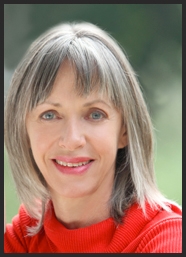
Northwestern Psychoanalytic Society and Institute
In this feature we interview one of the presidents of our component societies. This News Brief we feature the Northwestern Psychoanalytic Society with an interview by Managing Editor, Lisa Halotek and their President, Caron Harang, LICSW, FIPA.
Lisa Halotek: Caron, first off let me say what a pleasure it is to be interviewing you. We first met at a CIPS Conference in Los Angeles over five years ago when you were the Editor of the CIPS News Brief. Over the weekend conference we got to know each other and you invited me to write an article for the News Brief about my experience at the conference. I soon became your Assistant Editor and we worked together on the News Brief for nearly four years until you left to become the President of NPSI. Maybe you could begin by telling our readers more about your journey to become a psychoanalyst and how you eventually came to your decision to run for President of NPSI.
Caron Harrang: Lisa, I recall very well our meeting at the 2012 CIPS Clinical Conference in our small group facilitated by John Lundgren. It was a very creative group experience resulting in, among other things, the opportunity to work with you on the News Brief. Those years of producing the News Brief gave me a way of getting to know you and other analyst colleagues throughout the United States. Being able to shift my view back and forth between the macro and micro level of operations helped me to understand what are common concerns within all psychoanalytic societies and what are the unique challenges within my local society. I suppose this is one meaning of what Bion referred to in his concept of "binocular vision" or that capacity to think about phenomena from more than one perspective. What I've discovered in the process is that psychoanalysts are a passionate group of men and women, intensely interested in their work and eager to share their thinking and, in most cases, open to learning from one another. This discovery of the nature of the profession as a group speaks to part of my motivation to run for President of NPSI. Before I say more about that, let me answer the historical part of your question as to my path toward becoming a psychoanalyst. A path, I might add, that continues to unfold in interesting and challenging ways.
During my adolescence I was keenly involved in equestrian activities and studied what's called conformation or the relationship between a horse's anatomy, movement, and temperament. As I learned about the link between physical structure and personality with my horses I could see that the same thing applied to humans. Later in college when I studied psychology and discovered Reich's work on character analysis it made complete sense to me how unconscious aspects of emotional experience are reflected in how a person expresses him or herself verbally and in their movement signature. This orientation toward the interrelatedness of psyche and soma led me to train first as a bioenergetics therapist (New York Society for Bioenergetic Analysis). Interestingly, it was one of my bioenergetics supervisors, Vivian Guze, who recommended that I read Melanie Klein's The Psychoanalysis of Children because she felt that Klein's descriptions of unconscious mental life and the way she spoke to her patients was so oriented to the body. The other book Guze recommended as part of my training in bioenergetics was Countertransference by Harold Searles.
To show you what a profound influence these recommendations had on me, I'll tell you that some years later Harold Searles became my first psychoanalyst supervisor. Furthermore, when I entered psychoanalytic training in 2003 it was at an institute oriented toward British object relations theory.
Getting back to your question about taking on a leadership role and becoming President, it is very much tied to my experience in CIPS. In 2008 Marianne Robinson put my name forward to then CIPS President Rick Perlman as someone who might serve as Recording Secretary. It was in the last year of my candidacy and I was thinking about how it would feel to graduate and all of a sudden have less contact with teachers, supervisors, and candidates. Anticipating that post-partum feeling even as I was eager to graduate motivated me to accept Rick's invitation to join the CIPS Board as Recording Secretary. I will add that his warmth and welcoming attitude to my taking a more active role in the broader psychoanalytic community was also a key factor. I served in that role for two years (2008-2010) and then became a director on the NPSI Board. Working on the Board and attending monthly tele-meetings during Rick's terms as President and then under Leigh Tobias's leadership for another two terms followed by Randi Wirth's term taught me a lot about different styles of leadership and how a healthy workgroup can function. It's also a board where initiative and good ideas are always valued and this too gave me the hutzpah, if you will, to think I might be able to accept the responsibility of running a board meeting and making leadership decisions in my local Society. But how it actually came about at NPSI is that the now Past President, David Jachim, said when he accepted the nomination to serve that he'd only do it if someone else agreed to accept the nomination after his term was up. It was a politically savvy move on his part to ensure succession and I figured "why not" since I had two years to learn from him and warm up to task. So, that's how it happened and I have to say, I'm very glad that events have unfolded as they have such that I can serve as President at NPSI and continue on the CIPS Board, which provides a cushion of continued collegial contact and support, actually, in both roles.
LH: Can you tell our readership about the history, membership and the culture at NPSI? I remember working on the spring issue of the News Brief and being most impressed when I saw in the NPSI News section just how many of your members were presenting at the IPA Conference in Boston!
CH: Lisa, I was impressed too when I realized that over half of our analyst members and quite of few of our candidates were giving individual or panel presentations at the 49th IPA/23rd IPSO Congress this past July. We were also proud that one of our senior candidates, David Parnes, received the 2015 IPSO Writing Award for North America with his paper, "On growth, a gift and goodbyes: initial thoughts on a termination." One of the reasons we have quite a few good writers, in addition to individual interest and talent, is that we focus so much on writing in our psychoanalytic training. Beginning with infant observation and continuing in clinical seminar and supervision of control cases, candidates are expected to write-up detailed process notes on their observations for presentation to faculty and training supervisors. Graduation from the Institute includes presentation of a major theoretical and clinical paper to NPSI colleagues and invited mental health professionals. We also sponsor monthly scientific meetings where analyst and candidate members present original papers or written commentary on landmark psychoanalytic papers. Then, too, many of our members submit and are chosen to present papers at our biennial International Evolving British Object Relations (EBOR) conference. Last, but not least, in the past few years we've developed a very good newsletter called Selected Facts (Maxine Nelson, Managing Editor) that gives members opportunities to write and publish their ideas. Taken together these activities seem to have created a psychoanalytic culture at NPSI in which expressing one's ideas through writing is highly valued. Moreover, it is generally recognized among colleagues here that psychoanalytic writing and presenting is a means of finding out what one thinks and facilitates the ability to communicate ideas clearly.
In terms of our roots, NPSI was founded in 1999 by a small group of psychoanalysts interested in establishing a training program for individuals seeking advanced education in psychotherapy and psychoanalysis from a British object relations perspective. The initial Board of Directors, when it began as an IPA sponsored study group, included Maxine Anderson, Austin Case, Elie Debbane, Theodore Dorpat, Kenneth King, Sid Perzow, Marianne Robinson, and Stephen Rush. The initial study group was named the Center for Object Relations (COR). As the group continued, two distinct directions for growth emerged. In time, these visions for growth evolved into separate organizations. COR continued to educate psychotherapists focusing on the application of psychoanalytic ideas to work with families. The training center for future psychoanalysts and psychoanalytic psychotherapists developed into NPSI.
As is customary with groups seeking IPA affiliation, the early years of NPSI's development (1999-2004) were overseen by a sponsoring committee consisting of training analysts Brian Robertson (Chair), Theodore Jacobs, and Ernest Lawrence. In 2001, while NPSI was still a study group, it also formed national alliances by joining CIPS (then called the Coalition of Independent Psychoanalytic Societies). These efforts were richly rewarded when NPSI was granted full component society status by the IPA at its biennial congress in Berlin (2007).
So, as you can see NPSI is a relatively young, small Society. Nevertheless, it enjoys a unique position in North America being one of only two Institutes in the United States, PCC being the other, specializing in psychoanalytic education from a British object relations perspective.
LH: How many members and how many candidates does NPSI currently have?
CH: It might surprise readers to learn that we have currently just 22 full members and 10 candidates. We also have 30 community members comprised of psychoanalysts living in other parts of the world, psychotherapists, and the general public who support our mission and want to participate in our community through attending scientific meetings, workshops, and our biennial International Evolving British Object Relations (EBOR) conference.
LH: What do you see as the biggest challenge NPSI faces in the coming year?
CH: There is one big challenge NPSI faces and it touches every aspect of the Society and Institute. Our 2014-15 strategic plan identifies growth of the organization as our number one priority. This means growth on the Board of Directors by cultivating succession and identifying a President-Elect and adding at least one full member director and one community member director. In the Institute we have a capable new Director of Training, Dana Blue, who needed to step down from several other positions when she was elected to her office including Dean of Students and co-chair of Admissions. To date both of these positions are unfilled. In a small Society (and maybe in larger ones too) a handful of people do most of the work of running the organization and the danger is always fatigue, no matter how much passion and enthusiasm some individuals bring to the table. This shortage of individuals willing to roll up their sleeves and pitch in, and the misperception on the part of some members that their input is not needed for us to thrive, affects the ability of the organization to conduct effective outreach and attract new candidates to psychoanalytic training, which is the heart of our mission.
On the other hand, I am very proud to be able to say that NPSI applied for and has been granted provisional one-year accreditation by ACPE or the Accreditation for Psychoanalytic Education. This is a huge accomplishment for any institute, and one we hope to convert to full accreditation in 2016 by requiring board certification and providing a means to achieve it for all of our training analysts.
In the past year I have also formed an Advisory Council whose mission it is to provide non-binding informed guidance to the Board of Directors for the purpose of enhancing the organization's development and governance. In September the Council met with the Board for the first time and discussed strategies for working together in the year ahead. Members of the Council have expertise in non-profit tax accounting, mental health law, educational policy and management, financial planning, social media, distance learning technology, and development. It is the sort of collaboration we've not sought before and I am inspired by the talent we have on the Council and hopeful that we'll be able to move forward on key projects with this additional support. For example, we are starting to research and develop the capacity for distance learning so that our instructors can effectively co-teach with colleagues from other institutes throughout the country. In time we'd like to be able to record non-confidential portions of our scientific meetings and workshops making them accessible to colleagues via podcasts and audio or video recordings. Of course all of this takes financial resources and human resources, both of which are valuable commodities. At the same time, being a small Society leaves plenty of room for innovation and creativity for those who do step forward and contribute. For example, some months ago it was uncertain if we would be able to continue producing our biennial International Evolving British Object Relations Conference (EBOR) until one of our members, Rikki Ricard, after reading Mark Solms's paper on "The Conscious Id" was motivated to see if he would agree to be one of our plenary presenters. When Solms accepted our invitation that was all she needed to quickly form an organizing committee full of enthusiasm for the EBOR 2016 theme ("The Feeling Mind and Lived Experience: Clinical Transformations in Psychoanalysis") and continuing one of our most successful outreach efforts.
So, in spite of the considerable challenges we face, I'm encouraged by the efforts of those who are working hard at NPSI to transform our small Society into a healthy sustainable organization devoted to supporting our members, offering outstanding psychoanalytic training to mental health professionals, and educating the general public about psychoanalysis.
LH: I think our readers will be inspired after learning about all that NPSI is involved with especially given the size of your institute. Your EBOR Conference is growing in recognition and so is your Society. I can imagine that you're also an inspiring President, Caron. All the best to you and your colleagues at NPSI!
CH - Thank you Lisa for your well wishes and for taking the time to conduct this interview. In terms of inspiration, I'd like to end with a quote from Vaclav Havel that sums up my attitude toward leadership when he says, "Hope is a state of mind, not of the world. Hope, in this deep and powerful sense, is not the same as joy that things are going well, or willingness to invest in enterprises that are obviously heading for success, but rather an ability to work for something because it is good." This sentiment described Havel's attitude toward his work with and for the Czech people after the fall of Communism as they struggled to regain a meaningful democracy. It also describes my feeling about working to foster the growth and development of our relatively young psychoanalytic society and institute.
Finally, I'd like to invite any CIPS member who's curious about what we're doing or who wants to join our community to contact me at caron@caronharrang.com.
|
| CIPS Study Groups and Seminars | The following is a list of current or planned study groups or seminars. All groups meet via teleconference and are led by CIPS members or honorary members. Please contact Maxine Nelson if you have questions or an idea for a study group you would like to facilitate (maxinenelson1@gmail.com - 425-637-8844).
Currently we have three teleconferences running:
Bion 1, co-led by Marianne Robinson and Maxine Anderson, now in its sixth year, with members from Seattle, NY, DC and Canada.
Enactment, led by Nancy Goodman, with members from NY, DC and Mexico City.
Psychoanalytic Writing Group, led by Eve Golden, MD.
|
| Inter-Society Dialogue | The purpose of this section of the News Brief is to report on instances of collegial contact and sharing of ideas amongst the Societies and Study Groups that make up the Confederation (IPTAR, LAISPS, NPSI, PCC, VPSG and the Direct Member Society) and between our members and psychoanalytic societies or organizations outside of CIPS. In this issue we feature collaboration between an IPTAR analyst and a colleague from the British Psychoanalytical Society. The News Brief invites submissions from any CIPS member with similar planned activities or a review after attending an event illustrative of inter-society dialogue and learning.
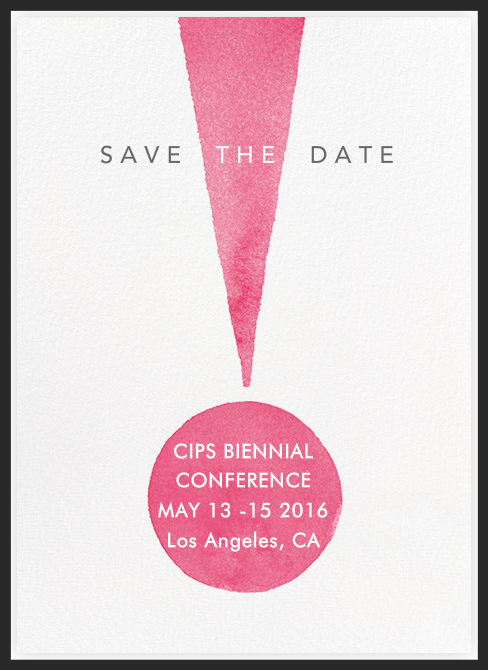
CIPS BIENNIAL CONFERENCE, MAY 13-15 2016
SAVE THE DATE
CIPS BIENNIALCONFERENCE
MAY 13 -15 2016
Los Angeles, CA
More details will be coming in the Winter News Brief!
|
| CIPS Societies News |
Direct Members Society (DMS)
-
Maurice Apprey, PhD, DM, FIPA, has published, "Urgent Voluntary Errands: My first Intuited Sense of Psychoanalysis", in the inaugural issue of the IPA's Digital Psychoanalysis Today. The essay also appears in all 5 languages of the International Journal of Psychoanalysis.
-
Fred Busch, MD, FIPA has recently published: Busch, F. (2015). "Working Through Sarah Polley's 'Stories We Tell.'" Int.J.Psychoanal. 96: 477-491.
-
Busch, F. (2015). "Our Vital Profession." Int. J. Psychoanal. 96: (3). Also as: La nostra professione vitale. Rivista di Psicoanalisi, (2015), LXI, 2, and Revista Brasileira de Psicanalise (2015), 49: 99-120.
His recent presentations include:
-
Busch, F. "Working from the Patient's Perspective." Presentation and clinical workshop, Oregon Psychoanalytic Institute. Portland, OR. March 2015. Also presented for the Berkshire Psychologist/ Psychoanalysts. Stockbridge, MA. May 2015.
-
Busch, F. Clinical workshop for candidates. Vermont New Training Facility, Burlington, VT. April 2015.
-
Busch, F. "Our Vital Profession." Keynote presentation of the meetings of the International Psychoanalytic Association. Boston, MA, July 2015.
-
Busch, F. Working Through. Contribution to a Panel on "Working Through: A Concept in Transition" (Serigo Nick, MD, Chair). Meetings of the International Psychoanalytic Association. Boston, MA, July, 2015.
Since DMS is comprised of individuals from IPA Societies other than one of the CIPS Societies, there is not a website for this group. To join CIPS as an individual member please fill out an application on our website by clicking here: DMS Membership Application Form.
Institute for Psychoanalytic Training & Research (IPTAR)
-
Nuar Alsadir, PhD, became a licensed psychoanalyst and opened an office in Tribeca. She was made a fellow at The New York Institute for the Humanities. Nuar presented "Laughter in the Analytic Setting" as a part of IPTAR's Friday Night Papers series. She read her poetry and spoke at "The Creative Unconscious: A Psychoanalytic Poetry Festival" which took place at The Freud Museum in London on September 19th. She also gave a reading and was interviewed by psychoanalyst Ken Robinson in a related event, "The Creative Unconscious: A Psychoanalytic Poetry Pop-Up" at The Scottish Poetry Library in Edinburgh on September 20th.
-
Steven Ellman, PhD, FIPA, published, "Traversing Narcissistic Pathways; From Freud to the Present Times" in Psychoanalytic Inquiry, 34, 1-14, 2014; as well as an article in the First English Edition of the Caliban, Latin American Journal of Psychoanalysis Vol.13 No.1 2015. He was the main discussant of the Brain, Mind and Body conference at Mount Sinai Hospital, New York City, sponsored by PEP Web and various societies, and discussant, with George Makari, of his book Revolution in Mind., published, "Traversing Narcissistic Pathways; From Freud to the Present Times" in Psychoanalytic Inquiry, 34, 1-14, 2014; as well as an article in the First English Edition of the Caliban, Latin American Journal of Psychoanalysis Vol.13 No.1 2015. He was the main discussant of the Brain, Mind and Body conference at Mount Sinai Hospital, New York City, sponsored by PEP Web and various societies, and discussant, with George Makari, of his book Revolution in Mind.
-
Vivian Eskin, PhD, presented a paper at the Boston IPA Meetings 2015 entitled, "The Impact of Infant Observation on the Treatment of a Dying Patient."
-
Laurie Hollman, PhD, has a new book coming out entitled, Unlocking Parental Intelligence: Finding Meaning in Your Child's Behavior. It is helpful for analysts who work with adults who are parents; infant, child, and adolescent therapists, and therapists who are parents. Psychoanalytic Institutes are using it for their child and adolescent psychotherapy programs.
- Ben Kafka, PhD, will be giving a lecture in October at the Chicago Center for Psychoanalysis titled, "The Grand Unified Theory of Unhappiness" and another in November at the Centre Pompidou titled "The Analog Unconscious."
- Orna Ophir, PhD, had her book, Psychosis, Psychoanalysis and Psychiatry in Postwar America, published by Routledge in May 2015. She gave three presentations at the IPA Congress in Boston: "Lost in translation - Teaching Infant Observation via Skype in China"; "Training in a Foreign Country - Pains and Growth"; and, "Klein in America - the Marginalization of Melanie Klein in America, 1924-2009."
- Karen Proner, MA, FIPA, published, "To Look into the Eyes of an Infant: Bion's Fear of Dying" International Journal of Infant Observation Vol 16. She was a Member of the IPA Working Group on Family and Couples Psychoanalysis, and participated in the following panels, One Plus One Makes Three: in a panel Exploring New Modes of Couple and Family Psychoanalysis with New Family Structures in the Light of New Analytic Theory, 2015 Boston IPA Congress; Learning from Experience, Teaching from Afar: Losses and Gains in Translation, participant in a panel on teaching infant observation to students in China, 2015 Boston IPA Congress; If We Don't Do It, We'll Have to Separate: Coming out of the Ban of Silence to Catastrophic Change. Discussant and teaching faculty: Psychoanalysis with Families and Couples, Perspectives around the World, April, 2015, IPA Fepal Conference in Buenos Aires.
- Ellen Sinkman. LCSW, FIPA, published, "Heroines and Mythology of Contemporary Girls," in, Myths of Mighty Women: Their Application in Psychoanalytic Psychotherapy. Eds. Richards, A. K. and Spira, L. London: Karnac, 2015. Reviews of her book, The Psychology of Beauty: Creation of a Beautiful Self (2014, Jason Aronson) appeared in
Journal of the American Psychoanalytic Association, February, 2015; Psychoanalytic Quarterly, July 2015; and International Journal of Applied Psychoanalytic Studies. Her exhibit entitled, "Beauty," can be viewed in the Virtual Psychoanalytic Museum.
-
Neal Vorus, PhD, FIPA, became a Fellow at IPTAR. On Sunday, September 20, 2015, at the Freudian Lounge of the Contemporary Freudian Orientation he presented, "Implications of the Interpsychic Turn in Contemporary Freudian Theory." The talk focused on two interrelated trends in recent psychoanalytic theory and practice: 1) a growing emphasis on the "interpsychic" dimension of the clinical situation, for example unconscious/preconscious interaction processes that exist alongside the verbal interchange of patient and analyst; and 2) a movement in the conceptualization of therapeutic action from an emphasis on structural change through specific interpretive insights toward an emphasis on expanding the space for potential meaning through a continuous dyadic interpretive process. The implications of these emerging trends for a contemporary Freudian theory of therapeutic action were considered, both conceptually and clinically.
Los Angeles Institute & Society for Psychoanalytic Study (LAISPS)
- LAISPS supervising and training analyst Beth Kalish, PhD, FIPA, was elected to be an IPA Representative for North America. Beth will remain on the CIPS board as an Assistant to the President. Claudia Eskenazi, PhD, replaces Beth as the new Director to CIPS. Terrence McBride, PsyD, FIPA continues in his role as Vice President of the Confederation of Independent Psychoanalytic Societies (CIPS) as does Director, Lisa Halotek.
- LAISPS members congratulated two new supervising and training analysts Steven Isaacman, PsyD, FIPA, and Susan Jay, PhD, FIPA at its annual convocation in September. Also at this meeting Lucia Tripodes, PhD, Irene Schweitzer, PsyD, Craig Wagner, PhD and Lanning Melville, PsyD where congratulated for completing their membership papers and were promoted to full membership status.
- On October 24th Howard Levine, PhD, from the Massachusetts Institute for Psychoanalysis (MIP) and a member of the faculty at the Psychoanalytic Institute of New England East (PINE) presented a day-long workshop on working with primitive patients entitled "Beyond Neurosis: Clinical Implications of the Work of Wilfred Bion and Andre Green." He presented two papers, "Freud's Theory of Representation" and "Clinical Representations of Unrepresented States" followed by a discussion with LAISPS members Tom Helscher, PhD, FIPA, and Lisa Halotek, PsyD, FIPA. Marc Sanders, PhD, FIPA, presented a case. The event was held at Covel Commons on the UCLA campus.
- LAISPS is pleased to announce the appointment of Carole Morgan, PhD, FIPA, to Chair of the Education Committee.
- LAISPS will continue its community outreach programs, which include Lynn Goren, PhD, FIPA, as Chairperson of The Professionals Affiliated with LAISPS, Billie Weiser, MFT, as Chairperson of The Affiliate Society, and Victoria Curea, MFT, as Chairperson of The Student Society.
- On going courses for the mental health community this year include, the Trauma Studies Program under the direction of Mariann Hybels Miller, PhD, FIPA the Psychoanalytic Psychotherapy Program under the direction of Steve Isaacman, PsyD, FIPA, and Roberta Mirisch, LCSW, the Eating Disorders Program under the direction of Susan Krevoy, PhD, FIPA and Victoria Curea, MFT, and the Infant, Early Childhood, and Parent Psychotherapy Program under the direction of Beth Kalish, PhD, FIPA, Jessica A. Lehman, PsyD, FIPA, and Kathleen Campbell, PsyD.
For more information on all LAISPS events visitwww.LAISPS.org
Northwestern Psychoanalytic Society and Institute (NPSI)
- Save-the-Date for EBOR 2016 on October 28-30. (See additional details in this issue of the News Brief shown above.)
- The NPSI Institute is pleased to announce that it has been granted provisional one-year accreditation by the ACPE or the Accreditation Council for Psychoanalytic Education (July 2015). Although the Institute received high marks in many areas the lack of a policy requiring board certification in psychoanalysis for our training and supervising analysts was cited as the main reason for provisional accreditation. The Institute is evaluating its policies and will seek full accreditation at the end of the provisional period provided a means can be found for all training analysts to become board certified.
- The Institute is also launching a nine-month certificate course in "The Fundamentals of Psychoanalysis" (October 2015 - June 2016). The overall objective is to acquaint participants with Freud's fundamental articles, which are the bedrock of psychoanalysis and the basis for all theory and technique. Each monthly unit will feature one concept or topic, each with its own objectives. Over the year, participants will see the unconscious come alive through studying its manifestations, such as slips of the tongue, neurotic symptoms, and dreams. Participants will learn psychoanalytic technique as well as the rationale for making interventions by studying theoretical papers and learning from clinical cases. NPSI analysts and senior candidates are teaching this course.
- Caron Harrang, LICSW, FIPA qualified to become an IPA training and supervising analyst in September 2015. Congratulations Caron!
- David Parnes, LICSW, received the 2015 IPSO Writing Award for North America with his paper, "On Growth, a Gift and Goodbyes: Initial Thoughts on a Termination." The award was presented to David in Boston at the 49th IPA/23rd IPSO Congress this past July.
- NPSI is sponsoring a two-day workshop titled, "Reconsidering the Contributions of Donald Winnicott and Wilfred Bion: Then and Now" featuring Joseph Aguayo, PhD, FIPA (PCC) on February 5-6, 2015.
- The Friday evening program features a public lecture by Joseph Aguayo titled, "Winnicott and Bion: Irreconcilable Differences?"
- Saturday morning includes a panel discussion on "Bion's Italian Seminars: Facilitating and Learning from the Group Experience." The idea for this panel originated in a teleconference study group held in 2015, in which panel members Caron Harrang, LICSW, FIPA and Maxine Nelson, LICSW, FIPA were participants, and which was facilitated by featured presenter Joseph Aguayo. The group read and discussed the nine seminars included in Wilfred R. Bion: The Italian Seminars (Karnac: 2005).
- Bion conducted a series of clinical seminars between 1967 and 1979 (Los Angeles, 1967; Brasilia, 1975; Tavistock, 1976-79; Rome, 1977 and Sao Paolo, 1978) in which he transmitted ideas developed in his epistemological writings of the 1960's vis-à-vis his exemplification of "being in the moment" with a live audience. Additionally, the organizers are hoping to evoke Bion's way of working with groups. Thus, like a Matryoshka doll, this panel presentation will be a group experience intended to evoke not only a sense of what it was like to participate in the 2015 Italian Seminars study group, but also the experience of the Italian clinicians who participated in the 1977 seminars in Rome facilitated by Bion.
- Saturday afternoon Joseph Aguayo will facilitate a Clinical Seminar exploring clinical material presented by an invited clinician. Discussion will include attention to how the case might be viewed from a Winnicottian or a Bionian perspective.
For additional information or to register contact NPSI Administrator Hollee Sweet admin@npsi.us.com
For more information on all NPSI events visit www.npsi.us.com.
Psychoanalytic Center of California (PCC)
- A party was held on September 27, 2015 to welcome the following seven candidates to the core training program; Philip Lance, PhD, Deborah Miora, PhD, Margarita Perez, LMFT, Helaine Ross, LMFT, Alice Segars, LCSW, Laura Spain, LMFT and Daria Spino, LMFT.
- PCC members and candidates welcomed the Psychoanalytic Psychotherapy Program at an orientation on October 4, 2015. This year the PPP has one first year class on the Westside and two second year classes in both Pasadena and the Westside, bringing the total number of PPP students to 15.
-
Patty Antin, PhD, FIPA, Janis Goldman, PhD, FIPA, Jennifer Kunst, PhD, FIPA and Leigh Tobias, PhD, FIPA have all recently advanced to become PCC Training and Supervising Analysts.
- Meme Rhee, PsyD, FIPA has completed her training and advanced to member status. She presented her paper "Learning From Emotional Experience" at the IPA Congress in Boston in July.
- Jennifer Kunst, PhD, FIPA, presented her paper, "Outreach in Psychoanalysis: The Hundred Foot Journey" at the IPA Congress in Boston in July. On September 11, 2015, she gave a talk, "Wisdom From The Couch: A User-Friendly Translation of the Psychoanalytic Model" to the San Gabriel Valley Psychological Association.
- Jon Tabakin, PhD, FIPA was a panelist on the NAPsaC Clinical Workshop at the IPA Congress in Boston this past July.
-
The PCC newsletter, Phoenix Rising published our summer edition in memory and to honor James Grotstein, MD, FIPA. There were tributes and memories from people worldwide.
- A memorial service for Dr. Grotstein will be held on Sunday, November 8, 2015 at the University Synagogue in Brentwood. RSVP to JamesSGrotsteinMemorial@gmail.com
- Our Fall newsletter will similarly honor Bonnie Engdahl, PhD, FIPA, a longtime member of PCC. There will be a memorial service for Bonnie on October 10th at the home of PCC member Cathy Shankman, PhD, FIPA.
- PCC will offer four very exciting conferences for the 2015-2016 year:
On November 7, 2015, the 20th Annual Tustin Lecture will feature Alina Schellekes, PhD of Israel. A daylong conference will be held at the NCP Auditorium.
The 6th Annual Wilford Bion Conference will feature Didler Houzel, MD of France. It will take place on December 5, 2015 at the NCP Auditorium from 8:30 am to 4:00 pm.
The Annual Melanie Klein Lectureship with Catalina Bronstein, MD of London will be held on January 27, 2016, from 8:30 am to 4:00 pm at the NCP Auditorium.
On May 21, 2016, Albert Mason, MB, BS, PsyD, FIPA, will present "Anatomy of an Interpretation" at the NCP Auditorium from 8:30 am to 12:00 pm.
- PCC's Outreach Committee has inaugurated a Clinical Café. Graduate students and interns from Los Angeles area schools and training programs are invited to hear clinical material from a PCC member or advanced candidate. Lunch and a group discussion follow this free talk. The first Clinical Café, April 18, 2015, featured Christopher Burr, PhD, FIPA discussing treating a patient from another culture. On June 20, 2015, Elisabeth O. Clark, PhD, FIPA, presented her paper, "For There To Be An 'Us,' There Must Be A 'Them': Disenfranchisement and Projective Identification."
- The PCC Extension Committee has introduced a series of evening talks. In May Jeanette Gadt, PhD, FIPA presented a two evening exploration of the work of Ann Alvarez of London, prior to the conference featuring Ann Alvarez. The Fall offering will feature a talk by Nancy Wade, PhD, on eating disorders.
For more information on all PCC events visit www.psycc.org.
Vermont Psychoanalytic Study Group (VPSG) News
- This past summer four candidates from the Vermont Psychoanalytic Study Group were pleased to make a presentation at the full IPA Congress in Boston. The title of their Small Discussion Group was: "New Tools for New Times: Training to be Psychoanalysts in our Nascent Vermont Psychoanalytic Study Group - The Profound and Creative Role of Writing 2 page papers to our Training". The four candidates who participated in the presentation were Teresa Canal Meyer, PhD, Johanna Boyce, MSW, Sandra Howell, MS and Susan Alnasrawi, LCMHC, all presently 4th year candidates at VPSG. The presentation was held on Saturday, July 25 and was very well received by those in attendance and was very gratifying for those who worked to create it.
- On Friday, September 25, VPSG hosted a combined members and candidates' Friday Forum with invited guest, Lewis Kirshner, MD. Dr. Kirshner is a seasonal resident of Vermont and is a Training and Supervising Analyst at the Boston Psychoanalytic Society, as well as a Clinical Professor of Psychiatry at Harvard Medical School. The title of his presentation was "A Perspective on Intersubjectivity."
For more information on all VPSG events visit http://www.vermontpsychoanalytic.org
|
|
|