|
|
|
|
Subscribe
 |
|
|
Dear (Contact First Name),
 | | Lisa Halotek, PsyD, FIPA |
In this Winter edition of the CIPS News Brief we are excited to bring you the first installment of a five issue feature called Institute Spotlight. The Special Report section will feature an interview with the Presidents of each of our component societies and we begin alphabetically by institute with Richard Reichbart, PHD, FIPA of IPTAR. The Institute Spotlight is intended to give the CIPS community an inside look at the leadership and culture of each of our member societies, large and small. President Reichbart's interview provides an inside look at the largest institute within CIPS and he embraced the interview process with candor.
CIPS President Randi Wirth reports on the recent face-to -face meeting of the CIPS board during the ApsaA Conference in January. Her term as President is winding down and we are extremely grateful for her leadership and devotion to CIPS, which has grown in popularity and increased member participation during her tenure.
 | Claudia Eskenazi, PsyD
|
Excitement is building around the upcoming IPA Congress in Boston, July 22-25, and we feature several articles with important information. Maureen Murphy's report from NAPSAC begins with news of a clinical workshop that NASPSAC will be sponsoring at the IPA Congress for the first time. There is also an article by Fred Busch on more details about what the Congress has in store including some paper topics. IPA elections are also taking place this month and information on how to vote is included. (Two CIPS members are on the ballot as Candidates For The Board of Representatives For North America: Beth Kalish of LAIPSPS and Arlene Richards of IPTAR.)
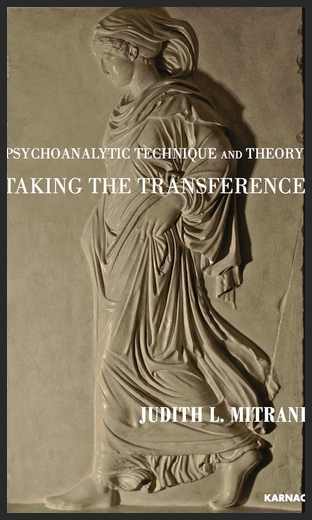
Honorary CIPS member, Ellen Handler Spitz, recently published Magritte's Labyrinth and Associate News Brief Editor, Claudia Eskenazi has written a review of her ebook which is featured in Publication News along with information about two new publications, Taking the Transference and Frances Tustin Today from our prolific PCC members, Judith Mitrani and Theodore Mitrani.
If you are in need of inspiration, we encourage you to read the reviews on the 10th Annual Evolving British Object Relations Conference. We were amazed at the depth and assortment of activities that this conference, co-chaired by Dana Blue and Caron Harang of NPSI had organized. PCC President, Leigh Tobias, attended this conference in Seattle and shares her thoughts on her experience.
We want to thank everyone who contributed news for this issue. We are grateful to our wonderful news staff: Susan Mitchell (PCC), Jared Russell (IPTAR & DMS), Joseph Davis (LAISPS), Doug Dennett (VPS) and Caron Harrang (NPS). Here's to the beginning of a new year filled with growth and fulfillment for all.
Lisa Halotek, PsyD, FIPA
enewseditor@cipsusa.org Claudia Eskenazi, PsyD Assistant Managing Editor |
|
|
|
|
|
|
CIPS Board of Directors
|
Officers:
* President: Randi Wirth (IPTAR)
* Past-President: Leigh Tobias (PCC)
* Vice President: Terrence McBride (LAISPS)
* Treasurer: Sandra Borden (IPTAR)
* Recording Secretary: Marilyn Rifkin (IPTAR)
* President Elect: Phyllis Sloate (IPTAR)
Directors:
Direct Member Coordinator:
* Batya Monder bmonder@gmail.com
Membership Coordinator:
* Sandra Wilder-Padilla dr.wilderpadilla@gmail.com
Directors represent the interests of their local society and institute on the CIPS Board of Directors and attend monthly teleconference meetings chaired by the President. The Direct Member Society Coordinator represents the interests of our individual direct members and also attends board meetings. The Membership Coordinator processes the application of those applying for direct membership, welcomes new members, and coordinates with the Webmaster to make sure our member roster is accurate and up to date.
Any candidate or member may attend a CIPS Board meeting (except when the board is in executive session) to learn more about the organization and how to become more involved. Contact your local society director(s) if you are interested.
|
|
Letter from the President
|
 | | Randi Wirth, CIPS President |
It has been a very busy winter for CIPS and there is much to report to our membership. The 2015 APsaA Winter Meeting in New York City presented a timely opportunity for many of our CIPS members to reconnect. The CIPS Board held a very productive face-to-face meeting where we were able to look back at past successes and plan new programs for the future.
The CIPS Book Series continues to build on its successful foundation with several publications in progress. We are extremely proud of the stellar reviews and positive response we continue to receive. We encourage our members to get involved, and to that effect, we are holding a meeting via teleconference with our series editors, Rick Perlman, Phyllis Sloate and Beth Kalish. Interested members will have the chance to learn how they can get involved. The meeting's date and time will follow.
The Teleconference Series remains extremely popular with groups that have been running continuously for several years. Particularly in demand was Dr Eve Golden's Writing Group and we are happy to announce that new writing groups will be forming in the Fall of 2015. The Board also discussed a variety of other possible topics to be developed.
The CIPS Board reflected on our two-decade history of Clinical Conferences and the importance of the small clinical group experience which sets these meetings uniquely apart from other psychoanalytic conferences. The 2014 Conference in New York City, with its theme of Trauma, Destruction and Transformative Potential was particularly poignant and there has been discussion of continuing the small group process via teleconference. The success of that weekend led to the decision to publish a book on Trauma based on ideas stimulated at the conference. It will be part of the CIPS Book Series under the editorship of Terry McBride and Maureen Murphy.
The Board is also pleased to announce that the next Clinical Conference will be held
May 13-15, 2016 in Los Angeles. Plans are in the works, so mark your calendars!
CIPS and its Public Policy Committee will once again be a sponsor of the 5th International Summit on the Future of Health Privacy to be held at Georgetown University on June 3-4, 2015. Co-hosted by PatientPrivacyRights.org and the O'Neill Institute for National and Global Health Law, the Summit is critical for advancing the goals of awareness, education, progress, and positive outcomes on important issues related to protecting patient privacy. The erosion of patient privacy rights has been a focus of the CIPS Public Policy Committee and they are committed to focusing on issues which impact our clinical practices.
The Board is busy planning our next reception to be held at the 2015 IPA Congress in Boston this summer. It is always a great opportunity for members from across the country to socialize and meet new friends and colleagues. Please be sure to let us know if you are presenting at the Congress, by emailing me at randiwirth@gmail.com. We would like the opportunity to feature all participating CIPS members in the Spring issue of the CIPS News Brief.
Warmest Regards,
Randi Wirth, PhD, FIPA
|
|
|
Maureen Murphy, NAPsaC Chair, reports on the following activities reflecting NAPsaC's growing involvement as the North American regional IPA association.First, on behalf of the NAPsaC Board, I wish you a peaceful, satisfying and creative New Year. I'm pleased to tell you that our request for time during the IPA 2015 Congress for a NAPsaC Clinical Workshop was approved. We have been assigned Tuesday, July 21 from 9am - 5:30 pm.- please mark that date in your plans for the Congress. The NAPsaC Clinical Workshop format is adapted from the CIPS/NAPsaC Clinical Conference (Spring, 2014) and FEPAL Conference (Fall, 2014) Clinical Exercises Model. Using verbatim clinical material, the workshop is an exercise of spontanous dialogue between different minds "dreaming' the same material. A panel of three analysts from different geographical areas will hear the material from two different cases for the first time with the audience and associate to the material as freely as possible. Inter regional participants including Francesco Castellet (Italy); Serge Frisch (Switzerland); Abigail Golomb (Israel); Ruggero Levy (Brazil); and Monica Vorchheimer (Argentina) will join NAPsaC analysts on the panel. The function of the workshop is to provide an opportunity for discussion among the colleagues in an atmosphere free of supervisory dynamics. Specifically, a series of anonymous cases will be presented by a reader who is not the treating analyst. Following the response of the panel, the attending participants will be invited to respond. This format is designed to give all of the participants an opportunity to observe how the mind of the analyst works in "real time" and as close to an actual session as possible. In addition to NAPsaC members, participation in the Workshop is open to candidates and non-IPA members who register for the Congress. To permit the opportunity for substantive dialogue, the workshop is limited to 50 people so I encourage you to please sign up early. All International Psychoanalytical Association members in North America are automatically members of the North American Psychoanalytic Confederation. NAPsaC is a confederation of IPA component groups, formed in 2003, to enable the North American societies of the IPA to communicate with each other, to collaborate with each other on projects of mutual interest, and to facilitate decision-making by the component groups of North America in response to the administrative and governance requirements of the IPA.NAPsaC Officers: Maureen Murphy (Chair); Beth Kalish (Co-Chair); Leigh Tobias (Secretary); Sandra Borden (Treasurer)
Board of Directors: Andrew Brook (CPS), Caron Harrang (NPSI),
Beth Kalish (LAISPS); Mark Smaller (APsaA), Leigh Tobias (PCC), Marcia Levy Warren (CFS), Maureen Murphy (PINC), Steven Ellman (IPTAR)
Alternate Directors: Harriet Wolfe (APsaA); Louis Brunet (CPS); Paula Ellman(CFS), Randi Wirth (IPTAR) Lisa Halotek (LAISPS); Dana Blue, (NPSI); Andrea Kahn(PCC);
Charles Spezzano (PINC)
|
|
|
The International Psychoanalytic Association's (IPA) 2015 elections are approaching and all members in good standing will be invited to vote at the end of February.
As the IPA website states, "The IPA exists to advance psychoanalysis. It is the world's primary accrediting and regulatory body for the profession, and our mission is to ensure the continued vigor and development of the science of psychoanalysis. The IPA fulfils this mission through a range of activities, and through services to its members. Its activities fall under three broad strategic areas: Professionalism, Promotion and Participation."
If you have not registered as a member on the site you can go to www. IPA.org.uk and do so. The site is filled with interesting and important information. In order to vote you will need to establish a user name and pass word as well as fill out "My IPA" indicating how you would like to receive your ballot.
The slate of nominee's for the primary offices and for the Board of Representatives from North America are as follow:
(Candidates are listed in alphabetical order)
Candidates for President-Elect and Vice President-Elect (to take office in 2017):
Virginia Ungar (Buenos Aires Psychoanalytic Association; for President-Elect); and Sergio Nick (Brazilian Psychoanalytic Society of Rio de Janeiro; for Vice President-Elect)
Candidates for Treasurer:
Andrew Brook (Canadian Psychoanalytic Society)
Arthur Leonoff (Canadian Psychoanalytic Society)
Jonah Schein (APsaA)
Candidates for Board Representative from North America:
Martin Gauthier (Canadian Psychoanalytic Society)
William Glover (APsaA)
Beth Kalish (Los Angeles Institute & Society for Psychoanalytic Studies)
Lewis Kirshner (APsaA)
Peter Loewenberg (APsaA)
Monisha Nayar-Akhtar (APsaA)
Jack Novick (APsaA)
Gunther Perdigao (APsaA)
Arlene Richards (Institute for Psychoanalytic Training and Research)
Graham Spruiell (APsaA)
Drew Tillotson (Psychoanalytic Institute of Northern California)
Gordon Yanchyshyn (Canadian Psychoanalytic Society)
A position statement from the candidates can be found on the website. The results of the election will be communicated to all IPA Societies in June 2015 and formally announced by the President at the time of the Business Meeting at the Boston Congress.
Support your profession and vote!
|
Think Boston for Summer 2015
|
By Fred Busch, MD, FIPA
From July 22nd through July 25th over two thousand psychoanalysts from around the world will be gathering in Boston for the Bi-Annual Congress of the International Psychoanalytic Association. This chance to participate with and hear psychoanalysts from around the world, can be an enriching and fascinating experience. In addition to the usual panels and paper presentations, there will be numerous workshops and a new initiative, "The Boston Groups." These groups will allow participants from all over the world to engage in an online discussion focusing on one of the Congress plenaries prior to the actual congress. The groups will continue to meet during the Congress providing an opportunity to get to know a number of psychoanalysts one wouldn't usually have contact with.
There are two other innovations I'd like to highlight. The first is a special program for residents, graduate students in psychology and social work, and for therapists who have been out of graduate training less than five years. Senor analysts will meet with this group during the Congress to explain, consolidate and further learning and development from the Congress. (There will be reduced fees for this group.)
A second innovation will be a number of panels of leading academic scholars discussing psychoanalytic topics, including The Future of Holocaust Testimonies: Interdisciplinary Perspectives, The Poetics of Boundary Vision: The Case of Boston Poet Anne Sexton, Psychoanalyst as Creative Writer: An Interview and Reading, Psychoanalysis and the Academy, Shakespeare and Psychoanalysis and Objects of Memory.
Of course Boston has world-class art museums, restaurants, music of all sorts, as well great activities for families and history buffs. Boston is two hours from the beaches of Cape Cod, and Tanglewood, the summer home of the Boston Symphony. Close to Tanglewood there are dance festivals and theaters. Boston is also near beautiful vacation spots in Vermont, New Hampshire, Maine and New York City. All of this makes Boston an ideal vacation destination.
Visit the IPA website for preliminary information at: http://www.ipa.org.uk/Congress
Registration and further updates will start in February.
|
|
|
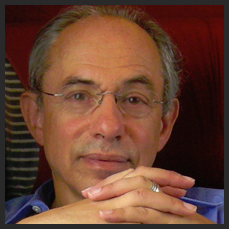
Institute Spotlight: IPTAR
This new feature will run for the next four issues as we focus on each of our component societies with an interview by Managing Editor, Lisa Halotek with the institute presidents. We begin alphabetically with IPTAR and their President, Richard Reichbart.
Lisa Halotek: Let me begin by congratulating you on your new role as President of the Institute for Psychoanalytic Training and Research (IPTAR). In this interview I'm hoping our readers will get a sense of you and for our readers outside of New York, a sense of IPTAR. I'd like to begin by asking what drew you to psychoanalysis and about your training.
Richard Reichbart: Lisa, I am honored by this opportunity to speak to you and the CIPS readership about both IPTAR and my background. My background is somewhat unusual, however, because psychoanalysis was an unexpected and unforeseen career for me.
I was an English major at Yale College and went on to graduate school in playwriting at the University of California at Berkeley, where I was somewhat quickly arrested in the Free Speech Movement of December 1964 (incidentally with Frank Summers, whom I did not know at the time). I then dropped out because my grades were abysmal and I did not want them on my record. However, my draft board was glad to try to draft me -- this was at the time of the Vietnam War, which I very much opposed. So, I was compelled to get back into graduate school at the University of Minnesota, the first place to accept me. Here I helped to organize a group of twenty students who went down South to Fort Valley, Georgia as civil rights workers under the auspices of Martin Luther King's SCLC.
After that summer, I enrolled in Yale Law School with the hope of becoming a civil rights attorney. When I graduated, however, the draft was still interested in me so I got a job working on the Navajo and Hopi Reservations in Arizona as an O.E.O. legal services attorney for Dinebeina Nahilna Be Agaditahe (attorneys who work for the economic revitalization of the Navajo people). This was an occupational draft deferment -- as a result of the intervention of Senator Sam Ervin, later of Watergate fame, who was the principal sponsor of the Indian Civil Rights act.
Both these experiences -- working down South in the Black community as a civil rights worker and living and working on the Navajo reservation -- were transformative in the sense that they taught me how much culture determines one's relationship to the world and one's understanding of causality. The experiences also taught me how a culture can intensely invoke the natural world and its beauty, and how people can interact in ways different from mine. However, at the point when I left the reservation, I was very much at the end of my psychological rope (having fallen madly in love with a Navajo woman whom I lost) -- approaching a psychotic break, so I desperately needed psychological help. I was fortunate enough to find an exceptional psychoanalyst in Denver, who saw me literally for six times a week at the beginning.
This was my introduction into psychoanalysis. I was immediately fascinated and enthralled and decided it would be my career. For years, then, I studied essentially on my
own, using my analyst's work -- he had written prolifically -- as guide and institute,
and following through on almost every reference (from Mesmer to Janet to Freud and on) that he made in his books. In addition, my analyst was a noted parapsychologist, which had not endeared him to the New York Psychoanalytic Institute from which he originally hailed. And so I also self-studied parapsychology.
During this time, I eventually left law entirely, drove a cab, opened an art gallery, obtained a quick M.A. in psychology at the University of Northern Colorado, and then applied to analytically oriented Ph.D. programs in psychology. I also published extensively in the field of parapsychology, including an article about the role of the psychic in the traditional Navajo medical system. Despite this background, I was accepted at the City University of New York's Clinical Psychology Program, a superb psychoanalytically oriented program, run by Steve Ellman and Larry Gould at the time.
After obtaining my doctorate, I attended and graduated from IPTAR, undergoing
a second (and equally wonderful) analysis there. I have now been practicing for almost 30 years in Ridgewood, New Jersey, a suburb about half an hour from New York City, where I treat children in psychodynamic psychotherapy and adults in both psychotherapy and psychoanalysis.
So that is how -- very long way around -- I got into this field.
LH: That's a wonderful example of the circuitous personal journey many of us have as we find our way to this profession. I appreciate your honesty and vulnerability. Your history with the civil rights movement leads me to the recent PEP grant to produce a video based upon the IPTAR Diversity Committee's two Latino Conferences at the New School. Tell our readers about this exciting news and about the culture at IPTAR.
RR: IPTAR is an amazing institution in many ways. It was founded in 1958, in effect one of the spin-offs (after some other fractures) from Theodore Reik's NPAP. For years, it was a small mom-and-pop shop, with a distinct and demanding Freudian orientation, notable on the one hand for challenging Freud on his understanding of female development and on the other, for believing implicitly in Freud's thesis that those with advanced degrees, even outside the mental health field, could and should become psychoanalysts.
Through the years, IPTAR grew like Topsy, so we now have close to 175 psychoanalysts affiliated with our various programs, and approximately 75 candidates. In addition to our original adult psychoanalytic training program, we now have a child and adolescent psychotherapy program, a low-fee clinic, a schools program that services a number of New York City elementary schools, an asylum program, an intern/extern program, an F-1 Visa program that permits candidates from other countries to study with us, a Parent-Infant program in conjunction with the Contemporary Freudian Society, a Socio-Psychoanalytic Program, a Respecialization Program for those without mental health degrees, and a New York State Licensed Psychoanalysts program which permits those with mental health degrees (although not social workers or psychologists) to become licensed as psychoanalysts in New York State in the process of our full psychoanalytic training.
I mention all this, because as a consequence of these changes at IPTAR our candidates and the populations that we treat, have encouraged us to become a more multi-diverse institution. Thus, approximately four years ago, before I became President, I was Chairman of the Diversity Committee at IPTAR, a Committee started by Michael Moskowitz and Jama Adams, which had managed to create a Diversity course for IPTAR but one that only took place in the fourth year, as well as a scholarship for minority candidates named after Enrico Jones, a Black psychoanalyst. Michael had the idea of creating a conference simply entitled Black Psychoanalysts Speak and as a consequence IPTAR first held a conference in May 2012 in which five Black psychoanalysts presented to an audience over half of whom were people of color.
At the same time, I also organized with Chris Christian and one of our candidates, Carlos Padron, a Latin American Conference in conjunction with the Clinical Psychology Department of the New School, which included presentations by Albert Brok and Isaac Tylim. Both of these conferences were huge successes. The following year, we expanded the Black Psychoanalysts conference to have six more Black psychoanalysts, held now not only by IPTAR but by William Alanson White and the Clinical Psychology Department of the New School, with the support of NYU Postdoctoral Program in Psychotherapy and Psychoanalysis. The Black psychoanalysts who participated incidentally were: Jama Adams, Janice Bennett, Anton Hart, Dorothy Holmes, Annie Lee Jones, Dolores Morris, Craig Polite, Cheryl Thompson, Kirkland Vaughans, Cleonie White, and Kathy White.
Chris Christian and Carlos Padron organized another Latino conference, this time entitled "Psychoanalysis in El Barrio" which featured Patrica Gherovici, Chris Christian, Carlos Padron, and Enrico Mujica. Again, both conferences were successes.
What was the next step, after these conferences, and how could we keep the momentum going, in a way that might really effect some change in how we teach psychoanalysis in our institutes, how we recruit candidates of color, and how we embrace cultural differences in our institutes and explore them in transference and countertransference interactions?
Serendipity! At this point, the Psychoanalytic Electronic Publishing Company
(PEP) offered its first grants for producing psychoanalytic videos. We applied for the Black Psychoanalysts Speak group and we won a $19,000 grant to produce a video, which would feature interviews with the Black psychoanalysts as well as their group interactions and parts of the conferences. That video, produced by our videographer, Basia Winograd just came out. We are very grateful to PEP because not only did they give us a free hand but also made the video available without a subscription, which was entirely unexpected. It can be accessed at: http:/goo.gl/S3AEnE
In addition, it's scheduled to be shown at the Division 39 conference in San Francisco in April as a result principally of the efforts of Kris Yi and Ankhesenamun Ball.
The next step of course was for IPTAR to apply this past year for another annual grant, this time for a video based on the Psychoanalysis in El Barrio conference. It did not seem possible that we might get awarded this too, but when the grants were announced last month -- Yes, we had received another $19,000 grant to produce a video about psychoanalysis in el barrio! The guiding force behind this video is Chris Christian, with the help of Michael Moskowitz and Carlos Padron, and the same videographer, Basia Winograd will produce it. So far, it will feature some of the same speakers that appeared at the last two conferences.
These videos suggest the extent to which IPTAR has become a community that attempts to address cultural issues as they affect our psychoanalytic training, our patients and ourselves. In that sense, I suppose there is a dovetailing: my interest in culture has found a home at IPTAR, where I very much enjoy both our candidates and our faculty because they are devoted to making what we do as psychoanalysts relevant to our times. Recently, for example, Jama Adams, Michael Moskowitz, Kathy White and I called a hastily organized and well attended conference just for IPTAR, entitled "Ferguson, Staten Island and the Role of Psychoanalysis" where we had a very open discussion about how and whether our training really addresses what exists for us and our patients in a racially charged environment.
But my role is only an extension of so many of our members and candidates who have worked so hard to make this possible: our Co-Directors of our Clinic, Elizabeth Evert and Anthony Mazzella; the current Chair of our Program Committee Carolyn Ellman; former Presidents Joe Candelmo, Allan Frosch, and Joan Hoffenberg; and the heads of our Child and Adolescent Program: Phyllis Beren and Susan Berger. I could go on -- so many people in so many ways have made our current stance and our current vibrancy possible.
LH: Since you're the first institute President to be interviewed I wasn't sure how this new feature would go but I've enjoyed getting to know you and more about IPTAR so much! I had no idea how large your institute is and I imagine that your position demands quite a bit form you so I'm grateful for your time. In finishing up our interview Rich, what are the biggest challenges you see for psychoanalysis and how can CIPS be of help?
RR: As to the challenges psychoanalysis faces -- what an intriguing question. There are many challenges: how to protect psychoanalysis in the United States as a practice from the attempts by NAAP to pass state psychoanalytic licensing laws (as they have managed to do in New York and New Jersey for example) that lack frequency requirements, thereby minimizing the importance of three or four session per week personal and control analyses in training; how to counter the pernicious practices of insurance companies that persist in non-sensical attempts to limit multiple sessions per week and psychoanalytically based treatment; how to provide more research findings for the effectiveness of psychoanalysis. But to my mind, one of the principle challenges we face in this country arises because we are very quickly becoming a more diverse, more ethnically mixed nation. We need to address these culturally diverse populations in the manner we do treatment, and we need to open psychoanalysis to more people in innovative ways. Certainly, one of the books that I have read, and I think every psychoanalyst should read, that has influenced me greatly is Elizabeth Ann Dantos's Freud's Free Clinics, which shows both the history that existed with Freud and his early followers in Vienna, Berlin, and Hungary to bring psychoanalysis to everyone both in terms of treatment and in educational institutions. In addition, I have been very moved by the China American Psychoanalytic Alliance (CAPA) started by Elise Snyder (on which I was briefly on the Board) which has created a virtual institute to train professionals in China in psychoanalytic psychotherapy -- psychotherapy, educational classes, and supervision all being done by many psychoanalytically informed therapists mostly in the States through Skype(c). This suggests that we need to think more often and more fully about bringing psychoanalysis to people through the use of the computer.
This brings me to the next question with regard to CIPS. I was very involved setting up the CIPS conferences many years ago, the one in Rye, New York, the one in Los Angeles, and then a little less so, one of those in New York City (working principally with Vicki Stevens on how to arrange the facilitators and the groups)-- and I thought the conference format and the give and take with people from other institutes enjoyable and informative. But I do think that there should be more communication so that we know better not only what CIPS is doing but what each institute is doing, how the institute functions, what are its concerns and priorities. To most candidates and members at IPTAR for example, I suspect that CIPS is somewhat distant and its member institutes more enigmas than anything else. As a practical matter, I think CIPS should not assume that its website is sufficient to provide information to candidates and members of its institutes; I think it needs more frequently to address them directly, at least that seems to me to be true on IPTAR's list serve.
CIPS has conferences and wonderful book series, of which it should be proud. But the question seems to me: How can it become more relevant to the issues that I have discussed in this interview, or other issues close to hand at our institutes, and how to provide a means of conversation that goes beyond its book series, and its conferences, its website, in an on-going way? Perhaps this new series of interviews of institute leaders developed by you can substantially contribute to that and lead in just that direction. I very much hope so.
|
| Publication News | |
A Review of Ellen Handler Spitz's Book Magritte's Labrynth
By Claudia Eskenazi, PhD, ATR-BC
Ellen Handler Spitz is a writer, lecturer and scholar who hold the Honors College Professorship of Visual Arts at University of Maryland, where she teaches interdisciplinary seminars in aesthetics, literature, psychology, and the visual arts. She attended the University of Chicago, Barnard College (A.T.), Harvard University (M.A.T.), and Columbia University (Ph.D.). She also studied at the Art Students League in New York; the School of the Museum of Fine Arts in Boston; SUNY; and at the Columbia University Center for Psychoanalytic Training and Research. Dr Spitz has held fellowships, among others, at the Getty Center for History and Art and the Humanities; the Radcliff Institute at Harvard University; the Camargo Foundation in Cassis, France.
The Belgian Surrealist artist Rene Magritte (1898-1967) has left us a body of work that is distinct, wondrous to see but simultaneously mysterious and unsettling. Thinking of those images might be as baffling as waking in the midst of a labyrinth facing the Minotaur or having fallen asleep and awakened in the trenches of Verdun during an artillery barrage. Nothing could have prepared the Continental Bourgeois gentleman for the mechanized slaughters of World War I save perhaps the rats racing about the flooded trenches in which he stood.
World War I destroyed the idea of rational government, leaving behind fragmented political and economic systems. From that fragmented world, Surrealism (1920 +), an outgrowth of the Dada (1915- 1923) movement, produced works of art that deliberately defied reason. Surrealism was a reaction against the destruction of the traditional patriarchal system of monarchial alliances of nations coupled with the pre-Victorian notion of valor that dominated and which they believed was caused by a rational way of thinking, primarily in European politics and culture. One of the goals of Surrealism was to reunite the unconscious and conscious experiences of life so that the dream and fantasy would unite. Thus, the rational world would be in the minds of people not as an absolute reality but as surrealism.
The relationship between psychoanalysis and surrealism has played a greater importance to the art historian than to psychoanalysts. There is very little reference to Surrealism in the psychoanalytic literature compared to the numerous references of Freud in the writings about Surrealism. Many Surrealistic artists had read Freud and had knowledge of his theories including the unconscious, dream theory and repression. For instance, Mundy in his book entitled Surrealism: Desire Unbound cites Freud at least twenty times, cites eighteen of his writings and provides a listing of French translations of his works from 1896 to 1969 (Esman).
Ellen Handler Spitz has created a work of art to "negotiate a labyrinth of paintings by means of tangled psychoanalytic threads." Magritte's Labyrinth analyzes paintings of Magritte through the lens of psychoanalytic thought and personal projections. One could easily contend that this book uses the work of Rene Magritte to demonstrate the psychoanalytic method and the power of psychoanalysis. Like psychoanalysis, the reader may experience frustration, illumination and gratification.
Dr. Spitz has undertaken the task of connecting many of Rene Magritte's painting with psychoanalytic thought and her personal associations. The body of this book is written without chapter numbers and weaves in, out and between aesthetics, art history, visual art, psychoanalytic interpretation, criticism and projection. Psychoanalysis is the means for her exploration.
In analysis, the often disorganized words of our patients mingle with our own reverie as we travel together through the tunnels of our minds to find together a "third space" in the same way we might wander through the halls of a museum noticing themes that appear and disappear.
The author has mirrored the psychoanalytic model of not always pointing out the themes the analyst is observing with the goal of not "stifling the patient." Magritte's Labyrinth is written in a free association style that allows the reader, through the art of Magritte and the spirit of psychoanalysis, to ponder and associate at their own pace.
Exasperation and frustration were my initial response as I began my journey into the work of Magritte and the mind of Ellen Handler Spitz. Magritte's Labyrinth was originally published under the title Museums of the Mind: Magritte's Labyrinth and Other Essays in the Arts (Yale Press, 1994). The current edition, which covers Part 1 of "Museums of the Mind" is only available in e book form. This was my first encounter with an "e book" and I yearned for my familiar habit of caressing and establishing a special relationship with a hand held book. Instead of my comfortable companion I was confronted with a strange object that I did not know how to navigate. Adding to my frustration was my discovery that there were no illustrations of Magritte's paintings on which I could gaze and study. At one point I felt compelled to pull out some of my books on Surrealism, if just to touch, view and taste Magritte by myself. I wanted tosee illustrations of the paintings Professor Spitz was addressing and allow the "magic" of Magritte's art and my relationship to them to be enhanced. The author notes that, for financial and technical reasons, the images were not included and that she feels apologetic. Magritte's art is accessible on the internet and would greatly enhance the readers experience. Nevertheless, Spitz's conviction and sensitivity persuaded me to suspend my own bias. I was resolved to be open to her thesis and to tolerate my own discomfort. Thus, I accepted her invitation to find the space between the reader and the art through psychoanalytic thought. My discomfort was rapidly transformed into a freely suspended state of trust where she, Magritte and I were encased in a new space.
Psychoanalysis allows us to move through our own intrapsychic spaces with the knowledge of our own fragility and resistance to once again know what we have attempted to forget. These are the museums of our mind. The author questions if, as we pass through the museums of Magritte's art, there are links between the "abstract and personal, the paradoxical and the perverse."
Dr. Spitz analyses and associates to Magritte's disjunctive visions of his mother's suicide by drowning when he was 13 years old. The sensitive and critical eyes of an artist and gifted writer explore the labyrinth of his paintings. She notes that we all lose our mothers symbolically. Magritte lost his to maternal depression and suicide attempts before emotionally naked, he is transfixed by the corpse of her reclaimed body from the river clad only in a nightgown. In his art we are permitted to reflect on, project onto and feel his intense attempts to work through this loss. We cannot view his paintings, as they are not presented to us to regard, yet we can feel in her writing the cold, hard and dead essence in his expressions. Handler Spitz summons the reader to consider whether Magritte denied his loss and pain and/or contained his rage while reenacting his drama on the canvas again and again. This she brings to us through the lens of psychoanalysis, her impressive scholarship and her heartfelt sensitivity.
Handler Spitz impels the psychoanalyst to bring her "delicacy, depth, and directness to bear on actual works" (of art) while "safeguarding our distinctive approach to the powerful impact on the viewer of the arts."
Ellen Handler Spitz shares with the reader that she has the same experience as Marion Milner when looking at and experiencing Magritte's paintings; they make her feel 'strangely mixed up with his paintings'. As Professor Spitz herself says, "this book asks whether and how psychoanalysis might whisper in our private moments with works of art." I have come to feel Magritte's presence in me in a different and more profound way as well as feeling I have a relationship with Spitz and her passion for the power of the arts. Just like the ambivalence one experiences during the termination phase of an analysis, I was ambivalent about ending my relationship with Spitz, Magritte and a now not so strange "e object." The reader may find that she too will discover that her journey through the maze can produce a knowing of the centrality of the arts to her being.
Spitz introduced this book with an analogy of the Greek chorus to psychoanalysis; in both we must look forward, but we can always look back to the recurring patterns of our lives. The writing of Magritte's Labyrinth, she says, has "occasioned many returns" for her. The reading and experiencing of this dense and beautifully constructed book has occasioned many returns for me. I recommend this enlightening experience to all analysts, artists and thinkers who are willing to travel beyond their own limitations in a maze of intellectual, emotional and spiritual growth.
This is not a "Book Review" and "This is not a Pipe" are a result of the mechanized slaughter of a generation that came to recognize that nothing was as it seemed and nothing could be trusted. The rise of thinkers such as Newton, Darwin, Freud and Einstein impacted the arts and the arts communicated the pain, confusion, disillusionment and loss of and to the people. Rene Magritte's art was influenced by the times he lived in and his traumatic psychological development. It is through the writings of Freud and the development of psychoanalysis that we can attempt to understand the labyrinth of Magritte's life and work, as well as have an opportunity to explore our own museums of the mind. Ellen Handler Spitz, in an e mail to me, hopes that this e volume will "prod and remind skeptics of the irresistible power of psychoanalytic thinking...and about the strange confluences of art and life."
Magritte's Labyrinth
is worth experiencing. It may frustrate, illuminate and gratify. Expect to carry it within the museum of your own the mind.
Ellen Handler Spitz is the author of numerous books and reviews and this book can be purchased on Amazon: http://www.amazon.com/Magrittes-Labyrinth-Ellen-Handler-Spitz-ebook/dp/B00LZ5RQF6/ref=sr_1_10?s=books&ie=UTF8&qid=1414150002&sr=1-10&keywords=ellen+handler+spitz
Claudia Eskenazi, PhD, is a psychotherapist in private practice in Encino, California and a senior candidate at LAISPS. She is also an art psychotherapist and Assistant Managing Editor of the CIPS News Brief.
___________________________________________________________
CIPS MEMBER BOOK RELEASES
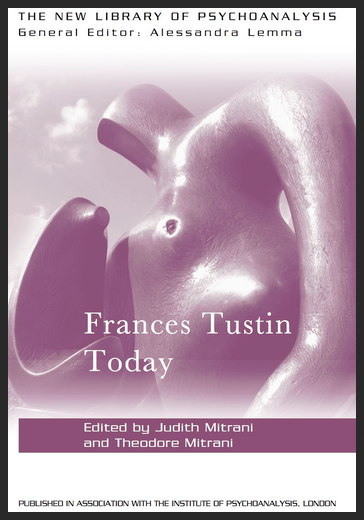
The Editors of Frances Tustin Today have done a wonderful job of bringing together an exciting collection of some of the most important writings illustrating Tustin's extraordinary influence on contemporary psychoanalytic work, particularly regarding the entire autism spectrum.
The book may be likened to a string of pearls. Each single pearl, like each single article, is precious in its own right, yet when strung together they form an entirely new and even more valuable reality.
This book, in my view, presents an invaluable harvest of ideas which will inspire and motivate future developments in a field as controversial as it is important. Indeed there is a growing awareness that we all experience autistic trends to one degree or another. In short, Frances Tustin Today is highly recommended to anyone wishing to delve more deeply into primitive mental states in the directions pointed out by Bion.
-Antonino Ferro, Italian Psychoanalytic Society
_________________________________________________________________
Judith Mitrani's Psychoanalytic Technique and Theory: Taking The Transference provides that rare opportunity to listen in on psychoanalytic thinking and practice at its most exquisitively sensitive to the inner life of a patient and analyst as they attempt to talk with one another about the most fundamental truths of the patient's experience. The book builds upon the work of Freud, Klein, Bion and Tustin, but goes well beyond that body of work to offer a conception of analytic theory and technique that is uniquely Mitrani's. It is a pleasure to learn from this very fine teacher. -Thomas Ogden
|
|
Conference Reviews
| |
In this section, we feature two conference reviews of the recently held 10th International Evolving British Object Relations Conference.
10th International Evolving British Object Relations Conference
"From Reverie to Interpretation: Transforming thought into the action of psychoanalysis"
Sponsored by Northwestern Psychoanalytic Society and Institute
October 17-19, 2014
By Dana Blue, LICSW, FIPA and Caron Harrang, LICSW, FIPA s
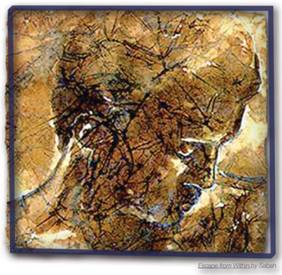 | | EBOR 2014 Conference logo ("Escape Within") by Sabah Al-Dhaher |
Two years in the planning, this 10th International Evolving British Object Relations conference was characterized by its inventive theme, through preparation, and friendly character. The conference design was developed and implemented by a small yet zealous organizing committee consisting of Margaret Bergmann-Ness, Lynn Cunningham, Christopher Owen, Maxine Nelson, and Co-Chairs Dana Blue and Caron Harrang.
EBOR is always stimulating, gathering creative psychoanalytic authors from around the globe to continue the work of advancing psychoanalytic theory. International participation and leading edge scholarship are its hallmarks. To celebrate this 10th anniversary of EBOR, the organizers added several innovations in design. For example, we developed and offered a study group titled "Pre-Conference Reveries" that convened at NPSI in Seattle for six sessions in the year leading up to the conference. This series assured that Seattle based attendees would have a solid theoretical understanding of the conference theme-from reverie to interpretation-that fueled enthusiasm for the upcoming event and increased participation at the conference.
The conference was located at the four-star Pan Pacific Hotel in the South Lake Union neighborhood of downtown Seattle. The sophisticated, comfortable setting provided a stylish and intimate environment to hold the conference. For the first time, the organizers solicited conference sponsors and are pleased to be able to thank them for their support. Jean Tarbox, Doug Ulrich, CFP, The Cunningham Family, Fran's Chocolates, and the American Association for Psychoanalysis and Social Work all made significant monetary or in-kind contributions ensuring the financial success of this international event. We were also pleased that one of the nation's leading psychodynamically informed inpatient psychiatric hospitals, The Menninger Clinic, accepted our invitation to become our first ever conference exhibitor. Additionally, we were fortunate to receive a generous travel grant from the IPA's CAPSA program assisting us to bring plenary presenters from Europe and Latin America by paying for a portion of their airfare. Without the support of these individuals and organizations, an event of this scale would be impossible for a small psychoanalytic society to produce.
After selecting our theme, we invited plenary presenters based on their writing and teaching in the area of reverie, with different theoretical and technical emphases. We were very fortunate in our choices of Giuseppe Civitarese, MD FIPA of Italy, and Clara Nemas, MD FIPA of Argentina. From our initial contacts, the plenaries were gracious and generous, granting interviews to post online (http://npsi.us.com/news-media/associations-psychoanalytic-essays/), sharing electronic copies of papers they had written, and helping us to promote the conference in their home countries. The call for individual papers generated a similarly enthusiastic response, with submissions arriving from the US and abroad, extending the concept of reverie to interpretation in novel directions; applying it to new ways of understanding the contributions of historical psychoanalytic luminaries such as Strachey and Fairbairn, to work with couples, to child psychoanalysis, to infant observation, and to the supervisory dimension of analytic work. The overall conference program, with its interweaving themes and emphases were gathered into a wonderful bouquet of offerings for presenters and attendees alike.
Another advance in event planning was in the creation of a fundraiser aimed at offsetting expenses associated with producing an international conference. This event titled "Midsummer Revelry," took place in June 2014 and featured a classical music program offered by Julliard-trained pianist Ari Livne. It was a masterful performance enhanced by Mr. Livne's scholarly commentary on his impressions of the composer's use of reverie evidenced in the compositions chosen for the concert. Midsummer Revelry offered a seed of thought, the notion of reverie as a matrix for creativity of various sorts that blossomed at the fall conference.
Approaching the conference theme through the lens of creativity, the organizers developed a two-evening integrated program, titled "The Art of Reverie" for conference participants and open to the general public. The aim of this portion of the conference was both to engender an experience of reverie for psychoanalyst and psychotherapist attendees and enhance appreciation of a psychoanalytic view of creativity and other aspects of human experience for the general public.
The Friday evening portion of "The Art of Reverie" opened the conference and included presentations by Iraqi-American sculptor Sabah Al-Dhaher ("Reverie as Key to Escape Within") and Shierry Nicholsen, PhD FIPA ("Working with Stone, Working with Psyche: Reverie in Art and Psychoanalysis"). Saturday night, conference attendees and general public guests enjoyed a film (The Hedgehog, USA release 2011) and subsequent discussion by Adriana Prengler, LHMC FIPA. This emphasis on art helped to enhance the experience of reverie that pervaded the conference. Sculptural work by Sabah Al-Dhaher was exhibited in the conference meeting areas throughout the weekend, offering conferees a visual echo to his powerful opening talk at Friday night's "The Art of Reverie" panel.
For clinicians, the EBOR conference proper began on Friday afternoon, where each of our distinguished plenary presenters taught a Master Class, another first. Each Master Class featured clinical material presented by an experienced analyst that served as a springboard for illustrating the theoretical and technical uses of reverie as understood by our master instructors. Leigh Tobias, PhD FIPA, a Training Analyst and current President of the Psychoanalytic Center of California (Los Angeles, California), presented analytic material to Dr Nemas. Nancy Winters, MD, FIPA, a graduate and faculty member at the Oregon Psychoanalytic Institute and Center (Portland, Oregon) presented a psychoanalytic case to Dr. Civitarese.
If a conference is like a garden, the full harvest of ideas lies in the plenary presentations. Dr Nemas offered a warm and thoughtful plenary presentation on Saturday morning, titled "Courage and Sincerity as a Basis for Reverie and Interpretation," followed by discussant remarks from Robert Oelsner, MD FIPA. The large group divided into smaller discussion groups to mull over her ideas; then moved on to attend morning individual paper presentations. Along with the luncheon, NPSI hosted a well-attended "Candidate Curious" meeting for those germinating a desire for future analytic training.
The afternoon plenary session began with Dr Civitarese's very stimulating paper titled "Reverie and the Aesthetics of Psychoanalysis." Jeffrey Eaton, LMHC FIPA acted as discussant and facilitator for the hour-long discussion of Dr Civitarese's contributions with the large conference group. The afternoon concluded with a second series of individual paper presentations.
NPSI senior candidates, full members, and community members facilitated the following individual paper sessions:
"The Primacy of Reverie in Making Contact with a New Couple" by Carl Bagnini, LCSW BCD
"Come On Hold a Baby's Hand: Psychoanalytic Reverie and Infant Observation" by Margaret Bergmann-Ness, LICSW, Judy K Eekhoff, PhD FIPA, Kerry Ragain, PhD, Barbara Sewell, LMHC FIPA, and Carolyn Steinberg, MD
"The Magnetic Compass of Reverie" by Diletta La Torre, MD FIPA (read by Rikki Ricard)
"Spiraling Transference: Strachey's Mutative Interpretation and Reverie" by Shelley Rockwell, PhD FIPA
"From Fairbairn to the Planet Neptune" by Mark Gundry, MA PhD LPC
"Infant Observation as a Pathway to Experience Reverie and Learning to Interpret" by
Gisela Klinckwort, FIPA
"The Couple" by Donatella Lisciotto, FIPA (read by Julie Hendrickson)
"Beta Elements in Search of Meaning or Little Hans Went Alone into the Wide World" by Robert Oelsner, MD FIPA and Carolyn Steinberg, MD
The final design innovation took place in the programming for Sunday morning. Montana Katz, PhD, FIPA offered her paper "The Timing of the Use of Reverie" as part of a final plenary titled, "Selected Short." Acting as discussants, Drs Civitarese and Nemas shared their responses to Dr Katz's paper in an integrating discussion that illustrated their respectfully differing and individually inspiring perspectives on reverie. After reports from the small group discussions the previous day, conferees returned home, invigorated by new ideas and filled with nascent understandings from the conference.
EBOR 2014 was a highly successful conference, enriching the sponsoring organization with new ideas and tangible resources. We expanded theoretical discourse in evolving British Object Relations theory, strengthened long-standing bonds, and forged new connections with colleagues from around the world. The forum was a project with communitywide support. Nearly everyone in the NPSI Society-analysts, candidates, and community members-participated in some way in the creation and production of this memorable event. The organizers also wish to acknowledge the contribution of our new Administrator, Hollee Sweet, who skillfully managed registration and many other details during and after EBOR.
For those that could not attend, we are happy to report that professionally produced very high quality DVDs of the plenary presentations by Giuseppe Civitarese and Clara Nemas are now available as a gift with a charitable donation to NPSI. For details, please check the organization website: http://npsi.us.com/society/evolving-british-object-relations-international-conference/.
******
REFLECTIONS ON EVOVING BRITISH OBJECT RELATIONS
(EBOR) 2014
By Leigh Tobias, PhD, FIPA
The Northwest Psychoanalytic Society and Institute (NPSI) has been mounting this International Conference every two years since 2004. The hallmarks of this conference are its international character: it draws presenters and participants from all over the globe, and its structure: presenters stimulate thinking that is then further refined in small groups.
This year's theme was "From Reverie to Interpretation: Transforming Thought into the Action of Psychoanalysis." The plenary speakers were Giuseppe Civitarese, MD, FIPA (Italy) and Clara Nemas MD, FIPA (Argentina).
The conference structure provided an opportunity for the concept and experience of reverie to develop over the weekend. Friday's pre-conference offered two master classes, each with one of the plenary speakers, discussing clinical material. This experience allowed conference attendees to get to know one another a bit, as well as more close contact with the plenary presenters and their clinical process. In the evening there was a panel of two artist-participants, Sabah Al-Dhaher, and Shierry Nicholson PhD, FIPA, addressing the topic of reverie in the creation of their art-work. Both are sculptors. Sabah's sculpture was on view throughout the conference, though on Friday evening he presented a deeply moving drawing in coffee and ink along with the story of its creation. Shierry works in soft stone, and presented a slide show, at the pace of 1 minute per slide, along with her commentary on creating the works. Both were very moving presentations, and deeply evocative of the process of being gripped by a feeling, allowing it to take shape, and come into form.
Saturday brought the first plenary presentation in the morning, Courage and Sincerity -- Reverie and Interpretation, by Clara Nemas; discussant Robert Oelsner, MD, FIPA. She developed the themes of maternal and paternal forms of reverie and containment, ideas that sparked a detailed response from Dr. Oelsner during the plenary discussion. Then the members of the conference adjourned to pre-assigned small groups, with two facilitators, and discussed the paper further. Many comments and questions emerged in that setting.
Immediately following the conference, members attended smaller groups again of pre-selected Individual Paper sessions, each of which had another paper on the topic presented and discussed. The conference then broke for lunch, served on site, with lots of informal buzz during that time. Following the lunch was the second plenary presentation of Dr. Civitarese: Reverie and the Aesthetics of Psychoanalysis, discussed by Jeffrey Eaton, LMHC, FIPA. Dr Civitarese emphasized the tools of transformation in hallucinosis to transformation in dreaming to interpretation, via Bion's grid. Dr Eaton provided interesting discussion and case material associations that were very helpful.
Saturday evening brought the screening of the French film The Hedgehog, discussed by Adriana Prengler. Sunday brought a final paper, The Timing and Use of Reverie, presented by Montana Katz, PhD, FIPA, and discussed by Nemas and Civitarese. By this time the conferees had been steeped in this rich idea all weekend. The conference concluded with the small group recorders presenting a summary of their group's discussion of the topic and the final discussion showed further development of the experience of transformations, of expression, and timing.
I understand it was the most ambitious EBOR conference to date. I found it very satisfying intellectually, colleagially, and experientially. It was respectful, meaningful, well-planned, and intellectually stimulating. I heartily recommend attending the next one.
|
| CIPS Study Groups and Seminars | The following is a list of current or planned study groups or seminars. All groups meet via teleconference and are led by CIPS members or honorary members. Please contact Phyllis Sloate if you have questions or an idea for a study group you would like to facilitate (plsloate@aol.com or 914.636.2833).
Currently we have three teleconferences running:
Bion 1, co-led by Marianne Robinson and Maxine Anderson, now in its sixth year, with members from Seattle, NY, DC and Canada.
Enactment, led by Nancy Goodman, with members from NY, DC and Mexico City.
Psychoanalytic Writing Group, led by Eve Golden, MD.
|
| Inter-Society Dialogue | The purpose of this section of the News Brief is to report on instances of collegial contact and sharing of ideas amongst the Societies and Study Groups that make up the Confederation (IPTAR, LAISPS, NPSI, PCC, VPSG and the Direct Member Society) and between our members and psychoanalytic societies or organizations outside of CIPS. In this issue we feature collaboration between an IPTAR analyst and a colleague from the British Psychoanalytical Society. The News Brief invites submissions from any CIPS member with similar planned activities or a review after attending an event illustrative of inter-society dialogue and learning.
LAISPS PhD Program Update
This program is open to all CIPS member organization's candidates and members. If you are interested in obtaining more information about this program, please contact Pamela Dirham, PhD atpdirham@ca.rr.co, or at 310-470-9957. This program is open to all CIPS member organization's candidates and members.
|
| CIPS Societies News |
Direct Members Society (DMS)
Since DMS is comprised of individuals from different IPA Societies other than one of the CIPS Societies, there is not a website for this group. To join CIPS as an individual member please fill out an application on our website by clicking here: DMS Membership Application Form.
Institute for Psychoanalytic Training & Research (IPTAR)
-
On October 17 - 18, 2014 IPTAR hosted Mourning and Loss: Emerging from a Psychic Retreat. Understanding Primitive Mental States (UPMS), an independent study group dedicated to learning London Kleinian Object Relations Theory, now in its sixth year of study and programming, brought John Steiner, MD, FIPA to NYC for this conference. Steiner, led a discussion of, "The Conflict Between Mourning and Melancholia" from his book
Seeing and Being Seen: Emerging from a Psychic Retreat
.
Everyone was asked to read the chapter in advance. Rather than reading his paper out loud, Steiner and the audience were able to talk together about the problems of seeing and being seen as one emerges from a psychic retreat. He discussed how coming into view exposes the patient to the problems of humiliation and shame, which being seen can give rise to, and then cause a return to the retreat as a defense. If the shame can be survived and worked through in the transference, countertransference situation, progress to face the guilt and make reparation becomes possible. In the process of facing loss, and in particular, facing the loss of one's own omnipotence is central, can allow working toward reparation and mourning. If the shame cannot be endured, he remains stuck in a melancholic situation.
John Steiner, is a training analyst of the British psychoanalytical Society. He is the author of Psychic Retreats (1993) and Seeing and Being Seen (2011) and many psychoanalytic articles. He is also a member of Understanding Primitive Mental States, NYC where he consults annually. This study group/program is organized by Susan N.Finkelstein.
Catherine Andersen, a training and supervising analyst from the Contemporary Freudian Society in Bethesda, MD and Debbie Zatz, a member of the Contemporary Freudian Society in Washington DC were the two case presenters. These clinical presentations allowed for an integration of theory and clinical application.
-
Joseph Aguayo presented: Bion's Clinical Seminars in Los Angeles and New York City on November 21and 22, 2014.
In November the Program Committee (under the leadership of Carolyn Ellman) hosted Joseph Aguayo, PhD, FIPA. Aguayo discussed the only two clinical seminars ever given by Wilfred Bion in the United States: the Los Angeles Seminars and Supervision in 1967 and the IPTAR Seminars in New York City in 1977. For many IPTAR members, this was a historic event since they didn't know that Bion had been at IPTAR. On Friday evening Aguayo took up the clinical and technical implications of Bion's ideas (especially his ideas in his paper "On Memory and Desire") and how difficult it was for the audience in l967 to hear these ideas. For classically trained audiences who were unfamiliar with any of Klein's ideas from England, they found Bion's language and technique quite foreign. Aguayo pointed out how surprised and disturbed Bion was at these reactions. On Saturday morning, the panel moderated by Susan Finkelstein heard two analysts who had been at the l977 lectures (William Fried and Bennett Roth). It was quite refreshing to hear from them the awe, outrage and complicated reactions that occurred during that week of meetings wherein Bion wouldn't respond to many of the questions asked. However, they both remembered the meetings as if it was yesterday.
Aguayo then presented case material that highlighted how he works with near psychotic patients. His openness to questions and ideas helped the audience to feel they were truly participating in an unusual event and helped us all to understand some differences between Freudian, Kleinian and Bionian technique.
-
Nuar Alsadir, PhD has published "Neighbor," Labor Day. Ed. Eleanor Henderson and Anna Soloman. New York: Farrar, Strauss and Giroux, 2014. 199-206; "The Hug Machine: A Review of Anne Carson's Red Doc," The Poetry Review (Spring 2014), 122; "Night Fragments: 3:15 a.m.," Provincetown Arts (Summer 2014), 107.
-
An interview with Alan Bass, PhD, FIPA has been published in the journal of the Center for Psychoanalytic Studies of Porto Alegre (Brazil). In November he delivered the keynote address at the conference 'Philosophers Since Freud' in Mexico City; and in December he presented at IPTAR's Developing Analyst Series (with Richard Grose) and at the CFS event for the CIPS book on sadomasochism.
- Fred Busch, MD, FIPA was an invited discussant of two clinical presentations with Stefano Bolognini, PhD, FIPA and Virginia Ungar at the meetings of the Latin American Psychoanalytic Societies (FEPAL), Buenos Aires, Argentina, September 2014. He was also the discussant of David Bell's paper, "Knowledge as Fact and Knowledge as Experience." Contemporary Freudian Society, New York, November 2014.
- Chris Christian, PhD, FIPA was appointed to the Editorial Board of PsychoanalyticPsychology. He presented a paper, The Piano Teacher: A Case Study in Sadomasochism at the Brill Library Film Series, New York Psychoanalytic Institute along with a screening of the film, Le Pianiste. Most recently, he, along with Richard Reichbart and Michael Moskowitz, obtained a grant from PEP for the development of a video to be entitled Psychoanalysis in El Barrio.
- Steven Ellman, PhD, FIPA presented "Intersubjectivity and the Analytic Third." to the Oklahoma Society of Division 39 in October 2014. He also presented at the CIPS and New York Freudian Society (NYFS) Sadomasochism Conference in December 2014. He also published the article Ellman, S. (2014). "Traversing Narcissistic Pathways: From Freud to Present Times." Psychoanal. Inq., 34:394-407.
- Erwin Flaxman, PhD, FIPA presented, "Psychoanalysis and the Endings of Shakespeare's Plays" at the biannual meeting of the British Shakespeare Association, University of Stirling, Scotland, July 5, 2014; and "Mourning and Melancholia: Henry James in Francois Truffaut's" 'The Green Room,' " annual meeting of the Henry James Society, University of Aberdeen, Scotland, July 17, 2014.
- Geoff Goodman, PhD, FIPA has published: Goodman, G. (2014). Mentalization: An Interpersonal Approach to Mindfulness. In J. M. Stewart (Ed.), "Mindfulness, Acceptance, and the Psychodynamic Evolution: Bringing Values into Treatment Planning and Enhancing Psychodynamic Work with Buddhist Psychology" (pp. 111-132). Oakland, CA: New Harbinger Publications.
- Goodman, G. (2014). [Review of "Restoring Mentalizing in Attachment Relationships: Treating Trauma with Plain Old Therapy"]. Psychodynamic Psychiatry, 42, 324-328.
- Goodman, G., Anderson, K., & Diener, M. J. (2014). "Processes of Therapeutic Change in Psychodynamic Therapy of Two Inpatients with Borderline Personality Disorder." Journal of Psychotherapy Integration, 24, 3-45.
- Goodman, G., Edwards, K., & Chung, H. (2014). "Interaction Structures Formed in the Psychodynamic Therapy of Five Patients with Borderline Personality Disorder in Crisis." Psychology and Psychotherapy: Theory, Research and Practice, 87, 15-31.
- Dent, V. F., Goodman, G., & Kevane, M. (2014). "Rural Community Libraries in Africa: Challenges and Impacts." Hershey, PA: IGI Global.
- Janice Lieberman, PhD, FIPA published "The Skin You Live In" in the Body Gallery of the new online Virtual Psychoanalytic Museum.
- Batya R. Monder, MSW, BCD, FIPA presented a paper, entitled "Childhood Sexual Abuse and Shame: Reverberations Through a Lifetime" in Mexico City on October 11, 2014. The presentation was sponsored by the Asociación Mexicana para la Práctica, Investigacióny Enseñanza del Psicoanálisis (AMPIEP).
- Orna Ophir, PhD presented, "On Loneliness, Belonging, Strangers and Otherness - Klein in America" at the Shalvata Mental Health Center which is affiliated with Sackler School of Medicine at Tel Aviv University on December 24, 2014. "The Apprehension of Beauty - The Kleinian School of Aesthetics." Invited lecture at the "Psychoanalytic Turns in Art History and Literary Criticism" seminar, Department of Art History and Archeology, Princeton University, December 5, 2014.
- Ellen Sinkman, LCSW, FIPA presented a paper entitled "Heroines and Mythology of Contemporary Girls" at IPA's Committee on Women and Psychoanalysis (COWAP) Conference: "Myth of the Mighty Woman," October, 2014. She also has an exhibit entitled "Beauty" in the online Virtual Psychoanalytic Museum.
On the 18th of September, 2014, Tuba Tokgoz, PhD, FIPA and Alexandra Petrou co-led a workshop for international students at John Jay College of Criminal Justice (Office of International Studies & Programs) on adjusting to studying and living in the US.
- Isaac Tylim, PhD, FIPA participated in the panel "The Many Faces of Pain" at the Federation of Latin American Psychoanalysis Congress in September 2014 in Buenos Aires. In November 2014 he was invited by Denver University and the Denver Psychoanalytic Institute to present "The Freud and Ferenczi Letters." His recent publications include "Home Sweet Home. A Psychoanalytic Reading of the TV 'Homeland "" - American Journal of Psychoanalysis; and "Technology and the Future of Psychoanalysis" - Psychoanalytic Inquiry.
- The Contemporary Freudian Society sponsored a conference on December 7, 2014 based on the book published by Karnac as part of the CIPS book series, entitled Battling the Life and Death Forces of Sadomasochism: Clinical Perspectives. In addition to the three editors - Harriet Basseches, Paula Ellman, and Nancy Goodman - there were presentations by many of the East Coast book writers including, Sheldon Bach, Alan Bass, Andrea Greenman, Steve Ellman, and Richard Reichbart. The conference was well attended.
For more information on all IPTAR events visit www.iptar.org.
Los Angeles Institute & Society for Psychoanalytic Study (LAISPS)
Upcoming LAISPS Extension Courses include:
- "The Process of Interpretation: Art and Science" taught by Alan Spivak, PhD, FIPA, on 5 Fridays January 16-February 13, 2015.
-
"How Romantic Love Can Change a Life" taught by Daniel Paul, PhD, FIPA, on 2 Saturdays January 10 & 17, 2015.
-
"Children and Families of High-Conflict Divorce: Psychodynamic Perspectives and Attachment Issues" taught by Janet Woznika PhD, FIPA, on 2 Fridays, January 16 & 23, 2015.
-
"A New Era Ahead With Alcohol and Drugs: Reconsidering Our Desires and Redefining Our Problems" taught by Margaret Ann Fetting, PhD, LCSW, on 2 Saturdays, January 24 & 31, 2015.
-
"Medication and Its Meaning: Adjunctive Psychotropic Drugs in Psychoanalytic Treatment" taught by Jacqueline Lichtenstein, MD, FIPA on Saturday, February 7, 2015.
-
"The Unconscious At Play: The Dream in Clinical Practice" taught by Sandra Garfield, PhD, FIPA, on 2 Saturdays, February 21 & 28, 2015.
-
"Treating Primitive Mental States" taught by Daniel Paul, PhD, FIPA, on 2 Saturdays, March 7 & 14, 2015.
-
"Theory and Technique of Working with Couples" taught by Vanessa Bell, PhD on 4 Thursdays, March 5-26, 2015.
-
"Girls to Women, Boys to Men: Gender in Psychoanalytic Treatment" taught by Michael Diamond, PhD, FIPA on 4 Fridays, March 13 - April 3, 2015.
-
"Victory in Defeat" taught by Alan Spivak, PhD, FIPA, on 3 Fridays, April 10 - 24, 2015.
-
"The Fragmented Self: Psychoanalytic Perspectives on Dissociation" taught by Jacqueline Lichtenstein, MD, FIPA and Roberta Mirsch, LCSW on 2 Saturdays May 2 & 9, 2015.
-
"Psychopathology and Literature: The Internal World of Franz Kafka and The Desire for Nothing" taught by Valerie von Raffay, PhD, on 2 Saturdays May 16 & 23, 2015.
For more information on all LAISPS events visit www.LAISPS.org
Northwestern Psychoanalytic Society and Institute (NPSI)
- Maxine Nelson, LICSW, FIPA became managing editor of Selected Facts: Newsletter of the Northwestern Psychoanalytic Society and Institute as of the special fall/winter 2014 issue dedicated to a wrap-up of the tenth International Evolving British Object Relations Conference (October 17-19, 2014) and once yearly committee reports. She takes over from founding managing editor, Caron Harrang. Senior candidate Anna Delacroix, LMHC continues as copyeditor. Candidates David Parnes, LICSW and Lynn Cunningham, LICSW continue as reporters.
- NPSI is pleased to report that a number of our members will be participating as discussants and in panel sessions at the 49th IPA Congress in Boston (July 2015). The following is a list of session titles with our members' names indicated in bold:
Maxine Anderson, MD, FIPA has been invited to be a co-discussant, along with Giovanni Battista Foresti, of one of the keynote presentations at the Congress. The paper, by Altamirando Andrade, is titled, Recovering the Psychic Apparatus.
Female Homosexuality: There and Then, Here and Now
Mirta Berman Oelsner
Judy K Eekhoff
Adriana Prengler
Samuel Zysman (Chair)
On Reverie: Tools of the Trade in Evolving Process and Technique
Dana Blue
Caron Harrang
Maxine Nelson
David Jachim (Chair)
Destructiveness: New Paths and New Tools for Understanding
Cláudio Eizirik (Chair)
Robert Oelsner
Marilia Aisenstein-Averoff
Clara Nemas de Urman
Working with Transference and Countertransference: Special Learning Moments in our Psychoanalytic Journey
Robert Oelsner (Chair)
Franco Borgogno
Theodore Jacobs
Jorge Maldonado
Second Thoughts on Meltzer's Explorations in Autism: The Clinical Importance of Psychic Dimensionality Forty Years Later
Jeffrey Eaton (Chair)
Didier Houzel
Suzanne Maiello
The Mind of the Supervisor: Impingements and Countertransferences
Lena Ehrlich
Margaret Ann Hanly
Nancy Kulish (Chair)
Marianne Robinson
Arden Rothstein
- Karnac Books Ltd. has offered a publishing contract to EBOR 2014 Organizing Committee Co-Chairs Dana Blue, LICSW, FIPA and Caron Harrang, LICSW, FIPA. The book, titled "From Reverie to Interpretation: Transforming Thought into the Action of Psychoanalysis", will be a collection of the papers presented at this year's EBOR. Dana and Caron will serve as book editors along with chapter authors (in alphabetical order) Sabah Al-Dhaher, Carl Bagnini, Margaret Bergmann-Ness, Giuseppe Civitarese, Judy K. Eekhoff, Mark Gundry, Montana Katz, Gisela Klinkwort, Diletta La Torre, Donatella Lisciotto, Clara Nemas, Shierry Nicholsen, Robert Oelsner, Kerry Ragain, Shelley Rockwell, Barbara Sewell, and Carolyn Steinberg.
- NPSI is proud to announce that DVDs of EBOR 2014 plenary presentations by Drs. Giuseppe Civitarese and Clara Nemas are now available for purchase from the NPSI website (see link below).
- Giuseppe Civitarese, MD, FIPA is a training and supervising analyst in the Italian Psychoanalytic Society. He lives and maintains a private practice in Pavia, Italy. He lectures in Italy and internationally and publishes widely on various subjects including the theory of the analytic field, Bion and the post-Bionian psychoanalysis, and psychoanalytic criticism. His EBOR paper titled Reverie and the Aesthetics of Psychoanalysis focused on reverie as compared with other aesthetic experiences and illustrates with numerous clinical vignettes how it can be utilized as a precise technical tool within a particular theoretical frame.
-
Clara Nemas, MD, FIPA is a training and supervising analyst of the Buenos Aires Psychoanalytic Association. She maintains a private psychoanalytic practice in Buenos Aires and is the current Scientific Secretary of APdeBA. She is involved in teaching Kleinian and Neo-Kleinian theory as well as Infant Observation seminars in psychoanalytic societies throughout Argentina. She has authored numerous papers on ethics, psychoanalytic theory, and clinical technique in work with adolescent patients. Her EBOR paper titled Courage and Sincerity as a Base for Reverie and Interpretation examines the qualities necessary for psychoanalytic work and what she calls the "reverie function" of the analyst's personality or sense of self.
-
Psychoanalytic Center of California (PCC)
- The 19th Annual Frances Tustin Memorial Trust Lecture took place at PCC on Saturday, November 8th. Mark Howard, MD, FIPA of Sydney, Australia was the keynote speaker.
- On Sunday, November 9, 2014, Mark Howard supervised candidate Honey Pietruszka, PsyD, in a Master Class for PCC candidates and members.
-
"The Value of Interpretation: Thoughts on a Controversy," was the topic of a conference featuring Jon Tabakin, PhD, FIPA, James Gooch, MD, PhD, FIPA and Albert Mason, MB, BS, PsyD, FIPA, on Saturday, January 17, 2015 from 9:00 pm to 1:00 pm at the PCC Conference Center.
- The 5th Annual Wilfred Bion Conference featuring Meg Harris Williams of London, Saturday, February 7, 2015, will be held from 9:00 am to 4:00 pm at the NCP Auditorium.
- Meg Harris Williams will present a bonus paper and discussion on Sunday, February 8, 2015, from 9:00 am to noon at the NCP Auditorium.
-
The PCC Open House will be held on Sunday, March 22, 2015, from 11:00 am to
3:00 pm at the PCC Conference Center.
-
The annual PCC Chamber Music Concert will be held on Sunday, May 17, 2015, from
3:00 pm to 5:00 pm at the University Synagogue in Brentwood.
-
The 26th Annual Melanie Klein Lecture featuring Anne Alvarez of London will be held Saturday, May 30, 2015, from 9:00 am to 4:00 pm at the Olympic Collection.
Vermont Psychoanalytic Study Group (VPSG) News
- VPSG has no report this issue.
For more information on all VPSG events visit http://www.vermontpsychoanalytic.org
|
|
|