|
|
|
|
Subscribe
 |
|
|
Dear (Contact First Name),
 | | Lisa Halotek, PsyD, FIPA |
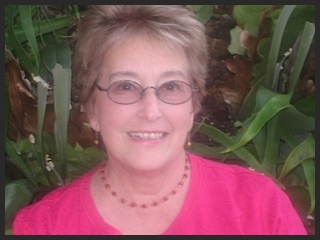
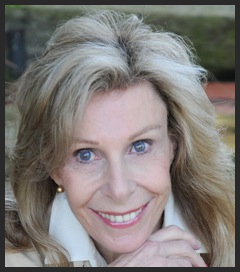
It's Fall, and we're back from vacations and holiday schedules and into teaching, classes and committee work at our institutes. The News Brief is also back from a summer break with new faces at the helm. We are pleased to have Lisa Halotek, (LAISPS), former Assistant Managing Editor and CIPS Director from LAISPS as the new Managing Editor of the News Brief. Lisa is excited to join forces with Claudia Eskenazi, (LAISPS) who takes on a new role as Assistant Managing Editor. Together they look forward to bringing you the current news, events, essays, photographs and reports pertinent to our geographically diverse membership.
 | Claudia Eskenazi, PsyD
|
We want to begin this issue by thanking Caron Harrang, our former Managing Editor, who managed the News Brief for the past three years and who, through this medium, graciously and adeptly kept us connected and fostered a sense of community amongst the societies that comprise our organization. We want to congratulate her on her new role as President-elect at NPSI and we are delighted that Caron remains a CIPS Director as well as the NPS reporter to the News Brief.
CIPS also has two new Directors to welcome this Fall representing IPTAR: Steven Ellman and Neal Vorus. They replace former Directors, Marilyn Rifkin and Phyllis Sloate, who will each remain active on the CIPS Board, Marilyn continuing on as Recording Secretary and Phyllis in her new role as President Elect and in Randi Wirth's Letter from the President you will learn more about these changes. Maureen Murphy updates us on Napsac, and her participation along with Beth Kalish, at the FEPAL Conference in Buenos Aires where 2700 people participated!
Along with the FEPAL Conference, we have several more conferences to report on including PCC's Infant Observation Conference and the 8th International Bion Conference that took place recently in Los Angeles. In our Special Reports Section, Leigh Tobias has an interview with former CIPS Bion seminar leader, Joseph Aguayo, on the resurging interest in Bion in the United States and abroad.
Frederick Perlman and Terrence McBride update us on opportunities for professional growth and development through the CIPS Book Series in Publication News, which also features Jennifer Kunst's new publication, Wisdom From the Couch.
We want to thank everyone who contributed news for this issue. We are grateful to our wonderful news staff: Susan Mitchell (PCC), Jared Russell (IPTAR & DMS), Joseph Davis (LAISPS), Doug Dennett (VPS) and Caron Harrang (NPS). Here's to the beginning of a new academic year of growth and development for all.
Lisa Halotek, PsyD, FIPA
enewseditor@cipsusa.org Claudia Eskenazi, PsyD Assistant Managing Editor |
|
|
|
|
|
|
CIPS Board of Directors
|
Officers:
* President: Randi Wirth (IPTAR)
* Past-President: Leigh Tobias (PCC)
* Vice President: Terrence McBride (PCC)
* Treasurer: Sandra Borden (IPTAR)
* Recording Secretary: Marilyn Rifkin (IPTAR)
* President Elect: Phyllis Sloate (IPTAR)
Directors:
Direct Member Coordinator:
* Batya Monder bmonder@gmail.com
Membership Coordinator:
* Sandra Wilder-Padilla dr.wilderpadilla@gmail.com
Directors represent the interests of their local society and institute on the CIPS Board of Directors and attend monthly teleconference meetings chaired by the President. The Direct Member Society Coordinator represents the interests of our individual direct members and also attends board meetings. The Membership Coordinator processes the application of those applying for direct membership, welcomes new members, and coordinates with the Webmaster to make sure our member roster is accurate and up to date.
Any candidate or member may attend a CIPS Board meeting (except when the board is in executive session) to learn more about the organization and how to become more involved. Contact your local society director(s) if you are interested.
|
|
Letter from the President
|
 | | Randi Wirth, CIPS President |
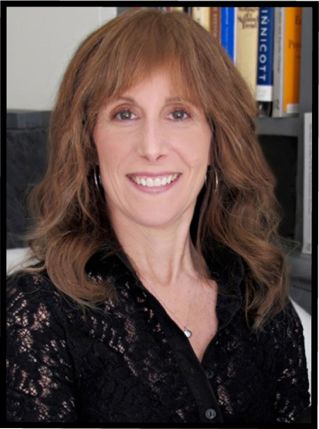
This is my penultimate President's letter to the CIPS community and, as we all prepare for the changing of the season, CIPS has changes of our own to inform you of. The results of our bi-annual election have been tallied and I am pleased to announce that Phyllis Sloate will succeed me as President and that Terry McBride will continue to serve as Vice-President.
Phyllis had been involved in leadership roles in CIPS for over a decade and has served on both the Public Affairs Committee and CIPS-IPTAR Committee on Public Policy. She chaired the Biennial Clinical Conference: Play in the Psychoanalytical Situation held in 2004 and she co-chairs the CIPS Intramural Education Committee, which oversees the LAISP/IPTAR PhD Program.
In 2006, Phyllis spearheaded the remarkably successful Teleconference Study Groups. Through hours of dedication, Phyllis has brought our members together with talented and innovative teachers from within the CIPS ranks providing a unique opportunity to learn coast-to-coast across institutes.
Phyllis is entering her fourth term on the CIPS Board of Directors and also serves as an Associate Editor for the CIPS Book Series. She is deeply dedicated to CIPS and her conscience and counsel are an asset to me and to the Board.
I met Terry McBride at my very first CIPS Board meeting in Seattle some ten years ago and had the opportunity to work with him on several committees over the years. It was not until my Presidency began, however, that I truly came to appreciate his long involvement with CIPS beginning on the Board in 1995. Terry served two terms on the Board from 1995 to1998 and 2003 to 2005 as well as a term as Co-Chair of the Board from 1998-1999.
Terry's influence can be felt in the growth of CIPS and many of its programs over the years. He is currently Co-Editor of a publication in the CIPS Book Series on Trauma, which was proposed as an offshoot of the very successful 2014 Biennial Conference on Trauma held in New York City last May. Terry's long-term perspective and sound judgment will continue to be as invaluable to Phyllis as it was to me.
Although the election is over, Phyllis and Terry will not begin their term until June 2015, so CIPS and I still have several busy months ahead. From its inception in 1992, CIPS has been committed to finding ways to expand collegial connections across our societies for productive learning and professional development.
We recently created a Teleconference course to focus on the writing process and we are fortunate to have Eve Golden, MD, teaching this class. We have received wonderful feedback from the participants and hope to develop other opportunities for our members to participate in writing groups. The CIPS Book Series was established so that our members would have an outlet to write and publish their work. We hope that those members interested in writing will attend a gathering in New York this January (details to follow) to discuss writing opportunities for the CIPS Book Series with likeminded colleagues.
Warmest Regards,
Randi Wirth, PhD, FIPA
|
|
|
Maureen Murphy, NAPsaC Chair, reports on the following activities reflecting NAPsaC's growing involvement as the North American regional IPA association.For the first time, NAPsaC Board members attended the FEPAL Congress recently held in Argentina, a reflection of NAPsaCs increased participation as a Regional Organization. Although it was August in the States, it was Spring in Argentina and the perfect season for the 30th FEPAL Congress, "Realities and Fictions" which mirrored spring's promise and exuberance as temperatures warmed to the mid 60's and blossoms began to enliven the winter-bare trees. The passion and enthusiasm for psychoanalysis in Latin America was reflected in the attendance, 2700 registrants on-site with another 2000 following on line! Beth Kalish, NAPsaC co-chair, and I were invited panelists on a series entitled "Clinical Exercises." This format was similar to the CIPS Clinical Conference with a slight twist. In the Clinical Exercises, three or four colleagues were called to compose a panel, along with a coordinator and a clinical case reader. The reader, who is not the person who treats the patient, is the only one who has read the case previously. The case is then a fictional story, with no commitment to the reality of the facts, but provides the space for the exercise of dialogue between different analytical minds "dreaming" the same clinical material. What is expected is that the discussants show how they feel and see the material and what that material evokes in them. Our panel was scheduled for late afternoon on the final day of the Congress. I expected a small showing. Instead, there was a full room of analysts, candidates and graduate students eager to interact with us! The excitement of this panel, inspired NAPsaC to request Pre-Congress time in Boston for a NAPsaC Clinical Workshop that builds on our collaboration with CIPS last spring. It is our plan to continuing offering these Clinical Workshops in conjunction with local meetings sponsored by our member societies as a unique way of developing clinical exchange among our members. All International Psychoanalytical Association members in North America are automatically members of the North American Psychoanalytic Confederation. NAPsaC is a confederation of IPA component groups, formed in 2003, to enable the North American societies of the IPA to communicate with each other, to collaborate with each other on projects of mutual interest, and to facilitate decision-making by the component groups of North America in response to the administrative and governance requirements of the IPA.NAPsaC Officers: Maureen Murphy (Chair); Beth Kalish (Co-Chair); Leigh Tobias (Secretary); David Falk (Treasurer)
Board of Directors: Andrew Brook (CPS), Caron Harrang (NPSI),
Beth Kalish (LAISPS); Mark Smaller (APsaA), Leigh Tobias (PCC), Marcia Levy Warren (CFS), Maureen Murphy (PINC), Steven Ellman (IPTAR)
Alternate Directors: Harriet Wolfe (APsaA); Louis Brunet (CPS); Paula Ellman(CFS), Randi Wirth (IPTAR) Lisa Halotek (LAISPS); Dana Blue, (NPSI); Andrea Kahn(PCC);
Charles Spezzano (PINC); Neal Vorous (IPTAR)
|
|
|
We are fortunate to feature an interview on the resurging interest in Bion's ideas, with Joseph Aguayo (PCC), conducted on August 18, 2014, by Leigh Tobias (PCC).

Interview with Joseph Aguayo, PhD, FIPA
by Leigh Tobias, PhD, FIPA
August 18, 2014
Joseph Aguayo, PhD, is a Training and Supervising Analyst at the PCC. Co-editor with Barnet Malin, MD of: Wilfred Bion: Los Angeles Seminars and Supervision, (Karnac, 2013) Dr Aguayo also led a CIPS seminar on Clinical Bion last year. He participated last summer in a panel presentation on aspects of Bion's work in his late, California period at the IPA Congress in Prague (Tobias, IJPA, 2013). He will publish his invited lecture on Bion's work on memory and desire, presented recently at both the British Psychoanalytical Society in London and the Societat Espanyola de Psychoanalisi in Barcelona (Aguayo, IJPA, in press). He presented at the International Bion Conference in Los Angeles in October and will be presenting at the IPTAR Bion Conference in New York on November 21& 22, 2014. He is now also a guest member of the British Psychoanalytic Society.
This piece reviews Aguayo's work on Bion's clinical thought with these various analytic audiences.
LT: You found different audiences for your work on Bion in these recent lectures-can you share some of your thoughts about your experiences?
JA: Yes, speaking broadly, Bion's work is generally more well-known and accepted in Europe and South America than it is here in the United States. (There are obvious exceptions, such as Los Angeles, where some of Bion's analysands, such as Jim Grotstein, James Gooch and Michael Paul live and publish on his work). Yet this scene in America is also changing. With the imminent publication of Chris Mawson's edition of Bion's Collected Works, I think we will see a steady increase in conferences here in the United States on Bion clinical studies. Think about it: Wilfred Bion is the only recent analyst who has entire conferences, such as the bi-annual International Bion Conference, (which this time around is being held in Los Angeles) dedicated to elaborating on ideas he bequeathed to psychoanalysis. At my home institute, the Psychoanalytic Center of California, our 4 Annual Bion Conferences have been subscribed to capacity. So yes, there is a burgeoning wave of Bion conferences, one that is just beginning to crest in the States.
As to the European reception of current Bion studies, it differs from institute to institute. Since Bion of course was a long standing member of the British Society, his work is well known there-and analysts are likely to take a particularly discriminating view of which Bion they favor most-and least. Until recently, I would say that the Bion up through the memory and desire paper of 1967 was the one most favored by London analysts, but even that position has given way a bit more recently. On the balance, British analysts think it desirable to be balanced and nuanced about which aspect of Bion's work should be admired-and which aspect should be critically questioned. On the other hand, it was very moving to see that in Barcelona, there exists a Bion seminar that is a reading group that has discussed his works on a weekly basis for over 10 years. I think we may see more phenomena like this in the United States in the coming years-i.e. more critical and balanced studies of Bion's clinical thought that are taken up in on-going study seminars.
LT: You're saying this reminds me of a related question. I think it is true that many American analysts relatively unfamiliar with Bion's work find it rather daunting to take on the study and reading of material that most of us would agree is dense and often rather difficult to read let alone understand. How have you tried to meet the challenge of respecting the complexity of Bion's thought while trying to make his ideas accessible?
JA: Well, this is a big part of this current exploration. In one fundamental way, I think that the boon of Bion's Los Angeles Seminars is that at the crucial point in 1967, he finally began to make his work on analytic technique transparently known. Bion's challenge then was to make his ideas on near-psychotic and psychotic states of mind clear enough to a group of American-trained Freudian analysts who were by and large unfamiliar with Klein's ideas, let alone those of Bion, who was rightfully her theoretical successor. In Los Angeles, Bion deftly handled this problem by speaking in rather plain and direct English, using copious clinical examples with his colleagues there. Of course, by presenting his work on the analyst's abandonment of memory and desire as a fundamental stance to be taken by the analyst, he created quite a stir and controversy. I think this kind of turbulent reception was to his liking-and along with the otherwise favorable reception he received in Los Angeles, he then decided to relocate and practice there in 1968. I find Bion's clinical and conceptual clarity in those LA Seminars quite moving, as he was attempting to reach an audience of listeners that soon became his colleagues.
Los Angeles in 1968 was also a cultural hot-bed for controversial ideas-and as Douglas Kirsner has pointed out in his book (Unfree Associations) on the history of American analytic institutes, Los Angeles was viewed back then as a sort of strange outpost, particularly by the American ego psychology establishment back East. Where else but Los Angeles could Kleinian ideas have taken root at that time? I think this atmosphere fit Bion's programmatic agenda rather well; he had grown tired of what his wife termed their 'cozy domesticity in England.' His work was so lauded in London that as he said, he had been 'loaded up with honors and sunk without a trace.' It is hard to imagine how Bion accomplished so much noteworthy published work during the 1960s while he was burdened with so much committee work and time-consuming administrative posts in London, such as being head of the Melanie Klein Trust as well as President of the British Society from 1962 to 1965. Restless and creatively 'hedged in' in London, he sought new challenges and he found them in Los Angeles. When he published his first paper there in 1967, 'Notes on Memory and Desire,' it received both extremely critical/skeptical as well as laudatory reviews. This sort of experiential turbulence fit the bill, so Bion then embarked on what turned on to be a 12 year California adventure. Los Angeles also allowed him the time to pursue his analytic passion for writing-and so he did while steering clear of committee work.
To read the full interview click here: http://cipsusa.org/news/67/49/Interview-with-Joseph-Aguayo-PhD-FIPA/
|
| Publication News | |
CIPS Book Series
By Fredrick Perlman, Editor, CIPS Book Series
The CIPS Book Series, which now includes six books, was first proposed nearly ten years ago by Norbert Freedman, who saw the need for our community to have its own publication outlet. In 2006, the CIPS Board embraced Bert's vision and adopted a plan intended to engage our members in a series of collective intellectual efforts that would benefit our profession, invigorate our membership, strengthen the functional cohesion of our national community, and promote public awareness of CIPS and its authors. A Book Series committee, chaired by Meg Beaudoin, was charged with the task of getting this project off the ground. Two years later, in 2008, after a series of unsuccessful negotiations with several publishers, we were delighted to discover a congenial home for our series at Karnac Publishers.
In 2009, the CIPS Board approved plans to create an Editorial Board for the new series and appointed Meg Beaudoin to serve as the series editor. Within a remarkably short span of time, the new series inspired a growing number of individual and collaborative projects, including projects within and across CIPS Societies.
The first volume of the series, When Theories Touch, was generously offered to the editors by its author, Steven Ellman. This book, published in 2010, is a probing comparative examination of the diverse theoretical positions that constitute the contemporary intellectual universe of psychoanalysis and of our own highly pluralistic CIPS community. Steve's remarkable volume, including his cogent analysis of how different theories relate to each other, served to introduce readers to the multiple perspectives represented in subsequent volumes.
The CIPS Book Series at present includes the following:
When Theories Touch: A historical and theoretical integration of psychoanalytic thought
by Steven J. Ellman.
A New Freudian Synthesis: Clinical process in the next generation edited by Andrew Druck, Carolyn Ellman, Norbert Freedman & Aaron Thaler.
Another Kind of Evidence: Studies on internalization, annihilation anxiety, and progressive symbolization in the psychoanalytic process by Norbert Freedman, Marvin Hurvich and Rhonda Ward, with Jesse Geller and Joan Hoffenberg.
The Second Century of Psychoanalysis: Evolving perspectives on therapeutic action, edited by Michael Diamond and Christopher Christian.
Absolute Truth and Unbearable Psychic Pain: Psychoanalytic perspectives on concrete experience edited by Allan Frosch.
Battling the Life and Death Forces of Sadomasochism: Clinical perspectives edited by Harriet Basseches, Paula Ellman, and Nancy Goodman.
You can read more about these books, including excerpts from each, on the CIPS website www.cipsusa.org (click on the bookstore tab or go directly tohttp://cipsusa.org/bpplstpre/cips-authors/).
The CIPS Book Series is a timely and apt response to the challenges we face as a profession. Since Freud's death and the ensuing "controversial discussions" within the London Society, the psychoanalytic world has been grappling with the progressive diversification of theory. Some have called for progressive efforts to unify our theories while others embrace our pluralism as the expression of our expanding creativity. While some CIPS societies may represent a single dominant point of view, the CIPS community as a whole replicates in microcosm the theoretical diversity of the larger international community of psychoanalysts. This affords us the opportunity to address the challenge of our diversity in our own way.
Since its establishment in 1992, the CIPS community has implicitly embraced the principle of academic freedom, valued the creativity that freedom of theorizing permits, and warmly welcomed the rich harvest of ideas that we have grown. This could have given rise to a slow fragmentation of the community as adherents of divergent paradigms clustered together in separate or competing groups. This has certainly happened in some psychoanalytic communities and societies. This is not, however, what happened within the CIPS community. Our community has moved in the opposite direction. With every passing year, our community knits together. With every passing year, collaborations and friendships form and deepen across societies, across schools of thought, and across the country. With every passing year, we are more deeply engaged with each other in dialogues that enable us to learn from our differing theoretical commitments and technical approaches. In a nutshell, we have made our pluralism work for us.
From the beginning, our founders recognized that the heterogeneity of our emerging community was a precious resource, one that offered us a rare opportunity to learn from our mutual engagements and, eventually, to make distinctive contributions to the intellectual life of our profession. Our clinical conferences, formed to nurture open and intimate dialogue about clinical experiences, were wonderfully suited to this large and enduring purpose. Our expanding range of teleconference seminars and study groups has further promoted this effort, enabling members to engage in new dialogues and continue those that they have already begun. The LAISPS PhD program, which now enables CIPS members and students to pursue doctoral studies with each other, is another example of our efforts to make the most of our heterogeneity.
The CIPS Book Series offers yet another context for collaboration among our members. Although the Series does publish books by single authors and by groups of authors within single societies, the series also serves to promote collaboration across societies and schools of thought. In recent years, participants at our clinical conferences and study groups have joined together to pursue their collaborative efforts. The fifth volume of the CIPS Book Series, "Absolute Truth and Unbearable Psychic Pain," edited by Allan Frosch, followed the CIPS Clinical Conference on Creativity and Concreteness. Similarly, the recent Clinical Conference on Trauma has generated a lot of interest and excitement about the prospect of a book on Trauma as seen from multiple points of view. If you would like to contribute to this proposed volume, please contact Terry McBride at TerrenceJMcBride@aol.com.
This year, the CIPS Book Series and the CIPS Committee for teleconference study groups are jointly sponsoring workshops to help our members advance their skills as writers. The workshops, to be led by Eve Golden, MD, a very experienced editor of psychoanalytic papers and books, are open to all members and students who wish to publish their own work. It is our hope that these workshops will encourage our members to write and publish. If you wish to participate in a writing workshop or seminar, please contact Phyllis Sloate plsloate@aol.com.
The CIPS Book Series is intended to serve the interests and aspirations of all our members. The Series editors and the editorial board are committed to facilitating the publication projects of our members. Any member or group of members is welcome to propose a book project. If you wish, the Editorial Board will work with you to help you think through your project, find collaborators who share your interest, and help you craft your formal book proposal. If you have an idea for a book project, we urge you to contact any or all of us at the addresses below.
Rick Perlman, Book Series Editor ftperlman@earthlink.net
Phyllis Sloate, Associate Series Editor plsloate@aol.com
Beth Kalish, Associate Series Editor beth.kalish@gmail.com
The CIPS Book Series is a terrific opportunity for each of us to fulfill our potential as authors and editors. Every publication enhances the vitality and cohesion of our community and contributes to our profession. We are a unique community with a unique contribution to make. Let us advance our profession and our community by associating freely and productively!
Fredric Perlman PhD, FIPA has been involved in the leadership of CIPS since 1999 when he was appointed by IPTAR to serve as the IPTAR representative to the CIPS Board. After serving on the board from 1999 to 2005, he was elected to two terms as CIPS President (2005-2009) and was subsequently elected to the IPA Board (2009-2011). He is immediate Past President of IPTAR (2012-2014) and has served as Book Series Editor for the CIPS Book Series since 2011.
___________________________________________________________
CIPS BOOK ON TRAUMA SEEKS PROPOSALS
Co-editors, Terrence McBride and Maureen Murphy, invite you to submit a proposal for a paper for the edited book on Trauma, to be published as part of the CIPS Book Series. The genesis of the book was the success of the recent CIPS/NAPsaC Clinical Conference on Trauma held in New York City this past May.
The deadline for submitting proposals for consideration for inclusion in the book is November 24, 2014. Proposals will be submitted for approval to the CIPS Book Series Editorial Board and then to Karnac for their review for publication.Proposals may be sent via email to terrencejmcbride@aol.com. An acknowledgment of receipt of the proposal will be sent in reply. A decision on the proposals to be included will be made by January 31, 2015. After that time, authors will be given a date by which a draft of the paper must be submitted.
According to the CIPS Book Series policy, authorship is restricted to CIPS members only. In addition, all papers must be original and may not have been previously published elsewhere.
The range of trauma is quite broad so the nature and subject matter of the paper can be broad as well. In the spirit of the clinical orientation of the conference, the emphasis of the book will also be clinical, each paper will require clinical examples to elucidate its thesis. If you have been thinking about writing a paper on trauma, we would like you to consider being a contributor to the book, and look forward to hearing from you.
_________________________________________________________________
 JENNIFER KUNST BOOK RELEASE PARTY:
WISDOM FROM THE COUCH
By Susan Mitchell
On May 21, 2014, PCC held a book signing and reception to celebrate the publication of the new book, "Wisdom from the Couch: Knowing and Growing Yourself from the Inside Out" (June 2014, Consortium Books/Central Recovery Press), written by PCC analyst and senior faculty member, Jennifer Kunst, PhD, FIPA. "Wisdom from the Couch" is a trade paperback that conveys the useful ideas of psychoanalysis to a general audience. Working from the Freud-Klein-Bion paradigm, Jennifer explores the major themes of psychoanalysis including the unconscious inner world; the life and death instincts; projective identification; mania; envy and gratitude; love, guilt, and reparation; and the process of developing maturity. Jennifer is remarkably able to convey these ideas in simple, non-technical language and apply them to everyday life using children's stories, popular films, fables, myths, and parables as illustrations. This is an outreach project of the first order. With a foreword by John Steiner and endorsements by Jim Grotstein and Neville Symington, "Wisdom from the Couch" is well worth reading and sharing!
|
|
Conference Reviews
| |
In this section, we feature three conference reviews: FEPAL, PCC's Infant Observation Conference, and the International Bion Conference.
30th FEPAL Congress
Realities and Fictions
August 2014
Buenos Aires
By Beth I Kalish
I have just returned from the Federation of Psychoanalytic Associations of Latin America (FEPAL) regional meeting in Argentina and I would like to share with you some reflections from my trip. FEPAL is one of the three Regional groups of the IPA along with EPF (Europe and Israel) and NAPsaC (United States, Canada, Japan and Korea). It was a wonderful experience in a very beautiful city, often considered the "Paris" of South America.
Over 2,700 psychoanalysts from South America and a small number of analysts from Europe and the United Stated States attended. Argentina has more psychoanalysts than any other country and their enthusiasm is evidenced by the huge attendance at this conference, in fact, their meetings are often better attended than the bi-annual IPA Congresses! This meeting, "Realidades Y Ficciones" was held at the Hotel Sheraton in early September and was the 30th Congress of the FEPAL. While most of the scientific sessions were only in Spanish, both committee meetings and a few clinical sessions were in English.
During the Congress, both Maureen Murphy (Chair of NAPsaC and IPA Board member) and I (Co-Chair of NAPsaC) attended a number of planning meetings about the upcoming IPA E-Journal. The E-Journal is the creative idea of IPA President, Stephano Bolognini and both he and Vice President, Alexandra Billinghurst, shared their vision for the journal with us. The E-Journal will feature news, a calendar of events as well as brief topic discussions of psychoanalytic interest. (The E-Journal will not serve as replacement for any current journal publications.) There will be an international editorial committee with representation from each of the three IPA Regions. The structure is currently in development and the inaugural publication issue will be online prior to the upcoming IPA Congress in Boston this July.
Maureen and I also participated on a panel of 6 analysts in a unique clinical 'exercise'. There were several of these clinical sessions for English-speaking attendees. With no preparation or prior knowledge, we were presented with clinical material of a patient. Each of us was asked to state spontaneously how we would process, associate and/or respond to the patient's material and only brief history was provided. Process notes were from the first session and then a session three months later. The exercise focused on how each analyst from different parts of the world would respond to the same patient's material. There was audience participation as well. This exercise was both challenging and richly rewarding and those of us on the panel found it a very meaningful experience.
The South Americans know how to entertain and a wonderful part of attending a Congress is the opportunity to socialize and get to know psychoanalysts from other countries. There were many planned events, including the Opening Reception, a private tour of a gallery showing a South American contemporary artist, and a special dinner, dance and tango show for about 400 invited guests, just to name a few of the highlighted social activities.
I also had the chance to explore Buenos Aires on my own and despite some warnings to the contrary, I never felt a moment of concern moment during six wonderful days in Argentina.
Beth L. Kalish is a member and training analyst at LAISPS. She is Director to CIPs and CO-Chair of NAPsac.******
The PCC Infant Observation Conference
Holding the Infant in Mind
September 2014
Los Angeles
By Shari Sapperstein, MA MFT
On Saturday, September 13, 2014, The Psychoanalytic Center of California hosted a daylong Infant Observation conference, along with Clinical Supervision of a candidate's case. The keynote speaker, Rebecca Hall, is a child and adolescent psychotherapist, trained at the Tavistock Clinic in London.
Ms Hall presented a very moving paper titled "Holding the Infant in Mind: Some Preliminary Thoughts on Observation and Clinical Practice." Ms Hall presented in such an alive manner, one had the experience of being in the consulting room with her as she was with her patients. Her unusual gifts and talents as both an observer and a clinician were impossible to miss as her paper read like thought process. Ms Hall gave us an experience of an observation of a not so ordinary baby and care person dyad, along with material from of a more primitively disturbed child patient. She demonstrated how her training in Infant Observation informed, deepened and increased her capacity to receive and understand her primitively disturbed patients. She did this with a beautiful, intuitive, clinical example of a disturbed child patient who was considered by many to be beyond help. She shared with us her experiences being with this child, along with her own inner stirrings; how she was required to bear the pain and trauma this young patient was putting into her, along with her own, while struggling to find words to make sense of it. We were transported into the treatment room with her. She also shared with us her personal reactions of the first day when she herself was observed with her baby in an observation and how this led her to change her field of study from Eighteenth Century English to Psychology, intuitively knowing she was experiencing something transformative.
The question and answer period following the paper sparked more interest in the impact of Infant Observation on clinical practice. Ms. Hall answered the questions with thoughtful authenticity. She reminded us how Infant Observation offers us a unique opportunity to observe while simultaneously being stirred. She then explained how being able to take this experience to one's seminar group furthers personal understanding and comprehension which we can then ultimately improve our work in the consulting room with our patients.
The afternoon session of the conference included small group discussions of an Infant Observation write-up. This allowed the conference participants to have a simulated experience of an Infant Observation. Senior Infant Observation Faculty Members of the PCC led each of the small group discussions. As we read through the write up, we were given the opportunity of observing our own reactions to the material. We shared these thoughts with our groups, and had lively discussions based not only on our conceptions of the material, but to the experiences of our group members as well. At the conclusion of the small group discussions, we rejoined as a large group and shared some of our thoughts and observations of the experience within our small groups. Ms. Hall also shared her own thoughts and experiences from having listened in on and participated in a couple of the small group discussions.
The day was concluded with some closing remarks by Ms. Hall and some further questions from the audience. We went away from the day with a renewed sense of the value that Infant Observation provides us as we try and tune in to the communications of the infantile aspects of our patients.
The following day, an adolescent case was presented to Ms. Hall. She shared her impressions of the case. Along with audience participation, Ms. Hall demonstrated to us how being attuned to these primitive aspects of our patients unconscious experience allows for richer, deeper analytic work to take place.
Shari Saperstein, MA, MFT, is in psychoanalytic training at PCC. She is a Licensed Marriage and Family Therapist and maintains a private practice in West Los Angeles where she sees adults, couples, and adolescents. She is also the candidate representative for the Infant Observation Committee.
******
The 8th International BION Conference
Psych'O'analysis: Explorations in Truth
Los Angeles, California
October 23-26, 2014
By Lisa Halotek, PsyD, FIPA
Over 250 people from sixteen countries convened at the Omni Hotel in downtown Los Angeles for the 8th International Bion Conference sponsored by the Newport Psychoanalytic Institute. Graciously chairing the conference were NPI members Glenda J Corstorphine, PsyD and Afsaneh Alisobani, PsyD. Along with stimulating workshops, presentations and papers, the conference also provided small and large group learning opportunities where facilitators called attention to the deeper unconscious meaning that arose in the groups from the collective effort to grapple with 'O.'
Artistic presentations were also an important aspect of the conference and an enlivening way to begin each day. On Friday morning, the conference began with a performance of poetry entitled Bion, Beckett and Poetry and featured Annie Reiner, PhD, FIPA and actors Barbara Bain and Alan Mandel. Saturday morning began with dance troupe Soul Motion Dance, and was facilitated by Katina Kay Kostoulas, PhD. The performance revealed how 'O' reflects the ephemeral reality of the mind, unknowable in verbal language, and yet experienced in all aspects of internal and external reality. The dancers reflected the turbulence and change that comes about when the truth is encountered.
The conference also honored two outstanding Bionian scholars, James Gooch, MD, FIPA and James Grotstein, MD, FIPA. Thursday evening, a letter of welcome form Francisca Bion was read by Shirley Gooch, PhD, FIPA and then Avedis Panajian, PhD, FIPA presented Dr Gooch with a Lifetime Achievement Award. Dr Gooch is the founding president of PCC and a training and supervising analyst. In the early 1970's he studied with Wilfred Bion during Bion's twelve years in Los Angeles. Dr Gooch was the Chief Psychoanalyst at Reiss-Davis Child Study Center in Los Angeles, a former clinical professor of psychiatry at USC and he was on the Board of Representatives of the IPA. A celebratory cocktail party followed the ceremony.
On the final morning of the conference, a touching tribute was delivered to James Grotstein by John Lundgren, MD, Annie Reiner, PhD, and Rudi Vermote, MD. Dr Grotstein, who also studied with Bion, is a Clinical Professor of Psychiatry at the David Geffen School of Medicine, UCLA. He is a training and supervising analyst at PCC and a member of the Editorial Board of the International Journal of Psychoanalysis. He is also a past North American Vice-President of the IPA. Dr Gooch is the author of over 250 papers and many books and his life's work was also honored at the 47th Annual Congress of the IPA in Mexico City.
Above all, Bion believed in learning from experience and the conference provided each of us with that opportunity. It was a rich, communal, evocative and rewarding weekend.
Lisa Halotek, PsyD, FIPA is a member at LAISPS, a Director to CIPS and the Managing Editor of the News Brief.
|
| CIPS Study Groups and Seminars | The following is a list of current or planned study groups or seminars. All groups meet via teleconference and are led by CIPS members or honorary members. Please contact Phyllis Sloate if you have questions or an idea for a study group you would like to facilitate (plsloate@aol.com or 914.636.2833).
Currently we have three teleconferences running:
Bion 1, co-led by Marianne Robinson and Maxine Anderson, now in its sixth year, with members from Seattle, NY, DC and Canada.
Enactment, led by Nancy Goodman, with members from NY, DC and Mexico City.
Psychoanalytic Writing Group, led by Eve Golden, MD.
|
| Inter-Society Dialogue | The purpose of this section of the News Brief is to report on instances of collegial contact and sharing of ideas amongst the Societies and Study Groups that make up the Confederation (IPTAR, LAISPS, NPSI, PCC, VPSG and the Direct Member Society) and between our members and psychoanalytic societies or organizations outside of CIPS. In this issue we feature collaboration between an IPTAR analyst and a colleague from the British Psychoanalytical Society. The News Brief invites submissions from any CIPS member with similar planned activities or a review after attending an event illustrative of inter-society dialogue and learning.
LAISPS PhD Program Update
LAISPS welcomes a new member, Sandra Padilla-Wilder, PhD to the PhD in Psychoanalysis Committee. Our committee now consists of Pamela Dirham, PhD, (Chair), Beth Kalish, PhD, Harvey Martz, PhD, Marjorie Schuman, PhD, and Dr Wilder-Padilla. The PhD Program in Psychoanalysis is proud to announce that Leslie Howard, (LAISPS) has completed her preliminary orals and is in the process of writing her dissertation. Matthew Von Unweth, Alexandra Cattaruzza, and Teresa O'Brien, all from IPTAR, have completed their class work and are working on their proposals for dissertations. We are planning for our PhD in Psychoanalysis Summer 2015 program. As of now we have two students who have been accepted to the program, and two more who are planning to submit applications this winter. If you are interested in obtaining more information about this program, please contact Pamela Dirham, PhD at pdirham@ca.rr.co, or at 310-470-9957.
|
| CIPS Societies News |
Direct Members Society (DMS)
Since DMS is comprised of individuals from different IPA Societies other than one of the CIPS Societies, there is not a website for this group. To join CIPS as an individual member please fill out an application on our website by clicking here: DMS Membership Application Form. Direct Members Society (DMS) News
Maurice Apprey, PhD, DM, FIPA, published, "Containing the Uncontainable: The Return of the Phantom and its reconfiguration in Ethnonational Conflict Resolution," in The American Journal of Psychoanalysis, 2014, 74. His essay, "A Pluperfect Errand: A Turbulent Return to Beginnings in the Transgenerational Transmission of Destructive Aggression," appeared in Free Associations: Psychoanalysis and Culture, Media, Groups, Politics, Number 66, July 2014. Dr Apprey gave the keynote address to the International Psychohistorical Association's 37th annual convention on June 4, 2014 at New York University.
Institute for Psychoanalytic Training & Research (IPTAR)
-
Susan Berger PhD, FIPA, published, "Whose Trauma Is It Anyway? Furthering Our Understanding of Its Intergenerational Transmission," in the Journal of Infant, Child and Adolescent Psychotherapy (Volume 13. Issue 3, 2014).
- Fred Busch, PhD, FIPA. Recent activities include:
Discussion of Creating a Psychoanalytic Mind with the London Freudian Group. British Psychoanalytic Institute. London, England. April 2014.
"Silence as a Disruption". Meetings of the European Psychoanalytic Federation. Turin, Italy. April, 2014.
Panel on "Trauma, Destruction, and Transformative Potential". CIPS Annual Meeting. New York. May 2014.
Invited discussant of two clinical presentations with S. Bolognini and V. Ungar.
Meetings of the Latin American Psychoanalytic Societies (FEPAL). Buenos Aires, Argentina, September 2014.
Busch, F. (2014). Book Review: Battling the Life and Death Forces of Sadomasochism. (Eds.), Basseches, Ellman, and Goodman. Karnac: London. Division 39 Review.
- Monica Carsky, PhD, FIPA, presented, "Conflict Between Fantasy and Reality in Schizophrenia: A Patient and Therapist Discuss their Work", Panel, APA Division 39 Spring Meeting, April 2014. She also presented, "Understanding and Dealing with Negative Transference" at the Center for Psychoanalysis and Psychotherapy of New Jersey, Bergen County Branch, May 18, 2014.
- Steven Ellman, PhD, FIPA, published, "Traversing Narcissistic Pathways: From Freud to Present Times," Psychoanalytic Inquiry, 34, 394-407. Dr Ellman also presented, "Intersubjectivity, Analytic Third and the Therapeutic Process" to the Oklahoma City Psychoanalytic Society Division 39. He served as Discussant for Candidates of the ApSA, "Transition from Psychopharmacology to Psychoanalysis."
- Janice Leiberman, PhD, FIPA, presented a case to the IPTAR community in the Master Clinicians Series in March.
- On May 18, 2014, Hattie Myers, CSW, FIPA, presented, "A New Perspective on the 'Signorelli Incident': Structural Parallels between Freud's Psychoanalysis and Dante's Conception of Purgatory" at the conference, Purgatory and Psychotherapy: Paradoxical Reals of Healing and Creativity, sponsored by the Freud Museum, London.
- Orna Ophir, PhD presented, "Klein in America - The Early Golden Years (1924-1938)" to the Psychiatry and Culture in a Historical Perspective working Group, Yale School of Medicine, May 2014.
- Marilyn Rifkin, PhD, FIPA, and Phyllis Sloate, PhD, FIPA, became IPTAR Fellows this past Spring.
- Anita Sacks, PhD, FIPA, was invited to give a Poster Presentation on Jared Russell's paper: "Is it the Problem of Emotional Aloneness?" at the recent Neuropsychoanalytic Congress in New York City July 24-26, 2014.
- Doris Silverman, PhD, FIPA, published a review of Jean Laplanche's "Freud and the Sexual" in Psychoanalytic Psychology. Dr. Silverman also received the Institute for Psychoanalytic Training and Research's (IPTAR) Neuwirth prize for her paper, "The Internalized World: Attachment, Transference and their Integration." She presented a paper at the Spring meeting of Division 39 on Laplanche and his contributions.
- On October 11 and 12, 2014, Ellen Sinkman, PhD, FIPA, presented, "Heroines, Mythology, and Fantasies of Girls in Contemporary Culture" at the Committee on Women and Psychoanalysis of the International Psychoanalytic Association (IPA) conference, "Myth of the Mighty Woman: What Makes a Woman?"
For more information on all IPTAR events visit www.iptar.org.
Los Angeles Institute & Society for Psychoanalytic Study (LAISPS)
- New LAISPS President, Lori O'Brien, PhD, FIPA welcomed members and candidates to the 2014 Convocation and introduced first year candidates Bina Zargari, LCSW, Valeria Penela, PsyD, Robyn Smith, MFT and Richard Gribin, MFT.
- LAISPS added a new community based program with the establishment of an Affiliate Society, open to licensed clinicians. Affiliate members meet 5 times yearly for presentations by LAISPS members, and also have a chance to have complimentary consultations with LAISPS Senior Analysts and other members. Chair Billie Weiser, MFT, reports that nearly all of the 25 members attended the year's first meeting.
- The LAISPS Student Society is entering its second successful year under the leadership of Victoria Curea, MFT, with many of its student members continuing on for another year of membership. Students and graduates earning internship hours engage in the language and attitudes of psychoanalytic thinking, receive guidance regarding additional training and career paths, have networking opportunities with analysts and colleagues, and benefit from their one-on-one interactions with helpful mentors.
- The Program Committee has scheduled a diverse and eclectic series of events for this academic year with a focus on exploring independent thought from around the world. We will be offering our programs at UCLA:
November 22, 2014, Lou Cozolino, PhD, will present "The Social Brain and the Evolutionary Necessity of Psychotherapy."
January 10, 2015, Sergio Nick, PhD, FIPA, Program Chair for the IPA Congress in Boston and a child and adolescent analyst from Brazil will speak on a topic to be announced.
February 7, 2015, Jeffrey Prager, PhD, former Dean at NCP and Professor of Sociology at UCLA, will present as part of the "Cross Currents in Psychoanalysis" series, "Mourning Becomes Eclectic: Racial Melancholia in an Age of Reconciliation."
-
April 25, 2015 we will round out the 2014/15 program events with an exciting workshop entitled, "The Times they are A-Changing: New Perspectives on European Psychoanalysis" with Martin Teising, MD, FIPA and Ingrid Moeslein-Teising, MD, FIPA. Martin Teising is the current president of the International Psychoanalytic University Berlin, and will present his paper on "The Contact Barrier in Psychoanalysis." Ingrid Moeslein-Teising is a member of the IPA committee on Women and Psychoanalysis (COWAP) and editor of an IPA collection of essay's entitled "The Female Body Inside & Outside." This workshop is made possible by a generous grant from the CAPSA fund of the IPA. We are in the process of arranging a provocative and interesting framework for this event, including the pairing of unique teams of LAISP analysts to act as discussants.
-
Beth I Kalish, PhD, FIPA has been nominated to represent the North American Region to the IPA. The vote will take place this winter and the results will be announced in Boston at the IPA Conference this July.
Beth I Kalish, is a Training and Supervising Analyst for LAISPS where she served as their President from 2003-2007. She is a Life Member of the American Psychological Association, Division 39, Sections I and III and a member of the American Psychoanalytic Association. Currently she is Co-Chair of the North American Psychoanalytic Confederation (NAPsaC) and is a LAISPS Director on the Board of CIPS. She is also Associate Editor of the CIPS Book Series. For the final four years of the IPA-House of Delegates, she served as the CIPS representative. She is also one of two people representing North America on the IPA's New Groups Committee appointed by IPA President, Stephano Bologini.
At LAISPS, she has served as Chair of the PhD Program, Membership Committee and the Infant, Early Childhood and Parent Psychotherapy Program as well as maintaining an active role teaching as part of the Faculty.
Previously she was Associate Professor at Immaculate Heart College and Loyola Marymount University where she initiated graduate degree programs in Dance/Movement Therapy. Her early writings focused on movement assessment, theory and practice. Her long standing interest in the study of dreams led to co-authoring with Charles P Fisher, MD, research and presentations of "Dreaming and Reality: A Comparison of Interpretive Work in Two Cultures- North American Psychoanalysis and an Indigenous Culture in the Amazon Rainforest." In 2009, they received grants from the Research Advisory Board of IPA and from the Emanual Windholtz Foundation for this work.
In 2013, she co-edited, (with Charles Fisher), The Rangell Reader: Commentaries on and Selected Papers by Leo Rangell, MD (International Psychoanalytic Books). She is in private practice of psychoanalysis, psychoanalytic psychotherapy and couples therapy in Hollywood.
Congratulations Beth, on your nomination!
-
Michael Diamond, PhD, FIPA recently published:
Diamond, M.J. (2015). The elusiveness of masculinity: Primordial vulnerability, lack, and the challenges of male development. Psychoanalytic Quarterly, 84: in press.
Diamond, M.J. (2014). Analytic mind use and interpsychic communication: Driving force in analytic technique, pathway to unconscious mental life. Psychoanalytic Quarterly, 83: 525-563.
Michael Diamond, PhD FIPA recently presented:
Infant Boy Vulnerabilities and Adolescent and Adult Susceptibilities: Psychoanalytic Perspectives. Invited Paper Presented at Panel for Zero to Three's National Training Institute Conference, Ft. Lauderdale, FL, December 2014.
Primordial Vulnerability and the Conundrum of Masculinity. Invited Paper Presentation for the Western New England Psychoanalytic Society and the Connecticut Society for Psychoanalytic Psychology's Conference on 'Reconsidering Men and Masculinities,' New Haven, CT, November 2014.
For more information on all LAISPS events visit www.LAISPS.org
Northwestern Psychoanalytic Society and Institute (NPSI)
- In July 2014 longtime Administrative Assistant Naoko Oguchi retired from her position with the organization and was replaced by former legal secretary Hollee Sweet. In addition to managing the many administrative tasks involved in maintaining operations of a psychoanalytic society and institute, Hollee serves as recording secretary for the NPSI Board of Directors.
- On September 15, 2014 NPSI initiated a new continuing education offering for analyst members. Training and supervising analyst Robert Oelsner, MD, FIPA was invited to teach a monthly study group to examine Donald Meltzer's work in Studies in Extended Metapsychology (1986), which builds on Bion's vision of the mind as an apparatus for thinking. Robert studied with and was supervised by Donald Meltzer in Buenos Aires and in Oxford for many years and has a special interest in Meltzer's work, which he has been teaching in the United States, Europe, and Argentina for the past twenty years. The study group will meet monthly for two years concluding in June 2016.
- On October 1, 2014 at the NPSI Annual Meeting Caron Harrang, LICSW, FIPA became President of Northwestern Psychoanalytic Society and Institute succeeding David Jachim, PhD, FIPA who is now Past-President. Maxine Nelson, LICSW, FIPA was elected Secretary-Treasurer. Maxine replaces Marianne Robinson, PhD, FIPA who is stepping down from the board after serving in various positions, except for one year, since the organization was founded. Maxine Anderson, MD, FIPA was re-elected Director of Training.
- NPSI completed its celebratory tenth International Evolving British Object Relations Conference on "From Reverie to Interpretation: Transforming thought into the action of psychoanalysis" held at the Pan Pacific hotel in Seattle over the weekend of October 17-19, 2014. Esteemed plenary presenters included Giuseppe Civitarese, MD, FIPA (Italy) and Clara Nemas, MD, FIPA (Argentina) along with colleagues from throughout the United States and Europe who presented individual papers. For the first time, plenary presentations were recorded and will be available for purchase to conference attendees and others in a few months. In addition, a special report on EBOR 2014 will be forthcoming in the next issue (winter 2014-15) of the News Brief.
-
Maxine Nelson, LICSW, FIPA is the new Managing Editor of Selected Facts: Newsletter of the Northwestern Psychoanalytic Society and Institute replacing Caron Harrang, LICSW, FIPA. Anna Delacroix, LMHC is continuing as Copy Editor.
Psychoanalytic Center of California (PCC)
- On September 13, 2014 a daylong Infant Observation Conference took place at the PCC conference center. Rebecca Hall, a Child and Adolescent Psychotherapist from the British Psychoanalytic Association, as well as Tavistock trained Infant Observer was the keynote speaker. She presented her moving and sensitive paper, "Holding the Infant in Mind: Some Preliminary Thoughts on Observation and Clinical Practice." A dinner to honor Rebecca Hall was held the evening after the conference.
- On Sunday, September 13, 2014, Rebecca Hall supervised PCC Candidate Lee Herzog, PhD in a Master Class for PCC members, candidates and North American Tavistock Observational Link (NATOL) members.
-
In celebration of PCC member and Training Analyst, Judith Mitrani's newly published book, Psychoanalytic Technique and Theory: Taking the Transference, a wine and dessert reception was held, Wednesday, October 15, 2014 at 7:30 pm, at PCC. Judith Mitrani, PhD gave a brief talk and was available for book signings.
- PCC welcomed the new leadership of Leigh Tobias, PhD, FIPA as PCC president and Asher Keren-Zvi, PhD as Dean.
-
PCC will offer four very exciting conferences for the 2014-2015 year:
The 19th Annual Frances Tustin Memorial Trust Lecture will feature Dr Mark Howard of Sydney, Australia on November 8, 2014. A daylong conference will be held at PCC.
On Sunday, November 9, 2014, Dr Howard will supervise Susan Mitchell, PhD, in a Master Class for PCC candidates and members.
"The Value of Interpretation: Thoughts on a Controversy," will be the topic of a conference featuring Jon Tabakin, PhD, FIPA James Gooch, PhD, FIPA and Albert Mason, MD, FIPA on Saturday, January 17, 2015 from 9:00 am to 1:00 pm at the PCC Conference Center.
The 5th Annual Wilfred Bion Conference will feature Meg Harris Williams of London, Saturday, February 8, 2015 from 9:00 am to 4:00 pm at the NCP Auditorium.
The 26th Annual Melanie Klein Lecture featuring Anne Alvarez, PhD, MACP of London will take place on Saturday, May 30, 2015, from 9:00 am to 4:00 pm at the Olympic Collection.
-
PCC members and candidates welcomed the Psychoanalytic Psychotherapy Program (PPP) at an orientation on October 5, 2014. This year the PPP has a class both in Pasadena and West Los Angeles, as well as a continuing second year class, bringing the total number of PPP students this year to 26.
For more information on all PCC events visit www.psycc.org.
Vermont Psychoanalytic Study Group (VPSG) News
- VPSG held its first psychoanalytic community event on Sunday June 1, 2014 with a memorable visit from IPA President Stefano Bolognini, MD, FIPA. The event "VPSG Spring Soiree with Dr Bolognini" was held at the Hilton Hotel in downtown Burlington with beautiful views of Lake Champlain and the waterfront. Dr Bolognini presented a paper "Inaduditum! Consciousness, Awareness, Integration: Analysis as a Post-Traumatic Experience." VPSG received support through the IPA CAPSA program for the translation of this paper from Italian to English. Over sixty community mental health professionals and spouses attend, including a few analysts from the Canadian Society. A beautiful sunset during our reception hour was followed by a very inspiring case presentation by Bolognini who clearly connected to the listeners through the use of his wonderful prose, poetry, and profound understanding of the shared unconsciousness in the human relationship.
The VPSG members and candidates then had the distinct pleasure to work with Dr Bolognini on Monday and Tuesday. He presented for our discussion two other recent papers and we ventured into some discussions regarding IPA administration, societies, institutes, and his new proposal for a 'quadripartite' model for training.
- Our next member's only event was held on October 23, 2014 with Mitchell Wilson, MD, visiting Vermont from his home in San Francisco. Dr Wilson presented a new paper titled "The New 'Maternal' Analyst: Containing, Desiring, and Caring for the Other."
- VPSG's first analytic class of six will begin their fourth and last year of seminars in January (we are on a calendar year instead of academic year). Our sponsoring committee will be meeting at the end of this month and discussions will begin about starting a second class. A busy and rewarding time for our small group here in Vermont.
For more information on all VPSG events visit http://www.vermontpsychoanalytic.org
|
|
|