|
|
|
|
Subscribe
 |
|
|
Dear (Contact First Name),
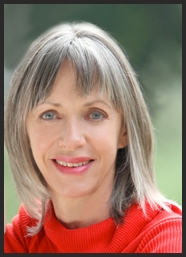 | | Caron Harrang, LICSW, FIPA |
This issue of the News Brief usually published in May was delayed so that we could bring you reviews from the recently concluded CIPS Clinical Conference co-sponsored this year, for the first time, with the North American Psychoanalytic Confederation (NAPsaC). Reports on this first time collaboration are also referred to in Randi Wirth's Letter from the President and in Maureen Murphy's report from NAPsaC.
In this issue are two special reports. The first reviews a LAISPS sponsored workshop on the life and work of psychoanalyst luminary Marion Milner by Peter Wolson. The second is a thought-provoking essay by Australian analyst Douglas Kirsner on training analysis followed by an interview of Kirsner conducted by Leigh Tobias.
 | | Lisa Halotek, PsyD, FIPA |
As related to continuing education please note opportunities to register for EBOR 2014 and for CIPS Seminars and Study Groups. Also, in Inter-Society Dialogue Susan Finkelstein describes a workshop she is organizing with psychoanalyst David Bell. And as usual, Society News recaps some of the important goings on in each of our member societies. Last but not least, the editors wish to let you know that Caron will be stepping down as Managing Editor after this issue to prepare for her role as NPSI President. At the same time, we wish to note the arrival of Joseph Davis as a new reporter for LAISPS. We both feel confident that the News Brief will continue to evolve and serve as a vehicle for the sense of community within CIPS under Lisa's leadership as the new Managing Editor. See information at the bottom of this and every News Brief for how to contact Lisa and our reporters.
Caron Harrang, LICSW, FIPA Managing Editor Lisa Halotek, PsyD, FIPA Assistant Managing Editor |
|
|
|
|
|
CIPS Board of Directors & Coordinators
|
Officers:
* President: Randi Wirth (IPTAR)
* Past-President: Leigh Tobias (PCC)
* Vice President: Terrence McBride (PCC)
* Treasurer: Sandra Borden (IPTAR)
* Recording Secretary: Marilyn Rifkin (IPTAR)
Directors:
Direct Member Society Coordinator:
Membership Coordinator:
Directors represent the interests of their local society and institute on the CIPS Board of Directors and attend monthly teleconference meetings chaired by the President. The Direct Member Society Coordinator represents the interests of our individual direct members and also attends board meetings. The Membership Coordinator processes the application of those applying for direct membership, welcomes new members, and coordinates with the Webmaster to make sure our member roster is accurate and up to date.
Any candidate or member may attend a CIPS Board meeting (except when the board is in executive session) to learn more about the organization and how to become more involved. Contact your local society director(s) if you are interested.
|
|
Letter from the President
|
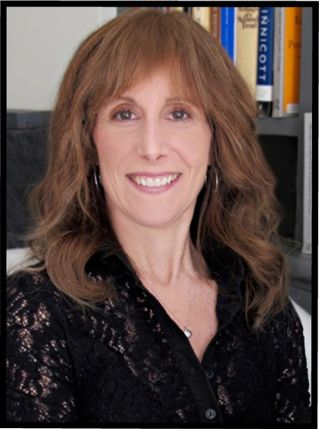 | | Randi Wirth, CIPS President |
As I write this letter to the CIPS community, I am still basking in the afterglow of the CIPS/NAPsaC Clinical Conference held this past May in New York City. Although this was our eighth Clinical Conference since 1998 in Palm Springs, this year's meeting marked a milestone with the inclusion of NAPsaC as our co-sponsor. This historic collaboration brought a new dimension to the weekend as the conference opened with a dynamic panel discussion led by IPA Vice-President Alexandra Billinghurst, and panelists Maxine Anderson, MD, FIPA, Fred Busch, PhD, FIPA, Michael Diamond, PhD, FIPA and Robert Pyles, MD, FIPA presenting papers on the conference theme of Trauma, Destruction and Transformative Potential. The ensuing discussion amongst panelists and attendees reflected the diversity and breadth of viewpoint that is the hallmark of this clinical conference. The setting at the Ritz-Carlton Battery Park, in the shadow of the fallen Twin Towers, added gravitas to the emotion of the evening.
As always, the small group case presentation format was the cornerstone of the weekend as participants shared clinical vignettes with colleagues from institutes around North Americas. We were stimulated and challenged by the collective experience and encouragement of our group members. Saturday afternoon we walked as a group to the site of the World Trade Center and were able to reflect on the bold and blatant trauma of that tragedy, ever mindful that trauma takes many forms.
A highlight for me was Saturday evening's cocktail party where we celebrated several special occasions. As the sun set over Battery Park, we were treated to a spectacular view of the Statue of Liberty, Ellis Island and the New York Harbor. In addition to our collaboration with NAPsaC, as CIPS President I was delighted to welcome our newest CIPS society, the Vermont Psychoanalytic Study Group, represented by Douglas Dennett, MD. We are delighted to welcome VPSG to the CIPS family. Then, along with CIPS Vice President Terry McBride, I was honored to present two Distinguished Service Awards to CIPS Past Presidents Harriet Basseches and Rick Perlman. Both Harriet and Rick have served CIPS for many years in a variety of roles, each working tirelessly to create the foundation of and then nurturing the growth of CIPS. We are indebted to them and it was a personal pleasure to watch as their colleagues recognized them for their contributions and devotion.
This issue of the News Brief marks the end of Caron Harrang's transformative tenure as managing editor. As a former editor of the original CIPS E-newsletter, I am acutely aware of the time involvement, effort, and commitment necessary to produce a newsletter that is timely, informative, and interesting. Caron has brought the News Brief to a whole new level by incorporating in-depth interviews and providing a broader sense of what is transpiring at our constituent institutes. At both the content and visual level, the News Brief is a reflection of Caron's talent and passion. On behalf of the CIPS Board I thank her and know that her successor, Lisa Halotek, will continue Caron's fine work.
I wish you all a wonderful summer!
Warmest Regards,
Randi Wirth, PhD, FIPA
|
|
|
All International Psychoanalytical Association members in North America are automatically members of the North American Psychoanalytic Confederation. NAPsaC is a confederation of IPA component groups, formed in 2003, to enable the North American societies of the IPA to communicate with each other, to collaborate with each other on projects of mutual interest, and to facilitate decision-making by the component groups of North America in response to the administrative and governance requirements of the IPA.
NAPsaC Officers: Maureen Murphy (Chair); Beth Kalish (Co-Chair); Leigh Tobias (Secretary); Sandra Borden (Treasurer)
Board of Directors: Andrew Brook (CPS), Caron Harrang (NPSI),
Beth Kalish (LAISPS); Mark Smaller (APsaA), Leigh Tobias (PCC), Joann Turo (CFS)
Alternate Directors: Harriet Wolfe (APsaA); Louis Brunet (CPS); Paula Ellman(CFS), Randi Wirth (IPTAR) Lisa Halotek (LAISPS); Dana Blue, (NPSI); Andrea Kahn(PCC);
Charles Spezzano (PINC)
The following activities reflect NAPsaCs growing involvement as the North American regional IPA association:
CIPS/NAPsaC Co-Sponsored Clinical Conference
For the first time, our two organizations collaborated to sponsor a clinical conference. In addition to the clinical emphasis that has long characterized the conference, this year a plenary panel with small group discussion opened the conference.
IPA Vice President, Alexandra Billinghurst, moderated the panel composed of Maxine Anderson, Fred Busch, Michael Diamond and Robert Pyles. In addition, Sergio Nick represented FEPAL bringing an inter-regional sensibility to the event.
Encyclopedic Dictionary of Psychoanalysis
This project is now under way with Co-Chairs as well as approximately 20 contributors from each region. While this is still a work in progress, the Encyclopedic Dictionary is envisioned to be divided into 2 broad categories: general concepts that are commonly recognized in all regions and a smaller series of concepts that have typically developed in one region and subsequently gained resonance inter-regionally.
EJournal
At the April EPF Conference in Torino, many strands of discussion about the vision of the journal took shape. Psychoanalysis Today was chosen as the title representing the contemporary feel of the journal. The Editorial Board will be composed of representatives from the three regions and the IPA. An optimistic date of October 2014 is slated for the inaugural issue with two key papers from each region.
|
|
|
We are fortunate to feature two special reports in this issue. The first is an overview of a conference sponsored by LAISPS featuring the work of founding member of the British Middle School, Marion Milner, written by Peter Wolson (LAISPS). The second is a presentation by Doug Kirsner given at IPTAR, followed by a phone interview with him conducted by Leigh Tobias (PCC).
Marion Milner's Exploration of Creativity in Art and Psychoanalysis
By Peter Wolson, PhD, FIPA
On April 27, 2014, LAISPS put on a workshop entitled: "Marion Milner's Exploration of Creativity in Art and Psychoanalysis." It celebrated the life and work of Marion Milner, a founder of the British Middle School, and featured distinguished Scottish author, Emma Letley, who recently published the first biography of Marion Milner: Marion Milner: The Life (2013). I decided to develop this workshop after reading and reviewing for Letley, her spectacularly rich, complex portrait of one of the most original, unique thinkers in psychoanalysis. (This review can be read on amazon.com) While on vacation, I could hardly put this book down. Thomas Helscher, Chair of the Program Committee, Claudia Eskenazi, my co-organizer, and Lisa Halotek, who led an inspired pre-workshop study group, felt the same. The Program Committee, which also included Jo Ann McKarus and Sandra Wilder-Padilla, provided invaluable support for this workshop.
Christopher Bollas, who had been supervised by Milner and was a close personal friend, described this event as, "A rare opportunity. The visit of Emma Letley to Los Angeles, to discuss the life and work of Marion Milner, will provide a unique opportunity for North American clinicians, art historians, academics, and feminists, to appreciate the idiom and power of this Englishwoman: a professor of English in London, a widely acclaimed biographer, and a psychoanalytical psychotherapist at Kings College, is uniquely positioned to convey Milner to others. This is not simply an occasion for those who know of Milner's work to celebrate her, but also for those who have no knowledge of her at all; indeed, perhaps especially for those who will be introduced to her for the first time. Letley not only writes about Milner, she embodies in her own person and sensibility many of those qualities that Milner exemplified in her own lifetime. It is safe to say that this event will be unlike any other conference in the psychoanalytical realm."
******
The following special report includes an edited transcript of a presentation given by Doulas Kirsner, PhD at IPTAR and a telephone interview conducted with the author by Leigh Tobias, PhD, FIPA following this presentation in the spring of 2014.
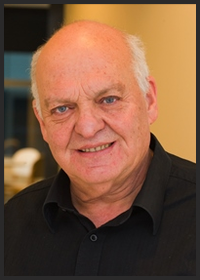 | | Douglas Kirsner |
Training Analysis: Lessons From The Past Not To Be Ignored
By Douglas Kirsner, PhD Deakin University, Melbourne
A presentation given at IPTAR (New York City) on November 9, 2013
It is now 60 years since Robert Knight's Presidential Address to the American Psychoanalytic Association in which he lamented the typical themes of difficulty in psychoanalytic institutes:
"The spectacle of a national association of physicians and scientists feuding with each other over training standards and practices, and calling each other orthodox and conservative or deviant and dissident, is not an attractive one, to say the least. Such terms belong to religions, or to fanatical political movements and not to science and medicine. Psychoanalysis should be neither a doctrine nor a party line."
In Knight's view, "the most pressing issue and the one charged with the greatest emotion has always been that of training."
I have been interested in investigating the training processes at institutes as the central sites for transmission of psychoanalytic knowledge and the qualification of analysts in the theory and practice of this knowledge. One of the conclusions from my studies on the internal political histories of psychoanalytic institutes is that major conflicts most often surrounded the issue around the right to train, who appoints whom and who is a training analyst. These problems have not abated.
In January this year, to the American Psychoanalytic Association, Otto Kernberg was invited to present the Presidential Plenary address. It was tellingly titled, "The Twilight of the Training Analyst System." The lecture provided a significant marker in Kernberg's well-known long-standing trenchant critique of an authoritarian system that he sees as an internal root cause of the destruction of creativity and growth in psychoanalysis.
Click here to read the complete presentation: http://cipsusa.org/news/66/49/Training-Analysis-Lessons-From-The-Past-Not-To-Be-Ignored/
Interview with Douglas Kirsner, PhD
By Leigh Tobias, PhD, FIPA
The following interview was conducted via telephone by CIPS Past President Leigh Tobias in January 2014 and edited for readability by the News Brief Editors.
Leigh Tobias: You cite on page one of your paper (shown above) that "although training analyst status is one important aspect of the training system, there are other roles that apply even when the literal role of training analyst doesn't exist in the system."
Douglas Kirsner: Yes, I'm asking a question-is there an underlying trope in the system? The question of who has the right to train lies at the heart. It's the basic fault in the system and goes right to the heart of the problem in many psychoanalytic institutes around the world. I am not stuck on the name of the position of training analyst itself. Rather, who is given the right to train?
There are some systems in which the advancement to TA status is automatic, but the problem I am outlining still remains. The status does not confer power or ability, nor did being eligible give meaning. Underlying the problem is that of a free market. If those in control regulate the market, then it is not free. A free market needs checks and balances and transparency. If it turns out that those that have a nominal right, but have no right in reality, then the question is begged. Those that have the right to train are then the cliques in power and then trainees may lose out on other capable trainers, no matter what their name. What is needed is a trustworthy institution that will produce the real possibility of distribution of candidates and power.
I am highlighting a question about how analysts accredit themselves. Is there a difference between a training analyst and a regular one? It is often asserted that a training analyst is the best. But this may be a social allocation and a subjective judgment, even if there is a process of vetting that produces the title training analyst, or conversely if there is an automatic conferring of the title after a period of time. If an authority distributes the goods, then it is still just as arbitrary as an authoritarian system. It can just push the problem one step back.
It is not the moniker that is important then, but how decisions of training trainees are made. A real distribution of power is not done by authority, but by criteria and transparent checks and balances. It is a demonstration of capacity rather than an allocation of value. Allocation, recommendation by a good reputation alone is opaque, and confers an esoteric magical line. Power needs checks and balances. Are they fair, trustworthy, and do they give candidates a choice?
Click here to read the complete presentation... http://cipsusa.org/news/65/49/Interview-with-Douglas-Kirsner-PhD/
|
CIPS/NAPsaC Clinical Conference Reviews
| |

Trauma, Destruction and Transformative Potential
May 16-18, 2014
New York City
Reflections on the CIPS/NAPsaC Clinical Conference, May 16-18, 2014*
By Maxine Anderson, MD, FIPA
This clinical conference held every two years has for a number of years been an open invitation to members from all the CIPS Societies (IPA Societies in the USA not part of APsaA), uniquely focused on the small group experience of presenting and discussing clinical material in a format that includes all members (including the facilitator) as presenters and discussants. This format where candidates, analysts, and training analysts work together puts everyone on a level playing field and establishes a sense of equality and respect for differences among the participants. In an additional effort for inclusiveness, reaching beyond the CIPS membership, this year's invitation went to all the members of the North American Psychoanalytic Confederation (NAPsaC), which meant all of the members of the American Psychoanalytic Association (APsaA) and of the Canadian Psychoanalytic Society. Another first was locating the conference at the very elegant Ritz Carlton in lower Manhattan situated near the newly opened 9/11 Memorial and inclusion of a panel presentation of invited papers on the conference theme: Trauma, Destruction and Transformative Potential. I was honored to participate as a member of the Friday afternoon panel as well as a small group member for the rest of the weekend. The panel was well received, the speakers having been chosen for their different points of view: Fred Busch (Boston), Bob Pyles, (Boston), Michael Diamond (Los Angeles), and Maxine Anderson (Seattle). Panelists spoke about trauma and reparation from their own point of view. I chose to consider the inevitability of internal trauma due to polarizing tensions such as the simultaneous urge to grow and the hatred of being disturbed. The title of my 20 minute talk was "Our inner dilemma: the trauma of everyday conflict." We were told that CIPS may try to organize the papers and discussions into book form. Everyone I spoke with seemed to have had a rewarding experience in the clinical group meetings, some saying that this conference represents a pinnacle in their ongoing psychoanalytic learning. *This essay was originally published in Selected Facts: Newsletter of the Northwestern Psychoanalytic Society and Institute.
Click here to read the full review: http://npsi.us.com/wp-content/themes/NPSI Theme/documents/Maxine_Anderson_June2014.pdf******
Reflections on the Individual Group Experience: CIPS/NAPSAC 2014
By Phyllis Sloate, PhD, FIPA
In our small clinical group we focused on the personal, individual meaning of trauma. In each case presented, trauma was defensively intertwined and defensively elaborated within fantasy and through conflictual issues. For example, dissociation could be used to hide anger, or be part of compliance to cover negative transference. Trauma in these cases involved neglect, abuse, actual and emotional abandonment, excessive parental hovering, and parental exploitation of the child. The patients we discussed ranged from severely dissociated, and involved in a fantasy world, to high level character disorders. Several themes in common emerged, centered on these patient's profound attachments to their internal terrorists, and the difficulties encountered in working this through. Problems with separation, boundary issues, an inability to tolerate ambivalence or to allow pleasure in their lives, were all brought to the transference engagement. This often took the form of an inability to accept help, and what Wurmser calls the "omnipotence of responsibility," they are special by virtue of their suffering, an inability to relinquish the power of victimization, and the concomitant power of entitlement. Inevitably, each of us was drawn into these powerful transferences, at times to the point of feeling our mind was confused, lost, or perhaps had been destroyed. Interestingly enough, when less known countertransference feelings emerged, they centered on how to not foster an excessively regressive transference, how to help our patients individuate, and how to let go. We all felt nurtured, helped and enriched by our process; what more could anyone want!
Phyllis Sloate, PhD, FIPA serves on the CIPS Board as Administrator to the President and chairs the Education Committee. She is a Fellow at IPTAR; training and supervising analyst and faculty at CFS; faculty and supervisor at WCSPP and the NYU Postdoctoral Program. She chairs the Psychosomatic Study Group of the American Psychoanalytic Association. Phyllis is especially interested in the transformative processes by which psychoanalysis facilitates movement from the concrete and external to a more developed capacity for symbolic, metaphoric, and interpretive thinking.
******
Trauma, Destruction and Transformative Potential
By Leigh Tobias, PhD, FIPA
As I boarded the plane from Los Angeles to New York for the eighth CIPS Clinical Conference, I felt ill at ease. The theme of the conference was taking CIPS to the lower tip of NYC, the Battery, close to Ground Zero. Though all was in order, I still felt the aftermath of Sept 11, 2001.When I arrived at the hotel hours later, it was 1:30 AM, the wind was whipping through trees and pulling at the hotel windows, the feeling was heightened. I stepped out of the cab and the new Ground Zero building, '1776' loomed directly in front of me, shrouded in clouds. Utter destruction now cleared and rebuilt in its place was a building stronger and more awe-inspiring than ever. Remarkable. CIPS was also trying something new, a joint conference venture with NAPsaC. There was a first-ever panel of speakers on the theme of the conference added Friday evening to the usual clinical-material-only CIPS style conference. Four panelists presented four different perspectives on trauma: Maxine Anderson, Fred Busch, Michael Diamond, and Robert Pyles. The NAPsaC alliance invited other regional members to participate, resulting in IPA Vice President Alexandra Billinghurst from Sweden (EPF) as moderator of the panel, and FEPAL member Sergio Nick joining us from Brazil, standing in for FEPAL President Abel Feinstein. All together we numbered 51 participants. The panel set the tone for small group discussion and shared clinical material. The weekend unfolded into an open, meaningful exchange among group members from different theoretical stances. The groups allowed presentation of difficult material in utmost confidence, leading to a sense of safety in exploring the different views of each member. This valuable exchange has become characteristic of the CIPS Conference format. Reports at the Plenary on Sunday found all group members feeling respectfully listened to, appreciating their groups, and group leaders. These conditions helped most participants to continue to transform several kinds of deep trauma and shock into meaningful representations. The following are a few of the anonymous comments made by the group reporters: "A dream came"; "I gained perspective on a case and could resume thinking about it"; "A lack of maternal pre-occupation for the patient became a place in the analyst's mind to find the patient"; "We found a lack of maternal and paternal holding that carried undigested trauma"; "There was something about analytic neutrality that re-traumatized the first responders' survival guilt"; "It can take a long time for the analyst to find words for the cumulative trauma of the patient"; "The group helped to digest and formulate further what has been hard to represent"; "Trauma can be defensively intertwined with defenses of anger, compliance, neglect"; "Our countertransference helped us to understand what was shown: an absence of words, an impasse. The group helped to go beyond this"; "How important the challenges in the treatment have been to understand-not as a provocation, but as communication of what cannot be represented yet." It was useful to find that most participants also carried vague but uneasy feelings about the location and occasion of the conference, which coincided with the opening of the 9/11 Memorial pools and Museum. The weather on Saturday was almost the same as that of the day of the attacks in 2001. There was an eerie undercurrent, and relief that nothing erupted over the weekend, other than the unconscious material-which was violent enough! The weekend ended with a sense of camaraderie and hopefulness that nourished our clinical selves, and our private selves. The conference was gracefully managed by President Randi Wirth and the conference organizing committee: Andrea Kahn, Phyllis Sloate, Marilyn Rifkin, and Maureen Murphy from NAPsaC (and CIPS). This conference was a particular and deep pleasure to attend. Many thanks for a quality experience. Leigh Tobias, PhD, FIPA is a training and supervising analyst (PCC) with a private practice in Beverly Hills, California. ******
First Impressions of a CIPS/NAPsaC Clinical Conference
By Doug Dennett, MD
I am pleased to say to my colleagues within the Vermont Psychoanalytic Study Group that we have made a very wise choice in joining CIPS. My three days at the May 2014 CIPS Conference cosponsored with NAPsaC in New York City at the Ritz Carlton was positive in every sense. Although I had some concern that a conference of "only" 40-50 attendees was too small, I left after the wrap-up on Sunday with a new realization about possibilities within psychoanalytic groups, new appreciations for this particular organization, and felt greatly enriched by the experience. During this conference I experienced an amazing inclusiveness with fellow psychoanalyst clinicians, teachers, writers, and leaders. I felt a degree of intimacy I would not have expected of myself in a new and unfamiliar environment. From the outset of this clinical conference, the implicit and explicit assumptions of acceptance, safety, mutuality, and creative possibility were apparent in both individual interactions with colleagues and in my small group experience.
Prior to attending, I did not truly understand the unique structure of a CIPS Clinical Conference, a tradition begun in 1998. I came away from the experience realizing that this biennial conference is designed to be a clinical working experience without the usual paper presentations or didactically driven lectures typical of many local, national, and international psychoanalytic conferences. Groups of analysts come together from different psychoanalytic cultures and gather to present and discuss clinical material in a respectful collegial space and format.
The 2014 CIPS/NAPsaC Conference also had an added event on Friday evening. A panel of four attendees presented brief papers on the topic of trauma, which effectively introduced the conference theme: Trauma, Destruction and Transformative Potential. Following discussion of the papers a very nice reception (overlooking Battery Park and the Statue of Liberty) was held which further facilitated the coming together of attendees as a large group (in contrast to the "small groups" which met throughout the weekend).
Saturday morning brought together again the large group for breakfast. This forty five minute beginning to the day was causal, relaxed, and especially for me another opportunity to meet new colleagues and renew long standing relationships. It was also one of those moments in time when degrees of separation fall away. For example, at breakfast I had the pleasure of talking with two wonderful senior analysts, Helen Gediman and Phyllis Sloate. I came to learn that they had worked as supervisors with a dear friend when he did his training with the Washington branch of Contemporary Freudian Society (then called the New York Freudian Society).
During all of these informal social moments I met interesting colleagues, learned about their "analytic homes," and also about the prehistory and formation of CIPS in the United States. Bit by bit a picture emerged, something like learning about extended distant relatives at a large family reunion.
Finally, I wish to say a word about my small group experience at the conference. All participants in the weekend were assigned to groups of five or six members. One member served as participant facilitator. The groups met three times over the next day and a half for approximately seven hours. Our task was to discuss clinical material presented by each of the group members. In my group all six members presented clinical material that represented trauma or difficult moments in treatment. I found that the case material presented did indeed represent very difficult clinical scenarios. Likewise the discussion presented viewpoints from multiple analytic perspectives. There was room for a diversity of ideas and challenges to the presenting analyst's experience were minimal. I quickly realized that this was a safe place to present material and express personal views. The experience was clinically relevant to our individual work with patients, especially to those who have suffered trauma. How to work with trauma without re-traumatizing the patient emerged as a critical theme in our discussion. Complex transference and countertransference developments, enactments, therapeutic impasse the uses of empathy were central themes in my group's discussion.
In this review, I hope I have conveyed something of the culture of the CIPS community and a bit about how I believe it is shaping the American psychoanalytic landscape. The CIPS Board is already planning for the 2015 IPA Congress in Boston. I encourage my colleagues within VPSG to attend this conference and get to know our international community as well as our American "relatives" within CIPS.
Doug Dennett, MD is the director representing the Vermont Psychoanalytic Study Group on the CIPS Board of Directors with a private practice in Essex Junction, Vermont.
|
EBOR Registration is Open!
|
Early Bird Rate Through August 15th
Tenth International Evolving British Object Relations Conference
Sponsored by the Northwest Psychoanalytic Society and Institute October 17-19 2014 Seattle, WA (USA) From Reverie to Interpretation: Transforming thought into the action of psychoanalysis
From its inception, EBOR has been noted for its international character, drawing world-renowned presenters and participants from near and far, and for its intimacy in providing an open collegial atmosphere for discussion of the conference theme in both large and small group settings. To those who have attended EBOR before, we look forward to your continuing participation and contribution. For those who are coming to EBOR for the first time, we extend a special welcome and invitation to let the organizing committee (below) know if there is anything we can do to facilitate your involvement.
Our esteemed plenary presenters will provide contrasting views of reverie and how it informs the process of making interpretations and other psychoanalytic actions.
Giuseppe Civitarese, MD (Italy) "Reverie and the Aesthetics of Psychoanalysis"
Clara Nemas, MD (Argentina) "Courage and Sincerity Reverie <-> and Interpretation"
As in the past, the conference will feature individual paper presentations with ample time for facilitated small group discussion. A complete list of individual presenters and paper topics will be available later this summer.
This year we are also adding pre-conference Master Classes taught by our plenary presenters and the opportunity to purchase guest tickets for the Friday evening portion of the conference called, "The Art of Reverie." In addition, the conference program includes a Saturday evening screening and discussion of the 2009 French film, "The Hedgehog" directed by Mona Achache.
For additional details about conference registration, lodging, and our host-a-candidate program see EBOR 2014 Online Brochure.
For additional details about the conference including schedule, registration, and lodging see EBOR 2014 Online Brochure.
|
| CIPS Study Groups and Seminars |
The following is a list of current or planned study groups or seminars. All groups meet via teleconference and are led by CIPS members or honorary members. Please contact Phyllis Sloate if you have questions or an idea for a study group you would like to facilitate (plsloate@aol.com or 914.636.2833).
CIPS is delighted to announce that our new honorary member, James Krantz, PhD, (IPTAR) will offer a teleconference in the Fall of 2014 titled: Introduction to Socio-analytic Theory and Practice. This is a unique opportunity for members to study with a highly regarded, experienced professional at the forefront of organizational consultation.
Details and how to register will be forthcoming in an email flyer and on our website.
Enactment Study Group led by Nancy Goodman. [This group is closed.]
Bion 1 Study Group led by Marianne Robinson. Limited openings.
Introduction to Socio-analytic Theory and Practice led by James Krantz. Four sessions beginning Tuesday, September 16, 2014 with the remaining sessions to be determined by the instructor and group.
Writing Workshop led by Eve Golden. This new group will begin with an email conversation among those interested with the instructor over the summer. Four sessions are anticipated in the fall with the startup date to be determined by the instructor and the group.
|
| Inter-Society Dialogue | The purpose of this section of the News Brief is to report on instances of collegial contact and sharing of ideas amongst the Societies and Study Groups that make up the Confederation (IPTAR, LAISPS, NPSI, PCC, VPSG and the Direct Member Society) and between our members and psychoanalytic societies or organizations outside of CIPS. In this issue we feature collaboration between an IPTAR analyst and a colleague from the British Psychoanalytical Society. The News Brief invites submissions from any CIPS member with similar planned activities or a review after attending an event illustrative of inter-society dialogue and learning.
CIPS Book Series Reception for "Battling the Life and Death Forces of Sadomasochism: Clinical Perspectives
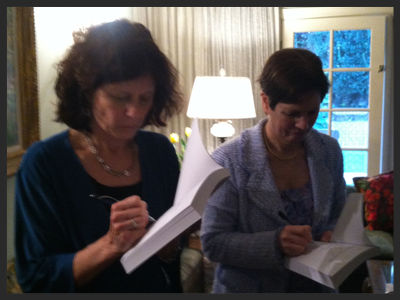 | Paula Ellman & Harriet Basseches
|
About thirty people gathered for a CIPS Book Series reception, celebrating the publication of Battling the Life and Death Forces of Sadomasochism: Clinical Perspectives. It was held on Saturday, March 8, 2014, in Los Angeles, at the home of Beth Kalish. This event honored editors Harriet Basseches, Paula Ellman, and Nancy Goodman as well as Los Angeles writers James Grotstein, Terrence McBride, and Leo Rangell.
The afternoon began with a chance to meet the authors and connect with colleagues over wine and hors devours on a warm, sunny afternoon at Beth's lovely home. The celebration transitioned into an opportunity for the editors and some authors to speak about the project and their chapters and a discussion ensued about the theoretical and clinical aspects of sadomasochism from different perspectives. Jim Grotstien ended the discussion commenting on the sadomasochistic role of the father when reality and the child's limitations need to be discussed, which can be painful for both. This book encompasses the depth and breadth of sadomasochism and would be an excellent resource for practice, teaching and/or supervision.
******
The Internal World and Its Objects
The Internal World and its Objects is a seminar that Susan Finkelstein, LCSW, FIPA (IPTAR) is organizing beginning in the fall of 2014 in collaboration with David Bell, MD (British Psychoanalytical Society). This course will follow the academic schedule of September 2014 to June 2015. It will be offered via video teleconferencing twice monthly on Thursday afternoons from 3-5 pm (New York time). Registration is available for candidates and analysts at all levels of practice and or training.
This theoretical and clinical course will focus on the historical evolution of psychoanalytical theory and technique from Freud to Contemporary Kleinian work, with an emphasis on psychoanalytic theory of practice with regard to narcissistic, borderline, and schizoid character structures. Clinical studies will accompany readings to integrate theory with practice as it relates to ideas about the internal world and its objects. For example, will explore central Kleinian concepts such as projective identification, enactment, paranoid-schizoid and depressive positions, early Oedipal configurations, psychic retreats, and reparation, including manic reparation.
Susan initiated her objective of learning and teaching Kleinian theory and technique to colleagues in New York through the development of a study group called "Understanding Primitive Mental States" in 2009. In the past David Bell, Irma Brenman Pick, and Alberto Hahn (British Psychoanalytical Society), as well as Robert Oelsner (NPSI) have presented at these annual conferences in New York. Looking forward, Priscilla Roth, also from the British, will present her paper On Mourning and Melancholia in the fall of 2015.
For additional information about Understanding Primitive Mental States conferences or The Internal World and Its Objects seminar, please contact Susan at 212.254.8501 or finkelsteinsn@gmail.com.
|
| CIPS Societies News |
Direct Members Society (DMS)
Since DMS is comprised of individuals from different IPA Societies other than one of the CIPS Societies, there is not a website for this group. To join CIPS as an individual member please fill out an application on our website by clicking here: DMS Membership Application Form
Institute for Psychoanalytic Training & Research (IPTAR)
For more information on all IPTAR events visit www.iptar.org.
Los Angeles Institute & Society for Psychoanalytic Study (LAISPS)
LAISPS sponsored a workshop by Arnold Richards and Gabriele Schwab who presented on "The Replacement Child: Cultural Trauma and Incomplete Mourning." Following the workshop, LAISPS and NCP hosted a book party for the Rangell Reader, edited by Beth Kalish, PhD and Charles P Fisher, PhD. The book consists of eight articles, chosen by the late Leo Rangell, MD and commentaries were presented by contributors, including Alan Spivak, PhD of LAISPS.
A CIPS book reception celebrating the publication of Battling the Life and Death Forces
of Sadomasochism: Clinical Perspectives was held to honor the editors as well James Grotstein, MD, Terrence McBride, PhD and Leo Rangell, PhD, Los Angeles contributors to the book.
LAISPS hosted a workshop at The New Center for Psychoanalysis on The Work of Marion Milner featuring Emma Letley, PhD academic and psychoanalytic psychotherapist practicing in London and the author of a recent Milner biography. Dr. Letley's presentation was amplified by personal reminiscences of analysts who knew and trained with Milner and in the afternoon several notable Los Angeles analysts led small group discussions about Milner's unique contributions to creativity in art and psychoanalysis.
Sandra Wilder-Padilla, PhD has been appointed to the newly created CIPS position of Membership Coordinator. Her duties will include processing new applications for individual membership and coordinating their addition to the membership roster on the website. She will also monitor the current status of Direct Members, including the coordination of dues payments with the Treasurer. As such, she will be a non-voting member of the Board of Directors.
W Preseton Lear, PsyD, LCSW has been named the 2013 Michael Diamond Candidate Essay Award Winner for his paper The Icarus Complex and the Addiction to Near Death. He presented the paper to the LAISPS community and public with discussant Michael Diamond, PhD, FIPA.
Second year candidate, Shireen Oberman, LCSW, is the recipient of the Dodd Cohen Memorial Scholarship Award for the academic year 2013-2014.
LAISPS is delighted to promote five candidates this year who have completed their fourth year of coursework, to senior candidate status. The candidates shown in the photo below, from left to right, are: Harvey Martz, PhD, Peggy Matson, MFT, Victoria Curea, MFT, Jessica Herzog, PsyD, and W Preston Lear, PsyD. A party was held in their honor on June 6, 2014.
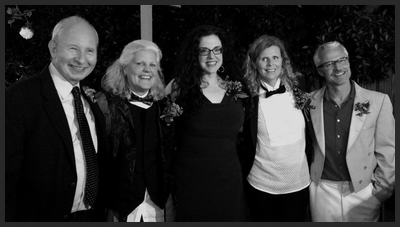 | | LAISPS Senior Candidates |
LAISPS members gathered for an annual end of the academic year celebration and to acknowledge the many contributions made by members running committees, teaching, and supervising. Outgoing President Lynn Goren, PhD was saluted with a standing ovation for her excellent work during the last three years, and she in turn welcomed in-coming President Lori O'Brien, PhD. For more information on the cost and location of these and other classes visit www.LAISPS.org Northwestern Psychoanalytic Society and Institute (NPSI) On May 8, 2014 NPSI Mirta Berman-Oelsner, PsyA, FIPA, LHMC moderated a presentation to members of the Child Therapy Association. Mirta responded to a paper from Carla Hershman, LICSW entitled, "Fear of Growing Up: Driven to Distraction." The paper focused on the treatment of an adolescent and explored a range of issues pertinent to adolescent development in the contemporary society. CTA is a Seattle-based membership organization of psychotherapists involved in the treatment of children.
Post-didactic candidate Lynn Cunningham, PhD, LICSW presented a paper entitled Trichotillomania: A Virtual World of One's Own to the Association of Psychoneurocutaneous Medicine of North America in Denver, Colorado in March 2014.
Judy K Eekhoff, PhD, FIPA has been appointed an Associate Editor for the American Journal of Psychoanalysis. Also of note, Judy will be presenting a paper, "Finding a Center of Gravity via Proximity with the Analyst" in July 2014 at the Seventh Annual International Tustin Conference in Boston.
Caron Harrang, LICSW, FIPA has been elected to become a full faculty member of the NPSI Institute.
NPSI President and Co-Chair of the Accreditation Committee David Jachim, PhD, FIPA is pleased to announce that the organization has as of April 18, 2014 submitted its written application to the Accreditation Counsel for Psychoanalytic Education (ACPE). The next step in the process toward accreditation is the ACPE Site Visit that we hope will occur within the next half year.
Maxine Nelson, LICSW, FIPA has been appointed to join the NPSI Board of Directors beginning in May 2014 after having serving for the past year as candidate representative on the board. Senior candidate Julie Hendrickson, LMHC has filled Maxine's former position.
EBOR 2014 Organizing Committee member Maxine Nelson, LICSW, FIPA organized a series of six meetings, facilitated by NPSI analysts and faculty, to prepare the NPSI community for the October 17-19 conference. Select papers on the conference theme of reverie were provided in advance for each meeting, enabling participants to interact with the material, the facilitator, and with each other. The series was extremely successful with approximately 25 people in attendance for each meeting.
First year candidate Carolyn Steinberg, MSC, MD, FRCPC received an award given by Psychiatry Residents at the University of British Columbia Faculty of Medicine entitled, Wall of Fame Award, for her contribution to teaching in 2013-2014. In addition, Doctor X Jinn, Head of Developmental Pediatrics for the Chinese Medical Society, invited Steinberg to speak to her colleagues at The Developmental Pediatrics Training in Shanghai this past April 2014. There she lectured on Early Childhood Psychological Development. For more information on NPSI events visit www.npsi.us.com. Psychoanalytic Center of California (PCC) PCC hosted its annual chamber music concert on April 20, 2014. Renowned pianist, Norman Krieger was the featured performer. As an added treat, PCC's own Jennifer Langham accompanied Krieger on cello, playing a movement from the Chopin Sonata for Cello and Piano. It was an afternoon to remember.
John Steiner, MD returned to PCC on April 26th and presented his paper in-progress, "The Use and Abuse of Omnipotence in the Journey of the Hero" to attendees. It was a thought provoking morning. In the afternoon he conducted a Members Master Class, where Lisa Selin presented clinical material. Steiner also held a Candidate Master Class where David Goldstein presented.
Several events made up the annual Bion Conference this year:
On April 9, 2014 a pre-conference workshop was convened for the 4th Annual Wilfred Bion Conference. Joe Aguayo, Barnet Malin and John Lundgren led a stimulating discussion of keynote speaker Rudi Vermote's recently published papers in IJP (2011).
A daylong Wilfred Bion Conference took place at the New Center in Los Angeles on May 3, 2014. Keynote speaker Rudi Vermote presented his paper, "Ways of Psychic Functioning, Ways of Psychic Change." The audience and Vermote then discussed the paper for the rest of the morning. A panel discussion was held in the afternoon featuring Rudi Vermote, Joe Aguayo and Barnet Malin focusing on the contributions of so-called "late Bion." Copies of the newly published book, Wilfred Bion: Los Angeles Seminars and Supervision edited by PCC members Joe Aguayo and Barnet Malin were available for sale and signing by the authors. A Faculty dinner to honor Rudi Vermote was held in the evening following the conference.
On Sunday, May 4th, Rudi Vermote supervised Judith Mitrani in a Master Class for PCC members. Vermote then conducted a Candidate Master Class with clinical material provided by Lee Herzog.
A book launch for PCC member Jennifer Kunst was held on Wednesday, May 21, 2014 at PCC. Kunst's newly published book, Wisdom From the Couch, was available for signing by the author.
The newly offered ICAPP (Infant, Child and Adolescent Psychoanalysis program) is taking applications for the 2014-2015 academic year, beginning in the fall. The deadline for returning applications is May 27, 2014. The ICAPP is open to members from IPA-approved psychoanalytic societies as well as candidates holding fourth-year status at an IPA Institute. The first-year "Object Relations Psychoanalysis" course must be completed. Equivalencies may be requested. Upon completion of the program graduates will receive a certificate in Child and Adolescent Psychoanalysis. Contact the PCC office for an application. For additional information contact Jeanette Gadt at 310.478.8481.
The PCC is now accepting applications for the 2014-2015 Psychoanalytic Psychotherapy Program (PPP) in West Los Angeles as well as a PPP Program in Pasadena beginning fall 2014. Applications will be accepted until the end of June. Please contact the PCC office for applications.
A Graduation and celebratory picnic for the class of 2013-2014 took place June 1, 2014.
The Infant Observation Conference has been rescheduled for September 13, 2014. Rebecca Hall from Tavistock will be the presenter. For more information on these events go to www.psycc.org.
|
|
If you have news from your local Society to share with the larger CIPS community, please send your thoughts, event announcements, conference reviews, or related items to the News Brief Staff:
Lisa Halotek for general news or questions - enewseditor@cipsusa.org
Joe Davis, PhD, LMFT for news from LAISPS - davis3d@earthlink.net
Caron Harrang, LICSW, FIPA for news from NPIS - mail@caronharrang.com
Susan Mitchell, PhD for news from PCC - susam1027@hotmail.com
Jared Russell for news from DMS and IPTAR - jaredkrussell@hotmail.com
The submission deadline for the next issue (fall 2014) is September 30, 2014.
|
|
|