It's about a BIRD, not a PLANE, at the moment.
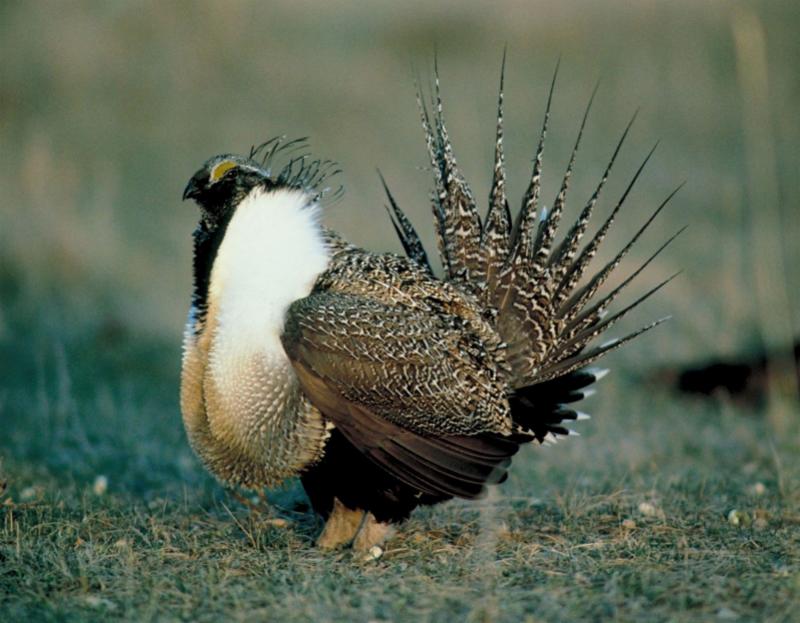 You've gotta admit, it's a pretty cool-looking bird. Measuring just under two feet tall, the Greater Sage-Grouse has a surprisingly big presence in the discussion about airport relocation. For now, the sage-grouse is no longer a candidate for listing under the Endangered Species Act because its habitat (called Sagebrush Focal Areas) is protected. This habitat is found throughout southern Idaho, which is why any discussion about an airport relocation site includes its proximity to Sagebrush Focal Areas. It's a pretty heavy topic and the FMAA wanted to ensure they weren't missing anything, so they reached out to experts at the BLM for some focal clarification.
During their presentation, Ammon Wilhelm and Codie Martin from the BLM noted the three levels of habitat protection zones currently afforded the sage-grouse: priority, important and general. You can review the presentation (which includes definitions of these protection zones on page 15) here start on page 6.
Because the conservation effort is somewhere around 70 million acres in the West, it's no surprise that sage-grouse habitat areas overlap with potential airport sites.
Hailey Mayor Fritz Haemmerle may have said it best: "I don't think there is one doable site in the field [of options]."
Okay, so what does that mean?
It's a little like meeting your soulmate. All the stars need to align for an airport relocation to work. The conversation is dynamic and based on a lot of moving parts. These include factors like the economy, sensitive habitat areas, you name it. In ten years' time we could be working with a completely different set of circumstances that may, or may not, align in the right way.
For example: Ten years from now, the sage-grouse habitat is reconfigured and site 10 (or a different site) no longer falls within a primary habitat management area. The economy is thriving and a fully funded capital campaign removes the financial strain of a relocation, and then...BINGO! The whole conversation has changed. (Now, remember, this scenario can go the other way, too.)
What we know about each of the 17 potential relocation sites is that an airport would physically fit on each of them, but every one of those sites also has major issues (except perhaps one).
In other words.
Friedman Memorial Airport will not be moving in the immediate future, but that could change quickly if a new set of circumstances were to make relocation feasible. That could happen at any time, so the board wants to be ready if it does.
Perhaps looking into a crystal ball will shed more light.
Why is it important to keep this information in the Master Plan?
Thanks to the site studies, the board already knows a lot! The Master Plan is reviewed every five years or so, and they don't want to lose all the hard work that has been put into understanding relocation options. Although this was never meant to be a site selection process, the FMAA has accomplished a lot in laying the groundwork for site selection when it becomes necessary.
|
|
WHEW, THAT WAS HEAVY!
Take a moment to enjoy an oldie but goodie while reading.
|
| | Wintertime - Steve Miller Band |
|
The Curious Incident of Blue-Sky Busing
Dear Friedman Memorial Airport,
Recently I flew into SUN for the first time. The epic snow delivered a weekend of fun, skiing, and I even met my soulmate. It was perfect, until we had to part. While my true love left on a private plane, my airline readied its buses. It was sunny and I was on a bus. What gives? Signed, Lonely and Confused

Dear Lonely and Confused,
First, congratulations on finding that perfect someone in our valley! It normally takes two to three visits before the planets align like that. Regarding your bus ride to Twin Falls, Mother Nature has a twisted sense of humor when it comes to mountain weather. Because the airlines need to schedule their whole day as the sun rises, sometimes we are at her mercy. Your flight was scheduled on a day that started with a call from "Mother" for poor enough weather to prevent flying. By the time your flight was scheduled to depart, that forecast had changed but the decision to use enhanced busing (and all the logistics coordination that goes along with it) had already been made. We do everything we can to ensure passengers fly out of SUN. Sometimes Mother Nature has a plan of her own and we have to make a decision based on current knowledge, even when she ultimately gives us a sunny day. Signed, FMA
**These are not real letters but were inspired by a recent question about bussing on a blue-sky day.
|
There's some pretty exciting news from:
|
|
WHAT WE'RE EXCITED ABOUT Airline Ticketing Office Area Improvements SOW
The board recently approved a Scope of Work to look at upgrading the Airline Ticketing Office area (the only portion of the airport that was not improved during recent renovations).
The goal of the Scope of Work: - To develop conceptual design options for this area
- To develop alternatives and costs
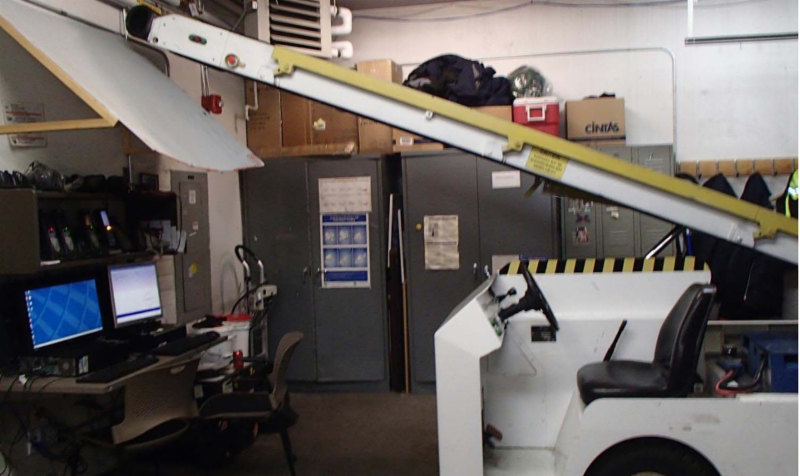
Have a look below at that desk under a makeshift canopy that is sheltering it from baggage equipment. Learn more here. Start on page 73.
|
PLANE FACT For those who want to know.
There's more air traffic now than in the past. FALSE
The total number of passengers flying into and out of FMA is growing, but still not up to the record number of passengers 12 years ago.
In 2015 the total number of FMA passengers was 137,944. That was an increase of 3,000 more passengers than the year before, but still not near the record of 148,875 the airport saw in 2003.
|
SPEAK EASY
WDAAM = What Do All the Acronyms Mean?
DME - Distance Measuring Equipment
SRE - Snow Removal Equipment
AFTIL - Airport Facilities Terminal Integration Laboratory
SRM - Safety Risk Management
We'll bring acronyms to you in every newsletter, but if you want to be an overachiever you can find them all HERE.
|
SAVE THE DATE The next regular FMAA meeting is March 8, 2016.
See you at the Blaine County Courthouse at 5:30.
|
STAY CONNECTED  
|
|
|
|
|