|
New Trends in Flooring Options
| |
 | | The product on the right is Armstrong vinyl! |
Bamboo: Bamboo is gaining popularity as a sustainable, environmentally-friendly flooring choice. Although it is often compared to hardwood, it is actually a grass, which is glued together to make strips or planks. It is durable and strong, and its cost is comparable to hardwood ($7 to $12 per square foot, installed).
Cork:
Cork is also considered an environmentally-friendly option, since it is the bark of a tree. Harvesting the bark does not destroy the tree; it regenerates and can be re-harvested every 8 to 10 years. As a flooring material it is soundproof and comfortable underfoot. Cork comes in tiles or planks with a laminate construction - a top wear layer glued to a stable core material. Most cork products are pre-finished but need to be re-sealed every few years with polyurethane. Cork flooring costs $2 to $6 per square foot, plus $3 to $5 per square foot for installation.
Linoleum: It's not your grandma's kitchen floor. Surprisingly, linoleum is also considered environmentally-friendly, as it is made from renewable, biodegradable components including linseed oil and cork. Coatings are available to help prevent staining and provide better wear. Cost is comparable to hardwood.
"Luxury" Vinyl: Think that's an oxymoron? Check out the new vinyl floors that mimic the look of stone, ceramic tile, slate and wood. These options feel warm and comfortable underfoot, they are durable, scratch and stain-resistant, and they handle dropped items better than hard surfaces.
|
HOW TO....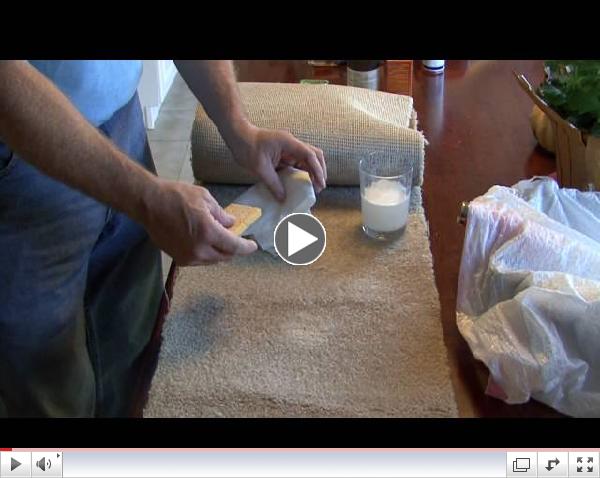 | | Home Maintenance : How to Clean Paint From Carpet |
|
|
Is Carpeting a Smart Choice for People with Allergies?
| |
Carpeting has been blamed for contributing to allergies and for emitting high levels of VOC (volatile organic compounds). However, the opposite is true -- carpet is actually good for capturing allergens which otherwise would float around in the air. It is important to vacuum frequently, though, to ensure that the allergens are removed and not allowed to recirculate once someone walks on the carpet. Periodic steam cleaning is also recommended. Low pile carpet is preferred as it is easier to avoid allergens being trapped in high pile.
Carpet should not be installed in areas that are prone to moisture, such as damp basements. Musty smells may result from carpet that is damp and has mold growing underneath. Mold spores will create problems for those with allergies and asthma.
And as far as VOCs go, studies have shown that new carpet is one of the lowest emitters of VOCs, especially compared to paint. The emissions dissipate quickly, usually within 4-5 days.
|