|
CELL
PHONES &
YOUR CHILDS HEALTH |
 |
|
Cell phones, brain tumours and kids: Health Canada clears the airwaves
The debate has been ongoing: does increased cell phone use cause brain tumours?
"For more than a decade, Health Canada has received numerous public inquiries expressing concerns over the safety of exposure to radiofrequency (RF) electromagnetic fields, such as those from cell phones and other wireless devices," says Art Thansandote, Chief of the Electromagnetics Division, Consumer and Clinical Radiation Protection Bureau, Product Safety Programme at Health Canada. "These concerns appear to arise from some media reports and dubious Internet Web sites, which contain inaccurate, unsubstantiated, controversial or contradictory statements regarding RF health issues," he explains.
FOR MORE INFO CLICK BELOW
|
|
|
|
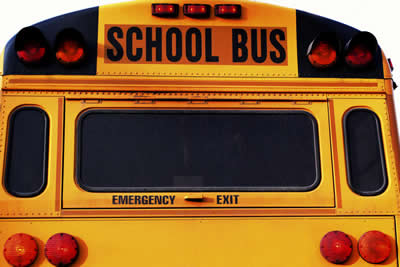
Stay in your seat
Always listen to your bus driver
Follow all safety rules
Eating & drinking is not allowed on the bus
Talk quietly NO shouting
please!
|
|
| |
|
Many of us have seen our children off to school for the first time, the fifth time or the last time this September. For most of us this summer seemed like a blur with our busy work schedule, sports practices, Games and most importantly the urgent Golf appointments that could not be avoided.
The older we get the shorter the summers seem to be. Long gone are the days of endless summers and kids asking "Mom, how many more days 'till school starts...I'm bored".
Well, the first month of school is over and children's agendas are filling up with homework to be signed, money to be handed in for milk, school teams, and annual trips.
Now begins the task of scheduling homework around winter sports. Many of us race home from work to grab a quick bite of dinner, throw the sports equipment in the back of the car and away we go off to another scheduled event.
Sometimes homework suffers because of our busy life. We want to share some tips and tricks for easier homework completion, the dangers of heavy backpack and the controversy over kids and cell phones. This months newsletter is our Back to School Issue.
|
 Danger: Is Your Child's Backpack Too Heavy? Danger: Is Your Child's Backpack Too Heavy?
Warnings Issued About the Dangers of Overweight Backpacks Carried by Children
The telltale sign of a child carrying a backpack that is too heavy is pretty evident - a hunched over posture when walking. It's not a good sign, especially for developing bodies. "Youngsters are lurched forward like peasants. Some of these children are carrying nearly 40 pounds of books
According to the U.S. Consumer Product Safety Commission (CPSC), more than 6,500 emergency room visits each year by children ages 5-18 stems from injuries related to heavy backpacks or book bags.
Furthermore, a CPSC study finds that backpack-related injuries have increased 256 percent since 1996. Additional research further shows that by the end of their teen years, nearly 60 percent of children experience at least one low-back pain episode.
Within the past several years, the American Academy of Pediatrics, the American Physical Therapy Association, the American Chiropractic Association and the International Chiropractors Association have all issued warnings about the dangers of overweight backpacks being carried by children from preschool to high school. While some schools have implemented measures, like extra copies of textbooks for school and home use, the backpack problem still exists.
According to a study conducted in Italy, the weight of the contents in a backpack carried by an average child is equivalent to a 39-pound load for a 176-pound man or a 29- pound burden for a 132-pound woman.
The problem with lifting and carrying heavy backpacks, says Dr. Kevin Donovan, past president of the Congress of Chiropractic State Associations (COCSA), is the significant back injury that can last a lifetime. Such injuries include spinal and muscular problems.
So how does a parent know when their child's backpack becomes heavy enough to cause injury? It depends on your child's body weight. The standard set by the medical profession states that a child should not carry a backpack that weighs more than 10 to 15 percent of their body weight. |
|
Homework Tips for Parents
- To get homework done early and well, develop a daily homework routine.
- Provide a quiet, well-lit place with basic school supplies for homework.
- Understanding your child's style of learning will help you develop a personalized homework plan for your child.
- It's not uncommon for kids to get overwhelmed with big assignments or projects. Help them break the project down into smaller steps. Work on pieces throughout the week and do the hard parts on the weekend.
- Talk with your child's teacher and be aware of their method of teaching so when you help you use the same terms the teacher does.
- Don't reserve learning to homework hour. Make it learning a part of your daily life.
- If your child gets frustrated or distracted with their homework, allow them to take a short break. If this frustration continues, talk with your child's teacher to determine if a tutor might be needed.
- To reinforce comprehension and memory skills, take 10 minutes to talk about the stories you've read together.
- Show your child that the skills they are learning are related to things you do as an adult. If your child is doing math, balance your cheque book.
- Teach your child to be independent. Help them with the hard homework you will need to do together and let them complete the remainder on their own.
|
|
|
GBS Insurance Solutions Inc.
" Optimal Health with Financial Freedom"
1-888-577-9537

|
|
|