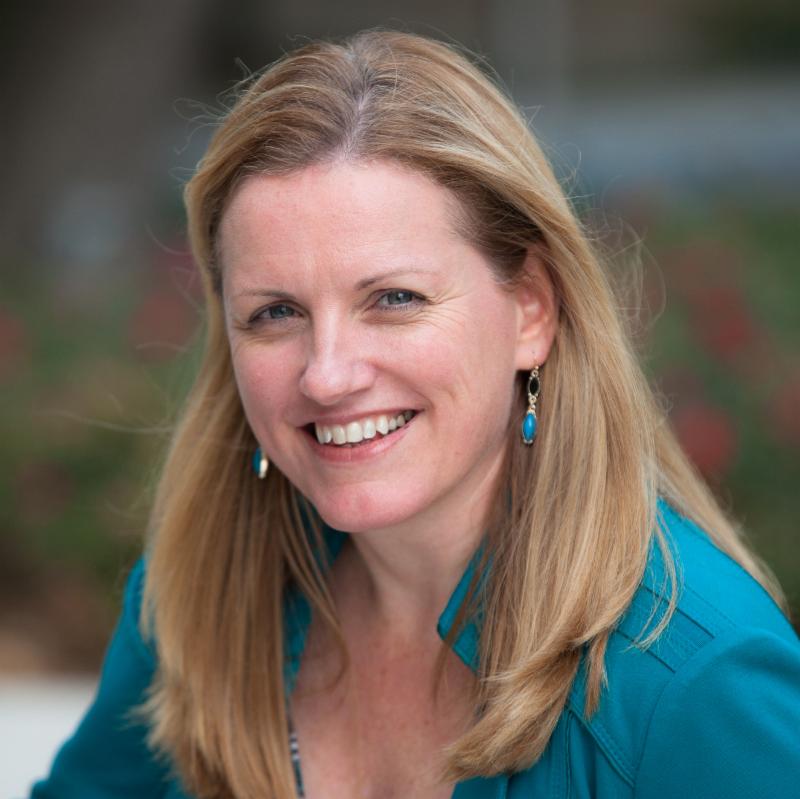
Greetings ~
We anticipate this New Year to be a significant one for background screening. I n this issue of The Monitor, we present our crystal ball predictions of what employers will need to know related to background screening in 2016. The predictions include the evolution of "Ban the Box" to "Fair Chance" initiatives, data privacy and security changes, technology integrations, and the continued onslaught of FRCA-related lawsuits; these are just a few of the topics we'll look at in depth in our article below.
Our guest article about FCRA compliance, is written by attorney Montserrat Miller and looks at one of the most common violations cited in FCRA-related lawsuits, disclosures that aren't presented as a standalone document. Ms. Miller will discuss the disclosure requirements under the FCRA, state specific requirements, and recent litigation regarding their convergence. Ms. Miller, co-chair of Arnall Golden Gregory's Background Screening Industry Group, specializes in data privacy related matters, including counseling and defending companies regarding their compliance under the Fair Credit Reporting Act in relation to their use of criminal and credit history information in the background screening process.
We look forward to continuing to provide the best possible service for all your background screening, drug testing and verification needs.
Sincerely,
 Christine M. Cunneen Christine M. Cunneen Chief Executive Officer Hire Image LLC |

Top 10 Predictions for 2016
by Christine M. Cunneen, CEO, Hire Image LLC
 When it comes to background screening, drug testing and employment verification, human resource professionals and employment attorneys must keep pace with ever-changing rules, regulations, laws and more. What are the trends facing the industry for 2016, and what will have the greatest impact on the practice of human resources and employment law? Here are my top 10 predictions for what's still "hot" from last year and why, and what's coming down the pike that demands attention and focus for 2016: 1. "Ban the Box" initiatives will turn into "Fair Chance" policies
"Ban the Box" intends to create a situation where employers are required to wait until later in the hiring process before asking about an applicant's criminal history. By removing the question about conviction history from the application, employers are unable to eliminate an applicant simply based on his or her answer and would be more likely to base the hiring decision on the applicant's qualifications. As the movement has grown, so have its goals and requirements. Rather than simply eliminating the criminal conviction checkbox, many of the laws now go further and require that an employer wait until after a conditional offer of employment to inquire about criminal history, limit the type or age of conviction records they consider, as well as conduct an individualized assessment of the applicant's criminal past before choosing to rescind that offer. To date, seven states and the District of Columbia have implemented laws that impact private employers, and several major cities and counties have also taken up the cause within their own jurisdictions. San Francisco and New York City have adopted more comprehensive Fair Chance policies which proponents claim support a broader agenda of community economic development, criminal justice reform and civil rights protection. New "Ban the Box" laws introduced in 2016 will all likely include Fair Chance components. It is also expected that many of the current laws will be updated to incorporate Fair Chance components, as Philadelphia has chosen to do. Employers will need to understand and comply with not only the requirements under the Fair Credit Reporting Act (FCRA) when it comes to background checks, but also the added requirements of those laws in the states, counties, or cities in which they do business.
Click here for a list of all current "Ban the Box" laws.
2. FCRA-related enforcement and lawsuits will continue to surge
The year 2016 will see the continued trend of class action lawsuits brought against employers for alleged violations under the Fair Credit Reporting Act (FCRA). It will also usher in an era of increased activity by those agencies charged with enforcement. As we predicted in early 2015, cases brought against employers for alleged violations under the FCRA proved to...
|
FCRA, State Disclosures and the Disclosure and Authorization
by Montserrat Miller, co-chair of Arnall Golden Gregory's Background Screening Industry Group, and published here with her permission. Ms. Miller's blog, Workforce Compliance Insights, covers legal issues, developments and noteworthy events in two areas. First, the background screening industry, including both users of background checks as well as providers of the reports. Second, immigration compliance and specifically the Form I-9 and E-Verify.

The on-going discussion about what is permissible in a disclosure and authorization notice (hereinafter "notice") for Fair Credit Reporting Act (FCRA) purposes continues. In a recent federal district court case in the Northern District of Court of California (Thomas Lagos v. The Leland Stanford Junior University, 5:15-cv-04524) the judge dismissed Defendant's motion to dismiss on the grounds that the state disclosures included with the notice could potentially mean it is not a "clear and conspicuous disclosure."
Quick Background
Under the FCRA employers have an obligation to provide the job applicant with a "clear and conspicuous" written notice, in a stand-alone document, explaining to the job applicant that a background check will be conducted for employment screening purposes. Thereafter the employer must secure the job applicant's written authorization for said background check. (15 U.S.C. § 1681b(2)(A)) Separately, several states require that certain notices be provided by the employer with respect to a pre-employment screening background check to advise residents of additional rights. For instance, California, Minnesota, Oklahoma and New York.
Litigation Posture
Plaintiff's bar has been attacking the validity of the Notices employers provide on the grounds that they are not a "clear and conspicuous disclosure" and in a stand-alone document under the FCRA. This hinges on the argument that certain language in the Notice is extraneous, and the courts have held that in certain situations some language in the Notice can be extraneous, such as release of liability language.
|
NEHRA Webinar:
Best Practices for
Maintaining a Compliant
Background Screening Program
|
| | Christine Cunneen, CEO Hire Image LLC |
| |
1:00 - 2:00 pm EST
12:00 pm - 1:00 pm CST
11:00 pm - 12:00 pm MST
10:00 pm - 11:00 pm PST
This program will review best practices for staying in compliance under the Fair Credit Reporting Act (FCRA), new state laws that are increasing restrictions on employers, and recent EEOC activities that could signal changes to come in the background screening process.
Cost:
NEHRA Members - FREE
Non-Members - $49

|
|
|

|
 |
|
 |
|
|
Cunneen Appointed VP of the Board for Big Brothers Big Sisters of the Ocean State
Christine Cunneen, CEO of Hire Image LLC, a nationwide background screening, drug testing and verification services company based in Johnston, was recently appointed vice president of the board of directors for Big Brothers Big Sisters of the Ocean State (BBBSOS). Ms. Cunneen has spent the past five years serving as a board member for the Cranston, R.I.-based nonprofit.
Cunneen will serve as the board's vice president for two years, working with the president and other board members to guide policy, drive strategic initiatives, monitor operations, and support fundraising activities.
"As Big Brothers Big Sisters of the Ocean State celebrates its 50th anniversary this year, we celebrate the important mentoring work that has been accomplished and is still being done, and we work to create strategies that will strengthen us for years to come. With her experience on our executive board as well as her education, training and business success, I can't think of a better person to help lead BBBSOS in a forward direction than Christine Cunneen,"says Katje Afonseca, Executive Director of BBBSOS.
"The reason I am involved in Big Brothers Big Sisters is that I am passionate about being part of a program that helps children discover their potential and gain confidence in the world," says Ms. Cunneen. "I look forward to using my leadership and financial management experience to support and strengthen BBBSOS programs and goals."
Board members serve as ambassadors in the community with a common mission to nurture boys and girls, helping them grow into confident, strong men and women by pairing them with a man or woman who will mentor them. Founded in 1966, Big Brothers Big Sisters of the Ocean State is the only statewide mentoring organization with the specific mission to positively impact the lives of at-risk boys and girls.
|
|
|
|
About Hire Image
Hire Image LLC is a specialist in the field of background screening, drug testing and verification services. Our priority is to provide timely background screening reports, thus enabling clients to make well-informed hiring and/or retention decisions. We work with organizations nationwide, from small businesses and associations to large corporations, in all industries. Our clients are best served through our exceptional support system and customized reporting, which is tailored specifically to meet their needs. By considering ourselves a partner with each client, our success is based upon their success.
|
|
|
|
|
Copyright © 2016. All Rights Reserved.
|
|
|
|