IEG INSIGHT
June 2015

Learning from the Past Will Dictate Our Success in the Future
This year is critical for the global development community. With the upcoming Finance for Development talks in July, the adoption of the Sustainable Development Goals (SDGs) in September, and the Convention on Climate Change in December, we will set the development trajectory for the next 30 years. There is wide agreement that we cannot continue "business as usual" if we are to achieve the ambitious SDGs. To move forward with the most effective, efficient projects and policies, we must first learn from the past. IEG is working to inform the WBG's way forward, having recently reviewed the World Bank Group's engagement with the Millennium Development Goals in the 2014 Results and Performance Report, and with a new report that specifically delves into how the World Bank learns, Learning and Results in World Bank Operations: Toward a New Learning Strategy. It's recommendation to forge a new learning and knowledge strategy is critical to the future effectiveness of the Bank, particularly as we enter into what is a defining era of change in the development landscape.
In This Issue


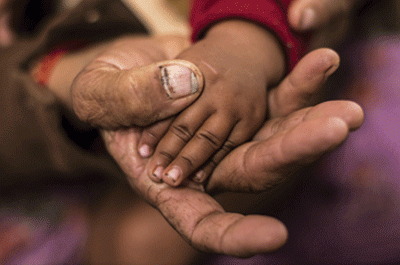
For children born into poverty, the equity enhancing impact of early childhood interventions hold the promise of overcoming social disadvantages and breaking the intergenerational transmission of poverty. This evaluation by IEG examines the Bank's design and implementation of projects across sectors supporting ECD interventions to inform future operations. 
business-deal-illustration.jpg
In a changing landscape, the best way to optimize the WBG's development impact, promote its twin goals of eliminating extreme poverty and boosting shared prosperity is to put the array of private sector instruments into full use, bringing enhanced cooperation between the World Bank/International Development Association (the Bank) and IFC at the country level to the forefront. 
This evaluation examines how, and how well, the Bank Group has focused its support on poverty reduction over in the past decade, and what lessons to draw from this moving forward. The lessons aim to strengthen the Bank's country diagnostics, improve the design of country strategies, and build greater learning opportunities from program experience. 


IEG's latest evaluation, Learning and Results in World Bank Operations, recommends an updated strategy for learning and knowledge. 
What are the factors internal to an evaluation, that help or hinder its influence? And what are the external factors that stymie or encourage change? 
Can we undo the Gordian Knot once and for all and decide whether we need accreditation, credentialing and certification? 

About IEG
IEG evaluates the work of the World Bank Group to find what works, what doesn't, and why. IEG evaluations provide an objective assessment of the results of the World Bank Group's work and identify lessons learned from experience. By providing independent, practical information, IEG is helping the World Bank Group achieve its twin goals of
eradicating extreme poverty and boosting shared prosperity.