|
Water Cooler Trivia
Completely useless but fun...
Best States for Fall Colors
|
|
|
|
|
Greetings!
Industry updates are important to all of us. If you would like to receive an update on a topic not listed in this issue or receive more information on Cornerstone Systems, please contact us at 800-278-7677 or visit our website at www.cornerstone-systems.com.
|
|
Discussion Continues on Truck Weight Reform Bill
Legislation Introduced to Increase Weight Limit from 80,000 to 91,000 lbs
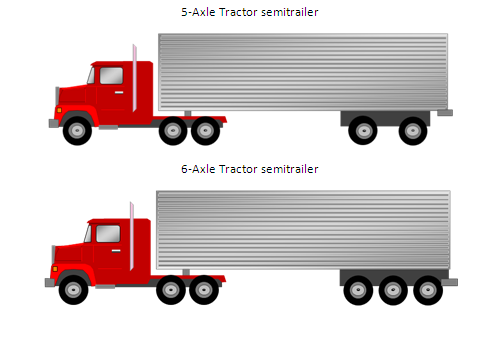
A bill that would allow individual states to increase the federal vehicle weight limit to 91,000 pounds for tractor-trailers equipped with a sixth axle has been introduced by Rep. Reid Ribble (R-WI).
The Safe, Flexible, and Efficient (SAFE) Trucking Act would "allow fewer trucks to move more cargo in a safer manner" via a configuration compliant with the federal bridge formula, said Ribble. The bill has been loudly applauded by at least six major associations representing the interests of shippers. But, at least initially, it has drawn no support from trucking-specific lobbies. Read OOIDA response (Owner-Operator Independent Drivers Association) Click Here Read TCA response (Truckload Carriers Association) Click Here
|
| | Image: Federal Highway Association |
|
|
Intermodal Cargo Market Growth Shifts
International Freight Accelerates
International freight has re-emerged as the driving force for intermodal growth because factors such as lower diesel and suboptimal rail service have slowed increases in domestic truck-rail freight, said experts as the 2015 Intermodal Expo in Fort Lauderdale, Florida last week. "Domestic intermodal growth is very low by recent stanadards," said FTR Senior Consultant Larry Gross. He compared an increase last month of about 1% domestic truck-rail freight with a 6.3% increase in international intermodal.
A stronger dollar has encouraged imports and sustained international intermodal growth since a snapback in cargo flow in the months after the end of West Coast port disruptions that trimmed cargo volumes earlier this year. The August numbers indicate that international growth has extended beyond the Spring. Gross is forecasting faster growth in international cargo relative to domestic intermodal for the rest of the year, with import and export cargo increasing 2 percentage points faster than domestic intermodal. That pattern could continue next year, but with a smaller gap between the categories of intermodal freight.
Until the recent turnabout, domestic intermodal had outpaced international cargo because truck-rail attracted freight from highways. As a result, domestic intermodal over the past several years has grown about twice as fast as international cargo. "We are not seeing folks defect" to intermodal from trucks, Gross said, citing two reasons that have hurt truck-rail offerings. "Intermodal service and pricing have come under a lot of pressure," he said, limiting the appeal of the service at a time when diesel price reductions are helping longhaul fleets.
|
|
Cornerstone Moves Co-Site to Franklin, Tennessee
Provides 100% Systems Availability in Event of Catastrophic Disaster
We work each day immersed in the world of "Information Technology". From our IPhones to our computers we are interconnected to important information and each other.
So what would happen if a fire, tornado or earthquake destroyed all connectivity to data and information?
At Cornerstone Systems, a well-constructed disaster recovery plan has been established to keep your business moving forward. No disruption, no data loss, no downtime. Cornerstone Systems has technology in place to keep you one step ahead of the unexpected.
Read more... Click here
|
|
In the News!
Cornerstone Systems
Transport Topics "Top Freight Brokerage Firms"
Armstrong & Associates
"Top 100 U.S. Domestic Transportation Management/
Freight Brokers"
|
|
Transportation Industry News
 | | Industry News |
Trucks haul 63.9% of U.S.-NAFTA freight, still most utilized mode -
The value of U.S.-NAFTA freight totaled $93.0 billion in July 2015 as all modes except air carried less freight than in July 2014, according to the TransBorder Freight Data released today (September 29) by the U.S. Department of Transportation's Bureau of Transportation Statistics (BTS).
Trucks carried 63.9 percent of U.S.-NAFTA freight and are the most heavily utilized mode for moving goods to and from both U.S.-NAFTA partners. Trucks accounted for $30.0 billion of the $49.2 billion of imports (61.0 percent) and $29.4 billion of the $43.8 billion of exports (67.1 percent). Rail remained the second largest mode by value, moving 13.7 percent of all U.S.-NAFTA freight, followed by vessel, 7.3 percent; pipeline, 6.0 percent; and air, 3.9 percent. The surface transportation modes of truck, rail and pipeline carried 83.7 percent of the total U.S.-NAFTA freight flows.
Railroads Contemplating Drones For Added Security -
Rail execs are beginning to explore the capabilities of unmanned aerial vehicles (UAVs) for a variety of potential applications - including security. More commonly known as drones, these camera-equipped devices can help crews keep closer tabs on tracks and trains from afar. Because UAVs can move quickly from one place to the next, they offer an advantage over fixed camera systems that criminals can evade.
"An unmanned aerial vehicle could be anywhere anytime, day or night," said Richard Gent, a retired Naval intelligence officer who now serves as chief executive officer of rail security consulting firm Hot Rail LLC. "You've increased the workload for a bad guy or criminal because they don't know where this thing is." Officials at PKP Cargo, a freight-rail operator in Poland, are applauding the security-related benefits of drones, too. The company began piloting the technology in early 2014. During the first half of this year, PKP reported that the number of thefts along its rails decreased 44 percent on an annual basis, according to spokeswoman Ewa Kowalczyk.
ATA Urges Focus on Critical Shortage of Truck Technicians -
ATA President and CEO Bill Graves called upon the country's policymakers, schools and trucking industry to do more to address the nation's large and growing shortage of truck technicians.
"In our industry, we often talk about the impact of the shortage of truck drivers," said ATA President and CEO Bill Graves, "but we mustn't forget trucking's need to have many skilled technicians and mechanics to keep their rigs in working order and their wheels moving." According to the U.S. Bureau of Labor Statistics, trucking will need to recruit 67,000 new technicians by 2022 due to growth or to replace men and women currently working in the industry. This does not include the more than 75,000 new diesel engine specialists BLS anticipates the country needing by 2022.
  
|
|
Fuel Prices
The Energy Information Administration reports U.S. On-Highway Diesel Fuel Prices (dollars per gallon) every week.
9/28/15 Date Released
2.322 Average U.S. Retail Price
-0.005 (Down) Change From Week Ago
-1.032 (Down) Change From Year Ago
|
|
|
Newsletter Sources: Cornerstone Systems, Journal of Commerce, Transport Topics, OOIDA, Land Line Magazine, TCA, TruckingInfo.com, TheTrucker.com, Progressive Railroading, IANA, SmartWay Transport-U.S. EPA, U.S. Energy Information Administration
|
|
|
|
|