|
|
|
| Upcoming Dates |
October 26, 2016:
CGFA and NGFA Joint Grain Safety Seminar
DoubleTree, Fresno, CA
2017
January 11-12, 2017
Grain & Feed Industry Conference
Embassy Suites, Monterey Bay, CA
April 26-29, 2017
CGFA Annual Convention
Hyatt Regency Lake Tahoe Resort, Spa & Casino
May 10 - 11, 2017:
California Animal Nutrition Conference (CANC)
|
|
Benefits of Belonging to CGFA
|
- State & Federal Legislative Advocacy
- Industry & Small Business Issues
- Business Advocacy
- Weekly Updates on Current Issues
- Networking Opportunities
- Industry Specific Directories
- Advertising Venues
- Social Media Sites
- Cost Saving Insurance Programs
- Environmental and Safety Resource
- Continuing Education and Training
- Political Action Committee Administration
- Annual Convention
- Education Programs
- District Meetings
|
|
|
FDA Issues Final Rule on Food Ingredients that May Be "Generally Recognized as Safe"
|
In a step to strengthen its oversight of food ingredients, the U.S. Food and Drug Administration today issued a final rule detailing the criteria for concluding that the use of a substance in human or animal food is "generally recognized as safe" (GRAS). Unlike food additives, GRAS substances are not subject to FDA pre-market approval; however, they must meet the same safety standards as approved food additives.
The rule addresses the types of scientific evidence that can be used to demonstrate safety as well as the role of publications in evaluating whether the scientific evidence of safety is "generally available and accepted." The GRAS criteria require that the safe use of ingredients in human and animal food be widely recognized by the appropriate qualified experts. The final rule also formalizes the voluntary GRAS notification procedure, which was originally established under an interim policy and pilot program for human food in 1997 and animal food in 2010.
|
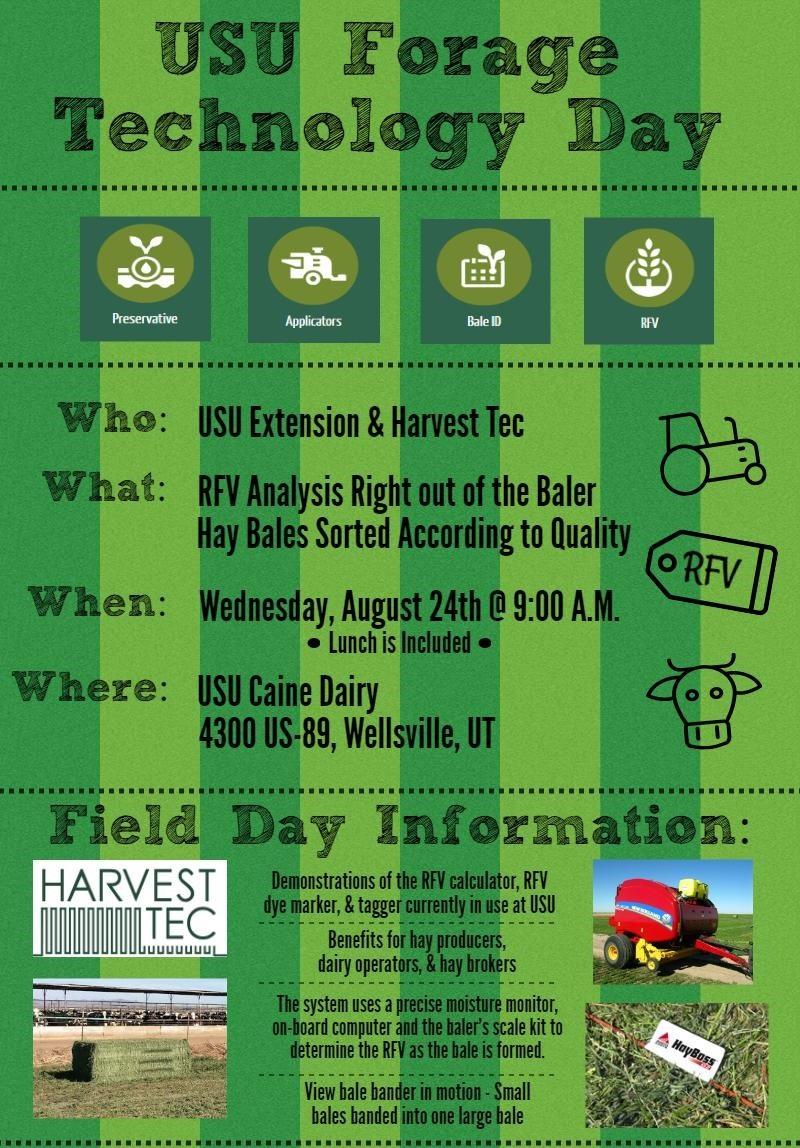
USU Forage Technology Day
|
Utah State and Harvest Tec will be hosting Field Technology Day on Aug 24th.
|
California Legislative Report
|
By Dennis Albiani, Legislative Advocate
Appropriations Committees Move Bills 
This week was the deadline for the Appropriations Committees in both houses to pass or hold the key bill. The committees met and considered over 400 bills with approximately 250 passing and moving to the floor of the respective houses. Key bills for the association that moved include:
Climate policy: There are three major climate measures of concern and all three moved off the suspense files and will be considered on the floor. There is significant opposition to these measures and the association is working with a broad coalition opposed to these measures.
SB 32 (Pavley) Mandates GHG reductions of 40% of 1990 level by 2030 and previous version required 80% reduction by 2050.
AB 197 (Garcia) CARB Oversight - This measure is intended to reform the Air Resources Board and provide additional "Legislative Oversight" of their actions and improve accountability. Double Joined to SB 32.
SB 1383 (Lara) Short Term Climate Pollutants Regulation mandates a 40% reduction in Methane, 40% reduction in refrigerants, 50% Reduction in black carbon.
Ag Overtime Moves Off Suspense
AB 1066 (Gonzalez) would change the current ag overtime rules which require time and one half after 10 hours worked in a day and after 6 work days in a week, and double time after 12 hours, to require time and one half after 8 hours and after 5 days worked in a week moved off the suspense file.
There is a strong coalition of agriculture and business representatives advocating against this legislation. Additionally, the association is participating in a public relations campaign encouraging legislators to continue to oppose the bill. Main points of opposition:
- The existing overtime rules for ag employees are not unique to agriculture. There are several industries that have similar rules because of the key elements of their industry including ski lift operators, camp counselors, ambulance workers, nurses and truck drivers. The industry requirements drive the overtime rules.
- California's overtime rules for agriculture are the most progressive for ag workers in the country. California is only one of 6 states that provides overtime for ag employees and the only to provide it after just 10 hours.
- With minimum wage being raised to $15 an hour in the near future, this is an additional compensation benefit that makes California agriculture less competitive and will reduce the job opportunities for all and promote mechanization.
The association has developed a standardized letter, talking points for association members and directors to call their representatives in opposition.
Cal ISO Expansion
Last year in the historical climate legislation SB 350 (de Leon), there was an agreement to consider expanding the CalISO to the western states. The value would be to upgrade the wester wide electrical transmission grid to provide additional renewable energy such as wind to California while offering an exchange of solar energy to other western states when California has an excess. As large energy consumers, agriculture and other ratepayer groups are concerned that the costs of the upgrades, which are estimated to be in the billions, will be born by all ratepayers, even those that will not benefit from the new resources. The association has joined a coalition to ask for additional review of the proposal and actively lobbied against legislation this year. The effort was successful. This week the administration backed off their proposal this year and agreed to provide more time for review.
|
|
|
|
Dog Days Hit DC; It's All Campaigns All the Time
|
It'smid-August, and Washington, DC, is a ghost town between citizen/bureaucrat vacations and the congressional recess. But it's still an election year, the race for the White House and control of Congress is one of the most vitriolic and confused in memory, and the media is feasting on the presidential race's caterwauling and name calling.
Even though Congress is in recess until mid-September, House Minority Leader Nancy Pelosi (D, CA) will bring back to town next week a handful of House party leaders for a press conference to denounce the GOP for leaving town without "finishing the people's business." This action will focus most directly on the failure of Congress to come to a compromise and enact new Zika virus funding. Rep. Rosa DeLauro (D, CT) has said she'll be back for the Pelosi event.
House Speaker Paul Ryan (R, WI) in denouncing the Pelosi move, pointed out it is Senate Democrats who have blocked new Zika funding twice and the White House has unspent Zika dollars sitting in a Department of Health & Human Services (HHS) account. This week the White House released more than $60 million in HHS Zika funding.
|
CFTC Releases Three Customer Funds Protection Actions
|
Three separate actions, all designed to increase protection of customer funds, were announced this week by the Commodity Futures Trading Commission (CFTC), a move done in part to make commission rules sync with similar recent similar actions by the Securities & Exchange Commission (SEC).
CFTC Chair Timothy Mossad, in explaining the commission's actions, reiterated steps already taken by the commission to protect customer funds in the wake of the collapse of MF Global and the financial crisis of 2008. "We required customer funds to be strictly segregated and limited ways they can be invested. We enhanced accounting and auditing procedures for FCMs, including requiring daily verification from depositories of the amounts deposited by FCMs," he said.
Commission rules now require that customer funds can only be invested in "highly liquid assets" that can be converted to cash within one business day without "material discount in value," he added, explaining CFTC rules also require initial margin deposits to be invested so that they can be "promptly liquidated."
Mossad said the SEC has taken similar actions, particularly to address the vulnerability of money market funds. A new SEC rule that takes effect in October describes how prime money market funds are permitted, and sometimes required, to suspend redemptions in order to prevent the undue risk of investor "runs." Because this action could make complying with CFTC rules on quick liquidation difficult, Mossad said the commission's actions this week "are providing guidance making clear that commission rules prohibit a clearing member from investing customer funds, or a clearinghouse from investing amounts deposited as initial margins, in such money market funds."
The first action is an order to exempt Federal Reserve banks that maintain customer accounts for derivatives clearing organizations (DCOs) from liability under the Commodity Exchange Act (CEA). The other separate actions include individual moves by the commission's Divisions of Clearing & Risk, and Swap Dealer & Intermediary Oversight which include interpretive and "no-action" letters related to the use of money market funds by DCOs and futures commission merchants (FCMs).
Under the Federal Reserve bank exemption, the banks get out from under CEA liability rules, but funds must not be commingled with "the money, securities or property in the account of any other person." Federal Reserve banks are also protected against private rights of action in federal court.
The Clearing & Risk "interpretive" letter says it would be "inconsistent with CFTC regulations" for a DCO to accept or hold initial margin in money market funds or to invest funds belonging to the DCO, its clearing members or clearing members' customers in money market funds that retain authority to impose redemption restrictions.
The action by the Swap Dealer & Intermediary Oversight division recommends the commission take no enforcement action against an FCM who invests its funds held in segregated accounts in money market funds that retain authority to impose redemption restrictions "provided such investments are limited to the amount of funds the FCM holds in excess of the firm's targeted residual interest."
Details of the administrative actions can be found by going to www.cftc.gov.
|
EU Tells Dow, DuPont "Concessions" Necessary to OK Merger, Signals Other Deals in Crosshairs
|
At the very least "significant concessions" by Dow Chemical and DuPont will be required for the European Union (EU) to approve the merger of the two chemical giants, and that warning has implications for ChemChina's proposed $43-billion bid to buy Syngenta, and Bayer's ongoing $65-billion tug-of-war with Monsanto. Similar oversight of the proposed mergers is ongoing in the U.S.
EU Competition Commissioner Margrethe Vestager, concerned farmers and others who will lose marketplace options when sourcing farm chemicals, sent the warning this week as she launched an unprecedented investigation into the Dow/DuPont deal, despite the two agrochemical companies having made at least some initial offers to ensure competition in the marketplace.
While the two companies continue to say they want to finalize their deal by the end of the year, Vestager's final recommendation on the merger are preliminarily expected by December 20, but that date could slip depending on concessions offered by the companies.
Farmers and non-government organizations (NGOs) have told EU lawmakers that a loss of competing chemical companies could lead to producers being held hostage to hostile pricing arrangements, as well as a possible limit on which chemicals may be available. "We are worried that this merger will lead to less diversity in crop protection products," said the German Farmers' Assn. in a statement.
"The livelihood of farmers depends on access to seeds and crop protection at competitive prices. We need to make sure that the proposed merger does not lead to higher prices or less innovation for these products," Vestager said.
Areas of Dow/DuPont's business which will be studied by Vestager's office include herbicides for cereal grains, beets and oilseeds, in addition to insecticides used to battle "chewing insects." Fungicides and products used to fight nematodes are also a focus of the investigation. Concern was also expressed over what may happen to the respective company's seed businesses, and whether the combined company would allow gene editing technologies to be licensed to third parties.
Both companies contend they'll ultimately achieve clearance to merge, and said in a joint statement: "We believe the merger is procompetitive and good for customers and consumers. As one focused agriculture company the combination of portfolios and research capabilities will enhance the ability of the intended new company to deliver innovative products and solutions for farmers that generate competitive price for value."
|
SD Couple Want Supreme Court to Hear Case on USDA Wetlands Designation
|
In a case that has potential impact on private property rights across the country, a South Dakota farm couple is asking the Supreme Court to take up their case challenging how USDA designates property as a wetland.
At issue is the 2014 Farm Bill "swampbuster" provision, which bars farmers receiving federal crop support payments if they drain wetlands for planting. Under the Clean Water Act (CWA) most agricultural activity is exempted, however, USDA's Natural Resources Conservation Service (NRCS) uses a different formula from the CWA when it determines wetlands designations.
Represented by the Pacific Legal Foundation, which has successfully taken on the federal government in several cases involving wetlands determinations, farmers Arlen and Cindy Foster contend USDA wrongly determined their property was capable of sustaining wetlands vegetation, making it technically unable to be planted to federal program crops if the Fosters drained it for planting. The foundation says USDA's use of a land parcel 30 miles away as a comparison was inappropriate, and is an example of how USDA is "gaming" the system to get to its desired goals on wetlands designations.
|
Immigration Reform Being Pushed as Election Issue
|
Two media billionaires have reinvigorated the election year call for comprehensive federal immigration reform with the creation by Bloomberg News founder and former New York City Mayor Michael Bloomberg and News Corp. Chair Rupert Murdoch of the Partnership for a New American Economy, an immigration advocacy organization.
The partnership is focusing on the economic case for rewriting federal immigration law, and is set to unleash in all 50 states events and detailed economic impact statements specific to each state. The group is also trying to collect stories of immigration impacts in all House districts through social media.
The effort keys in on the House because it was that chamber which refused to take up a Senate approved comprehensive immigration reform bill in the last Congress. It's hoped by showing the economic impact, immigration reform will get lawmakers' attention going into the next Congress.
However, the presidential candidates are miles apart on immigration reform, with Hillary Clinton favoring reform with a path to citizenship for undocumented workers, and Donald Trump vowing to build a wall along the southern U.S. border and advocating deportation of illegal immigrants.
"Not only do Americans want immigration reform, our economy needs it," the group's chair said last week. In addition to the two media moguls, companies including Intel, Pinterest and Google, along with the U.S. Chamber of Commerce, the Western Growers Assn., and the American Farm Bureau Federation (AFBF) are involved in the effort.
|
ERI Safety Videos: 5 New "To The Point" Programs
|
To The Point Communications and ERI Safety Videos have just added five new releases to our collection of high-quality, affordable safety training programs that deliver required safety information in a time-efficient manner.
|
Safety Corner: 10 Tips for Lifting Safely on the Job
|
Manual material handling work contributes to a large percentage of the more than half a million cases of musculoskeletal disorders reported annually in the United States, according to the National Institute for Occupational Safety and Health.
A manual material handling task means one that requires moving materials by hand by pushing, pulling, carrying, lifting, lowering or stacking.
The U.S. Bureau of Labor Statistics reported that 32 percent of injuries involving missed workdays in 2014 were the result of musculoskeletal disorders. Overexertion and cumulative trauma were the biggest factors in these injuries. And these injuries can happen in a variety of workplaces from offices to grocery stores to warehouses. (Have you ever tried lifting a case of copy paper or a case of one-liter soda bottles?)
Musculoskeletal disorders generally involve strains and sprains to the lower back, shoulders, and upper limbs - often as a result of not lifting correctly - and they can be among the top 10 most costly workplace injuries. They can result in extensive periods of pain, disability, medical treatment and financial stress for the injured workers, and employers often find themselves absorbing the costs, either directly or through workers' compensation insurance, while also dealing with some level of reduced physical capacity of their workers.
Employers can reduce the incidence of many strains and sprains by training all employees to lift safely. Here are 10 tips for lifting safely from Jacksonville, Florida-based Main Street America Group.
- Avoid standing too far from the load.
- Consider breaking up your loads into multiple intervals.
- Don't judge weight by the size of the load.
- Test every load before you lift it.
- Identify in advance your intended path.
- Avoid taking loads over slippery or uneven surfaces.
- Keep your back straight and bend your knees to the floor.
- Use proper support systems.
- Lift with a slow steady force.
- Make use of handles.
 Mike Taylor, CPCU Vice President InterWest Insurance Services, Inc. 100 Pringle Avenue, North Tower, Suite 550 Walnut Creek, CA 94596 (925) 977-4104 Office (800) 464-0077 Toll Free (925) 977-4150 Fax (510) 206-5505 Mobile CA Lic #0B01094
|
1st Annual Farm Tank Conference
|
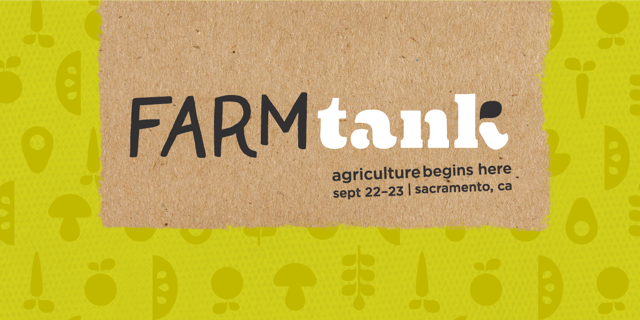
Food Tank, in partnership with the Sacramento Convention & Visitors Bureau, Farm-to- Fork Program, and University of California- Davis, is excited to announce the 1st annual Farm Tank Conference at the Hyatt Regency Sacramento. This two-day event will feature more than 35 different speakers from the food and agriculture field. After a day of interactive panels moderated by top food journalists, networking, and delicious food, there will be a day of hands-on activities and opportunities for attendees.
WHEN
Thursday, September 22, 2016 at 9:00 AM - Friday, September 23, 2016 at 5:00 PM
WHERE
Hyatt Regency Sacramento
1209 L Street, Sacramento, CA 95814
Event info including a full line up of speakers and tickets can be found at the link below.
|
|
|
|
|
|
|