|
|
|
| Upcoming Dates |
April 27-30, 2016:
CGFA Annual Convention The Manchester Grand Hyatt San Diego
California Animal Nutrition Conference at the DoubleTree by Hilton Fresno Convention Center
Fresno, CA
|
|
Benefits of Belonging to CGFA
|
- State & Federal Legislative Advocacy
- Industry & Small Business Issues
- Business Advocacy
- Weekly Updates on Current Issues
- Networking Opportunities
- Industry Specific Directories
- Advertising Venues
- Social Media Sites
- Cost Saving Insurance Programs
- Environmental and Safety Resource
- Continuing Education and Training
- Political Action Committee Administration
- Annual Convention
- Education Programs
- District Meetings
|
|
|
CDFA Safe Program's FSMA Seminar
|
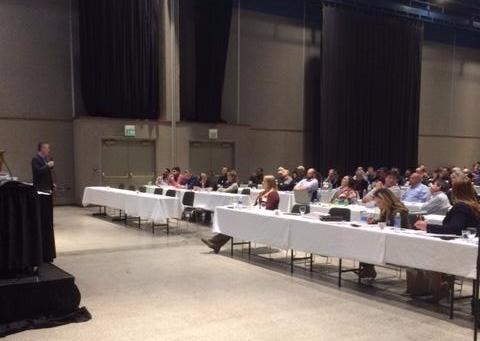 Over 140 CGFA members attended the CDFA Safe Program's Food Safety Modernization Act (FSMA) informational seminar on March 11 to assist firms with FSMA implementation strategies. The speakers for the day included David Fairfield, National Grain & Feed Association (NGFA); Matt Frederking, Ralco Ag Solutions; Geoff Holland, JS West Milling; Jessica Darneille, FDA State Liaison and Jenna Areias, CDFA. The program began with an overview from NGFA on the final rule and the applicability of the rules. A list of who's in and who's out was provided along and a recap of the dates and deadlines for each phase was discussed. They went over the final rule and current good manufacturing practices and preventative controls, including the supply-chain program and review of records. The goal this coming year is to continue providing the industry with resources, tools, templates, training and information to assist members in their efforts to complete the requirements. Our thanks to CDFA's Jenna Areias, Cathryn McCandless and their staff for coordinating this seminar and providing the industry the opportunity to learn more. The California Grain & Feed Association co-sponsored this event along with NGFA and CDFA. We will keep members posted as more opportunities like this become available. 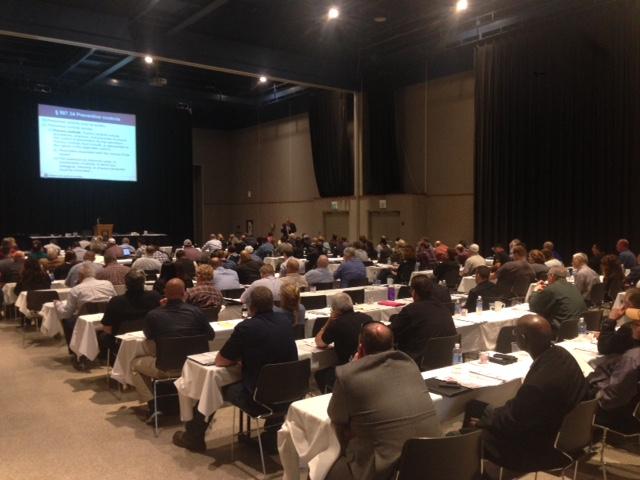
|
FDA Issues Feed Safety Guidance; AFIA Says Guidance Could Be Better
|
FDA this week released its final Guidance for Industry (#203) on "Ensuring Safety of Animal Feed Maintained and Fed On-Farm," and the American Feed Industry Assn. (AFIA) says the agency's advice could have been more helpful if FDA had paid greater attention to AFIA comments filed in June 2015.
The guidance, which does not carry the force of law or regulation, is designed to answer questions about the agency's current thinking and recommendations. The agency said animal feeds contaminated with mycotoxins, pesticides, excessive minerals or other toxins may present a risk to animals and people who eat products from those animals, and the guidance document is designed to help veterinarians, nutritionists and producers avoid those situations. The guidance also provides information on safety and handling recommendations, but also includes feed safety information sources, practices for different production settings, personnel training, feed analysis and how to remedy problems.
A feed "contaminant" is any "biological, chemical or physical agent" that if found in feed has a potential to cause animal health problems or present a risk to humans. While recognizing mineral supplements as beneficial to animals at the proper levels, deficiencies can cause animal health problems and excessive amounts can produce toxicity for animals and people. In some cases, while an animal may not be affected, contaminants can affect humans, e.g. aflatoxins at low levels in feed fed to lactating dairy animals may not harm the cow, but present a risk to people; some types of salmonella present in soybean meal fed to cattle present no risk to humans or animals, but if fed to chickens, the reverse could be true.
AFIA created a taskforce when FDA announced the guidance development, and filed extensive comments with the agency in June, 2015. However, "the final guidance failed to include many of those comments," AFIA said, adding "the relationship between feed suppliers and customers is not given the importance it deserves...an opportunity was missed to share industry quality assurance programs with producers."
The full guidance document can be found here.
|
Central Valley Scholars Program at UC Davis
|
The Central Valley Scholars Program at UC Davis is a scholarship program that strives to bring an educated workforce back to the Central Valley of California after graduation from UC Davis. If you are interested in learning more about ways that you can become involved, please click here for more information.
As a part of the program, students are asked to complete an internship over the summer, typically between their Junior and Senior years. If your company has a summer internship program, please post the opening to the CGFA Careers Center. The Central Valley Scholars program is actively sharing this recruitment resource with UC Davis students. For more information on the Central Valley Scholar Program please contact Leslie Peek with the UC Davis Internship & Career Center.
|
|
|
|
California Legislative Report
|
By: Dennis Albiani, Legislative Advocate
 Rendon Takes Over as Assembly Speaker - Makes Select Appointments
On Monday March 7th, Anthony Rendon took over as Speaker of the Assembly. While he was elected by his colleagues back in January, he was officially sworn in after a transition period. Following the ceremony, he discussed his priorities in a short address to provide an opportunity for people to be lifted out of poverty through education and assistance when necessary, he said with the extended term limits he hopes the legislature will focus more on oversight and he discussed reinvigorating the role of legislature and working with all parties and members. On Thursday, he announced various changes to committees and his leadership team. Click here for all the changes, the key committee chair and member replacement s are as follows:
Phil Ting - Budget Chair
Lorena Gonzalez - Appropriations Chair Devon Mathis - Agriculture Vice Chair Jay Obernolte - Budget Vice Chair Frank Bigelow - Sub #3 Budget which covers Energy and Resources Issues Rudy Salas - Business and Professions Chair Jim Woo - Health Chair Brian Jones - Natural Resources Vice Chair Eduardo Garcia - New Member Utilities and Commerce Rocky Chavez - New member Utilities and Commerce James Gallagher - Water, Parks and Wildlife Vice Chair
Administration Unveils Draft of How to Manage BPA in Food
Last May 11th, the Officie of Environmental Health Hazard Assessment listed Bisphenol A (BPA) as a reproductive toxicant under Proposition 65. The law provides a 1 year grace period before products are required to be labeled. This May 11th, any product containing BPA will need to be labeled. OEHHA does have the opportunity to set a "safe harbor" limit and studies supported a level that would have made most uses acceptable. However, the administration refused to provide a safe harbor, therefore leading to the possibility of most canned and bottled food needing a Prop 65 warning label come this May.
Since food and beverages are often canned or processed during the growing season and stored for use year round, many products have been canned or placed in bottles and are already in store distribution centers and were labeled long ago. Additionally, the shelf life and sale through time periods may be years.
In response to these issues, CalEPA and OEHHA announced a draft proposal to address general warnings.
On March 10th, CalEPA and OEHHA announced two actions that they plan to initiate as early as next week and a potential option, utilizing the Attorney General, that they are interested in facilitating.
EMERGENCY REGULATIONS
Amending regulation to allow for point of sale warning for food and beverage cans and bottles with an 8x8 sign posted at retailers and grocers checkout stands with language as follows:
WARNING: Many cans containing foods and beverages sold here have epoxy linings used to avoid microbial contamination and extend shelf life. Lids on jars and caps on bottles may also have epoxy linings. Some of these linings can leach small amounts of bisphenol A (BPA) into the food or beverage. BPA is known to the State of California to cause harm to the female reproductive system. For more information, go to www.oehha.ca.gov/xxxx.
Food processors and manufacturers would be required to provide the retailer with the signs and the retailer is required to post and maintain them. Proposed Emergency Regulations to be in place for six months, then replaced by normal regulations with a sunset of one year with potential for a one year extension. Therefore, the point of sale signage option is available for at least 18 months.
They also announced a willingness to facilitate a judicial decree option with the Attorney General.
ATTORNEY GENERAL CONSENT JUDGEMENT
For companies that will be phasing out BPA but may need more time than the 18 months offer, EPA has suggested facilitating a consent decree with the Attorney General that will allow a longer period for phasing out the product. This could be necessary for entities that may receive product in cans and remanufacture it, or a host of supply stream issues and may provide more time for compliance.
We will send out the specific language and proposal once it is officially released next week.
Assembly Utilities & Commerce Committee Grills CPUC President
On Tuesday, March 8, the Assembly Utilities & Commerce Committee held their annual "Overview of the CPUC" hearing where the Members grilled CPUC President Picker. In a wide-ranging and, at times, combative hearing, Democrat and Republican members took Picker and the CPUC to task over CPUC governance, ex parte communications, commitment to safety, Alison Canyon and responsiveness to Legislative direction. Picker admitted to being disengaged from the Legislature and committed to focus on that area. He pointed out the lack of resources that the Commission has and how it may need to ask the Legislature to remove certain oversight responsibilities - namely telecom and transportation companies - from their purview given that they operate in mainly competitive marketplaces.
The Senate is set to have their overview hearing of the CPUC and ORA on Tuesday, March 15.
|
FDA Answers Farm Antibiotics Use, VFD Rule Implementation Questions for Farm Foundation
|
FDA's Center for Veterinary Medicine (CVM) this week released formal written responses to questions left unanswered after more than 500 farmers, ranchers, veterinarians and feed companies attended a series of 12 Farm Foundation-sponsored workshops last fall on FDA's new cooperative program on on-farm antibiotic use, including use of the Veterinary Feed Directive (VFD).
The workshops highlighted the need for additional educational work to reach all affected industry segments, the Foundation said. The Foundation's report on the dozen workshops held across the country - 'Stewardship of Antimicrobial Drug Use in Food Producing Animals' - cites a lack of knowledge about the new antibiotic use policies, as well as concerns about the availability of veterinary services. The full report can be found here. www.farmfoundation.org.
"The conversations at those workshops provided FDA with detailed insights into industry questions on how to implement the VFD final rule," said William T. Flynn, DVM, MS, CVM deputy director for science policy. The Foundation said direct interaction between industry representatives and the agency was "one of the most valued elements of the workshops."
The letter - with complete questions and answers - sent to Sheldon R. Jones, Farm Foundation vice president, from Flynn can be found here.
|
Ag, Food, Hunger Groups Tell Congress: 'Hands off Farm Bill Spending'
|
A letter from nearly 255 national agriculture, feed, food and hunger groups sent to Congress this week says in no uncertain terms that Farm Bill program spending - particularly crop insurance, conservation and nutrition programs - should be off the table as lawmakers struggle with both an FY2017 budget and spending bills.
The letter comes just as conservative House members are seeking a budget resolution that includes $30 billion in cuts over two years from entitlement programs, and is on the heels of President Obama's FY2017 budget recommendations that targeted crop insurance for an $18-billion cut over 10 years. The letter, sent to House and Senate Budget Committees and both chambers' spending panels, reminded members that the 2014 Farm Bill has already contributed "significant contributions to deficit reduction." "The bipartisan Farm Bill was estimated to contribute $16 billion to deficit reduction over 10 years," the letter said. "These difficult cuts resulted from hard choices made to reform and reduce the farm safety net, conservation programs and nutrition assistance programs. Some of these reforms made in the new Farm Bill are still being implemented."
|
GE Labeling Bill to Hit Senate Floor Next Week; No Agreement Yet
|
Ongoing personal and staff negotiations between Senate Agriculture Committee Chair Pat Roberts (R, KS) and panel ranking member Sen. Debbie Stabenow (D, MI) have failed to reach agreement on how to provide consumers information about the use of genetically engineered (GE) ingredients in food and feeds. Roberts said he may take his bill to the floor as early as next Wednesday even as talks continue.
Roberts met this week with Stabenow and offered what's called "mandatory disclosure" on food labels, a significant shift from his original voluntary approach. Roberts' latest proposal includes a federal requirement that all food labels carry one of a menu of options - QR codes, website addresses, 1-800 phone numbers and authority to USDA to develop more options - allowing consumers to learn if GE ingredients were used in production of a food. Robert's mandatory disclosure would go into effect after giving USDA two years to develop standards and two years for industry to comply. Stabenow rejected the proposal saying she wanted disclosure compliance within two years and only QR codes or a "Brazilian-like symbol" indicating GE ingredients is included on labels. The symbol option is a new position for Stabenow, and the Environmental Working Group (EWG), which leads the Just Label It! coalition is working to undermine confidence in QR codes.
However, Stabenow is not the only Democrat with whom Roberts is talking to, in hopes of finding a partner on the floor. He's also had several discussions over the past week with ag committee members Sen. Joe Donnelly (D, IN), Sen. Amy Klobuchar (D, MN) and Sen. Heidi Heitkamp, all of whom voted to move his bill from committee to the floor. Donnelly has been active in developing language to make his Democrat colleagues happy with the overall effort, and is known to be frustrated with other Democrats' positions, even though they publicly agree with the need for a federal solution.
However, Sen. John Hoeven (R, ND) is more cautious about a bill getting to the floor next week. When asked if a bill will be voted on before the Senate's Easter recess, Hoeven said, "I've been working on it so long, it's hard to predict. We will have to see."
Secretary of Agriculture Tom Vilsack inadvertently confused the issue earlier in the week by saying he supported "mandatory labeling." While food industry representatives scurried to ensure the media understood the Secretary did not endorse mandatory GE food labels, at a Bipartisan Policy Center meeting, Vilsack was asked by reporters to clarify his position. He said, "I want Congress to get this done whatever they ultimately call it," adding disclosure is the goal, it needs to be mandatory, but not demonize biotechnology.
After the forum, participants former Agriculture Secretaries Anne Veneman and Dan Glickman backed Vilsack when he said, "I suspect when it's all said and done, you are going to have a mandatory system," explaining federal preemption of state laws and a mandatory disclosure system "is a pathway to the 60 votes" needed to get Senate approval.
|
Waterways Council Calls for Rejection of Obama Budget Cuts; Ag Backs Full Funding
|
After heavy lifting to get increased federal funding for modernizing U.S. riverway locks and dam projects included in the Water Resources Reform & Development Act of 2014 (WRRDA), the Waterways Council this week said its members will "work vigorously" to ensure Congress rejects cuts or funding shifts to those projects recommended by President Obama in his FY2017 budget request.
The Council's effort was bolstered by a separate letter this week sent by ag groups urging strong support for full inland waterways funding, particularly infrastructure functions performed by the U.S. Army Corps of Engineers that facilitate construction, operations, and maintenance. The ag groups reminded lawmakers that in 2014, 73% of U.S. ag exports and 65% of imports moved on inland waterways. "With congressional FY2016 funding finally at efficient levels, we simply cannot go backwards when the outlook for freight ahead is so robust," said Waterways Council President & CEO Mike Toohey at the Council's annual briefing this week. The most recent White House budget recommendation is "the most disappointing I've ever seen," Toohey added. Under the hard-won WRRDA, users agreed to increase user fee payments on diesel fuel from 20 to 29 cents per gallon to help fund modernization, but the White House wants to use part of that money to fund the Inland Waterways Trust Fund and other projects. While currently ag shipping on inland waterways accounts for about 13.1% of total shipments, ag products represent the biggest area for growth. Toohey said with the expanded Panama Canal and world demand skyrocketing, ag product growth potential is "enormous." Speakers at the briefing added that shipments may be down this year because of a strong U.S. dollar affecting overseas sales, but that cycle will reverse. They urged Congress to be looking 20 years ahead when the challenge will be to feed 9.5 billion people.
|
FDA "Food Safety Czar" Taylor Announces June Departure
|
FDA Deputy Commissioner for Foods & Veterinary Services Mike Taylor - dubbed the government's "food safety czar" by the food industry - announced this week he'll resign from FDA "on or about" June 1. His resignation comes on the heels of the announced departure of agency top veterinarian Dr. Bernadette Dunham, director of FDA's Center for Veterinary Medicine (CVM), the part of FDA which regulates feed, ingredients and animal drugs.
Taylor, the first attorney to head FDA's scientific food/feed/vet medicine regime, will be replaced by Dr. Stephen Ostroff, who until recently served as acting FDA commissioner until the Senate confirmation of Dr. Robert Califf to head FDA.
Taylor joined FDA in 2009, and was named deputy commissioner in 2010. He led agency efforts to implement the Food Safety Modernization Act (FSMA), and was in charge of FDA's effort to limit the use of certain antibiotics in livestock/poultry feed and water, shifting regulated antibiotic use to a cooperative system with industry utilizing veterinary oversight. He's the former administrator of USDA's Food Safety & Inspection Service (FSIS), and was acting USDA undersecretary for food safety. Taylor also served as a consultant to and later an employee of Monsanto.
|
Vilsack Leads U.S. Biz Leaders to Peru, Chile
|
Thirty-four U.S. companies and national trade associations will send representatives on a trade mission to Peru and Chile being led by Secretary of Agriculture Tom Vilsack next week. The executives will work to expand trade opportunities with the two South American nations, who are also members of the Trans-Pacific Partnership (TPP).
"South America has been one of the fastest growing world regions for exports of U.S. farm and food products, and Chile and Peru have been among the most rapidly growing markets in the region," Vilsack said. The mission begins in Peru where U.S. ag exports have more than doubled since the U.S.-Peru Trade Promotion Agreement was signed in 2009. Chile and the U.S. enjoy the U.S.-Chile Free Trade Agreement, and since its enactment in 2004, there's been a 600% increase in U.S. exports. Among the participants in the trade mission are ADM Rice, American Softwoods, Hubbard Breeders, POET, the Renewable Energy Group, the Renewable Fuels Assn. (RFA), USA Rice Federation, U.S. Grains Council, U.S. Meat Export Federation, and U.S. Soybean Export Council.
|
|
|
|
Registration is open for the CGFA Annual Convention April 27-30, 2016 at the Manchester Grand Hyatt, San Diego!
|
|
|
|
|