|
|
|
| Upcoming Dates |
April 27-30, 2016:
CGFA Annual Convention The Manchester Grand Hyatt San Diego
California Animal Nutrition Conference at the DoubleTree by Hilton Fresno Convention Center
Fresno, CA
March 8-10, 2016:
2016 Golden State Dairy Management Conference
Seaside, CA
|
|
Benefits of Belonging to CGFA
|
- State & Federal Legislative Advocacy
- Industry & Small Business Issues
- Business Advocacy
- Weekly Updates on Current Issues
- Networking Opportunities
- Industry Specific Directories
- Advertising Venues
- Social Media Sites
- Cost Saving Insurance Programs
- Environmental and Safety Resource
- Continuing Education and Training
- Political Action Committee Administration
- Annual Convention
- Education Programs
- District Meetings
|
|
|
Openings on the CGFA Careers Center
|
More jobs and internships have recently been posted to the CGFA Careers Center! Click here to view the latest job openings.
|
Farmer Profiles on Cultivate California
|
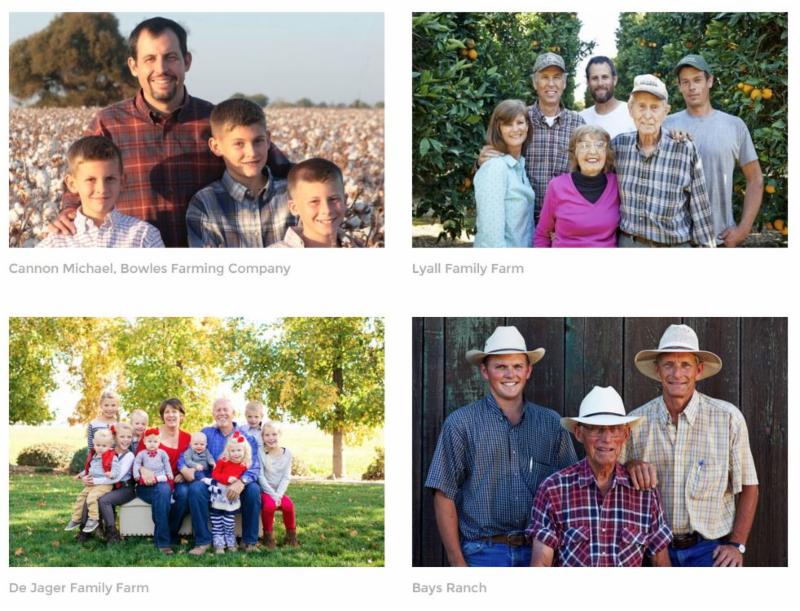
Cultivate California is an outreach program describing how California farmers and ranchers use water efficiently to produce the food and farm products Californians depend on. The website CultivateCalifornia.com recently launched which tells the story of our state's farmers and ranchers, who, armed with generations of wisdom, are helping to keep our state on your plate.
There are currently 4 farmer profiles on CultivateCalifornia.com (above), and CGFA members have the opportunity to be among the first farmers profiled. You would need to answer a few questions over the phone and provide one or more high resolution photos of your farm, family, fields crops, and/or equipment. If you are interested in being featured in a profile on Cultivate California please contact info@cgfa.org.
|
|
California Legislative Report
|
by: Dennis Albiani, Legislative Advocate 
Governor Brown Gives State of the State
On Wednesday, Governor Brown presented his record 14th "state of the state" address. The Governor warned of the next inevitable recession and the "zigzag of spend-cut-spend" budgeting. Rather than talking about new programs or restating all of the administration's priorities, he laid out a focused case for his top priority - continued fiscal discipline. The Governor also vowed to "focus on how we pay for the commitments we have already made," invest in "ways that will not lock in future spending" and keep California "prepared and vigilant" for a "profoundly uncertain" future.
The speech was broken into major categories: Budget, Income Inequality, Health Care, Education, Fiscal Commitments such as Retirement Liabilities, Infrastructure, Water and Climate Change. Much of the discussion on the issues identified what has been accomplished in his first 5 years as Governor.
Oddly, his speech didn't explicitly mention his two key infrastructure projects, California Water Fix - twin water tunnels beneath the Sacramento-San Joaquin Delta and high speed rail. Both face enormous hurdles - legal, political and financial - that must be overcome. Their omission from his speech may indicate that Brown fears that he cannot accomplish them within his remaining tenure.
A copy of the speech can be obtained here.
Senator Lara Announces "Short Lived Climate Pollutants Act"
Senator Ricardo Lara (D-Long Beach) announced his intention to introduce legislation that will mandate reductions of Black Carbon, Methane and Fluorinated gasses. Specifically, his legislation proposes to implement a strategy to reduce emissions of Short Lived Climate Pollutants in California by setting mandates to achieve a 50% reduction in black carbon emissions, a 40% reduction in methane, and a 40% reduction in fluorinated gases by the year 2030.
Black Carbon is emitted from burning fossil fuels. Its primary sources are diesel and gas emissions from the transportation sector, emissions from the industrial and energy sector, heavy machinery, and residential fireplaces. Methane (CH4) is a significant driver of climate change, and also the main precursor of tropospheric ozone (O3). The most significant sources of methane in California are manure from agriculture, dairy cows, landfills, and leakage from oil and gas operation pipelines. Fluorinated gases, including Hydrofluorocarbons, are man-made gases used primarily in air conditioning and refrigeration systems in cars, residential and commercial buildings, and also in aerosols.
This legislation could significantly impact agriculture including the livestock industry, fresh fruits and vegetable, cooping operations, wine and fermentation, and transportation. The association is working diligently to lead a coalition to address the legislation with facts and educate members on the impacts while opposing the current direction of the proposed legislation.
|
|
|
|
Obama Vetoes WOTUS Resolution, Battle to Continue
|
A joint congressional resolution to kill the controversial EPA "waters of the U.S. (WOTUS) rule expanding EPA and U.S. Army Corps of Engineers authority under the Clean Water Act (CWA), was vetoed this week by President Obama. In his "statement of administration policy (SAP)," the president said, "We must protect the waters...as I have said before, too many of our waters have been left vulnerable."
Unfortunately for critics of WOTUS, neither the House nor Senate was able to muster veto-proof majorities when approving the resolution, an action available to Congress under the Congressional Review Act. The Senate approved the measure last November on a 53-44 vote; the House last week cleared the measure on a 253-166 vote. An effort to attach language to the FY2016 omnibus spending package approved in December, 2015, failed. The Senate tried to override the veto yesterday, but that effort also failed. Sen. Joni Ernst (R, IA), who authored the Senate resolution, said she'll pursue other means to stop the rule. "We all want clean water - that is not disputable," Iowa's junior Senator said. "However, this rule is not about clean water. Rather it is about how much authority the federal government and unelected bureaucrats should have to regulate what is done on private land." She said the rule as finalized gives EPA authority over 97% of the land in Iowa. The WOTUS rule, considered a signature regulatory action by the White House, is in abeyance under federal court order based on suits against the rulemaking brought by over 30 states, as well as a number of industries and individuals. At the same time, the Government Accountability Office (GAO), the investigative arm of Congress, found EPA violated federal law when it overtly lobbied for comments on the final rule and formed alliances with environmental groups supporting the rulemaking. The National Cattlemen's Beef Assn. (NCBA), which intends to pursue litigation and legislation, said in a statement, "We are extremely disappointed the President chose to side with EPA, which has pulled out all the stops and shown an appalling disregard for the law throughout this rulemaking process. The President has ignored the will of Congress, including members of his own party. Moreover, he has taken sides against 32 states and countless stakeholders who have challenged the WOTUS rule...the consequences of WOTUS implementation now rest solely with President Obama." Similar statements were issued by the National Corn Growers Assn. (NCGA), and newly elected American Farm Bureau Federation (AFBF) President Zippy Duvall said, "We remain mystified as to why he continues to support this fatally flawed rule," calling Obama's action "salt in the wounds of farmers and ranchers."
|
House Ag Committee to Hold January 26 Hearing on "Impact" of EPA on Rural Communities
|
On the heels of this week's presidential veto of a joint congressional resolution killing the EPA "waters of the U.S. (WOTUS)" rule, the House Agriculture Committee announced it will hold a January 26 full committee hearing - with EPA Administrator Gina McCarthy as the agency witness - to consider "the impacts of EPA's actions on the rural economy."
Committee Chair Mike Conaway (R, TX), in announcing the hearing, said it's his intent to hear McCarthy's explanation of agency decisions, and to talk with her about how EPA and Congress can work together to ensure EPA actions don't harm agriculture. "America's farmers and ranchers are the original conservationists, and they have a vested interest in protecting our natural resources," said Conaway. "Yet, when it comes to the regulatory agenda of the U.S. EPA, we are repeatedly confronted by an agency seemingly oblivious to the voluntary conservation efforts of America's farmers and ranchers, and perhaps most alarmingly, apparently addicted to writing regulations that ignore congressional intent, ignore the input of stakeholders - including other federal agencies - and put our ability to produce food and fiber at risk." The hearing is scheduled to begin on January 26 at 10 a.m. EST, and can be viewed live by going to the ag committee's website at www.agriculture.house.gov.
|
More GE Labeling Talks Set by USDA
|
More discussion by both sides of the genetically engineered (GE) labeling battle will be held this week with USDA trying to broker a deal on whether or not foods containing GE ingredients should be labeled, or whether a labeling addition by which a consumer can easily find out ingredient information is possible and acceptable to the food industry.
At the talks will be the same 10 organizations - five for, five against - who met by invitation last week with Secretary of Agriculture Tom Vilsack. Representing the food industry will be representatives of the Coalition for Safe & Affordable Food (CSAF), in which the American Feed Industry Assn. (AFIA) and National Grain & Feed Assn. (NGFA) are active.
Vilsack favors a means which a food label can be scanned to reveal whether GE ingredients were used; industry, the Grocery Manufacturers Assn. (GMA) has developed a similar voluntary approach called "Smart Labels" where QR codes scanned by smartphones reveal ingredient information. The sticking point is whether or not such coding should be mandatory.
Sen. Pat Roberts (R, KS), chair of the Senate Agriculture Committee, said he's aware of the second meeting, and Sen. John Hoeven (R, ND), who's trying to put together a bipartisan GE labeling bill that fundamentally preempts state labeling schemes, said he'd been briefed on the first USDA-brokered meeting, but told Politico, what he heard is "nothing I can talk about publicly."
|
Northwest Senators Want USDA to Ensure China Buys U.S. Alfalfa
|
USDA is under pressure from four Pacific Northwest Senators who want the department to ensure China remains a strong customer for U.S.-grown alfalfa despite its mercurial policy on importing genetically engineered (GE) crops. At question is trace amounts of GE material showing up in Chinese import tests of U.S. GE-free alfalfa, and the four lawmakers want USDA to "address this issue without delay."
Sens. Ron Wyden (D, OR), Jeff Merkley (D, OR), Patty Murray (D, WA) and Maria Cantwell (D, WA) told USDA Secretary Tom Vilsack in a letter this week that the department's efforts to gain Chinese market access for previously barred products should also mean USDA is "vigilant to new barriers that may be eroding market access for products that have enjoyed export growth in recent years, particularly alfalfa hay." "American alfalfa is among the highest quality (dairy) feeds in the world, and its acceptance into the Chinese market is a positive...for both our producers and Chinese consumers," they wrote. The four lawmakers reminded USDA that given the Chinese ban on GE crops going back to 2001, "American alfalfa exporters have reoriented their production and methods to meet this requirement, and export the highest quality alfalfa...that is not grown from GMO seeds or in GMO-contaminated fields." The Chinese use of "more elaborate tests" is turning up cases of trace contamination, contamination not showing up in the export tests done by shippers in the U.S. The four Senators said shipments have been delayed and "sometimes rejected," despite the fact "these trace level may have been picked up from the ordinary shipping process and not on the farm."
|
Supreme Court Accepts Obama Immigration Order Case
|
A federal case brought against President Obama for using his executive authority to exempt certain classes of undocumented immigrants from deportation will be heard by the U.S. Supreme Court, the high court announced this week. Arguments will be heard in April, with a decision expected by the July 4 recess.
The case involves actions brought by 26 states, led by Texas, arguing Obama's executive order establishing the "Deferred Action for Parents of Americans and Lawful Permanent Residents (DAPA) failed to follow the Administrative Procedures Act (APA), federal law requiring public notice and comment rulemaking. At the same time, a similar program aimed at the children of illegal immigrants set up earlier is in question, but is not part of the Supreme Court action. Together, the two programs represent deferred deportation for about 5 million undocumented residents.
The court agreed to hear three issues, including the fundamental question of whether the president can unilaterally act to defer deportation and allow affected illegals to legally hold jobs. Also under consideration is whether the states have standing to sue to stop an executive action - the states contend they do have standing because they will bear the cost of public services for the newly legal workers - along with what's known as the "take care" clause of the Constitution which limits presidential authority.
The White House tried and failed last November to get the 5th District Court of Appeals to remove an earlier federal stay by a Texas judge of Department of Homeland Security (DHS) implementation of the orders.
Republicans in Congress say the Obama orders go against constitutional separation of powers because the president ignored Congress. The administration argues the president is granted broad leeway in implementing federal immigration law. Legal scholars contend the high court review could impact all executive orders issued by this White House.
|
TPP Could Cost the Federal Government Billions in Lost Tariff Income
|
As proponents struggle to convince a skeptical Congress of the wisdom and economic benefits of the Trans-Pacific Partnership (TPP), a $1-trillion-plus 12-nation Pacific Rim trade accord, this week reports surfaced revealing the U.S. Treasury could lose up to $15 billion in tariff revenue over the first decade of the pact.
In a related TPP development, New Zealand announced this week it will host a February 4, TPP signing ceremony in Auckland. The ceremony starts the clock ticking on White House submission of the formal deal to Congress, along with a plan on how it will implement the pact, and the process of administration-Congress negotiations on approval begin. John Murphy, senior vice president of the U.S. Chamber of Commerce, told the International Trade Commission (ITC) in testimony last week that nearly two-thirds of the agreement includes tariff elimination schedules, including "about 18,000 tax cuts on U.S. goods sold abroad, and 6,000 tax cuts on goods imported into the U.S. from other TPP nations." The "official" cost of the historic trade pact, which affects 40% of global gross domestic product (GDP) will be submitted to Congress by the Congressional Budget Office (CBO) once President Obama sends implementing legislation to Congress this spring. The ITC, which is reviewing the broad economic impact of TPP on the U.S. economy, as well as looking at how the deal affects individual sectors of the economy, said the U.S. takes in about $5 billion a year from tariffs on the other 11 TPP countries. ITC data said overall the tariff reductions could whack the treasury by up to $50 billion over 10 years, but due to longer tariff reduction schedules for some goods, including automobiles and auto parts from Japan, the financial impact is mitigated somewhat. Business is concerned Congress, as part of its review of TPP, could adhere to its so-called "pay-go" approach, imposing fees and taxes on business to offset the lost tariff income, as it did when it raised fees and taxes to offset the $7 billion cost of the U.S.-Korean Free Trade Agreement signed in 2011.
|
Vilsack Off to Chile, Peru on Trade Mission
|
Chile and Peru are Secretary of Agriculture Tom Vilsack's destinations come March 14, when he leads a four-day trade mission "to expand export opportunities" for U.S. agriculture.
Vilsack acknowledged the U.S. already has "strong trading relationships" with both South American nations, and both are part of the Trans-Pacific Partnership (TPP). He said if TPP is approved by Congress, it "will boost the Chilean and Peruvian economies and tighten integration with U.S. economy, helping further expand demand for U.S. agricultural products." The 2009 U.S.-Peru trade pact tripled U.S. exports, and now accounts for about $1.25 billion per year. In the Chilean market, all U.S. products move duty free as of 2015, and the 2004 deal with Chile now represents a 500% growth and $813 million in trade.
|
|
|
|
|
|
|