|
|
|
| Upcoming Dates |
October 12: CGFA Day At The Races Fresno
(flyer)
January 13-14, 2016:
Grain & Feed Industry Conference
The Embassy Suites on Monterey Bay
April 27-30, 2016:
CGFA Annual Convention The Manchester Grand Hyatt San Diego
California Animal Nutrition Conference at the DoubleTree by Hilton Fresno Convention Center
Fresno, CA
|
|
Benefits of Belonging to CGFA
|
- State & Federal Legislative Advocacy
- Industry & Small Business Issues
- Business Advocacy
- Weekly Updates on Current Issues
- Networking Opportunities
- Industry Specific Directories
- Advertising Venues
- Social Media Sites
- Cost Saving Insurance Programs
- Environmental and Safety Resource
- Continuing Education and Training
- Political Action Committee Administration
- Annual Convention
- Education Programs
- District Meetings
|
|
|
| CGFA at Cal Poly Career Fair |
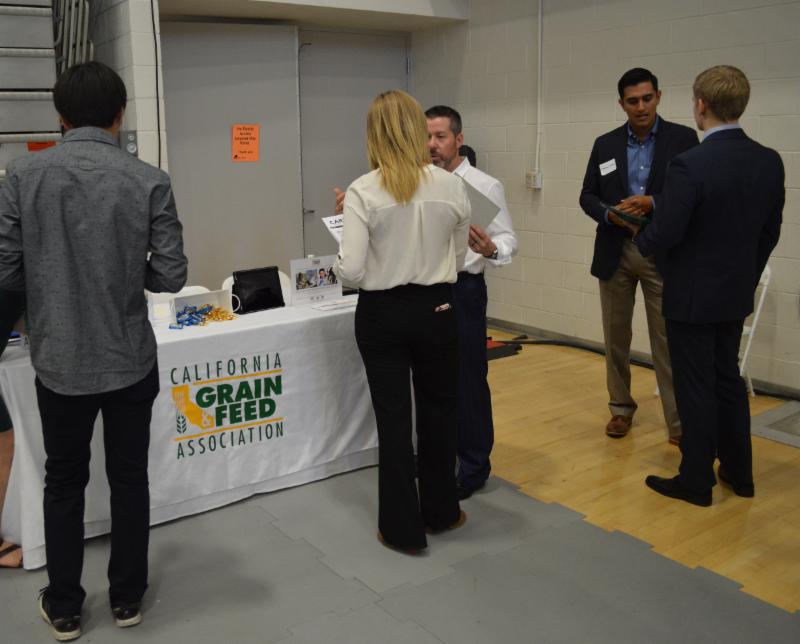
CGFA participated in the Fall Career Fair at California Polytechnic State University on October 7 & 8. CGFA Board and staff informed students of the diversity of career opportunities within the industry, introduced them to the CGFA Careers Center as a resource and recruited a pool of fresh talent!
John Kauffman, President of CGFA and Vice-President, Director of California Trading at J.D. Heiskell & Company, attended both days. "It was an excellent opportunity to meet the new young minds of our industry, we found some great prospects. I think it was a good start to our outreach for the CGFA Career Center.", John said.
Board member, Stephen Silva, E.B. Wakeman Company and member, Matt Kelly, William C. Loughlin & Co. attended on behalf of CGFA, on Wednesday and Thursday respectively. Both are alumni of California Polytechnic State University.
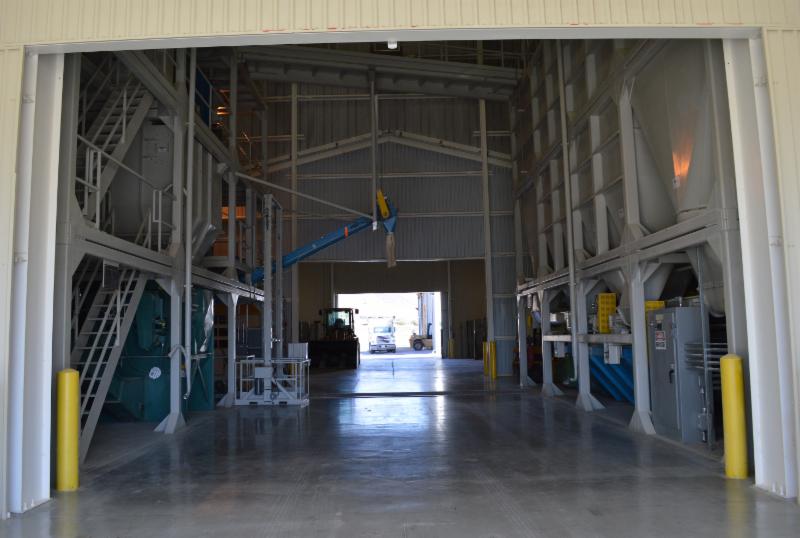
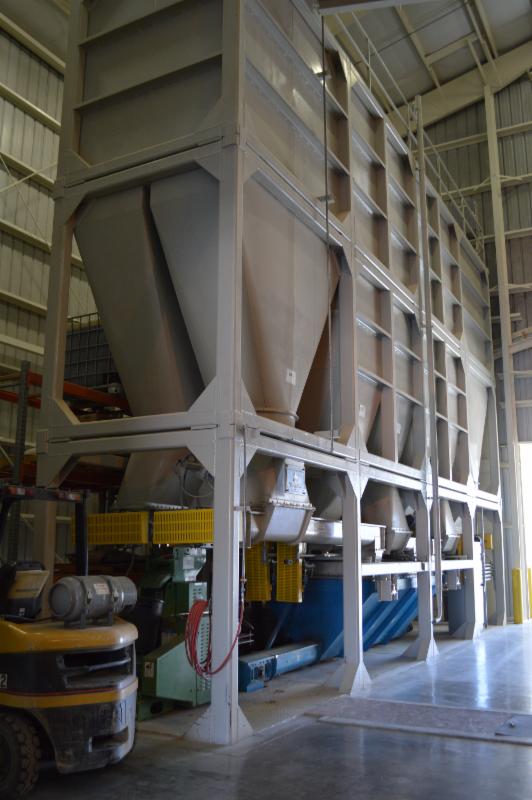
Students from a variety of majors stopped by CGFA's booth, including those majoring in Accounting, AgriBusiness, Agricultural Communication Agricultural Science, Business Administration, Dairy Science, Engineering (Agricultural/Computer/Industrial/Mechanical), Environmental Management and Microbiology. Over 25 student resumes are now available for download on the CGFA Careers Center. Students were excited to learn that CGFA represents over 250 companies while most employers at the Career Fair were companies. A few students sought out CGFA's booth after seeing the CGFA Careers Center on MustangJOBS, Cal Poly's Career Services Center. Dr. Jaymie Noland, Head of the Animal Science Department arranged a tour of Cal Poly's feed mill, built in 2012. Dr. Noland will also be sharing CGFA's video on opportunities within the grain & feed industry with her Animal Science 101 students and reaching out to her fellow faculty to do the same. The manager of the feed mill, Carl Whisenant, showed CGFA board members and staff the sparkling clean modern facility. Carl also supervises student employees and is an ambassador for the industry, advocating for staunch safety and accountability practices.
|
| | Left to right: Stephen Silva, Holly Klein, Carl Whisenant, and John Kauffman. |
CGFA will have a booth at the three more Fall Career Fairs, please email info@cgfa.org if you are interested in attending. Alumni from Cal Poly, Chico State, UC Davis and Fresno State are encouraged to attend career fairs on behalf of CGFA during the 2015-2016 school year. UC Davis October 14 10:00AM-2:00PM CSU Fresno October 20 11:30AM-3:00PM CSU Chico November 4 10:00AM-2:00PM
|
|
|
|
CGFA District Meeting: October 12th Day At The Races
|
Pleas join California Grain & Feed Association on
The Big Fresno Fair in Fresno, CA at the Races
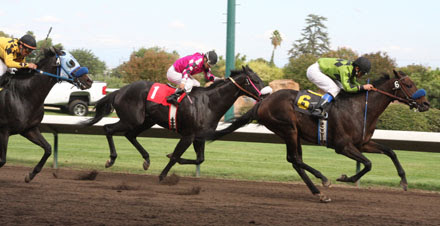
Live horse racing is back in the Brian I. Tatarian Grandstand at The Big Fresno Fair, with plenty of hoof-pounding action! Don't miss the excitement of live horse racing; it's only here once a year. Your registration includes admission to the fair and an air conditioned seat at the exclusive Turf Club. Dinner will be on your own after the races - some may want to stay at the fair and enjoy the other activities and others may want to head out after the races - we'll leave that to you.
Win, Place or Show - You Will Want To Be There!! Only $22.00 per person - Meet the group at 12:30 PM - Post time is 1:15 PM - Limit First 40
QUESTIONS? Call us at (916) 441-2272
|
Ohio Appeals Court Expands WOTUS Block Nationwide
|
The injunction granted by a North Dakota federal judge blocking EPA's "waters of the U.S. (WOTUS)" rule - only in the 13 states which joined in the petition - was expanded October 9 to the entire country by an Ohio federal appeals court. EPA had no immediate comment on the action.
The U.S. Court of Appeals for the 6th District, responding to a case brought by 17 states, said a nationwide stay of the WOTUS rule, effective August 28, is needed to restore uniformity to national water policy while a variety of litigation against EPA winds its way through the courts. The grounds for the North Dakota judge's action was similar - let the states remain in status quo while a federal suit brought by North Dakota and a number of other states is decided.
After the North Dakota action, EPA said it would enforce its WOTUS rule in the other 37 states. However, the Ohio appeals panel ruled that while they found no grounds for immediate irreparable harm from the rule going into effect, neither did it find any compelling evidence of immediate irreparable harm to the nation's waterways if the rule is held in abeyance during litigation.
The majority opinion says in part, "The sheer breadth of the ripple effects caused by the rule's definitional changes counsels strongly in favor of maintaining the status quo for the time being. A stay allows for a more deliberate determination whether this exercise of executive power, enabled by Congress and explicated by the Supreme Court, is proper under the dictates of federal law," the judges wrote.
|
|
Op-ed in Support of SB 27: We Need Strict Rules on Livestock Antibiotic Use
|
By Michael Lairmore and Terry Lehenbauer
The Sacramento Bee
In spite of efforts to reduce the overuse and misuse of antibiotic drugs in humans and animals, antibiotic resistance is a top health concern facing our country. According to the Centers for Disease Control and Prevention, antibiotic-resistance-related infections kill 23,000 people and sicken millions each year.
As veterinarians, we - along with our public health, physician and industry partners - are concerned about this growing global problem. That's why we embrace government's involvement in combating antibiotic resistance and expanding the important role that veterinarians play in protecting public health. Senate Bill 27, supported by the California Veterinary Medical Association and passed by the Legislature, is before Gov. Jerry Brown. It would place tough new restrictions on medically important antibiotics used in livestock animals raised for food. It would also call for increased oversight by requiring a producer to get approval from a veterinarian for antibiotics used in animal feed, which are currently sold over the counter with unrestricted access. These new rules follow a plan outlined by the Food and Drug Administration several years ago to eliminate the unnecessary use of antibiotics in animals, such as those used to promote growth. If the bill becomes law, California will lead the nation in addressing this serious public health threat, and consumers can be even more confident that the food we eat is safe from harmful drugs.
|
Governor Brown Signs Water Legislation
|
For Immediate Release: Friday, October 9, 2015
Contact: Governor's Press Office (916) 445-4571
SACRAMENTO
- As California's historic drought continues, Governor Edmund G. Brown Jr. today announced that he has signed the following bills to help boost water conservation, strengthen groundwater management and improve water quality:
- AB 142 by Assemblymember Frank Bigelow (R-O'Neals) - Wild and scenic rivers: Mokelumne River.
- AB 401 by Assemblymember Bill Dodd (D-Napa) - Low-Income Water Rate Assistance Program. A signing message can be found here.
- AB 434 by Assemblymember Eduardo Garcia (D-Coachella) - Drinking water: point-of-entry and point-of-use treatment.
- AB 496 by Assemblymember Anthony Rendon (D-Lakewood) - Pupil nutrition: fresh drinking water: funding.
- AB 530 by Assemblymember Anthony Rendon (D-Lakewood) - Lower Los Angeles River Working Group.
- AB 606 by Assemblymember Marc B. Levine (D-San Rafael) - Water conservation.
- AB 617 by Assemblymember Henry T. Perea (D-Fresno) - Groundwater.
- AB 939 by Assemblymember Rudy Salas Jr. (D-Bakersfield) - Groundwater sustainability agencies.
- AB 965 by Assemblymember Eduardo Garcia (D-Coachella) - California and Mexico border: water resources improvement.
- AB 1077 by Assemblymember Chris Holden (D-Pasadena) - Mutual water companies: open meetings.
- AB 1119 by Assemblymember Anthony Rendon (D-Lakewood) - Public utilities: municipal corporations: rights of way.
- AB 1164 by Assemblymember Mike Gatto (D-Glendale) - Water conservation: drought tolerant landscaping.
- AB 1390 by Assemblymember Luis Alejo (D-Watsonville) - Groundwater: comprehensive adjudication.
- AB 1531 by the Committee on Environmental Safety and Toxic Materials - State Water Resources Control Board.
- SB 144 by Senator Richard Pan (D-Sacramento) - Water development projects: Sacramento-San Joaquin watersheds.
- SB 208 by Senator Ricardo Lara (D-Bell Gardens) - Integrated regional water management plans: grants: advanced payment.
- SB 226 by Senator Fran Pavley (D-Agoura Hills) - Sustainable Groundwater Management Act: groundwater adjudication.
- SB 355 by Senator Ricardo Lara (D-Bell Gardens) - San Gabriel and Lower Los Angeles Rivers and Mountains Conservancy.
- SB 485 by Senator Ed Hernandez (D-Azusa) - County of Los Angeles: sanitation districts.
- SB 555 by Senator Lois Wolk (D-Davis) - Urban retail water suppliers: water loss management.
- SB 637 by Senator Ben Allen (D-Santa Monica) - Suction dredge mining: permits.
- SB 664 by Senator Robert M. Hertzberg (D-Van Nuys) - Water: urban water management planning.
- SB 758 by Senator Marty Block (D-San Diego) - Atmospheric Rivers: Research, Mitigation, and Climate Forecasting Program.
- SB 798 by the Committee on Natural Resources and Water - Natural resources.
|
California Legislative Update
|
by Dennis Albiani, Legislative Advocate
Governor Brown Signs Sweeping Energy Legislation
 Earlier this week, Governor Brown signed landmark legislation that establishes world-leading energy efficiency and renewable energy goals for California. SB 350 (De Leon) will create a requirement that California receive 50% of its electricity from qualified renewable sources and increase building energy efficiency by 50% by the year 2030. SB 350 codifies goals Governor Brown laid out in his January 2015 inaugural address to double the rate of energy efficiency savings in California buildings and generate half of the state's electricity from renewable sources by 2030.
"California has taken groundbreaking steps to increase the efficiency of our cars, buildings and appliances and provide ever more renewable energy," said Governor Brown. "With SB 350, we deepen our commitment." Governor Brown signed the legislation from the East Terrace of the Griffith Observatory overlooking the City of Los Angeles and was joined by dozens of government, climate, business, environmental justice and community leaders.
This legislation was a major step in electricity and energy efficiency but was missing one piece of the Governor's action plan, reducing transportation fuels consumption by 50 by 2030. That section of the legislation was removed during the last two weeks of intense negotiations. However, last week, the Governor attended a workshop of the Air Resources Board and reiterated his commitment to the 50% reduction in transportation fuels and encouraged the administrative agencies to develop plans to implement that goal.
Brown Signs Equal Pay Law Governor Brown signed legislation intended to address income wage discrepancy across genders. Women in California who work full time are paid substantially less - a median 84 cents for every dollar - than men, according to a U.S Census Bureau report this year.
California and the federal government already have laws banning employers from paying women less than men for the same jobs. SB 358 (Jackson) The California Fair Pay Act broadens that prohibition by saying bosses cannot pay employees less than those of the opposite sex for "substantially similar work," even if their titles are different or they work at different sites.
According to the author, Senator Hannah Beth Jackson, a female housekeeper who cleans hotel rooms, for example, may challenge higher wages paid to a male janitor who cleans the lobby and banquet halls. Similarly, a female grocery clerk could challenge a male clerk's higher wages at a store owned by the same employer but located a few miles away. The new law also prohibits retaliation against employees who ask about or discuss wages paid to co-workers, and it clarifies their ability to claim retaliation.
Essentially the legislation shifts the burden to employers not paying the same wages to show that the discrepancy is due to factors other than sex, such as merit or seniority; that they are job-related and reasonable; and that they are not due to discrimination.
The legislation was supported by a bipartisan coalition of legislators and business groups.
|
House Ag Committee Assured by Vilsack, Burwell Dietary Guidelines Won't Include "Sustainability"
|
Final 2015 federal dietary guidelines for consumers as ultimately fashioned by USDA and the Department of Health & Human Services (HHS) will not include sustainability as a factor, the full House Agriculture Committee heard this week from Secretary of Agriculture Tom Vilsack and Secretary of HHS Sylvia Burwell.
While the two Obama Cabinet members offered little detail on what to expect in the pending guidelines, Vilsack repeatedly reminded the committee that the recommendations of a guidelines advisory group, controversial because the panel went well beyond its mandate when it included "sustainability," tax and other recommendations on food consumption, does not represent the final recommendations being written by the two departments.
Vilsack said, "The guidelines that we formulate are - and should be - restricted by law to nutritional and dietary information. "The advisory committee report is not the guidelines, and sometimes there's confusion about that. The report informs our work, but certainly does not and should not dictate it."
Committee Chair Mike Conaway (R, TX) was "tickled to death" that Vilsack answered the committee's concerns, but ranking member Rep. Colin Peterson (D, MN) said the controversy makes it clear that perhaps it's time to rewrite the guidelines process because some consumers "are already losing confidence in the guidelines."
|
Speaker Drama Plays on; House Schedule, Issues Negotiations Complicated
|
Heir apparent House Majority Leader Kevin McCarthy's (R, CA) sudden, dramatic announcement this week he was withdrawing from the race for Speaker to replace the retiring John Boehner (R, OH) threw the chamber into political paroxysms, putting the schedule into question and threatened to sidetrack negotiations on several major issues, including markup of a multi-year federal highway reauthorization and sensitive talks with the Senate and the White House in hopes of reaching a two-year budget deal.
The House GOP has a week to confer as Congress recesses today for a weeklong Columbus Day break.
House Republicans gathered October 8, in the Ways & Means Committee room expecting to nominate McCarthy to be Speaker despite opposition from the conservative House Freedom Caucus broadly and the challenges of Rep. Jason Chaffetz (R, UT), chair of the Oversight & Government Reform Committee, and Rep. Daniel Webster (R, FL). Boehner previously set October 29 - his last day in Congress - for the full House election of Speaker, and still hopes to hit that deadline. He's said he'll stay on until a new Speaker is elected.
According to reports, Boehner was unaware of McCarthy's decision to withdraw from the race until just before the caucus meeting. Immediately after McCarthy's stunning announcement, Boehner gaveled the meeting to a close saying the election would be delayed.
In his press conference, McCarthy said he'd reached his decision for personal reasons, saying he wished to avoid putting his family through "turmoil," and, sounding much like Boehner at his retirement announcement, said the on-going battles between the conservative Freedom Caucus and the rest of the House GOP risked damaging the party and the institution. "I didn't want to become Speaker with 218 votes, but with at least 247," he said, referring to a simple majority victory versus a win that reflects the full GOP House membership.
Some conservatives had begun referring to McCarthy as "McBoehner" in press interviews, contending McCarthy would have simply inherited and perpetuated conservatives' antipathy toward Boehner as too moderate and bipartisan.
In a related development, Rep. Reid Ribble (R, WI) resigned from the Freedom Caucus immediately after the McCarthy announcement, citing its focus on the leadership race instead of issues, earlier plans to oust Boehner if he hadn't resigned and its decision this week to vote as a bloc for Webster. Rep. Tom McClintock (R, CA) quit the caucus in September over its refusal to vote for any continuing resolution that did not include defunding Planned Parenthood. The Freedom Caucus now has 37 known members.
Following McCarthy's announcement and Boehner's postponement of GOP candidate selection, the field of candidates for Speaker will likely grow quickly. The one agreement among all sides of the leadership fracas is that the new Speaker must be able to re-unite all political wings of the fractured party.
Ways & Means Committee Chair Paul Ryan (R, WI), a more conservative Republican than Boehner or McCarthy, but not a member of the Freedom Caucus, is a first choice for many. However, Ryan has said previously - and again following the McCarthy bombshell - he does not want the job because he can achieve more as chair of the tax writing committee. However, it's known Boehner met with Ryan twice after McCarthy withdrew, and other GOP members are leaning on Ryan to put his personal goals aside for the good of the party and the institution and accept the Speaker's gavel.
Other candidates seen as "unifiers" include Rep. Jeb Hensarling (R, TX), chair of the Financial Services Committee. While Hensarling has considered leadership bids in the past, he opted to stay out of this round. Hensarling is a strong fiscal conservative - he opposed Boehner on the 2009 Wall Street bailout - and previously chaired the Republican Study Committee, was GOP conference chair and finance chair of the National Republican Congressional Committee.
Conservative stars who've publicly said they don't want to be Speaker include Freedom Caucus Chair Jim Jordan (R, OH), Rep. Trey Gowdy (R, SC), Rep. Hal Rogers (R, KY) and Armed Services Committee Chair Mac Thornberry (R, TX).
In addition to Chaffetz and Webster, members who publicly or privately covet the Speaker's job include Rep. Peter Roskamp (R, IL), formerly part of leadership; Majority Leader Steve Scalise (R, LA), former member of the Study Committee; Rep. Tom Price (R, GA), Budget Committee chair, who was endorsed for majority leader early on by Ryan and Hensarling, and Rep. Pete Sessions (R, TX), chair of the Rules Committee, who's currently running for majority whip.
|
Final TPP Deal Sparks Candidate Attacks, White House Praise, Cautiously Optimistic Ag
|
Hillary Clinton, Sen. Bernie Sanders (I, VT) and Donald Trump say the Trans-Pacific Partnership (TPP) deal stinks, while the White House says it's the economic savior of President Obama's economic legacy. Agriculture groups, however, say they're generally "cautiously optimistic" TPP is good for agriculture, but they'll wait until they actually read the agreement before making any judgment.
While the Administration dribbled out details of the deal throughout the week ( www.ustr.gov, http://www.fas.usda.gov/tpp-benefits-us-agricultural-products) and the USDA ( www.usda.gov) spin machine was in high gear, the formal treaty won't be available for about a month as it must be translated for all 12 nations which participated in the negotiations and must be presented formally to their governments before the text is public. In the U.S. under the terms of trade promotion authority (TPA) granted Obama to get the deal done, the TPP treaty will be open to public scrutiny for 60 days before Congress debates and votes up or down on the deal.
That congressional review and vote will be tough, given TPA was approved in the House on a very narrow 218-208 vote. Some members have expressed their disappointment with the deal "based on what's been published," while others are reserving judgment until they see the final treaty and hear from their constituents, particularly ag groups. However, national livestock, poultry and crop groups, say that once the agreement is parsed - and all are pleased with the ultimate outcome - agriculture will lobby Congress as a bloc to get TPP approved earlier in 2016, just as it did with TPA this year.
The exception to that scenario is the National Farmers Union (NFU), which has opposed TPP as lacking sufficient muscle to curb currency manipulation by trading partners. NFU said TPP does not set enforceable standards, and warned that whatever economic gain comes from increased trade could easily be undercut by non-TPP nations which undervalue their commodities to compete with the U.S.
House Agriculture Committee Chair Mike Conaway (R, TX) told the Administration it would lose House votes to approve TPP if the final deal doesn't make dairy, rice and sugar industries happy, and said tobacco should be treated as a commodity, not a public health issue.
On that last one, tobacco may be one of the big "losers" in TPP. Tobacco state lawmakers are angry as U.S. negotiators failed to get U.S. tobacco products exempt from other nations' anti-smoking restrictions.
The President also convened this week a meeting of 18 business leaders at USDA - strategically placing Bob Stallman, president of the American Farm Bureau Federation (AFBF) next to Obama so ag is prominent in all photos - to sing the economic praises of TPP. Other ag groups attending were the National Chicken Council (NCC) and the Wine Institute.
Broadly, USDA says more than 50% of farm products by value will now enter Japan duty free, including pet foods. Japan, which stymied the talks for months over protections for its "sacred commodities," will lower beef import tariffs from 38.9% to 9%, and eliminate 74% of beef and beef product line tariffs over 15 years; it will cut pork tariffs by 80% in 11 years and make deep cuts in remaining tariffs, and eliminate the current 21% tariff on soybean oil.
U.S. dairy interests appear to have achieved the "balance" they hoped for, increasing its access to Canadian and Japanese markets enough to offset greater U.S. market access for Australia and New Zealand dairy products. Canada, which until the 11th hour refused to even talk about changes to its dairy and poultry protection system, will open 3.25% of its market to foreign products, with market share based on product, with some products allowed in at greater than 3.25%. The overall Canadian market access percentage is expected to grow over time.
Other nations dramatically reducing or eliminating tariffs include Vietnam - all U.S. poultry now moves duty free; Malaysia and New Zealand, with the latter agreeing to immediately eliminate more than 90% of its ag tariffs, in exchange for greater access to U.S. and Canadian dairy markets.
|
Ethanol, Biodiesel Interests Ramp up Pressure Ahead of EPA November 30 Deadline on Final RFS
|
A White House meeting this week between a bipartisan group of 14 Senators and the President's chief of staff to push for a higher EPA Renewable Fuel Standard (RFS) on ethanol followed closely on the heels of a bipartisan letter from 36 Senators urging identical action on biodiesel.
And while it seemed all biofuels interests were focused on the Administration, ethanol interests were able to kill an amendment Sen. Patrick Toomey (R, PA) offered during markup of an oil export bill in the Senate Banking Committee that would have killed the ethanol RFS altogether.
The White House meeting focused on "a more aggressive" RFS for ethanol when EPA finalizes its proposed rule at the end of November, and specifically asked that EPA stick to RFS volumes stipulated in the enabling law. At the same time, several of the Senators attending the White House meeting said the future of biofuels and advanced biofuels industries depend on a "rule that provides stability and predictability."
On the biodiesel side, 36 Senators from 24 states and both sides of the aisle, led by Sen. Chuck Grassley (R, IA) and Sen. Patty Murray (D, WA), told EPA they want to see a biodiesel/renewable diesel RFS "at least 2 billion gallons in 2016, and at least 2.3 billion gallons in 2017." They said the current proposal fails to recognize the industry's production capacity and ability to increase production to meet a higher RFS.
|
Anti-GM Labeling Group Pushes for Senate Action; Vermont Case Begins, CAST Releases Report
|
The Coalition for Safe & Affordable Food (CSAF), in which the American Feed Industry Assn. (AFIA) and the National Grain & Feed Assn. (NGFA) participate, staged a congressional fly-in this week, calling on the Senate to follow the House in passing legislation that provides a federal solution to the impending patchwork of state laws requiring the labeling of foods and feeds containing genetically modified (GM) ingredients.
In related developments, attorneys for the state of Vermont and the Grocery Manufacturers Assn. (GMA) this week squared off in their first court appearances in GMA's legal challenge to Vermont's GM labeling requirements.
At the same time, the Council on Agricultural Science & Technology (CAST) released a report that says mandates on food labeling based on production processes are a bad idea because they mislead consumers and can be used to demonize competing products. CAST also said the government should encourage voluntary labeling if the claims are true and are scientifically verifiable.
The group's message was simple: We want a Senate bill that does what the House-passed HR 1599 does, namely preempts the states from requiring GM labeling, and we want the law in place by the end of the year.
Sen. John Hoeven (R, ND) has picked up the challenge in the Senate and has drafted his version of the House bill, authored by Rep. Mike Pompeo (R, KS) and approved 275-150. However, Hoeven wants a Democrat to join him at introduction, and while he's getting a lot of private encouragement from his Democratic colleagues - and a similar message was heard by fly-in participants - no Democrat has stepped up to join Hoeven.
Meanwhile, Sen. Pat Roberts (R, KS), chair of the Senate Agriculture Committee, has set October 21 for a hearing on federal regulation of biotechnology with a focus on the labeling issue. Insiders say Hoeven is being encouraged to introduce his bill - with or without a Democrat on board - before that hearing to give focus to the ag committee action.
The House bill gives federal labeling authority to USDA, and creates a voluntary department certification process if a company wants to label for the presence or absence of GM ingredients. Further, FDA is required to define the term "natural" when used on food labels.
|
PTC Deadline Extension Proves Elusive
|
The December 31 deadline for railroads to install "positive train control" (PTC) systems on their trains as a means to help avert collisions has elicited warnings of both rails and shippers that if that deadline isn't extended, Class I carriers will start shutting down lines to avoid breaking the law. If that happens, they say, fall shipments of grain, crop chemicals and fertilizers will grind to a halt. Further complicating the scenario, Amtrak this week said it will begin shutting down service in mid-December if no extension is granted.
Agriculture shippers have been strongly urging Congress to act quickly on the PTC deadline extension. There's consensus on Capitol Hill that a three-year extension of the deadline is needed, but no agreement on how or when to enact the new deadlines. The ag groups are hopeful the House and Senate can take their respective versions of a three-year extension and pass them quickly and without the complication of other legislative and political issues.
The Senate included a three-year extension in its multi-year highway reauthorization bill, while the House is looking at a free-standing extension authored by Transportation & Infrastructure Committee leaders, in hopes of including it in a late October markup of its highway reauthorization. However, the highway program extension through October 29 will likely be extended until sometime in December, so with moving a deadline fix apart from the highway programs, an extension may be one of the last things done this year.
Sen. John Thune (R, SD) tried to get the extension included in the just-passed continuing resolution on FY2016 spending, but was unsuccessful. He said, "This is a looming economic and safety disaster that is completely avoidable."
For itself, the Department of Transportation (DOT) says the law is written so tightly, it has no administrative authority to extend the deadline and will be forced to begin enforcement in early 2016. The Federal Railroad Administration (FRA) hasn't offered Congress any options on the deadline dilemma, but acknowledges it fully expects widespread non-compliance with the mandate.
The PTC systems were required after a string of rail accidents and derailments involving "toxic inhalation hazards," i.e. gases and chemical, with the GPS-type systems designed to slow or stop a train if an engineer is distracted or incapacitated. Congress didn't take into account the interconnection of various divisions and lines within the rail networks, and the Class I carriers say that to remain legal, they'll have to shut down entire subdivisions of their networks where the PTC is not operational.
The American Chemistry Council published a report this month showing a one-month shutdown as anticipated by the carriers would cost $30 billion in economic losses and 700,000 jobs.
|
Senate TSCA Bill Hits Magic 60 Cosponsors, Supporters Want Vote
|
Supporters of a Senate bill to reauthorize and modernize the Toxic Substance Control Act (TSCA) for the first time since 1976 celebrated 60 cosponsors this week, action they hope will prompt chamber leaders to allow a vote when the Senate returns from recess October 19.
Lead authors of the bill, Sen. David Vitter (R, LA) and Sen. Tom Udall (D, NM), had hoped to move the bill this week when the magic 60 cosponsors was reached, but their move to get the bill to the Senate floor under unanimous consent - straight vote, no amendments - was blocked by Sen. Richard Burr (R, NC) who wants to add unrelated land and water use language to the bill.
The bill is virtually veto-proof, supporters say, because the list of cosponsors includes both Republican and Democrat leaders, achieved by language changes in the bill to make tougher industry compliance requirements, as well as giving greater freedom to the states to enforce their own chemical safety regulations.
Sen. Edward Markey (D, MA), in announcing his cosponsorship said, "I'm proud we have secured changes in the bill that will ensure chemical companies comply with mandatory deadlines for safety regulations, expedite regulatory action on the most dangerous chemicals, allow states more flexibility to implement new chemical regulations and gives EPA the funds to do the job."
The bill creates a four-year mandatory deadline for compliance with EPA rules, but would allow an extension for companies of up to 18 months if meeting that deadline is found to be technically or economically impossible. The bill also authorizes EPA to expedite its evaluation of 90 chemicals that are acknowledged dangers. TSCA fees would increase on a yearly basis from $18 million to $25 million, and set up a process whereby fees offset 25% of EPA's chemical safety program costs. Also included are protections for "vulnerable populations," including children, the elderly, pregnant women and workers, and add a new requirement that EPA release information on any priority chemical safety decisions.
|
Cargo Preference Study Released by GAO
|
A federal law requiring U.S. food aid sent overseas move in U.S.-registered ships increased the overall cost of shipping the food by 23%, or $107 million, from 2011-2014 over what those shipments would have cost had the cargo law not been in place, the Government Accountability Office (GAO) reported this month. At the same time, because food aid requirements at the U.S. Agency for International Development (USAID) and USDA don't agree, USDA's costs are higher, GAO said.
"Following the July, 2012, reduction in the minimum percentage of food aid to be carried on U.S.-flag vessels, USAID was able to substantially increase the proportion of food aid awarded to foreign-flag vessels, which on average, have lower rates," the report said. "In contrast, USDA was able to increase the proportion of food aid awarded to foreign-flag vessels, but only by a relatively small amount" due to a court order to meet the U.S.-flag cargo preference rules.
|
CGFA Feed Manufacturing Study Group Meeting Notice
|
Chairman John Austel and CGFA staff have scheduled the next meeting of the CGFA Feed Manufacturing Study Group for Thursday, October 29th from 9:30 am until approximately 12:00 noon. The meeting will take place at the Clarion Hotel in the Vineyard Room - 1612 Sisk Road, Modesto, CA 95350 (209) 521-1612. The committee will be discussing Food Safety Modernization Act final rule "Current Good Manufacturing Practice and Hazard Analysis and Risk-Based Preventive Controls for Food for Ani mals" as well as other issues and concerns facing the industry. Please RSVP if you will be able to attend this meeting by Friday, October 23rd - by email or phone (916) 441-2272.
|
|
|
Wildfire: Tips to Protect Your Family, Home, and Property
If your home [or business] is located in a woodland setting, rural area or remote mountain site, you may face the threat of wildfire. Wildfires often begin quietly and then spread quickly, igniting brush, trees and even homes. You can reduce your risk by following these tips to help protect your family, home and property from wildfire.
Mike Taylor, CPCU
Vice President
InterWest Insurance Services, Inc.
100 Pringle Avenue, North Tower, Suite 550
Walnut Creek, CA 94596
(925) 977-4104 Office
(800) 464-0077 Toll Free
(925) 977-4150 Fax
(510) 206-5505 Mobile
CA Lic #0B01094
mtaylor@iwins.com
|
|
|
|
|
|
|