FSMA and The California Feed Industry
|
The California Grain & Feed Association continues to provide members with more training and education in regards to FSMA. CGFA, in conjunction with Jenna Areias, Program Supervisor at the Feed and Livestock Drugs Inspection Program, Division of Inspection Services at the California Department of Food and Agriculture had the following video produced to assist members.
This video was part of Jenna's presentation at the recent CGFA Annual Convention. A copy of the full presentation and a link to the video is available on the CGFA website under publications in the resource section. http://www.cgfa.org/safety_resources.html
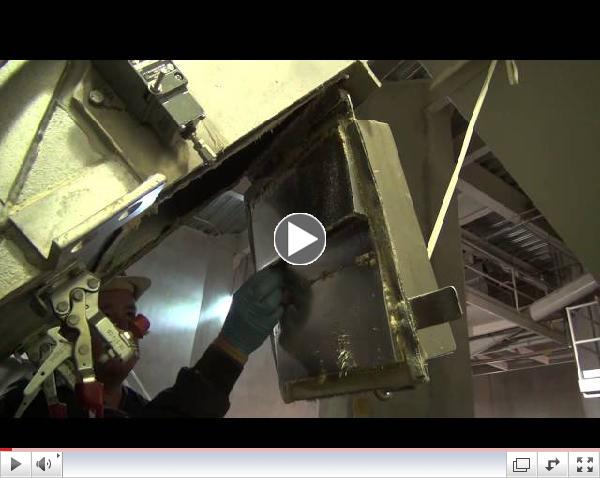 | Food Safety Resources: Video
|
|
Budget Deal Gives 25 Percent of Cap-and-Trade Money to High-Speed Rail
|
Source: Capitol Alert
Read more here: http://www.sacbee.com/2014/06/12/6480411/budget-deal-spends-cap-and-trade.html#storylink=cpy
Gov. Jerry Brown and Democratic legislative leaders have agreed to a proposal to use 25 percent of future cap-and-trade revenue - money polluters pay to offset carbon emissions - to provide ongoing funding for construction of California's high-speed rail project, according to part of a budget deal legislators will consider Thursday, sources said. The amount falls short of the 33 percent Brown originally sought but is more than the Senate Democrats proposed. The use of cap-and-trade money is one of the most controversial elements remaining in a spending plan Brown and lawmakers are finalizing this week. Lawmakers are expected to finish committee work on the budget Thursday, with floor votes Sunday, the constitutional deadline.
Cap-and-trade auctions could generate as much as $1 billion in 2014-15. The deal lawmakers are considering for the $68 billion high-speed rail calls for ongoing funding beginning in the 2015-16 budget year.
In addition to high-speed rail, the deal calls for 15 percent of cap-and-trade revenue to go to other transportation projects and 20 percent to go to affordable housing projects and other programs that help reduce greenhouse gases. The remaining 40 percent of cap-and-trade revenue would go to various transportation, natural resources, energy and other projects.
|
California Legislative Report
|
by: Dennis Albiani, Legislative Advocate 
Revenues are up for California, providing legislators with $2 billion more for the current year than expected. Governor Brown is trying to maintain fiscal prudence by limiting funding for "one time" expenditures such as technology in schools, transportation and to pay down additional debt. However, some legislators would like to see an expansion of programs such as universal pre-school, expansion of health care to all Californians regardless of immigration status, and rebuilding social welfare programs to pre-recession levels. Sacramento is focused on the budget because the Constitution requires a balanced budget be passed by June 15, 2014.
Outstanding budget issues impacting agriculture include:
- Restoring partial funding for Williamson Act subventions to counties.
- Increasing ongoing funding to border stations to limit plant, animal and invasive pest exposure. The Governor included an additional $3 million in his May Revise.
- Increasing funding for Animal Health Branch and the UC Diagnostic lab by $3.6 million.
- Funding the Agricultural Education incentive grant to $4.17 million
Legislation
AB 1566 (Holden) This measure increases the available tools for identifying and prosecuting inedible kitchen grease theft. By increasing fines, allowing impoundment of a vehicle used in a theft and providing more tools for law enforcement it is hoped this will reduce the theft of kitchen grease in California. Sponsored by Pacific Coast Rendering Association and California Grain and Feed Association.
|
| Livestock Haulers Get One-Year Exemption for Hours of Service Rules |
The Federal Motor Carrier Safety Administration (FMCSA) this week granted livestock and poultry haulers a one-year exemption from hours-of-service (HOS) rules requiring 30-minute breaks during the first eight hours of driving.
Trucking, livestock, poultry and feed groups petitioned FMCSA to grant the exemption based on concerns for animal health and welfare. Most big rigs don't have independent ventilation systems, relying on air circulating through the trailers as the truck moves. To force drivers to park trucks for up to 30 minutes during periods of very high or extremely low temperatures endangers the animals, the groups said.
A similar 90-day waiver granted in the summer of 2013 showed no safety problems. Drivers moving agricultural commodities, including livestock within a 150-mile radius of the commodity's source are already exempt from the HOS rules.
|
|
Corn Crop Condition Slips
|
USDA said this week the condition of the U.S. corn crop slipped one point, but is still rated 75% good to excellent as of June 8. About 21% of the crop is rated fair, down a point as well, and 4% is rated poor to very poor. Corn emergence in the 18 states surveyed is at 92%, ahead of the 83% last year, and a five-year average of 90% at this time of year.
The soybean crop sits at 74% good to excellent, 22% fair and 4% poor to very poor in the 18 major states. Soybeans are 87% planted and 71% emerged as of June 8.

|
| Food Industry Sues Vermont over GM Labeling Law | |
As expected, the food industry led by the Grocery Manufacturers Assn. (GMA) filed suit to overturn Vermont's new law requiring foods for human consumption that include ingredients or are the product of biotechnology be labeled.
The food industry is challenging the law based on First Amendment grounds, contending the law "imposes burdensome new speech requirements" on the food industry, and will invoke the Commerce Clause, saying states are prohibited from "regulating nationwide distribution and labeling practices that facilitate interstate commerce." The Vermont law, state lawmakers argue, is "lawsuit-proof" because the state has a responsibility to protect the public based on health concerns whether those issues are proven to be real or not.
Joining GMA are the International Dairy Foods Assn. (IDFA), the Snack Food Assn. (SFA) and the National Association of Manufactures (NAM). The Vermont law takes effect July, 2016, and when the state assembly enacted the new labeling law, it created a public/private legal defense fund in anticipation of the food industry legal action.
|
|
House Pulls Ag Approps off Floor Amid School Lunch Fight, CFTC Funding Dispute
| |
After the surprising defeat of House Majority Leader Eric Cantor (R, VA) in the Virginia GOP primary this week, House leaders pulled the agriculture/FDA spending bill off the floor. Floor debate began on the bill, but Cantor's stunning loss Tuesday sent the GOP caucus into rounds of meetings the next day, and at one point House Speaker John Boehner (R, OH), recessed the House so Republicans could meet to talk with Cantor, discuss the process for replacing him as Majority Leader and allow Cantor to make a public statement.
The White House threatened early this week to veto the agriculture/FDA bill in its current form, citing the amendment to the bill that would allow Women, Infant, Children (WIC) recipients to buy more white potatoes with their federal WIC dollars than nutritionists recommend, and an amendment that would underfund the Commodity Futures Trading Commission (CFTC).
The school lunch battle pitted school districts and state directors of school nutrition programs against First Lady, Michelle Obama and her "Let's Move" initiative to combat childhood obesity. The language in the bill requires USDA to create a waiver program allowing schools and districts to opt out of federal breakfast and lunch programs if they could demonstrate a net operating loss on school meals for at least six months, retroactive to July, 2013.
Pledging to fight the waiver language "to the bitter end," Obama contends the new menu requirements - focusing on fruits, vegetables and "local" foods - are necessary to teach students proper nutrition. Lunch program directors said the new standards are expensive, unrealistic with foods difficult to obtain, and where the standards are in place, students refuse to eat the lunches and food waste rates are rising.
Rep. Sam Farr (D, CA), ranking member of the Appropriations Committee's subcommittee on agriculture, led the Democrat charge to strike the school lunch waiver/potato language. "The Republicans are in disarray with Cantor's defeat," Farr said. "School lunch and white potatoes ... are controversial enough and are causing concerns in their caucus and they need more time to whip it to get the votes."
|
|
President Signs WRRDA
|
On June 10, President Obama signed the Water Resources & Reform Act (WRRDA) into law, releasing $12.3 billion in federal dollars to improve U.S. harbors, locks, dams and other waterway/flood control projects. The President said during the White House signing ceremony that the new law will allow funding to move to 34 designated waterway/harbor maintenance projects to move forward. National crop and farming organizations which rely on the Midwest river/waterways networks praised the action, noting U.S. waterways move 60% of agricultural products to export. Part of the law federalizes 85% of the cost of modernizing the Olmsted lock and dam project on the Ohio River - the other 15% paid by the Inland Waterways Trust Fund (IWTF) - and this action frees up about $100 million a year for other waterways projects. The bill includes modernization of the Harbor Maintenance Trust Fund and the IWTF, while carrying language that dramatically changes EPA's spill prevention control and countermeasure rules and their impact on farmers and ranchers. |
|
House Energy/Water Spending Bill Blocks EPA WOTUS Rule; Agency Extends Comment Period
|
The draft $34-billion energy/water FY2015 appropriations bill unveiled this week by the House Appropriations Committee contains language blocking EPA from proceeding with its "waters of the U.S." (WOTUS) rulemaking under the Clean Water Act (CWA).
At a House Transportation & Infrastructure Committee hearing this week, EPA witnesses took bipartisan hits on the rulemaking, with committee chair Rep. Bill Shuster (R, PA) calling the proposal a "dramatic expansion of the reach of the federal government." He said WOTUS is the latest in a series of "brute force" rulemakings begun by the administration. Committee members Rep. Nick Rahall (D, WV) and Rep. Bob Gibbs (R, OH) have introduced separate legislation to block the rules.
In agency action, EPA this week announced it is extending the public comment period on the controversial rulemaking. The original deadline was July 21, but the agency set the new deadline for October 20. July 7 remains the comment period deadline - extended from its June 7 original deadline - for separate agency action taking comments on an "interpretative" rule setting agriculture exemptions to EPA permit requirements. The House Agriculture Committee's subcommittee on conservation, energy and forestry said this week it will hold a June 19 hearing to review the exemption interpretive rule on ag exemptions. The hearing will be broadcast on the committee's website and can be accessed at www.agriculture.house.gov.
The draft appropriations bill language bans the spending of federal dollars by EPA to develop or implement any rulemaking changing CWA jurisdiction of EPA or the U.S. Army Corps of Engineers. The rule, which is highly controversial among agriculture groups, essentially takes the current regulatory definition - "navigable waters of the U.S." - and removes the word "navigable," giving the agency authority to regulate ponds, ditches and other waters on private property, critics say.
The American Farm Bureau Federation (AFBF) which leads the anti-WOTUS coalition said action by EPA to exempt 56 agricultural practices from the permitting requirements is not enough, as the rulemaking would take currently voluntary USDA conservation practices and make them mandatory.
|
| House Approves Farm-Friendly Tax Extenders |
A bill making permanent a tax credit that allows farmers, ranchers and other small businesses to write-off up to $500,000 a year on equipment purchases was approved this week by the full House. The action was the second in a series of "tax extender families" approved by the House Ways & Means Committee. The House has already approved making permanent the 20% research and development tax credit.
The $500,000 write-off was authorized in 2012 and 2013, but needs to be reauthorized each year. Not only does the House action dramatically increase the amount (permanent law limits the write-off to $25,000) the tax breaks will not have to be reauthorized if accepted by the Senate.
The Senate Finance Committee took similar action this spring, but extended the tax break for only two years as part of a broad bill extending 55 separate tax exemptions, including those for biofuels. The House Ways & Means Committee took the list of 55 exemptions and broke it down into several individual bills carrying related "families" of federal tax credits
|
| Short-term Extension of Highway Programs Likely as Funding Solution Eludes Congress | |
How to fund the federal Highway Trust Fund (HTF), which is forecast to run out of cash by August, in both the short and long terms is a problem Congress has not overcome. And, the longer a solution eludes lawmakers, the greater the likelihood this Congress will abandon its plans for a long-term reauthorization of federal highway/commuter programs.
It's expected the short-term extension will be tacked on to whatever short-term funding solution is agreed to sometime before August. A short-term extension - 15 months if Congress listens to Sen. Orrin Hatch (R, UT), ranking member of the Finance Committee - solves two issues: First, it gets Congress well past the November elections, minimizing to the extent possible, the politics of reauthorization and financing; second, it gives both chambers time to come up with long-term solution to the HTF dilemma.
The two-year budget agreement signed by President Obama last year doesn't allow Congress to shift money from general Treasury funds to keep the HTF running as it has in the past. Now, any contribution to the HTF from the Treasury must be paid for by cutting other programs or scaling back the authority - and level of federal contribution to state transportation projects currently enjoyed by the Department of Transportation. Further, a bankrupt HTF means states currently receiving about $45 billion in federal contributions to highway, bridge, urban commuter and related projects would begin to shut down ongoing projects, idling thousands of workers nationally.
|
Our Appreciation to The Many Generous Sponsors at the 2014 Annual Convention
| |
Kahuna Major Sponsors
A.L. Gilbert Co.
BNSF Railway
Cargill Limited
Elanco Animal Health
Foster Farms Commodities
The Gavilon Group LLC
H & H Eng. Const. Inc.
Imperial Western Products
J.D. Heiskell & Co.
Novus
Penny Newman Grain
Richardson Oilseed Ltd.
TPi "A Nutra Blend Brand"
Union Pacific Railroad
V-V Enterprises
Wells Fargo Bank
Westway Feed Products
Golf Hole Sponsors
ADM
Atlas Physical Products LLC
Baker Commodities
Bunge Canada
Bunge North America
Cereal ByProducts Co.
Commodity Specialists Co.
E B Wakeman
Elanco Animal Health
Grain Processing Corp.
H & H Eng. Const. Inc.
Hanlon Trading
Imperial Western Products
Industrial Railways Co.
Interstate Commodities
J.D. Heiskell & Co.
J.G. Boswell Co.
J.R. Simplot Co., Agribusiness
Kings River Commodities
Lansing Trade Group
Laughlin Cartrell
Midwest Agri Commodities Co.
North Central Companies
Olam Cotton
Phibro Animal Health
Pine Creek Nutrition
Premier Magnesia LLC
RJO'Brien
Richardson Oilseed Ltd.
SRC
Seley & Co.
Short and Miller Marketing LLC
Star Milling Co.
The Scoular Company
US Commodities
Wells Fargo Bank
Western Milling LLC
Industry Social Hour Sponsors
A.L. Gilbert Co.
Adams Grain Co.
Adisseo
Ag Processing Inc.
Alfalfa Supply, Inc.
Associated Feed
Atlas Physical Products LLC
Baker Commodities
Bank of the West
Bar ALE Feed
BioTech Associates Ltd.
Boer Commodities Inc.
Bunge North America
EB Wakeman
El Toro Export
Elanco Animal Health
Evans Grain & Feed
Evonik Industries
Foster Farms Commodities
Fontier Ag Co.
The Gavilon Group LLC
H & H Engineering Const. Inc.
Hanlon Trading
High Desert Craftsmen
Imperial Western Products
Ingredion
Interstate Commodities
InterWest Insurance
J.D. Heiskell & Co.
J.R. Simplot Co., AgriBusiness
L.A. Hearne Co.
Leach Grain & Milling
Leo-Parreira and Associates LLC
Louis Dreyfus Commodities
NuWest Milling LLC
Olam Cotton
Origination Inc.
P & F Metals
Pennfield Animal Health
Penny Newman Grain Co.
Quality Grain
Ranchers Cotton Oil
Richardson Oilseed Ltd.
Seley & Co.
Solvay Chemicals
The Scoular Company
Thompson Trading
V-V Enterprises
Van-G Logistics
Verhoeven Grain Co.
Wells Fargo Bank
Westaqua Commodity Group
Westside Hulling Association
Western Milling LLC
Westway Feed Products
Wilbur-Ellis Co.
William C. Loughlin & Co.
Zinpro
Industry Auction
A.L. Gilbert Co.
AAMSI
Arm & Hammer
Betsy Peterson
Cargill Limited
J.D. Heiskell & Co./ Scot Hillman
Jerry & Sue Marshall
John & Mary Kauffmann
Penny Newman Grain
Quality Grain
Richardson Oilseed Limited
Screw Conveyor Corp.
Simplot Agribusiness
Kevin & Nina Kruse, Western Milling LLC
Leach Grain & Milling
Jiffy Tickets
Harris Ranch
Westin Mission Hills
Harveys Harrahs
Hyatt Monterey
Frontier Ag
Transload Solutions LLC
V-V Enterprises
|
|



