September 2011 September 2011
|
|
|
|
NLP Canada Training Inc. Newsletter
|
|
|
|
|
|
|
Greetings!
Are you coming to HOPE 2011? It's one of my favourite days and I would love to share it with you. The NLP Canada Training community will gather in force to listen, to talk, to tell stories, and to celebrate.
NLP works to create so many different kinds of good differences. Listening to the work and experiences of 20 different NLP practitioners in one day is challenging and exciting. Some of your favourite speakers from previous years will be back, including Mike Murray, our keynote speaker. Other speakers are new to the community this year, and they have a wonderful range of experiences to get you thinking and inspire you to get moving, too!
If you're thinking about NLP this fall, come meet the people who know our training the best. If you're part of the community, come play. I would love to reconnect, and I will have some great stories and some very good chocolate waiting for you.
Linda
|
|
Coming Soon!
Saturday, September 17, 9:30am to 6:00 pm
The HOPE Symposium 2011
Emmanuel College, University of Toronto
This is our biggest event of the year and we hope you'll come play. We call it a symposium because our goal is to provide the kind of conversations you would have at a terrific banquet or dinner party. You'll meet people with lots of different backgrounds and opinions who share a love of NLP and a love of making a positive difference.
This year, 20 speakers (all NLP Practitioners and Master Practitioners trained at NLP) will be making short presentations on how they lead themselves through personal vision, and how they lead others in their work in wellness and business. Come get to know NLP and NLP Canada Training better. You can judge us both by the terrific people you will meet at this symposium.
Full details and online registration are available at www.hopesymposium.com
Register before September 3 for only $50/per person.
Saturday, September 24, 10am to 5pm
Motivating All Types: An Introduction to Using the Enneagram
Glendon College, Bayview & Lawrence, Toronto
In just one day, Barb Luedecke will teach you a system that makes it easier to identify the motivations driving people's behaviours. You will learn so well that on Monday morning you will begin to see behaviour differently. As you understand and work with motivation, you will be more curious and less frustrated. You'll find the leverage points where you can connect and motivate. You might even find that you learn something about yourself that makes it easier to get started or to get finished.
Click here for details.
$175 +HST
More coming in October, including our fall NLP Practitioner Certification which will run Oct 15/16 and Oct 29/30 and Nov 12/13. The next NLP Master Practitioner program will run in the winter of 2011.
|
Register Now for HOPE 2011, Sept. 17, 9:30am to 6:00pm
On Saturday, September 17, NLP Canada Training will host the 3rd annual HOPE Symposium at Emmanuel College, University of Toronto. Speakers will represent the diversity of people who have integrated NLP practices into their work for clearer thinking and better results. The format for the day allows for lots of short, lively presentations, interaction and networking. Newcomers curious about neurolinguistic programming (NLP) will discover how it can support better results in a wide range of applications.
You can register online by clicking here.
This year, speakers will be discussing whether it's better to lead with truth or with hope. It's a question that is central to both leadership and NLP. Among other practices, NLP teaches people to imagine better results in order to achieve them. It begins from a presupposition that hope is both possible and a good thing. At the same time, NLP includes practices for heightening acuity and becoming more precise in observing the truth in people and situations.
 | | Enter through south door to find Room 119 at Emmanuel Hall |
NLP Canada Training trains people to form strong, positive intentions and carry them out through mental rehearsal and replicating the behaviours and strategies of models of excellence. In a field that has often been characterized by wild claims and uneven results, NLP Canada Training consistently promotes ethical influence and conscious attention to best practices. Dr. Linda Ferguson leads a training team of professionals from different fields who are committed to building skills and making a real difference.
Linda will give the closing keynote of the symposium. In it, she will urge participants to become better leaders by telling bigger stories. Well-known as a storyteller, she will demonstrate how changing frames or perspectives can respect difficult truths while opening up new room for hope. Linda is very good at uncovering the resources that allow people to look at difficult truths and move through them to renewed hope. This is the hallmark of her training in NLP: she teaches practices that support integrity, determination and tangible results.
The HOPE Symposium runs Saturday, September 17 from 9:30 am to 6:00 pm in Room 119 at Emmanuel College (St. Charles and Avenue Road, at the Museum subway stop). Registration at the door is $80 (includes HST), and discounts are available for early registrations. Details are available by calling NLP Canada Training at 416-928-2394 or visit the HOPE Symposium website at www.hopesymposium.com.
|
How would you engage a conference audience?
Conference presenters face a special set of challenges as speakers. A conference is a place where many people gather to hear many speakers in a short time. The speakers address similar topics, some of which are of more interest to the gathered audience than others. Most of the topics are not directly connected to the audience's ability to complete projects in their work or lives. The speakers will not reconnect with the audience members until (unless) they find themselves at a similar conference in the future.
To think of it from the point of view of the audience, conference presentations are part of a stream of too much information that is often difficult to distinguish, difficult to imagine vividly, and difficult to remember.
 | | People remember Linda's stories |
The most straight-forward way to address these challenges is to remove some of the explanations and analysis from your conference presentation. Fill your presentation, instead, with short stories.
Stories have beginnings and endings that separate them from the flow of information. They are easy to imagine vividly, especially when told well. And they represent a natural way to memorize information so that it can be remembered. Storytelling connects with the audience in a way that is direct, powerful, and memorable.
How will you add stories to your next conference presentation? The first way is to think of the whole presentation as a story you will tell. Ask yourself these questions:
- If my presentation is a story, who is it about? Who is the hero? Is there a villain or a sidekick or a love interest?
- If my presentation is a story, what happens in it? Stories are about events; stuff happens. What events are part of the story I am telling?
- If my presentation is a story, what pattern does it follow? Is it a buddy story, a sports story, a tragedy, a comedy, a love story or the story of a treasure hunt? You already know dozens of patterns for stories. Choose a model that fits your material.
Think about the last three conferences you attended as a participant. What do you remember now? It's likely that you either think of what you remember as a story (I remember the problems with the computer and how that presenter managed) or you remember stories you heard. As a presenter, if you want to add value to your presentation at a conference, just add stories.
|
Short videos on how to tell stories for influence
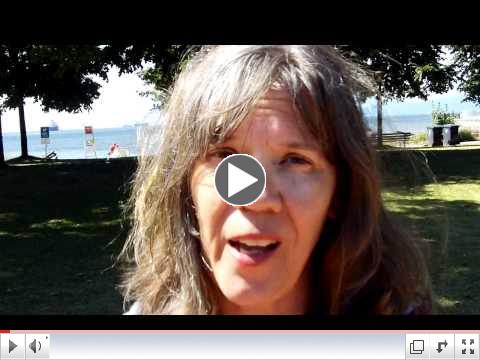 | | Storytelling for Influence 1 |
|
|
|
|
|
|
|
|