 March 2011 March 2011
|
|
|
|
NLP Canada Training Inc. Newsletter
|
|
|
|
|
|
|
Greetings!
It has been a very busy month.
There are lots of good things to say about going out in the world to practice and teach NLP. We enjoy the challenge and the stimulation and the negotiation. But we do admit that there is nothing quite as lovely as a group of amazing people in a practitioner training at 47 Queen's Park Cres. E. We have been having a deep, wonderful time with our current practitioners.
As we consider the spring (we have to wait till mid May for a new crop of practitioners) we are excited by Barb Luedecke's new course combining personality models and NLP for motivation. We look forward to the marvellous Mike Mandel's new group of Ericksonian practitioners (that class is filling fast). We are eager to pilot the new courses in Choice Management, and we are always delighted to meet new people at our evening events.
In the meantime, we are both now practicing yoga. Our bodies really are metaphors and we need to learn even more about how to stretch safely and comfortably and strongly. It's one way we take what we teach and make it real.
We are still learning. We are still stretching. This newsletter will tell you a little bit about some of the books and ideas and people that are helping us get better. We hope you enjoy them as much as we do.
Linda and Chris |
|
|
Coming Soon to NLP Canada Training Inc.
Today the sun is shining brightly and the winds are gusting. March is coming in like a lion. If winter has you feeling less energized than the wind outside, it might be time to join us for a one day course or evening event. We promise that you'll meet terrific people, gently twist and stretch your thinking, let go some of the stress that you're carrying and f eel more ready for spring (in your step, if not in the air). All these events are at 47 Queen's Park Cres. E., Toronto. and require registration by calling Carole at 416-928-2394. eel more ready for spring (in your step, if not in the air). All these events are at 47 Queen's Park Cres. E., Toronto. and require registration by calling Carole at 416-928-2394.
Sunday March 6, 10am to 5pm is another in our new series of courses on Managing Choice. Whole Brain Thinking will show you how to open up new choices and test them using your body, senses, emotions and imagination in collaboration with logical analysis. You'll learn how your body and senses provide a window into unconscious learning that can make you more effective and more precise. $175 + HST On Tuesday, March 8, 7:30pm to 9:30pm we have an evening program that will make you laugh. Enjoy Making Presentations is designed as a hands on experience of making mini presentations that demonstrate your passion, humour, and clear thinking. When you connect each of these with the experience of speaking, you'll understand that underneath the butterflies, you really can enjoy making presentations. This event is by donation to the Canadian Cancer Society.
On Saturday, March 26, 10am to 5:00pm we are introducing a great new course in Motivating All Types of People. Barb Luedecke has deep and wide experience in working with different models of motivation. She will be teaching a clear, intuitive method for quickly deciding what is likely to motivate someone and provide some NLP techniques best suited to making use of your insight. You will learn a little about yourself and more about how to connect NLP with other models to get fast, effective results. $175 + HST
Sunday, March 27, 10am to 5:00pm offers another in the series, Managing Choice. Creating Choices will show you how to use one of our most powerful natural learning tools to open up new possibilities. You will learn what metaphor is, how it is embedded in human thought and neurology, and practice techniques for using metaphorical thinking to develop and test new choices. $175 + HST
Finally (of course), we will offer Stop Procrastinating! on Thursday, March 31, 7:30pm to 9:30pm. After considering the benefits of looking before you leap, we will build a powerful state of motivation that will burst through blocks and get you moving in the right direction! This event is by donation to the Canadian Cancer Society. Coming in April: Ericksonian Hypnosis with Mike Mandel, April 9, 10 and 15,16, 17, 2011 An Introduction to NLP & Ericksonian Hypnosis, April 10, 2011 |
|
We're Taking Our Training to Charlottetown, PEI!
We are very excited to be offering an NLP Practitioner certification course at the University of PEI in Charlottetown this summer. It's an opportunity to stretch our own comfort zone away from our beloved city park setting and to bring New Code NLP to a new audience. It's also true that Linda has been a big fan of PEI for many years, and can't wait to be back on the Island.
The practitioner training will be just like the one in Toronto - except for the opportunity to walk on the beach in Stop the World, fully present to the smell of the salt, the cries of the gulls, and the cool PEI breeze against your skin. Linda has already arranged for kitchen facilities so that our Maritime clients will know the particular pleasures of home-baked banana bread. They will walk (with Grace and Power and in each other's shoes) on the Confederation Trail and enjoy the quiet, common sense hospitality of the university campus.
If you have friends or family out East, encourage them to take advantage of this rare opportunity to train close to home. We want to spread the word and build the NLP Canada Training community outside of Ontario. Please help us make it happen.
If you're thinking of taking the practitioner or Master Practitioner training, consider combining your training with a holiday in one of the prettiest places in Canada. The food and music are fresh and plentiful; the beaches are glorious, and the weather changes so often you're bound to have some you like.
Email Linda for more information. |
|
What's Linda Reading? 3 Books on Thinking Differently
There are always more books on the shelf than I can read. This week, I'm working my way through three books with a range of perspectives on how to change perception and accommodate difference.
In fact, the first book is Different: Escaping the Competitive Herd. Youngme Moon, the author is a professor at the Harvard Business School and she's writing a distinctive book about being different in a world where overwhelming choice has made brand differences less important. I bought the book because our friend, Mike Murray, said he thought of me while reading it.
If you click on the link to her site, you can watch a 3 minute trailer that will tweak your thinking and explain the premise of the book. It also demonstrate that this is not just another book on marketing: it's a good read about thinking about what choice means. To quote her site, "Youngme's message is simply: Get off the competitive treadmill that's taking you nowhere. Aspire to offer the world something that is meaningfully different. Different in a manner that is both fundamental and comprehensive."
The second book I'm reading (about halfway so far) is The Second Circle by Patsy Rodenburg. Our voice coach, Andrew Freund, introduced us to Patsy - or so I thought. After I started the Second Circle, I discovered that I had already seen and admired Patsy Rodenburg in this video, called "Why I Do Theatre."
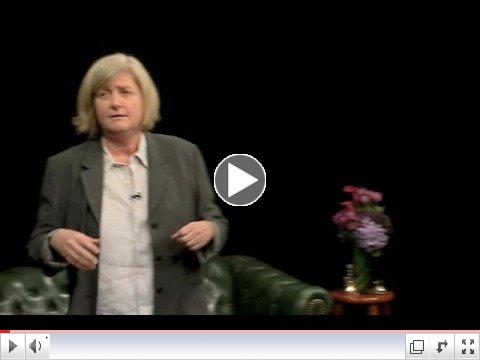 | | Patsy Rodenburg - Why I do Theatre |
Just watch. It's a great way to spend 7 minutes. You'll learn what it means to be fully present, and why it matters.
Finally, I pulled myself out of bed at 5:30 on Tuesday morning for a breakfast event at the Rothman School of Management at U of T. I was there to hear Margaret Heffernan speak about Willful Blindness, her new book. You can read about it on CNN's website by clicking here. I haven't had a chance to read the book yet, but I liked her presentation very much, particularly the final section on what it takes to be 'wilfully sighted.'
I know. There are no NLP or hypnosis books on the list. I have those clustered on my floor and piled on my desk and some are even on my bookshelves. But generally I find that they rehash the same ideas. They are good ideas, but they are even better when put in the context of the best public conversation about perception, change and getting results.
|
Would You Like to Be Better at Motivating People?
We often talk about being motivational as if there were just one way to do it. When you think about your own life and work, you will notice that is not the case. There are people who like to be scared into action and others who just want to get it right. Some people can be lured with praise and some just want to feel needed. How can you tell what will work with a particular individual or group?
The Enneagram is a system for noticing what works in motivating different people. Instead of recognizing people by their behaviours or thinking, the Enneagram recognizes people by their patterns of motivation. While it can be a very flexible and precise system, the basics are easily learned in a single day. In fact, you carry around the best way to remember it everywhere you go. The three core types of motivation can be remembered as head, heart and gut.
NLP accelerates learning of the characteristics of each type by allowing you to effectively remember experiences in which you have encountered these characteristics in others and in yourself. It also gives you effective tools for reaching out to different motivation types and getting them moving. We wouldn't teach you to recognize motivation if we weren't also prepared to introduce you to what to do next.
 This one day course taught by Barb Luedecke will be a practical, hands-on introduction to noticing what works and using that to drive your strategy for motivating yourself and others. If you are already familiar with NLP, you will be delighted to have a new way of thinking about how to choose which patterns to use with different people. If you are new to NLP, you will find it easy to learn just enough to get you going (and to allow you to be effective at getting others moving too). This one day course taught by Barb Luedecke will be a practical, hands-on introduction to noticing what works and using that to drive your strategy for motivating yourself and others. If you are already familiar with NLP, you will be delighted to have a new way of thinking about how to choose which patterns to use with different people. If you are new to NLP, you will find it easy to learn just enough to get you going (and to allow you to be effective at getting others moving too).
You may not be the kind of motivator that you see on tv, getting a stadium full of people to cheer and cry. It's more likely that you want to know how to take advantage of the energy when someone around you is cheering (or to stop the tears when someone is crying). Motivating All Types of People will give you practical tools for identifying the emotions driving a person's responses and to change your own approach to be more influential.
This is a training that will feel right, look right, and give you more choices. You'll understand that better after you take it.
|
|
Using Your Training in Hypnosis
It's not uncommon to hear people who have taken a course in hypnosis say things like "It was really fun but I don't see how I would use it in my life." Of course the easy answer to this is that everyone can use self-hypnosis to solve problems, enhance performance, manage pain or relax and sleep better. Everyone needs the intense, relaxed focus that hypnosis promotes. Self hypnosis is a powerful way of influencing yourself.
Training in hypnosis is only partly about self-influence. Most people take hypnosis courses because they are curious about their ability to influence others. Let's take a look at three ways that you could use training in hypnosis to improve the quality of your relationships.
The core skill in hypnosis is listening. This isn't apparent when you watch a stage hypnotist: it is part of the "magic" that your attention is on the subjects and not on the hypnotists while they are working. It should be apparent in any good hypnosis class. Even before the induction begins, the hypnotist is paying attention with all of his or her senses. This is whole brain listening: hypnotists pick up key words and inflections, watch postures and expressions and notice breathing. They reflect what they observe back to the client to create a wonderful sense of connection and safety. Now take a moment and identify one relationship in your life that would benefit from that quality of connection.
Another skill in hypnosis is the ability to distinguish what is said from how it is said. Hypnotists learn to vary their voice tone and tempo in response to the changes they want to induce in their client. Sometimes these variations are in keeping with the meaning of their words, and sometimes the meaning of the words follows an independent pattern. Generally, hypnotists learn to convey at least two meanings simultaneously. The sound of their voice carries the message that it is safe to focus internally and allow the hypnotist to guide the process. The words in the message give specific suggestions about what will happen inside the process. When you think about your life or work, when would it be useful for you to convey a message about the quality of your relationship at the same time you conveyed information abo
 | | That's right. It's Mike Mandel. |
ut a task, activity or person?
Finally, hypnotists all know the power of positive suggestion. They neatlyavoid the trap that many people fall into of making suggestions they would rather you didn't follow. For instance, I have heard many yoga teachers tell classes to "let go of your work and all the stress of your day." They clearly don't know that talking about something brings it into awareness. Or you could think about the parents who mean well when they tell their young children, "don't spill that." Introducing something tangible to the senses, like spilling, makes a suggestion to the brain. When we are connected with someone (like a teacher, supervisor or manager) we open ourselves to suggestion. Where in your life would it be useful for you to remember to suggest what you want (not what you don't want).
Does this look too simple? Influence is simple. Two people make a connection through what is familiar. One person makes a change, and the other person follows. Under all the complexities of teaching, selling, parenting, or managing, there are two people who are paying attention to each other. When you think about applying your hypnosis training now, you can notice that it's easy to let go of the complexity and simply focus on what you want. |
|
Evaluating Soft Skills Training
Most soft-skills training are evaluated too soon in a way that ignores results and measures familiarity and rapport. The forms with which we are all familiar never judge results: they only judge the comfort level of the process. They do not work for the training we most want - training that effects real, positive change by introducing difference.
1. Results trump experience.
Growth is uncomfortable. The way to know whether or not you are getting results is to know what results you want and to measure your progress.
2. You already know how to do what you are already doing.
If you hire trainers to work with you because they think differently than you do, then you are accepting that you will have to stretch.
3. You can't test a process before the process is complete.
Expecting to know whether or not training worked at the end of the training day is a little like judging cookies halfway through the baking time.
Read the full article at ntgr8, our blog.
|
|
|
|
|
|
|
|


