Greetings!
Hello fellow practitioners! We hope you're having a great May! Here, in Hermosa Beach, we've been lucky to escape the typical "May Gray" and have enjoyed much sunshine. We hope it stays around for our upcoming June FSTT courses. Please consider joining us June 22nd (Lumbar), and June 23rd (Foot/ Ankle). As for this month's newsletter, we offer a quick progression of what we shared in the March newsletter. In March we demonstrated a kneeling hip region mobilization. This month we show a progressive-aggressive, yet important, tissue mobilization that extends from the hip past the knee. In addition, we have posted a question regarding hydration and manual pressure that someone was kind enough to email us. Thank you for all your positive feedback on this newsletter, we appreciate you all! If you have any questions or just want to share ideas for an upcoming newsletter topic, please email Lenny at lparracino@gmail.com. Enjoy! In Health, Lenny and Vince |
|
Clinical Application

It is very common for a client to develop an abundance of adhesive tissue along the lower extremity, often enough to cause tibial torsion or a mal-alignment at the knee junction. We must realize the malformation is almost always a result of the connective tissue's behavior, not a bone deformation. The bone is being positioned by the connective tissue. This quick video demonstrates a few variations to assess and address the behavior of the connective tissue. We hope this will spawn other ideas or integrations that you may have!
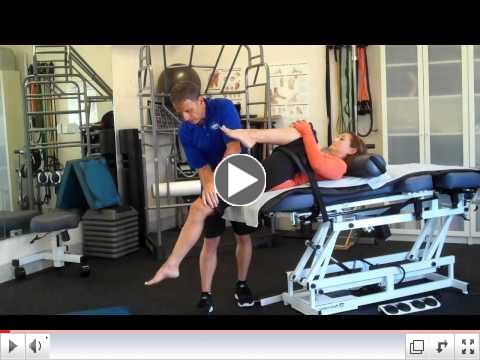 | | FSTT Newsletter May 2012 |
|
|
Questions/Research/Information
Question: What does manual force do to the hydration of the connective tissues? First, connective tissue (CT) consists of cells (fibroblasts and leukocytes), interstitial water, fibers (collagen and elastin) and matrix molecules (glycoproteins and proteoglycans). It is important to note that interstitial fluids create a transport space for nutrients, waste materials and messenger substances, and facilitate homeostasis between extracellular and intracellular regions. Although the structure of water is not completely understood we shouldn't neglect what is known, but instead apply what is known to improve the health of people we work with.
So what is happening when we apply dynamic mechanical stress to a client's connective tissue? It can be helpful to think of connective tissue like a sponge. When a force is applied (tension-compression), water is being extruded or forced out of the connective tissue. This makes the tissue more pliable and supple (at the moment). When force is reduced or removed, water is reabsorbed and the tissue finds a new equilibrium. It's like squeezing a sponge and then releasing or reabsorbing when your force is removed and therefore a pumping reaction is created. This is why in class we emphasize "listening" to the tissues beneath your contact and sensing for the tissue's responsiveness. The tissue's responsiveness will dictate how much force to apply, direction, when to release, and how fast or slow to move - this ALL has to do with the hydration (or lack of) within the connective tissue. By applying this knowledge, the manual therapist is creating a pump-like action to the connective tissue in attempt to wash out pro-inflammatory substances and waste products. In addition, it is helping to dissolve adherences of the collagen network to enable the supply of oxygen and nutrients.
In conclusion, our applied mechanical force helps to break up fascial adherences (congestion) and once "sticky" thicker tissue becomes more pliable it makes sense to irrigate and purify the connective tissue. Researchers are revealing more and more about the dynamics of the interstitial fluids as they seem to play an important role in homeostasis. The bottom line is you don't want substances to stay detained long enough to produce sickness. Therefore, promote "fresh flow" as stagnation eventually kills.
|
Something to Think About
"Anyone who conducts an argument by appealing to authority is not using his intelligence; he is just using his memory" Leonardo da Vinci
Thank you for being a part of our FSTT community!
|