|
|
|
Functional Soft Tissue Transformation
|
April 2012
|
|
|
|
Greetings!
Hello fellow practitioners! We just returned from London sharing with a great group of people. We even had the honor of Dr. Dave Tiberio attending this FSTT Hip class. This month we want to share a quick integration of the January (Foot / Ankle) and March (Kneeling Hip) topics in the clinical application section by applying a more global soft tissue approach. This approach can also be integrated into your knowledge of Functional Manual Reaction. In addition, under the information section you will find a quick tip on nourishment! We hope to see you in person soon at one of our upcoming courses! If you have any questions or just want to share ideas for an upcoming newsletter topic, please email Lenny at lparracino@gmail.com. In Health, Lenny and Vince |
|
Clinical Application

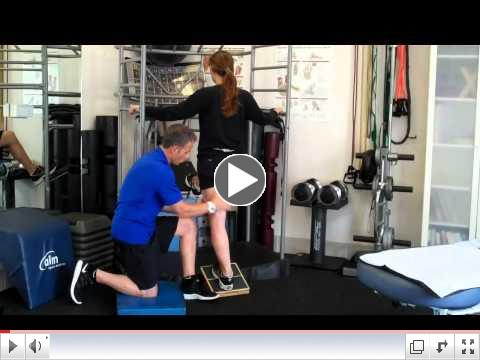
The fact is that we are NOT stuck together by mechanical hinges, but instead stuck together by "spit" or "glue" and this substance between our tissues often gets too sticky! Therefore, instead of focusing solely on the joint region, we must often  go outside the joint region and explore the surrounding soft tissues searching for areas of stagnation that can have a huge impact on specific joint motion and/or overall motion. The following technique is designed to enhance the relative tissue translation from the foot to the hip. In the January newsletter we focused on the foot/ankle complex and in March we shared a kneeling hip mobilization, here we share a combination that addresses the entire lower extremity. It is important to keep in mind that when more tissues are placed under tension the total tension distribution changes the mobilization intensity. Have fun with it. go outside the joint region and explore the surrounding soft tissues searching for areas of stagnation that can have a huge impact on specific joint motion and/or overall motion. The following technique is designed to enhance the relative tissue translation from the foot to the hip. In the January newsletter we focused on the foot/ankle complex and in March we shared a kneeling hip mobilization, here we share a combination that addresses the entire lower extremity. It is important to keep in mind that when more tissues are placed under tension the total tension distribution changes the mobilization intensity. Have fun with it.
 | | FSTT Newsletter April 2012 |
|
|
Questions/Research/Information
As we share in our courses, nourishment plays a VERY important role in the health of soft tissues. In our opinion, it's a much bigger component of health than most realize or apply. For example, today more and more kids are visiting clinics with "orthopedic" injuries that you normally see in the older population. When you start to connect-the-dots between nourishment (or lack of), rest/recovery, and movement you start to appreciate that many injuries or symptoms are multi-factorial!
It has been recently stated that by the year 2020 over 50% of the American population will have a form of insulin resistance (you can be insulin resistant and not get diagnosed as diabetic). If we want to make a change in our clients/patients we must respect the elements that make up the entire organism. One known element is nourishment. Nourishment is not only the energy that we provide our body but it is also information that allows us to repair, grow, and of course function!
Practically speaking, one of the best things we can do for ourselves is to feed our tissues the necessary building materials for optimal health. This can be done in the form of bone broth. By boiling animal bones, skins, and tendons you end up with the protein source gelatin. Interestingly, before the drug craze began, doctors were starting to report on the benefits of using gelatin. Dr. Pottenger, one of the more famous nutrition experts of the early 20th century, reported that adding gelatin to the meal improved digestion of ALL foods. Other doctors found that food allergies, problems with mixing different types of foods, and even food reactions due to leaky-gut syndrome could be overcome by adding gelatin to the meal.
If you look at the list of items found in gelatin (too exhaustive for this section), you'll see that it contains the same compounds that are being promoted and sold individually as food supplements to help arthritis and joint problems. Of course the healthiest way is NOT to buy synthetic, individual supplements. Instead, do it naturally and make it yourself. If you or your clients suffer from digestive complaints, gastrointestinal disease, food allergies, slow healing, liver problems, skin abnormalities, muscle pain/cramping/soreness, arthritis, or other joint pain/inflammation, then share the attached high-quality bone broth recipe -stay out of the laboratory and get back into the kitchen!
Simple Bone Broth/Soup Recipe
|
Concluding Thoughts
In order to achieve optimal health we must respect the four key essentials that function interdependently (nourishment, movement, rest/recovery, behavior). In this issue we shared a soft tissue technique that applied a movement strategy and in the information section we shared a nourishment strategy. When applying an AFS approach we apply a multi-strategic plan to an often multi-factorial problem. It would be naive to think that pain or complaints, whatever they may be, are isolated to one part! Thank you for being a part of our FSTT community!
|
|
|
|
|
|
|