|
|
|
|
You recently signed up for our monthly e-newsletter. If you wish to be removed from our mailing list, please click the unsubscribe link above.
In subsequent issues we want to provide sources of information that you can find on the web, local information for various elder needs, and information about the aging process, among other subjects.
We are excited about starting this form of communication with all of you. Please feel free to write back about information that you would like to see in the e-newsletter.
Care Needs and Technology
People are thinking about their care needs for the coming year. Finding the funds to cover care or finding the personnel to provide care, are both issues for this year. Increasingly, technology is offering solutions to both problems. Electronic monitors of many types are available to stretch out the care dollars and increase a person's independence. The following articles touch on technological care.
More information can be found at www.youtube.com if you search for Eldercare via Television, and at www.google.com if you search for personal emergency response system.
I might add that we also use technology in the office to monitor when caregivers arrive and leave clients' homes. Our remote time clock system links into our web-based scheduling system so we can monitor caregiver services throughout the day and night. The system sends an alert to our cell phone when a caregiver fails to arrive on time.
Our web-based scheduling system is also useful for the client or family member who wants to view the client's schedule online.
If, after reading the articles, you have further questions about PERS equipment, including medication, activity, and fall monitors, please feel free to contact us.
|
| Seniors at Risk of Overmedication |
Americans age 65 and older have more chronic health problems than the general population. As a result, they consume about a third of prescription medicines and more than half of over-the-counter (OTC) medications, the Journal of the American Academy of Physician Assistants reports.
By taking multiple prescriptions, OTC drugs, vitamins, supplements and herbal remedies, seniors face a greater risk of health- and life-threatening drug reactions. In fact, the American Society of Consultant Pharmacists (ASCP) reports that adverse drug reactions are among the top five greatest health threats for seniors.
The U.S. General Accounting Office reports that inappropriate prescription usage costs $20 billion a year in hospitalizations and that 18 percent of outpatient Medicare recipients—about 30 million people—take at least one medication considered unsuitable for the elderly.
Contributing factors to this problem include:
- Seeing several doctors for multiple health problems
- Using multiple pharmacies
In addition, the natural aging process affects how seniors respond to certain medications and how the body metabolizes medicine. In many cases, dosages need to be reduced to account for these changes.
Overmedication can lead to falls and fractures, cognitive dysfunction, electrolyte disorders and cardiac failure.
Some symptoms of overmedication include:
- Increased confusion
- Drowsiness
- Fall or balance problems
- Memory loss
- Incontinence
As a result of the problems and side effects associated with overmedication in seniors, the demand continues to increase for person-to-person in-home senior care and technology systems (specifically, medication management systems) to alleviate concerns of overmedication in seniors.
|
| PERS | Help At the Push of A Button |
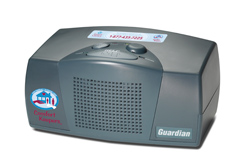
Personal Emergency Response Systems (PERS) offer seniors and their loved ones the comfort of knowing that help is always close at hand—even between visits by caregivers.
By simply pushing an emergency call button on a pendant or wrist band, a senior immediately alerts—by phone line—an emergency monitoring center that is in operation 24 hours a day, seven days a week. By way of the system's two-way speakerphone, the monitoring center operator dispatches appropriate help.
For PERS subscribers who lose consciousness some systems sense when a senior has fallen and automatically dials the monitoring center to dispatch emergency personnel.
To meet the changing needs of seniors, certain systems can be expanded with accessory features. For instance, motion detectors, pressure-sensitive mats and window and door sensors can be added for wandering seniors who develop Alzheimer's disease or other dementia-related conditions.
When selecting a PERS unit, make sure the system's monitoring center has professionally trained staff, emergency backup power service during electrical outages and state-of-the-art computer systems that allow the PERS staff to provide instant, complete information about your loved one to emergency personnel. |
| Technology: The Caregiver's Helper |
The supply of professional and family caregivers can't keep up with America's rapidly growing senior citizen population. In fact, the ratio of seniors to working-age Americans is expected to rise 30 percent from 2010 to 2020 and another 29 percent in the following decade.* (citation below)
At the same time, more senior citizens want to continue living at home, for as long as possible, even with chronic health conditions.
So, how can a shrinking supply of caregivers catch up to this increasing demand? The answer, many believe, lies in caregiving technologies that complement and extend the personal, human touch.
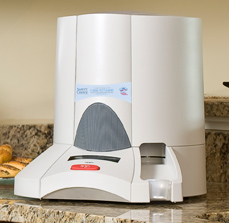
Technology solutions such as monitoring devices, electronic medication dispensers and emergency response systems—effectively bridge the times when a caregiver can't be present. Such technologies are monitored by professionals at central stations. Monitoring and assistive technologies offer family members the opportunity to take respites from caregiving with the peace of mind their loved one is still being watched over.
Ultimately, this melding of technology and personal caregiving leads to improved health outcomes and quality of life for seniors, enabling them to age right where they most want to be—at home.
* According to Dowell Myers, a demographer at the University of Southern California, in a May 7, 2007, article in The Wall Street Journal
|
|
|