|
WE THE PARTY in theaters now...
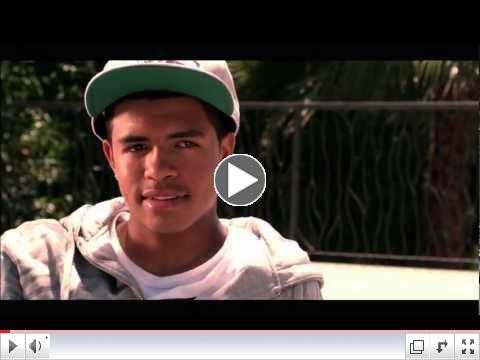 | We The Party
Mandela Van Peebles |
WE THE PARTY & LIFE, LOVE, SOUL in theaters now.
Melvin, Mario and now introducing Mandela Van Peebles. Mandela and his dad Mario have put together a solid film which everyone should see and everyone will enjoy, especially teenagers. LaShawn Williams chatted with the newest Van Peebles one-two punch, Mario and Mandela about "We The Party," life in America, race and more. See the film. Also, "Life, Love, Soul" hits screens today. Both films are worth your time and dollar.
Enjoy.
Thanks for subscribing.
Shelby Jones-Founder
Urbanfilmpremiere.com
MARIO VAN PEEBLES & MANDELA VAN PEEBLES
by LaShawn Williams
Filmmaker Mario Van Peebles has directed for both the small screen ("Lost," "Law and Order") and the big screen, including "Posse," "Panther," and the cult classic, "New Jack City." With his latest independent project, "We the Party," which stars a solid teen cast including Mandela Van Peebles and Moises Arias, Mario takes us on a ride with teens in America. The film also features Salli Richardson-Whitfield, Snoop Dogg and Michael Jai White. Peebles realistically addresses life and the challenges of Generation Y. Here, the Van Peebles (father, Mario, son, Mandela) discuss their new movie and tell us why there is a definite purpose to this "party."
LaShawn: Growing up with your dad, the legendary filmmaker Melvin Van Peebles, and now hearing the music your kids listen to - did that create flashbacks of similar moments?
(Mario): Yes. I think I get to hang out with my kids even more than my dad got to hang out with me; his struggle was extremely difficult because the times were even more difficult. But I think the struggle of his generation, in a way, allowed me to be a more hands-on dad with my kids. I get to love them up and play with them-and then there are times when I've had to give them a little tough love, but basically, one of the best roles I've ever had is being a dad. To make a movie that's inspired by things your kids did-I mean, real teenagers-and not just my children, but other fathers and sons like Snoop Dogg's kids, Diddy's kids, the Wayans kids, etc., was great.
LaShawn: Mandela, when your dad told you about this movie, what were your thoughts going in?
(Mandela): He had given me the script and it was cool because some of it was based off real stuff that happened. It's a cool movie to see and I hope people come support it. I just want to see how other people react to it and see what they walk away with because there are a lot of messages in the movie.
LaShawn: The cast is very multicultural which shows that there really are common threads among teens of all races - was this move conscious?
(Mario): Absolutely. If you look at some of the great coming-of-age movies that inspired me like "The Breakfast Club" where there wasn't a black face in the movie, "House Party," with mostly black folks or "Stand and Deliver" with mostly Latino folks, in "We the Party," I wanted to bring in all Americans because the times have changed. There are kids growing up with young billionaires from Facebook and Twitter, along with the first black presidency in America, and I think the world to some degree is more "multi-culti" with the dividing lines being no longer just about race but also about socio-economics.
(Mandela): That's truly how America is-it's not just all black people in one area or all white people in one area-it's a lot of mixed places in America. America is known as the "melting pot," so there's a bunch of different cultures and it is cool how it's broken up like that.
LaShawn: "We the Party" tackles common social issues teens regularly face: first loves, self-esteem, growing pains, etc.; how does it address these issues differently than similar stories in the past?
(Mario): Because I made the movie independently, it tackles them pretty honestly in that I didn't have to water it down or worry about the rating in the same way. I was making a film with a lot of teenagers and real teenagers advising me. I wanted it to be legit. I wanted to also not be afraid to have a conversation with our youth that society already started-society already started talking to kids about hypersexuality with the cover of 'that magazine' or 'that music video'-society already started a conversation with our young boys about hypermaterialism when they watch the rap videos where everybody's throwing money in the air and driving Bentleys. You can't be afraid to have those conversations, so in the context of "We the Party," we can have great music, great songs and a great party, but we're also going to have some real knowledge, too. When you put reality in a movie, art imitates life but sometimes life imitates art.
(Mandela): In the movie, YG's character is covered in tattoos-he wears the hoodies-and people misjudge and prejudge him and avoid him as much as possible to avoid conflict. His character and my character are important to the situation where we actually end up befriending each other and we see that he has another side to him-that he's not just the gangster rapper-he's actually a conscious person. I like to think of "We the Party" as an ultimate ending-it's like the ending we wish we would've gotten to see as far as this Trayvon [Martin] situation. We get to see YG's consciousness and it's nice to know at least other people will take away that message and say, "Maybe we shouldn't prejudge."
LaShawn: Social media, especially Facebook and Twitter, is an integral part of this generation and it is also something the movie addresses. Talk about that as it relates to the story.
(Mario): When we were making "New Jack City" back in the day, Ice-T said, "You can either make a movie how you want them to be or you can make a movie about how things really are." With five teenagers around me, it was easy to see how they really are-they're [always] multitasking. I wanted to make the movie as if I were making it from the point of view of a young person today-moving at that speed-and with the ability to do very good and very bad very quickly, with some of that "very bad and very quickly" having to do with the internet, IMing, Facebooking and all that stuff that allows them to communicate at hyper speed. That is just a part of the existence-kind of like in "American Graffiti" and what the car was to that generation of early Americana.
(Mandela): That's one of the cool things about this generation is with Twitter and Facebook, we're all really connected all over the world.
LaShawn: Given the movie's subject matter, it is clearly geared towards the young adult/teen demographic-do you think the film will also resonate with pre-teens?
(Mandela): I think that might be the biggest demographic because people always want to see what the next step in their life is-little kids always want to be older and big kids always want to be older-people just always want to take the next step. I think either way, "We the Party" should do really well.
(Mario): You raised a good question; I mean again, we handled the film in a real way. When we showed the movie in Atlanta, it was a packed house with the full demographic of us. There was a brother there who was a reverend who came up to me after the screening and said, "Black people--you are what you eat and our children have been choosing off the devil's menu. I want to make sure they see this movie; the language is real and sometimes it is rough, but that's how our kids are talking."
LaShawn: As you mentioned earlier, this generation is the first one with a black president-in what ways do you think that fact impacts or affects young folks, specifically, where "We the Party" is concerned?
(Mandela): One of the cool things about growing up in this generation is, well, I only know two presidents-Bush and Obama. I wasn't aware of politics so much when Clinton was around, so what I've seen is that it's 50/50.
(Mario): In other words, from their perspective, it's like being that first generation after the water fountains were desegregated. We still see it as a big deal, like, "Let's go get some water-I'm thirsty," but in a way, l think that's actually very healthy, because they're growing up to say, "Hey, that's normal" and that's actually really exciting. When my boys were in public school, if you played ball well, they'd say, "Oh you're trying to be like Brother Jordan," or if you golf well, they say, "Oh you're trying to be like Brother Tiger." Now my boys don't really do either well, but one of my sons was on the debate team and did do really well, so they said, "Oh, you are cool- like Obama." It wasn't about trying to be "white" or that you're a sellout, but more like, "We now know what 'smart' looks like" and we think 'smart' is the new "gangsta." Even though we've got 50% of our young men not graduating with their high school class, which is a catastrophe, we do have some kids embracing smart as the new "gangsta" and I wanted to show that as well.
LaShawn: What do you want audiences to take away from this movie?
(Mario): I hope the audience enjoys "We the Party" and takes away that the party is not just outside of you; it's inside. Also, the message they get will depend on their consciousness; some folks will leave saying, "You can't judge a book by its cover" and then come away with a different message. But what I hope the message Hollywood gets is that, there's nothing wrong with comedy-and I'm okay with men wearing wigs and dresses and all that, but that's not the only kind of cinema we can make. We get reduced down to one kind of movie now and we're much more than that-we should have a whole range of movies. We should also be "Malcolm" and "Akeelah and the Bee" and all those great movies. And I think any time that in a movie you raise consciousness but you have fun doing it, that's a great thing.
(Mandela): I like to think of "We the Party" as a nice, freshly-baked corn dog: It's got the meaty filling inside while it also has the fun, doughy, playful bread wrapped around it. You can leave the movie and think, "Wow, I got something out of that."
"We the Party" is now in theaters; for more information, visit their Facebook page. SPREAD THE WORD WITH THE SOCIAL LINKS AT THE TOP. ALL KIDS AND PARENTS SHOULD SEE THIS FILM.
LaShawn Williams is an arts and entertainment writer from Chicago, Illinois; follow her on Twitter: @MsWilliamsWorld.
|




