|
|
|
|
|
|
 Feature Partner Feature Partner
|
|
Alpha Dental Clinic
康怡口腔门诊部
For appointments 预约电话
021-6270 2875
Emergency/ After-Office
急诊
1391 811 1319
Opening Hours营业时间
Daily 10am - 7pm
每日周一至周日
上午10点至晚上7点
|
|
|
|
Dear friends,
Spring is fast gone and Summer has landed. It is time for summer holidays! We are offering a three-month promotion 20% off for invisible braces treatment till Oct 2010. Yes, we make it available for you even after the summer holidays.
Regards,
Your Family Dentist @ Alpha Dental |
Invisible Braces 
Invisible Braces is a proven and effective method of treatment which consists of a series of transparent and removable custom trays (aligners). Each aligner is individually manufactured with exact calculations to gradually shift your teeth into place. This is achieved by working out a treatment plan devised by your dentist using professional software; each aligner is custom-made for your teeth only, giving you a smile that truly fits.
Commonly treated conditions using Invisible Braces are:
1. Overly crowded teeth: Due to lack of space within the jaw to fit all the teeth normally. Overly crowded teeth can result in dental decay, increase in chances of gum disease and can prevent normal function of teeth.
2. Widely spaced teeth: When spaces are available in between teeth, the teeth can shift and result in misalignment and difficulty in cleaning, leading to periodontal diseases.
3. Crossbite: This occurs when one or more upper teeth are not in correct relationship with the lower teeth. This can cause wear of the teeth, gum recession and bone loss.
4. Overbite: This occurs when the front upper teeth bite excessively over the lower teeth. This can lead to gum problems or irritation, and can cause painful jaw and joint problems.
5. Underbite: This occurs when the front lower teeth protrude past the upper teeth. This can lead to tooth wear and can also cause painful jaw and joint problems.

Our experienced dentists at Alpha Dental will work with you to create a custom-designed program that will treat your specific dental or orthodontic issues after a detailed examination and diagnosis. |
| 20% off Invisible Braces |
Interested in getting your teeth straightened without people noticing? Make an appointment for a consultation and find out how!
Offer is applicable for: Dental consultation, diagnostic services and invisible orthodontic treatment only.
Terms & Conditions:
-
Valid for invisible braces diagnosis and treatment
-
May not be used in conjunction with other promotions
-
May not be used for direct billing insurance claims.
-
Alpha Dental reserves the final rights to the promotion
| | Offer Expires: Oct 15, 2010 |
|
|
|
|
|
|
|
|
Replacing your Lost Tooth
Loss of all natural teeth can result in a person's psychological, social, and physical impairment. Some people have difficulties adjusting back to a normal life after losing their natural teeth. This is because even when missing teeth are replaced with well-constructed dentures, there may be some limitations in speech, chewing ability, taste perception, and quality of life.
Therefore, it is important to understand how tooth loss occurs and take steps to prevent it, through education, early diagnosis, and regular dental care.
Q. What causes tooth loss?
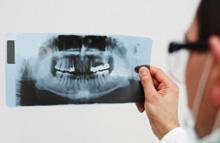 A. The most common causes of tooth loss are dental caries, also known as tooth decay, and periodontal (gum) disease, which affects the gum and bone structure that supports the teeth. A. The most common causes of tooth loss are dental caries, also known as tooth decay, and periodontal (gum) disease, which affects the gum and bone structure that supports the teeth.
Plaque contains bacteria, which in turn create toxins which irritate the gum and result in a breakdown of the attachment of gum tissues to teeth. The accumulation of plaque and tartar (calculus) at the base of the teeth breeds infection. Inflammation causes a pocket filled with plaque and tartar to develop between the gum and the teeth. If left untreated, the infection and inflammation may start to spread from the gum to the ligaments and bone that support the teeth.
Eventually, loss of support causes the teeth to become loose and fall out.
Q. What other factors for tooth lost?
A. Besides plaque, a number of other factors can increase the risk, severity and speed of development of the condition. Smokers, pregnant women and people who use oral contraceptives are more likely to have periodontal diseases. Poor diet may cause periodontal disease to progress more rapidly. Poorly fitted bridges, badly aligned teeth or defective fillings can all contribute to plaque retention and increase the risk of developing periodontal diseases.
Excessive biting forces on your teeth, such as clenching or grinding, may also accelerate the rate at which supporting bone is lost.
Q. What happens when a tooth is lost?
A. The loss of a tooth affects your health in several ways. The teeth are no longer in alignment and there are uneven contacts between the teeth. The tilting of teeth also creates areas between the teeth where the food debris and bacteria collect. These areas are especially difficult to clean so tooth decay and gum disease often develop in these areas.
Q. What are methods of replacing teeth?
A. Methods of replacing tooth:
Dentures
Dentures are removable artificial teeth. They should be removed after every meal and cleaned. They should also be removed when you go to sleep. Dentures are most commonly used when several teeth need to be replaced.
Normally, after an extraction, one has to wait a few months for the gum and bone to heal before dentures can be made.
In some cases, an immediate denture can be made before the extraction so that it can be worn immediately after the tooth is extracted. Such dentures are temporary and need to be replaced within 6 months. During this period, the denture would need to be adjusted several times to fit the healing gum and bone.
Dentures are the most economical way of replacing lost teeth.
Bridges
Bridges are fixed artificial teeth that are rigid and cannot be removed. A bridge can only replace a few teeth and requires good, strong natural teeth on either side of the empty space to support the artificial teeth.
Implants
Implants are the latest technology available to help replace missing teeth. An implant is a device that is inserted directly into the bone at the site of the missing teeth. This requires surgery. After about 4-6 months, when the bone around the implant has healed, artificial teeth can be constructed over the implants.
As implants involve surgery, extra time and new technology and last longer than the previous methods.
Q. How to prevent tooth lost?
A. Good oral hygiene is the best means of prevention this involves thorough tooth brushing and flossing, and regular professional dental cleaning,
Brush your teeth at least twice daily. Use a soft-bristle brush and fluoride toothpaste to remove plaque and food. Floss once daily to remove plaque and food stuck in the gums and teeth. Also brush your tongue. Replace your toothbrush every three months because germs accumulate and bristles lose efficiency.
Check for gum disease: swelling, tenderness, or bleeding, constant bad breath or bad taste, loose or shifting teeth. Gums should be coral pink, not red in colour.
Eat a nutritious and balanced diet. Avoid gooey, gummy, or hard candy that stays in the mouth longer than other sweets. |
|
|





