BowerPower Papers, a quarterly digital newsletter from Bower & Co. Consulting LLC, aims to inspire non-profit leaders and event/festival producers to think creatively about marketing, corporate sponsorship, events, and business development.
|
Volume 4 Issue 3
|
Fall 2009
|
|
Dear ,

If you're like many successful nonprofit, association, and festival and event leaders across the country, you've probably spent the last 6 to 12 months strengthening your operations to weather the recession. If you're really gearing for success, you are already thinking about the rebound and what you'll do differently in 2010.
There's no doubt we're operating in different times. Trust has been eradicated in our communities. People are anxious and exhausted of bad news. And guarded. If you haven't factored this new environment, along with ways to build new relationships, into your thinking for this year, you may be missing important opportunities to engage constituents and donors and to grow revenue. Read more in the articles in this issue of BowerPower Papers.
Wondering how your nonprofit peers plan to respond in 2010?
Are you curious about what your peers are doing, and how they may be getting ready for the recovery? I invite you to take this short survey, with only two questions, about your 2010 marketing communications strategy. I'll report the findings in the next issue.
Welcome to new subscribers and everyone I met at the Bridge Conference outside Washington, DC. If you find this issue of value, please share it with friends and colleagues.
As you enjoy these final days of warm weather and gear up for fall and recovery from the past year's economic trauma, spend time to reflect and consider how you want to go forward more boldly, more connected to your stakeholders and constituents, positioned with strength for the future.
Warm regards,Gail S. Bower President 
|
ARE YOUR PROGRAMS UNDERMINING YOUR MISSION?
by Gail S. Bower
|
|
Through my
travels this summer, I visited  several museums around the country, including
three fantastic art museums in Fort Worth, Texas - the Kimbell Museum, the
Modern Art Museum, and the Amon Carter Museum - and the year-old
Museum of Bethel Woods, a multi-media timeline and exploration of the
socio-political events surrounding the Woodstock festival. Kimbell Museum several museums around the country, including
three fantastic art museums in Fort Worth, Texas - the Kimbell Museum, the
Modern Art Museum, and the Amon Carter Museum - and the year-old
Museum of Bethel Woods, a multi-media timeline and exploration of the
socio-political events surrounding the Woodstock festival. Kimbell Museum
Around this
same time, I also visited the Galileo exhibit at the Franklin Institute,
featuring the scientist's telescope that enabled findings that would forever change the way we
understand our place in the universe.
My
divergent experiences at these museums reminded me of something that David Ogilvy,
the famous ad man, once observed - that there is no better way to kill a bad
product than with good advertising.
Here's how
I'd translate that for nonprofit organizations: There's no better way to kill
your mission, donor support, and constituency engagement than with poor program
execution and good advertising. (Yes, I know; it's not as smooth as Ogilvy's
line, but read on!)
Excited to
take in the Galileo exhibition in its only U.S. stop, we bound up the stairs to
immerse ourselves. About three artifacts in, I yawned.
What
happened?
Unfortunately,
the execution of this premier educational opportunity at one of our foremost
science museums had been stripped of its vitality. The overall design lacked
progression, visual interest, and climax. The only way you knew you'd reached
the end was by the lifeless security guard at the end of a gallery leading into
a hallway. The guard, by the way, stood reading People magazine with body language that
screamed complete disinterest. The labels identified what the objects were and
the year used, but not much else. Just the facts. Like we were in an archive.
 Contrast
this experience with that of the other museums. All three Fort Worth museums'
exhibitions had labels that briefly yet colorfully brought the stories of the
paintings, prints, and sculptures to life. I learned about the artist, the
work, the socio-economic or cultural conditions at the time it was created, and
sometimes some Contrast
this experience with that of the other museums. All three Fort Worth museums'
exhibitions had labels that briefly yet colorfully brought the stories of the
paintings, prints, and sculptures to life. I learned about the artist, the
work, the socio-economic or cultural conditions at the time it was created, and
sometimes some
The Modern Art Museum, Fort Worth interesting tidbits that added delight and further interest.
Consequently, I invested significant time and concentration to rooms of
paintings or other works around which I otherwise might only have glanced.
At the
Woodstock museum, I relived the music, fashion, politics, and civic and global
unrest of the day and connected with other museum visitors with whom I watched
video snippets in little vestibules and even on the Magic Bus. I learned,
reminisced, and experienced the sights and sounds (but no mud!) of the mythical
musical event. Museum at Bethel Woods music, fashion, politics, and civic and global
unrest of the day and connected with other museum visitors with whom I watched
video snippets in little vestibules and even on the Magic Bus. I learned,
reminisced, and experienced the sights and sounds (but no mud!) of the mythical
musical event. Museum at Bethel Woods
Don't get
me wrong. Galileo had a couple shining moments, especially attempts to enliven
with narration by Chief Astrologist Derrick Pitts obtained through cell phone
audio tours (great information but cumbersome albeit free technology). I'm glad
I saw it, and I'm grateful to the organizers and funders who made it possible.
However,
someone forgot to connect the exhibit to the organization's mission, inspiring
us to learn, be curious, and wonder about science. At a time when our
culture struggles to cultivate young scientists, when our scientific literacy
is staggeringly low, this is a noble mission. Yet, the exhibition turned a
celebration of one of the most important and revolutionary scientific
inventions into a boring, lifeless display of objects.
Your
programs say more about your organization than your newsletter, your web site,
or your annual report. They are the most important avenues for conveying your
mission and should do so with gusto.
What to
look for.
Here are
just five areas for you to examine and immediately improve:
Overall
experience. What does the overall experience for
your constituents, customers, or clients of your programs say about your
connection to and passion for your mission? Does it entice, excite, or
empathize? Or does it feel sterile, lifeless, and disconnected? Same goes for
events, which also should foster measurable impact towards your mission.
Staffing. When your customers interact with
your staff - from the front line to the
administrative phone lines - do they experience enthusiasm, knowledge,
courtesy, and respect? Or automatons and time-clock punchers, just doing their
jobs?
Facilities. Take a look around at the
facilities of your programs. What do they say about your operation and passion
for your mission? I've been in some dreary offices of organizations whose
missions are to inspire. I doubt that's happening. I've seen dismal, uncared
for, and threadbare places run by people wondering why attendance is declining.
Hmmm. I wonder.
Operations. Why are museums only open from 9 to
5? Have museum administrators not noticed that most households for the last
decade or two are headed by singles or couples who work those and longer hours? Your operations must be user-centric.
Messages. How is your organization using
every opportunity it can to connect all your audiences with your mission in
ways that are most appropriate for each audience?
I've read
that the Galileo exhibit met or exceeded attendance goals, with tens of thousands of
visitors, which is great news. What a shame, though, that the museum missed
that many opportunities to inspire about science.
|
Concerned
about the impact of your programs? Could you use a critical eye and some fresh
insights about how to better and more strategically engage your constituents
with your mission? Call Gail at 215/922-6937.
|
|
HOW TO JUMP-START YOUR SPONSORSHIP STRATEGY IN TOUGH TIMES NOW AVAILABLE IN AMAZON
If you and your staff are walking around your offices in a daze, unsure what to do next with your corporate sponsorship program or scrambling because nothing is working, scramble no more. Check out my new guidebook, and you'll find plenty of tools and techniques to get you back on track.
"A godsend"
Visit Amazon to read Traci Browne's 5-star review and find out how using the book has helped her become "wildly successful in securing partnerships." She calls it "the Bible for anyone involved in securing sponsors."
You can pick up your own copy of Jump-start at Amazon or through the new store on my web site. If you're a
member of the International Festival & Events Association (IFEA),
visit the member bookstore and save $2 on your purchase.
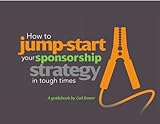
How to Jump-start Your Sponsorship Strategy in Tough Times
by Gail S. Bower by Bower & Co. Consulting LLC
Perfect Paperback

List Price:
$12.00
Our Price:
$12.00
Buy Now

|
|
|
NEW ON

Check out these new posts on Gail's blog, SponsorshipStrategist.com:
Lots more to come, including excerpts from How to Jump-start Your Sponsorship Strategy in Tough Times and answers to questions that readers of BowerPower Papers asked me to answer in the book.
|
|
|
| HI. JUST SEND MONEY.
by Gail S. Bower
|
We're heading into annual appeal season, the time of year
when charities you may or may not have heard of ask for money.
One
year, I saved all the solicitations I received from October through year-end. I
lost count somewhere around 63.
I'd neither heard of nor had relationships with 80 percent of these
organizations. And among those groups to whom I had made contributions
previously, some I'd heard from in the previous year only when they wanted
money, just like politicians who send flyers outlining all their marvelous
accomplishments weeks before an election. Some have a rather impersonal and
haphazard ways of staying in touch, and the rest do a great job of inviting me
to engage with their missions, to participate in their communities, and to
understand their issues and successes more completely.
I
predict that 2009 will be a challenging year for individual gifts for those
organizations whose ongoing communications and relationships with their
communities and contributors are sketchy to non-existent. We are overwhelmed by
doom and gloom. News about two unpopular wars, weekly terrorist bombings, the
implications of global warming, and the never-ending recession reports -
layoffs, unemployment, business bankruptcies, corporate incompetence, the
incomprehensibly swelling deficit, poor industrial performance reports, cities
and states teetering on the fiscal edge, and worse - have engulfed us. Some
people are in denial, others are tuning out, and most of us just don't want to
hear about more problems. We're burned out on bad news.
How
is your organization communicating to members, donors, constituents and the
community at large? What's your plan to engage, to enrich, and to build
meaningful relationships? How are you deepening your ties to your audiences?
What are the messages you plan to convey as we head out of the recession? What strategies have you developed to help your organization stand out above bad news burnout?
Now more than ever, you'll need one heading into 2010.
|
|
Gail Bower, President, Bower & Co. Consulting LLC, specializes in
raising the visibility, revenue, and impact of non-profit
organizations and festivals/events. She's a professional consultant, writer, and speaker,
with more than 20 years of experience managing some of the country's most
important events, festivals and sponsorships. Launched in 1987, today Bower & Co. improves the results of clients marketing strategies, events, and corporate sponsorship programs. She is the author of the guidebook entitled How to Jump-start Your Sponsorship Strategy in Tough Times. For
more information, visit her web site or contact her at 1-866/36-BOWER
(1-866-362-6937).

© 2008 Gail S. Bower. All rights reserved.
|
|
|
|
|
Upcoming Teleseminars
|
Getting Started in Sponsorship: Is corporate sponsorship
right for your organization or event?
Fri., Oct. 16, 2009, 12-1 p.m. EST
With traditional funding sources drying up or becoming more
difficult to access, nonprofits of all sizes expect to turn to the
corporate sector for unrestricted dollars. If you've identified corporate
dollars as part of your resource development plans, launch your strategy with
this teleseminar to find out what you need to know.

Developing Sponsorship Opportunities that Sell
Thu., Nov. 12, 2009, 12-1 p.m. EST
The so-called Great Recession has affected every sector of our
culture, including the corporate sector. Every expense is under the microscope
to determine the ROI, or return on investment. Can you articulate the value of
your corporate sponsorship program? Have you identified measurable outcomes
that translate to a significant return for your corporate partners?If not, this teleseminar is the place to begin.
10 Trends in Corporate Sponsorship and What They Mean For
You
Wed., Dec. 9, 2009, 12-1 p.m. EST
The past year's challenging economy has given way
to new opportunities and challenges for nonprofit organizations and events or
festivals that rely on corporate partners. Find out more about 10 trends Gail
Bower has spotted, what they mean for you, and how you turn these trends into
powerful strategies to boost your sponsorship revenue. Start 2010 with new
ideas and market intelligence that give you an advantage over your competitors
for corporate dollars.
|
I Need BowerPower! Subscribe to
 |
|
| Gail's Upcoming Speaking Dates
|
I hope to see you at
my class at Temple University and upcoming speaking appearances, including:
International Festival & Event Association Convention (IFEA), Sept. 24-25, 2009.
National Council of Nonprofits Webinar, Oct. 15, 2009. Check for details soon.
Pennsylvania Association of Nonprofit Organizations Mini Conference (PANO), Oct. 21, 2009.
|
|
|
|


