|
|
Cat Body Language Spotlight: Crouched Lying PositionCats lie down in many positions. Each one has its own meaning. Within the position of lying down, further interpretation of the cat's mood can be made by looking at the ears, eyes and tail. Generally, the crouched position is one of defensiveness or fear. At minimum, the cat is uncomfortable with the situation. The crouched, lying position involves folding the feet underneath the body and often the tail is curled around the body. Click here to read the entire article
|
What is Nosework? Dr. Radosta's note: I frequently recommend Nosework classes for my reactive and fearful canine patients. It allows the owners to be active with their dogs in a low risk, safe situation.
"Nose Work is a great activity for all dogs. It uses the dogs natural sniffing ability and combines it with a great game. Initially, dogs learn to search cardboard boxes for their favorite food or toy. As they become more proficient in the game, the game gets harder by adding closed boxes, boxes inside boxes, elevations, and many other items to keep the searching fun. You even learn to search outside. Each dog works alone with their handler,and is crated in between runs. It's a class that has a "NO OBEDIENCE" zone. It's a great class/activity for reactive dogs who are not always successful in the typical class setting.Competitions are spreading rapidly through out the country." --Cheryl VanVoorhies, Nosework Instructor 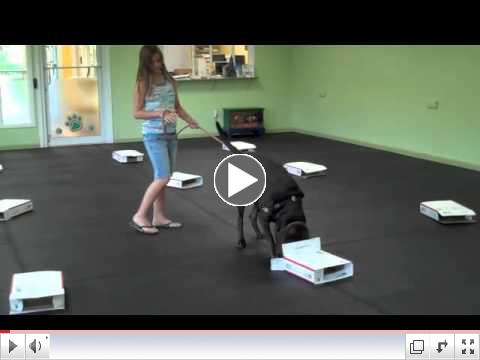 | | Nose Work Games |
Video link courtesy of Mindy Cox and Cheryl VanVoorhies,www.luckydogsportsclub.com |
Video of the Month: Training your dog to settle
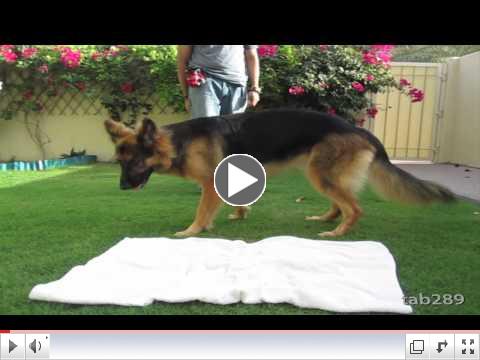 | | How To Train A Dog To Settle Down / Relax |
|
|
Adopting Jeffrey
Marti Hohmann, PhD, CPDT-KA
I was working as a veterinary technician at the city shelter in Austin, Texas. It was hardly a dream job, but I had just moved to Austin, and I needed work. My boyfriend had ended our relationship the minute I stepped into town, having met better, I supposed, and I didn't have a backup plan. I was a dog trainer, and I loved dogs.
Part of my job involved evaluating the dogs that came in by the truckload -- sixty or more a day -- and deciding which ones could be adopted to the public. The ones that couldn't were euthanized.
Nobody wanted this job, but as anyone knows who has worked at a city shelter, it came with the territory. However, my hands still go numb, ten years later, remembering. After a few months, I was deemed too sensitive and miraculously promoted to the role of surgical technician, so I didn't have to decide anymore. I'm not proud of this, because it means I left everyone else behind.
As a group, we asked a series of questions that screened for aggression and fear. Every day a different team assembled to look at dogs and make decisions. To protect ourselves from sentiment or irrationality, we followed a formula. Dogs that had bitten people, killed livestock, fought with other dogs, or were afraid of people usually made the list. After all, there were only so many empty pens. The citizens of Austin kept dropping off animals they couldn't possibly keep -- usually because they were "moving" or "too busy, not enough time." Some dogs defied the formula. Plain brown dogs. Big black ones. Litters of puppies made by accident. Old dogs that needed a veterinarian the family couldn't afford.
"What about this one?" somebody said, pointing to a little brown dog crouched in the corner of a wet concrete pen. His eyes were squeezed shut, and you could see the faint outline of rib under his curly coated side.
The dog, a scruffy brown terrier, was miserable and afraid, his body crammed into the corner of the cage, head turned away, tail tucked. You could barely see that he had brown ears and a body full of yellow wiry hair. Little dollops of blood-tinged feces dotted the pen floor. This was a bad sign, for it meant he was sick or afraid, or both.
Glances were exchanged. This guy would be a "no."
Suddenly I was looking at Justin, my first dog, the dog of my childhood, a honey-colored terrier my mother had given me, just because. I was seven years old, and the world in an instant was pure love. It was one of the few moments I remember from that time that my mother was kind to me, an impression I know is unfair and certainly not true.
The dog in the pen was the dog that had won first prize for me at the Virginia State Fair fifteen years before. My father had driven us for two hours to get there, and every inch the competitor, I had made him hide behind the bleachers, worried his presence would distract us. I am not sure my father even knew what we were doing, but it mattered that he saw us win, and that afterwards he took us out for dinner. For the first time it, was just the two of us.
I missed my father. He had died the year before I moved to Texas, dropping dead of a heart attack in the driveway. My mother had died of pneumonia several years before, and in an act of forgiveness and redemption, I had nursed her for months, brushing her hair while she cried and holding a hand I hadn't touched in years.
"I'll take him," I said, looking at the frightened dog.
Click here to read Jeffrey's story.
Click here to read the entire article
|
Lisa Radosta, DVM, DACVB
Florida Veterinary Behavior Service
|
|
|
|
|
| Volume 3, No. 2: April 2012 |
Does your dog lunge, bark and growl on the leash?

Take the Reactive Dog Class taught by Dr. Radosta to learn how to control your dog and teach her to relax on walks. Reactive Dog Class starts May 2012 For more information, Click here>> |
Body Language Spotlight:
Inguinal Presentation When a dog rolls over onto his back it is called an inguinal presentation signal. Inguinal presentation is a sign of submission and deference. It is a STOP signal. A puppy may exhibit this signal to show that he is not a threat to another dog. When this happens, the older dog generally sniffs the puppy and walks away or just walks away. In general, it is best to assume that a dog who offers the inguinal presentation signal doesn't want you to rub him, but instead wants you to leave him alone.
|
|
Does your dog know how to Sit and Stay?
Cheryl VanVoorhies, M.Ed | | Courtesy: Carol Harris |
We all want things to be simple. We live in a fast paced world, living non stop lifestyles. We are in an age filled with simplicity and immediate gratification. Do you need to call someone? You have a cell phone. Do you want to take a picture? Your phone has a camera. Do you want to surf the net? Again, you can do this on your phone. By the same token, you bring your puppy or dog weekly to a dog training class and she is trained for life! Done deal, right? Not quite.
But wait, there are certain behaviors that your dog knows very well. Lets take the sit/stay exercise, for example. In this exercise, your dog should sit and stay on your first verbal cue (command) without getting up until you tell her that she is released. When asked, "Does your dog know how to sit/stay?" Most owners immediately respond "Yes." Are you sure that your dog knows how to sit/say? Are you REALLY sure? Click here to read the entire article |
Click the icon belowto check out Dr. Radosta's Purely Puppy Blog on
|
Follow
Florida Veterinary Behavior Service on

|
|
Hungry for more?
Click here>>
for how to videos, articles and podcasts.
|
|
Do you have a great story of success with your pet?
Your story could inspire someone else! If you would like to share your story, write it in 500 words or less and email it to us at info@flvetbehavior.com.
If we use it in the next newsletter, we will let you know!
|
Florida Veterinary Behavior Service
|
|



