|
Day in the Life of...

Betty Krones,
Disease Prevention Specialist
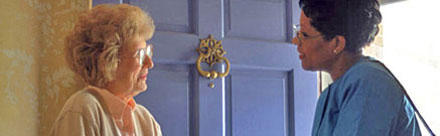
For Betty Krones, Disease Prevention Specialist, nursing has been a way of life for the last 30 years. She started her nursing profession at Rochester Community College where she received her Associate Degree in Nursing and become a Registered Nurse (RN). After graduation, Krones began her career as a RN at a nursing home. From there, she started working at Mercy Family Care- Forest Park, now known as Forest Park. "At Mercy Family Care-Forest Park, I was responsible for doing anything from rooming patients to drawing blood," Krones said. "When we would run labs, I would count the patient's white blood cells in a grid with a hand counter."
Six years later, Krones traveled to Obstetrics and Gynecology (OBGYN), where she assisted physicians in surgery and talked to expecting mothers about concerns and questions during their pregnancy. "As an OBGYN nurse, I would perform non-stress tests on patients as well as catherizations for patients post-surgery," stated Krones. Krones wanted a change of scenery, so five years later, she accepted a job as a nurse at Newman Daycare. "At Newman Daycare, I was in charge of the infant room including 15 staff members and around 40 infants," she noted. Her other duties included first aid, evaluating sick children and making sure children's immunization records were up-to-date.
In 2006, Krones wanted to experience new challenges in the nursing profession, so she accepted a position as Disease Prevention Specialist at the Cerro Gordo County Department of Public Health. At the Health Department, Krones is responsible for a wide array of duties. She provides STD, HIV and hepatitis testing and counseling. She coordinates several grants including the immunization and the Vaccine for Children (VFC) Program. This grant allows children through the age of 18 or who meet the following criteria to receive free vaccinations:
- Child has no health insurance coverage.
- Child is American Indian or Alaskan Native.
- Child is enrolled in Medicaid.
- Child is under-insured. This means the child's health insurance does not cover the cost of immunizations.
Krones also facilitates and coordinates the Wyman's Teen Outreach Program (TOP). In this program, students learn about exploring their personal values, romantic relationships, sexual education and effective communication skills. The curriculum is approved by the Iowa Board of Education and is driven by the needs and interests of the students. It also helps participants chart their own course by giving them tools to navigate the difficult and sometimes threatening journey from adolescence to young adulthood. "At the Health Department, my additional job requirements include training staff on how to handle blood borne pathogens, administering flu vaccines and providing assistance at our Immunization Clinic," Krones said. Krones also serves as tuberculosis control manager, which includes monitoring the percentage we see in the county. "I love my job at the Health Department for several reasons. I enjoy providing clients with information that can help them lead a healthier life or deal with a life altering illness," notes Krones. "I also like the challenges of my job. I am able to wear three different hats in one day; it just makes my job fun."
Krones also believes another added benefit from working at the Health Department is the clientele. "I love the diversity of our clients," she said. "The age range and demographics is so varied that it never makes my job dull." Yet, with positives also comes some negatives. "The hardest thing about my job is funding, especially with the STD services I provide, she said. "In today's society STD's are still taboo, so it makes it difficult to receive adequate funding to provide the ideal care to my clients." Even with difficulties, Krones knows the future of Public Health looks bright. "We will also be at the forefront providing services to aid in the prevention of obesity," Krones stated. "Our homecare services will be vital, especially with our aging population."
Betty Krones is an experienced nurse with many talents in the field. We are glad she lends her talents and experience to the Health Department.
|
|
Department Quick Links...
Scan this QR code with your smartphone for a direct link to our website. |
 |
|
September is Cholesterol Awareness Month
Why Is Cholesterol Important?
Your blood cholesterol level has a lot to do with your chances of getting heart disease. High blood cholesterol is one of the major risk factors for heart disease. A risk factor is a condition that increases your chance of getting a disease. In fact, the higher your blood cholesterol level, the greater your risk
for developing heart disease or having a heart attack. Heart disease is the number one killer of women and men in the United States. Each year, more than a million Americans have heart attacks, and about a half million people die from heart disease. In 2010, 150 individuals in Cerro Gordo County died from heart disease.
How Does Cholesterol Cause Heart Disease?
When there is too much cholesterol (a fat-like substance) in your blood, it builds up in the walls of
your arteries. Over time, this buildup causes hardening of the arteries so that arteries become narrowed and blood flow to the heart is slowed down or blocked. The blood carries oxygen to the heart,
and if enough blood and oxygen cannot reach your heart, you may suffer chest pain. If the blood supply
to a portion of the heart is completely cut off by a blockage, the result is a heart attack.
High blood cholesterol itself does not cause symptoms, so many people are unaware that their cholesterol
level is too high. It is important to find out what your cholesterol numbers are because lowering cholesterol levels that are too high lessens the risk for developing heart disease and reduces the chance of a heart attack or dying of heart disease, even if you already have it. Cholesterol lowering is important
for everyone-younger, middle age, and older adults; women and men; and people with or without heart disease.
What Affects Cholesterol Levels?
A variety of things can affect cholesterol levels. These are things you can do something about:
Diet. Saturated fat and cholesterol in the food you eat make your blood cholesterol level go up. Saturated fat is the main culprit, but cholesterol in foods also matters. Reducing the amount of saturated fat and cholesterol in your diet helps lower your blood cholesterol level.
Weight. Being overweight is a risk factor for heart disease. It also tends to increase your
cholesterol. Losing weight can help lower your LDL (bad) and total cholesterol levels, as well as
raise your HDL (good) and lower your triglyceride levels.
Physical Activity. Not being physically active is a risk factor for heart disease. Regular physical activity can help lower LDL (bad) cholesterol and raise HDL (good) cholesterol
levels. It also helps you lose weight. You should try to be physically active for 30
minutes on most, if not all, days.
Things you cannot do anything about also can affect cholesterol levels. These include:
Age and Gender. As women and men get older, their cholesterol levels rise. Before the age of menopause, women have lower total cholesterol levels than men of the same age. After the age of menopause, women's LDL levels tend to rise.
Heredity. Your genes partly determine how much cholesterol your body makes. High cholesterol can run in families.
|
|
|
|
|
Happy September!
The 2012 - 2013 school year is in full swing! The Walking School Bus Program has began without a hitch. As more students take to the sidewalks this school year, the Cerro Gordo County Department of Public Health is reminding residents on their morning and afternoon commutes to pay close attention to pedestrians. Motorists need to obey all traffic rules and yield to pedestrians to ensure the safety of students, adults and fellow drivers.
The Health Department's Immunization Clinic offers flu shots or mist daily. Stop in Monday - Friday from 10:00 AM - Noon and 12:30 - 4:00 PM. We also accept insurance, so bring your insurance card.
The Health Department is hiring a part time home care aide. For more information, visit our website at www.cghealth.com and look under the Career Opportunities tab!
This month's Public Health Communicator includes dates and times of our school based flu clinics. September is Cholesterol Awareness Month, so we provide information about cholesterol and how it causes heart disease. Also included is an article by Jodi Willemsen, Public Health Preparedness Service Manager, which highlights September as National Preparedness Month. As always, we feature the "Day in the Life of" column and the Wellness Corner.
Like us on Facebook or follow us on Twitter to stay up-to-date on all the current information surrounding the Health Department. Make sure to check out the left side of our newsletter, which features our Quick Response (QR) Code. Scan it with your smartphone to get directly to our website.
Best wishes,
Nola Aigner
Public Information Officer
Cerro Gordo County Department of Public Health
|
|
September is National Preparedness Month
The month of September is National Preparedness Month, put into place after the September 11th terrorist attacks, in hopes that individuals would remember the significance of the day. And to also take the time to think about becoming a little more prepared in our homes and communities as a whole to build our resilience during disasters.
We have seen disasters close to home over the years, and no matter what, we will never be able to control what happens. But we can control our reactions, our attitudes, our behavior and our level of preparedness. Nothing trumps knowing how to take care of yourself and your family. As things get more complicated in the world, resources don't get where they need to be fast enough in a major emergency, or don't get there at all. Most of us say we are too busy to think about disasters until they strike. But it only takes a little time to work through the steps to get through the worst of times. Preparedness is kind of like putting a seatbelt on in a car. We do it automatically now, but before it became a law throughout the country, many people died in motor vehicle accidents. These things are not particularly fun to think about, but we do it because there is a sense of the potential danger involved and we want to protect ourselves from it.
Being prepared is very real and important. For example, with the loss of power comes many side affects you might not think of. There may be no gasoline available because there is no way to pump the gas without electricity. Cash cards might become useless if power or phone lines are lost. Your only source of news might be the car radio. There might not be medical help for minor cuts or broken bones for several days. You get the picture.
You could be anywhere when disaster strikes, at home, at work, in your car. It's important to be ready, no matter where you are. Here are some things you can do to prepare:
At Work
- Know the evacuation plan. Note designated meeting locations after you evacuate.
- Take note of the exit routes, locations of fire extinguishers and medical kits.
- Keep your own personal supplies in your desk in a pack that you can access quickly.
- Carry important phone numbers in your purse or wallet, to include your out of state contact.
- Keep the area under your desk free of waste-paper baskets and such. This area might be home during a few traumatic moments.
At Home
- Water - one gallon per person per day.
- Food - at least a three day supply of non-perishable food and manual can opener.
- Paper cups, plates, paper towels and plastic utensils.
- Infant formula and diapers.
- Pet food and extra water for your pet.
- Personal hygiene items.
- Battery powered radio and a NOAA weather radio with extra batteries.
- Flashlight with extra batteries.
- First aid kit, prescription medications and glasses.
- Cell phone with chargers.
- Wrench or pliers to turn off utilities, fire extinguisher.
- Important documents such as copies of insurance policies, identification and bank account records in waterproof container.
- Sleeping bag or blanket and a change of clothes for each person.
- Books, games, puzzles or other activities for children.
- Install smoke detectors on every level of your home and near sleeping areas.
In Your Car
- Always keep your gas tank full, fill it when it reaches a half a tank. Especially during the winter months!
- Keep tools, jumper cables and a spare tire in the vehicle at all times.
- Your car will be one of your most important resources after disaster strikes. Your car battery may need to run the radio and heater for extended periods of time. Make sure it is replaced every two to three years.
- Store miscellaneous items such as granola bars, candy bars, trail mix, flashlight, matches or lighter, first aid kit, rain gear and extra clothes, blankets, small sack of sand for traction, small shovel, etc.
In addition to stockpiling supplies, talk about the possible hazards in your home and area and draw up a detailed emergency plan. If an emergency occurs while your child is at school and you are at work, where will you meet? Agree on an emergency contact person, like a neighbor, nearby relative, or friend. Write down emergency contact information and have your children carry it with them at all times.
Many of us wish that all this change would go away - or at least slow down, but it won't and it's not! Today may be just a warm-up for the game ahead. Use the opportunity of crisis or change to identify the areas of life that you need to organize more effectively, so that you will have the ability to recover from whatever life throws your way.
For more information about preparedness, visit our website at www.cghealth.com
|
|
|
School Flu Clinics

Hey parents and guardians, the Health Department will be visiting your child's school for back-to-school night and parent/teacher conferences and will have flu shots and mist on hand. Family members and Make sure to bring your insurance card. Howie Staywell might even make an appearance, so make sure you attend! The Health Department accepts the following health insurance:
- Wellmark (Blue Cross and Blue Shield)
- Hawk-i
- Aetna
- Midland's Choice
- Cigna
- First Administrators
- Medicare Part B
With insurance, no money is collected at the time of the vaccination; services are billed directly to insurance. Any remaining balance is billed to the client after insurance has paid the service.
Here are the times and dates will be visiting the schools!
School Schedule
- Jefferson Elementary, Thursday, September 20, 5:30 - 7:00 PM
- Hoover Elementary, Thursday, September 20, 5:00 - 7:00 PM
- Harding Elementary, Thursday, September 27, 5:30 - 7:00 PM
- Mason City Alternative High School, Tuesday, October 2, 4:00 - 7:00 PM
- Mason City High School, Thursday, October 4, 5:00 - 8:00 PM
- JAMS 8 (located at MCHS), Thursday, October 4, 5:00 - 8:00 PM
- JAMS 7, Monday, October 8, 5:00 - 7:00 PM
- Lincoln Intermediate, Tuesday, October 9, 5:30 - 7:30 PM
- Clear Lake Middle & High School, Wednesday, October 17, 7:30 - 9:30 AM
- Newman Middle & High School, Monday, October 22, 2:30 - 4:00 PM
- Newman Elementary, Monday, October 22, 4:00 - 6:30 PM
- Ventura Schools (located @ Middle School), Tuesday, October 23, 4:30- 6:30 PM
- Clear Creek Elementary, Thursday, October 25, 4:00 - 7:00 PM
- Rockwell School, Monday, October 29, 3:00 - 6:30 PM
- Roosevelt Elementary, Thursday, November 1, 2:00 - 6:00 PM
|
|
Wellness Corner
Nutrition Around the Clock: Benefits of Regular Meals

Sometimes we assume that skipping meals is a good strategy for controlling body weight. The logic says if you cut a meal, you'll cut calories. A study from the University of Nottingham in England shows the opposite.
Lean women and overweight women were asked to follow either a regular or irregular meal schedule for 14 days (including skipping breakfast). The women were then asked to follow the opposite meal schedule for two more weeks. When women (both overweight and lean) ate regular meals their total calorie intake per day was less than when they were eating irregular meals. Furthermore, total cholesterol, LDL cholesterol, and glucose control were better when eating regular meals.
Skipping breakfast and missing meals may actually contribute to weight gain and poor cardiovascular risk profile. No matter how busy your life is, give yourself and your loved ones regular, healthy meals.
Components of a complete, healthy meal:
Prepare a well-balanced meal by following these simple rules:
* Include at least 1 cup of fruits and/or vegetables
* Include whole grains
* Include fiber (> 5 grams)
* Include a protein source
* Limit saturated fats (but ensure good fats are present! - mono and poly unsaturated fats)
Breakfast example:
1 apple
2 slices whole wheat toast
2 tablespoons of natural peanut butter
6 oz. low fat yogurt
Glass of skim milk
Lunch example:
Roast beef slices
Whole wheat bun
1 cheese slice
1 cup of grapes
1 cup of carrots and celery
1 glass of water
Dinner example:
1 chicken breast
1 baked potato
1 tablespoon butter
1 cup green beans
1 cup mixed fruit
1 cup fat free milk
|
Help us promote Public Health services. Forward this electronic newsletter to your friends, family, co-workers and associates. Thank you for choosing the Cerro Gordo County Department of Public Health! Our Mission Statement: The Cerro Gordo County Department of Public Health works to optimize the health of all people in Cerro Gordo County. Our Vision Statement:
We will be the leader in making Cerro Gordo County the healthiest
county in Iowa.
Our Value Statement:
We believe in human dignity, respect for individual choices, promotion for wellness and personal safety, protection of the environment, prevention of disease and access to quality health services.

|
|
|
|
|