|
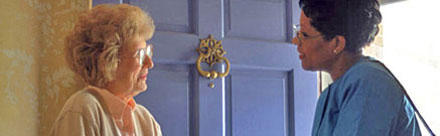
Day in the Life of...

Lisa Losen,
Home Care Aide
Manager
Sometimes we know exactly what we want to do when we grow up and sometimes finding our future career is a journey. Lisa Losen, Home Care Aide Manager, knew exactly what she wanted to do.
Losen started her professional career at the University of Dubuque where she obtained her degree in Social Work and received certification as a Licensed Bachelor Social Worker (LBSW). "I knew I wanted to become a social worker when I started college," Losen said. "I love being able to work and help others." After college, Losen accepted her first job at Vera French Mental Health Center in Scott County where she was employed as a Case Manager. "At Vera French, I was responsible for coordinating services for our chronically mentally ill adult clients." She noted. "Services included maintaining their living, work environments and helping with financial benefits and all things that encompass their daily life." As a case manager, she was also responsible for each care plan and monitoring any changes to improve or modify the plan.
In 1995, Losen moved to Mason City as a case manager for the Board of Health. As a case manager, she had a lot of the same responsibilities as she did in her previous position. Losen coordinated client benefits and provided assistance with daily living responsibilities, which sometimes included making referrals for jobs or nursing referrals. In 1996, Case Management fell under the Board of Supervisors. That same year, Losen took on a new role as Home Care Aide Manager and moved to the Family and Community Health Service Section for the Cerro Gordo County Department of Public Health.
As the Home Care Aide Manager, Losen is responsible for hiring, training and supervising 10 Home Care Aides and one Administrative Aide. This is the largest service section at the Health Department. One part of her responsibilities at the Health Department is to do intake assessments with the clients, in which she meets with our new clients to assess their needs. "When we first take on a client, I meet with them to understand and determine their needs to create a needs plan," She stated. "Sometimes our clients need our help on a weekly basis with personal care and sometimes they need to be seen once a week to help with their laundry or groceries." In addition to the initial meeting, Losen meets with our clients every six months to reassess and re-advise their needs plan. "We do this to see if their needs have changed or if we can help with additional resources," Losen said. "We can help our clients with Meals on Wheels services, telephone reassurance or other services our community provides residents of the county."
The Home Care Aides provide services to over 100 county residents and their tasks range from helping with light housekeeping to daily baths. Each Home Care Aide needs to complete a 75 hour Certified Nursing Aide class prior to employment at the Health Department. Once hired, the Home Care Aides also complete a 13 hour course required by the Iowa Department of Public Health. "We provide a wide range of services to our clients because it is our mission to keep them in their home as long as possible," Losen states.
"As the Home Care Aide Manager, I love the opportunity to get out and meet our new clients," she said. Losen believes another benefit to working at the Health Department, especially in the Family and Community Health Service Section, is the relationship between the Home Care Aides and the Public Health Nurses. "We are office based, which means our nurses and aides get one-on-one interaction about clients and our services." She said. "It's nice to be a part of a great team." However, with the positives does come some challenges. "We are faced with the instability of our funding services and each year our costs increase and reimbursements decrease. Yet, Losen believes there will always be a need for Home Care Aide services. "Our aging and chronically ill population creates a strong demand for our services," Losen said. "Most people who need some care prefer the familiar surroundings of home to an institution." She also believes the future for the Health Department looks bright. "We will always be adapting to the needs of our clients whether it be home care or immunization needs," she noted.
We're glad that Lisa Losen knew she wanted to work in the helping profession because her expertise and experience has successfully helped Cerro Gordo residents for many years!
|
|
Department Quick Links...
Scan this QR code with your smartphone for a direct link to our website. |
 |
| Back-to-School Immunizations
School is just around the corner. Before your child heads back-to-school, make sure all their immunizations and boosters are up-to-date. Here is a list of what age group needs which immunizations:
Kindergarten:
- Varicella (chicken pox)
- TdaP (diphtheria, tetanus, Pertussis)
- IPV (polio)MMR (measles, mumps, rubella)
- Flu vaccine - recommended, but not required.
Middle school:
- Tdap (tetanus, diphtheria, Pertussis)
- Meningococcal (meningitis)
- Human Papillomavirus (HPV) - recommended, but not required
- Flu vaccine - recommended, but not required
College:
- Meningococcal (meningitis)
- Human Papillomavirus (HPV) -recommended, but not required
- Flu vaccine - recommended, but not required
It is now recommended that adolescents receive the Meningococcal Meningitis vaccine around 11-12 years, with an additional booster dose at age 16. The health department offers two immunization programs that provide vaccines free of charge or at a reduced cost: the Vaccine for Children (VFC) Program and Vaccine Patient Assistant Program (PAP). The Immunization Clinic is open Monday through Friday from 10:00 AM - Noon and 12:30 PM - 4:00 PM. The clinic also has late hours every first Monday of each month until 6:30 PM.
|
|
|
|
|
Happy August!
Can you believe summer is almost over? Soon, we will be thinking about snow. It's never too early to prepare an emergency kit for natural disasters. The next time you are at the grocery store, start stocking up. Include the following to ensure your loved one's safety:
*Keep canned food in a cool, dry place.
*Store boxed food in tightly closed plastic or metal containers to protect from pests and to extend its shelf life.
*Throw out any canned good that becomes swollen, dented or corroded.
*Use foods before they go bad and replace them with fresh supplies.
*Place new items at the back of the storage area and older ones in the front.
*Change stored food and water supplies every six months. Be sure to write the date you store it on all containers.
*Re-think your needs every year and update your kit as your family's needs change.
The Health Department is hiring a part time home care aide. For more information, visit our website at www.cghealth.com and look under the Career Opportunities tab!
We will be starting school-based flu clinics. Make sure to check our website www.cghealth.com to see when we will be at your child's school.
In this month's Public Health Communicator, we include information about our public flu clinics and back-to-school immunizations. We also highlight our Tobacco Coalition and how members of our community can get involved! There is still time to join the Walking School Bus program, read below to find out more information. As always, we feature our "Day in the Life of" column and the Wellness Corner. Enjoy!
Like us on Facebook or follow us on Twitter to stay up-to-date on all the current information surrounding the Health Department. Make sure to check out the left side of our newsletter, which features our Quick Response (QR) Code. Scan it with your smartphone to get directly to our website.
Best wishes,
Nola Aigner
Public Information Officer
Cerro Gordo County Department of Public Health
|
|
Sign up for the Walking School Bus!

There is still time to register for the Walking School Bus Program as a volunteer or a student in the Mason City School District. This is a great opportunity for students to meet new friends and participate in some physical activity before school. It is also a wonderful opportunity for adults to provide leadership and guidance to students as well as physical activity. If you are interested in registering your student or volunteering, please visit our website at www.cghealth.com
|
|
|
It's almost FLU Season!
It's that time to start thinking about the FLU! The Cerro Gordo County Department of Public Health will be hosting several public flu clinics this year. Here are the locations, dates and times:
Ventura Community Center, Wednesday, September 5, 2012 from 9:30-11:00AM
Mason City Senior Center, Thursday, September 6, 2012 from 10:30-11:30AM
Plymouth Townhall, Thursday, September 6, 2012 from 1:30-2:30PM
Rockwell Community Center, Friday, September 7, 2012 from 10:30-11:30AM
SwaledaleTownhall, Friday, September 7, 2012 from 9:00-9:30AM
Clear Lake Senior Center, Wednesday, September 12, 2012 from 9:30-11:30AM
Zion Lutheran Church, Friday, September 14, 2012 from 11:00AM-12:30PM
NIACC Activity Center, Room 101, Monday, September 17, 2012 from 11:00AM-1:00PM
Meservey Library, Tuesday, September 18, 2012 from 12:30-1:00PM
Thorton Townhall, Tuesday, September 18, 2012 from 12:30-1:00PM
The Health Department accepts the following health insurance:
- Wellmark (Blue Cross and Blue Shield)
- Hawk-i
- Aetna
- Midland's Choice
- Cigna
- First Administrators
- Medicare Part B
With insurance, no money is collected at the time of the vaccination; services are billed directly to insurance. Any remaining balance is billed to the client after insurance has paid the service.
This year, we will provide the following types of flu vaccine:
Traditional flu shot (ages 6 months and older)-$23
High-dose flu shot (ages 65 and older)-$41
Intradermal flu shot (ages 18-64)-$25
Thimerosal-free flu shot (ages 3 and older)-$25
FluMist (ages 2-49)-$25
Check our website frequently for any flu updates at www.cghealth.com |
|
A Note from the Partnership for a Tobacco Free Cerro Gordo County
The Partnership for a Tobacco Free Cerro Gordo county is heading into its new fiscal year and would like to invite anyone interested in education and advocacy to join in! There are many opportunities to serve the community in this way. As tobacco companies strive harder every day, spending millions of dollars in Iowa alone it is important to continue local efforts to minimize second hand smoke exposure, prevent initiation of tobacco use among our youth, and promote cessation potential for struggling tobacco users. If you're an insurance representative, a landlord or tenant, if you're an employer or employee, or a healthcare provider and you have a passion for reducing health risks of tobacco in north Iowa, you are a perfect fit for this Partnership! Please contact Penny McCaslin, Tobacco Program Coordinator at Cerro Gordo Public Health by emailing admin2@cghealth.com or call 421-9329. |
|
Wellness Corner
Keep an EYE on your health!

It's important to separate fact from fiction, especially when the topic is eyesight. Knowing how to take good care of your eyes is the first stop in protecting your sight. Don't be blind to the facts - below are 9 common myths about vision, along with the true facts.
MYTH: Failure to use proper glasses will hurt your eyes.
FACT: This statement does have some truth in it for a small number of people. Some children have eye problems that can be corrected and it is important that they wear their glasses, but vision problems caused by heredity or physical injury do not go away, even with glasses. While corrective glasses or contacts are needed to improve eyesight, using your eyes with or without glasses will not damage your vision further.
Myth: Reading in dim light can damage your eyes.
Fact: Reading in dim light can cause eye strain, but it will not hurt your eyes permanently.
Myth: Watching television for too long or sitting too close can damage your eyes.
Fact: There is no evidence to suggest that watching television for too long or sitting too close can damage your eyes. Young children often sit close to the television screen because they have a greater ability to focus on objects closer to their eyes than adults do. Due to this, children hold their reading material close as well. However, as they grow older, these habits usually change. If not, this may be a sign of myopia (nearsightedness). To detect possible eye problems, children should have regular eye exams.
Myth: Eating carrots will improve your vision.
Fact: While it is true that carrots, as well as many other vegetables are rich in vitamin A, which is an essential vitamin
for sight, only a small amount is necessary for good vision. A well-balanced diet, with or without carrots, provides all the
nutrients the body needs. In fact, too much vitamin A, D or E may actually be harmful.
Myth: Reading fine print for too long will wear out or damage your eyes.
Fact: This is one of the most widely held myths about vision. Some people are concerned that they should not read too
much because it will wear out their eyes. Although extensive or prolonged reading of fine print can cause eye strain, there is no evidence to suggest that it will damage or wear out your eyes.
Myth: Wearing contacts prevents nearsightedness from getting worse.
Fact: Wearing contact lenses will not permanently correct nearsightedness. Myopia or nearsightedness is usually an
inherited condition, and contact lenses can only be expected to improve vision. Contact lenses cannot prevent nearsightedness from getting worse.
Myth: Cataracts can be removed with a laser.
Fact: A cataract is a clouded lens of the eye-this procedure cannot be performed by a laser, only by surgery. However, after the surgery, the wrapping around the lens (called the casing) is left behind. This casing can become cloudy and cause blurry vision. The casing can then be opened with a laser, but the procedure should not be confused with the surgical removal of the clouded lens.
Myth: An eye examination is necessary only if you're having problems.
Fact: Everyone should follow proper eye healthcare, which includes regular eye exams, whether or not you are having
any noticeable signs of problems. Children should be tested at birth, at 6 months of age, before entering school and periodically throughout the school years. For adults, the frequency depends on your doctor's advice and may be every two years or more often. If you have diabetes or an eye disease, you should go every year for a comprehensive eye exam.
Myth: There's nothing you can do to prevent vision loss.
Fact: More than 90% of eye injuries can be prevented, when simple and relatively inexpensive safety precautions are
followed. That means choosing the correct eye safety glasses for the job and wearing them 100% of the time. Regular eye exams can help save your sight. Early detection of vision problems is crucial to preventing vision loss from many eye diseases-especially diabetic retinopathy and glaucoma. |
Help us promote Public Health services. Forward this electronic newsletter to your friends, family, co-workers and associates. Thank you for choosing the Cerro Gordo County Department of Public Health! Our Mission Statement: The Cerro Gordo County Department of Public Health works to optimize the health of all people in Cerro Gordo County. Our Vision Statement:
We will be the leader in making Cerro Gordo County the healthiest
county in Iowa.
Our Value Statement:
We believe in human dignity, respect for individual choices, promotion for wellness and personal safety, protection of the environment, prevention of disease and access to quality health services.

|
|
|
|
|