|
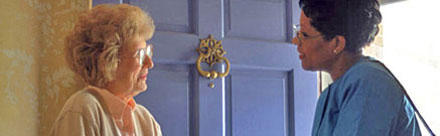
Day in the life of...

Karen Crimmings,
Assistant Deputy Director of Public Health
Practice makes perfect. We hear this saying utilized in so many situations. If one practices their instrument, they can become a world class musician. If an individual studies hard for their math test, they can get an A. The same goes with your career. You practice hard enough at a profession and you find a career that is a perfect fit. This rings true of Karen Crimmings, Assistant Deputy Director of Public Health and Disease Prevention and Investigation Service Manager.
Crimmings started her professional career by attending North Iowa Area Community College in the Associate Degree of Nursing Program. After her first year in the program, she took her Licensed Practical Nursing (LPN) boards and worked part time as a LPN at Heritage Care Center while finishing her Registered Nursed (RN) degree. "Working at the long term care facility taught me a lot about pharmaceuticals and the aging process," Crimmings stated. "It gave me an appreciation for the elderly with their knowledge and the stories they share." After graduation, Crimmings stayed at Heritage Care Center and worked as a RN. From there, Crimmings continued practicing her profession as a nurse in oral surgery. Crimmings spent five years working in oral surgery and then headed into the realm of general practice nursing at Regency Family Clinic. "At Regency, I was a lead nurse, which meant I was responsible for scheduling, staff orientation and acting as the liaison between the hospital and the clinic," said Crimmings. At the clinic, she also had the responsibilities of assisting the medical providers with a variety of health services, working with expecting mothers with obstetrics (OB) and prenatal health checkups, and in the lab collecting specimen samples and conducting various tests.
In 2002, Crimmings joined the Cerro Gordo County Department of Public Health as a Disease Prevention Specialist. "As the Disease Prevention Specialist, I supervised the Immunization Clinic, coordinated flu clinics and provided clients with HIV/STD counseling," Crimmings expressed. Shortly after starting at the Health Department, Crimmings became the Disease Prevention and Investigation Service Manager.
(Every interview I do, I always ask my colleagues what a typical day in their position is like and their answer always is "there is no typical day." That's why I love writing this column. It helps our public, the community and the clients we serve better understand our roles at the Health Department.) Of course, for Crimmings, there is no typical day in her position. She oversees two RN's, two LPN's and an administrative aide. Crimmings is responsible for making sure all Disease Prevention and Investigation services are met such as conducting and monitoring illness surveillance. "I'm a resource for our community partners, such as schools and clinics, when questions arise about communicable diseases," Crimmings noted. "I am also accountable for following up on reportable diseases. If a person has certain diseases, I sometimes have to not only interview the ill person, but other family members, their employer, a school or physician and then report my findings to the Iowa Department of Public Health." As the Assistant Deputy Director of Public Health, she works along side the Deputy Director of Public Health on different human resource policies and procedures at the Health Department. Throughout her professional career at the Health Department, Crimmings has achieved two milestones, being Certified in Infection Control (CIC) and receiving her Bachelors of Arts Degree in Health Services Leadership from Buena Vista University.
Crimmings believes the saying "when you find a job you love, you will never work a day in your life" is true of the Health Department. "I love being able to provide health services to hundreds or thousands of people at once instead of just the one person I was able to reach in the clinic setting," Crimmings stated. "I am able to reach out and help more individuals by working at the Health Department." She also believes Public Health plays a vital role in the education and prevention of illnesses. "The health system can only go on so long reacting to diseases, eventually the system will burn itself out and deplete its resources," she noted. However, working for the Health Department does present some challenges. "It can be challenging at times to change a person's way of thinking about taking measures to prevent a disease (such as vaccinations) instead of having to treat the disease instead," Crimmings said. "There are a lot of healthy lifestyles that we can teach people to prevent illnesses, but getting them to learn and then live by these lifestyles can be tricky sometimes."
No matter what challenges Crimmings and the Disease Prevention and Investigation Service Section face, her almost 20 years of practice in the field of nursing has created a leader to make sure the public health needs of our clients and community are met.
|
|
Department Quick Links...
Scan this QR code with your smartphone for a direct link to our website. |
 |
|
Radon Awareness Month
By Erik Gustafson
Take a moment to think of your home. This is the place you long for in the middle of the work day. This is your safe haven, your play area, your castle. You try to do everything in your power to keep it a clean, dry and safe place for your family. Now, ask yourself, have you ever tested your home for radon. If the answer is yes, then good for you! You now have the knowledge to have reduced the risk of lung cancer to your family by 2-4%. That would mean that you would no longer be one of the estimated 20,000 people that die from radon related lung cancer annually. You're a hero!
If you answered no, there is no better time than now to act. January marks "Radon Awareness Month," so we at the Health Department try hard to educate our community members about the potential threat posed by radon. If you answered no, perhaps this is the first time ever hearing about radon or you didn't know how to test your home. Maybe you are afraid to test your home because you believe the burden may be too much to bear. I hope to address all of those issues.
Radon is the second leading cause of lung cancer in the United States behind smoking. The highest potential for radon exposure is in your own home. People are now estimated to spend roughly 90% of their time indoors, which means 90% of your time could be spent exposed to a known human carcinogen. Radon, like any gas will find the path of least resistance to move from high concentrations (in the ground below your house) to low concentrations (out of the soil). This is why any crack, crevice, hole or opening is a prime location for radon gas to find its way into your house. Much like carbon monoxide it is colorless, odorless and extremely harmful if it goes unchecked. The easiest way to check your home is by purchasing a home test kit.
Home test kits are becoming easier to find because most hardware stores have kits on hand. The Cerro Gordo County Department of Public Health has kits available for five dollars, plus we are always willing to walk you through the process. Most kits sold are the short term kit meaning they only need to be exposed for a limited amount of time in your home. Results will return within a couple of weeks with an explanation of the results. If you have trouble interpreting your results, contact the Health Department for help. You will want to see a result level of 4 picocurries per liter or less, the recommended action level set by the Environmental Protection Agency. If your test is high, we recommend doing a follow up test to confirm the results.
If both results are high or you choose to take care of the radon, then you will need to do some research on radon mitigation systems. Radon mitigation is also referred to as sub-slab depressurization because the system is designed to pull gas from below the slab or floor your home sits on so radon can't enter your home. You can think of this system like a large vacuum that is used to suck the gas from below your home and displace it above the roofline. The price of the system often scares people as the average system can cost roughly $1,000-1,500. To put that price into perspective, the average cost of the initial treatment for lung cancer is around $40,000.
So if you happen to be a pack a day smoker paying seven dollars per pack and were to quit today, you could pay off that system in 214 days and reduce your risk for lung cancer by 94%. Not bad for one investment in your and you families health.
Please keep in mind that the only way to know your home has radon is to test for it. Be AWARE test your air. For more information about radon or radon test kits, please call (641) 421-9339 or visit our website at www.cghealth.com
|
|
|
|
|
Happy 2012!
I can't believe it's January and we have received almost no SNOW or cold weather, but I may have jinxed us by saying that. With that being said, please be sure your vehicle is ready for winter. Include a winter safety kit with the following items: cell phone and charger or extra batteries, blankets and extra clothing such as a hat and mittens, flashlight, first aid kit, container of sand or kitty litter and a shovel, high calorie, non-perishable foods, ice scraper and battery booster cables.
Make sure to check out the left side of our newsletter, which features our Quick Response (QR) Code. Scan it with your smartphone to get directly to our website. Enjoy!
In this month's issue of the Public Health Communicator, we feature new year's resolution ideas from our service sections, new volunteer information from the Walking School Bus Program, an article that highlights January as Radon Awareness Month, our "Day in the Life of" column featuring Karen Crimmings, and as always, the Wellness Corner.
Like us on Facebook or follow us on Twitter to stay up-to-date on all the current information surrounding the Health Department.
For more information about Public Health, visit our website,
e-mail webmaster@cghealth.com or call 641-421-9300.
Best wishes,
Nola Aigner
Public Information Officer
Cerro Gordo County Department of Public Health
|
|
Walking School Bus Program
Volunteer Information
Do you have an interest in promoting health and supporting the environment? Are you looking for a way to get active? Would you like to be a positive role model to students? Join the Walking School Bus Program at one of the Clear Lake or Mason City Elementary Schools as a volunteer leader. Walk with students to school to ensure safety, get active, and give back to your community! Volunteer anywhere from 1 to 5 days a week. Visit cghealth.com or call (641) 421-9312 for information on how to get involved! The first session starts March 19, 2012!
|
|
|
New Year's Resolutions
The start of a new year marks creating and implementing new changes and resolutions for you and your family. This year, the Health Department has compiled a list of ideas from our staff to help make 2012 a healthy and safe year. We hope that you can utilize these ideas and start off 2012 right!
Wellness Resolutions
For Kids:
- I will drink water and milk and limit soda and fruit juice.
- I will wear a helmet when using my bike, skateboard, or rollerskates.
- I will play an activity I like everyday with my friends (basketball, soccer, jumping rope, tag).
For Parents:
- I will prepare meals from several food groups (use the MyPlate model).
- I will find a sport or activity I enjoy and do it 3 times a week.
- I will take time each day to be active with my family.
For Seniors:
- I will volunteer once a week in my community.
- I will be more active (walk one block each day and add another block each week).
- I will take care of my health by making appointments for prevention screenings with my doctor.
Public Health Preparedness Resolutions
- Be informed - know what to do before, during and after an emergency.
- Create a family emergency plan. Your family might not be together when an emergency happens, so it's important to have a plan in place. Think about how you will contact one another and how you will get back together.
- Put together a supply kit. You may have to survive on your own after an emergency. This means having your own food, water and other supplies to last for a minimum of three days. In addition, basic services such as electricity, gas, water, sewage treatment and telephone may be cut off for days or longer. Be prepared to deal with these types of situations also.
Health Promotion and Education's Resolutions
- If you are a woman over the age of 40, schedule your mammogram. If you aren't a woman over 40, think about those you care about. A personal reminder is more effective than any billboard, ad or poster. EARLY DETECTION SAVES LIVES! There are many women at risk who've never had a mammogram. Don't let that be you or someone you love. To see if you or a loved one qualifies for a free MAMMOGRAM, call (641) 421-9315.
- QUIT SMOKING! It can be a difficult challenge for anyone, but since 2002, the number of former U.S. smokers has exceeded the number of current smokers. When you are able to quit smoking, it lowers your risk for lung and other types of cancers, reduces the risk for coronary heart disease, stroke, and chronic obstructive pulmonary disease (COPD). The Health Department utilizes the 1-800-QUITLINE smoking cessation program. If you need help quitting smoking, call (641) 421-9315.
Environmental Health's Resolutions
- Check your heating, ventilation and air conditioning (HVAC) filters monthly.
- Check your smoke and carbon monoxide batteries monthly.
- Fix one home hazard in your house per month (i.e. shaky banister, install no-slip mats in showers, add child locks to cabinets, properly dispose of unused chemicals/paints/etc.)
- Switch to all energy efficient lighting.
- Check your home for radon.
- Place a thermometer in your home refrigerator.
- Make sure to clean your cloth grocery bags after each use to avoid bacteria build up that happens over time.
Disease Prevention and Investigation's Resolutions
- Make sure everyone in your household has been vaccinated against influenza and other vaccine preventable diseases. For an up-to-date immunization schedule, follow this link http://www.cghealth.com/index.php?option=com_content&view=article&id=61%3Aadult-immunizations&catid=37&Itemid=110
- No matter what time of year it is, flu season or not, it is important to make sure you wash your hands to reduce the spread of disease and germs. Lather with soap for at least 15 seconds. Wash the front and back of your hands, between your fingers and under your nails. Rinse your hands well under warm running water and dry them completely with a clean towel. You can be extra careful by using a clean paper towel to turn off the water and then throwing it away.
Family and Community Health's Resolutions
- Secure your children in a proper fitting, correctly installed car seat or booster seat.
- If you are elderly, access community services to remain safely home as long as possible. Call (641) 421-9302 to find out how you can remain in your own home after surgery.
|
|
Wellness Corner
Winter Exercises

Winter is an excellent opportunity to dust off those ice skates or skis to get a heart pumping workout. In one hour, a 160 pound individual can burn 511 calories ice skating or cross country skiing and 365 calories downhill skiing.
Just because it is cold outside doesn't make it an excuse not to exercise. Choosing indoor exercise is an option necessary when it gets too cold. The following are some indoor exercise ideas to help you stay active:
- Walk indoors, like at the mall.
- Check out exercise videos from the library.
- Join a health club.
- Sign up for a group fitness class.
- Enroll in a dance class.
- At home or at work, climb up and down the stairs.
- Create low-cost home gym: dumbbells, exercise ball, and jump rope.
|
|

The New Year welcomes your resolutions. There's no better time than now to decide to do something great for your health and the health of Iowa. Join thousands of Iowans in Live Healthy Iowa's annual 100 Day Wellness Challenge!
For the past 10 years, Live Healthy Iowa has been making an impact on individuals, families, schools, businesses and communities across the state. In 2011, more than 152,000 adult and youth Iowans took part in a Live Healthy Iowa program.
The 100 Day Wellness Challenge is a simple and affordable challenge encouraging Iowans to make healthy choices. Over the course of 100 days, teams (2-10 people) compete in friendly competition tracking activity minutes and/or weight loss through the Live Healthy Iowa website.
For $20, participants receive:
- Training T-shirt
- Weekly motivational emails
- Personal tracking page
- Unlimited access to recipes, workouts and health information
- Chance to win team incentives and/or individual prizes, including a four-night tropical cruise for two!
- ...and more!
Live Healthy Iowa's 100 Day Wellness Challenge works well for businesses, communities and organizations wishing to start a wellness program or to simply enhance an existing wellness program.
|
Help us promote Public Health services. Forward this electronic newsletter to your friends, family, co-workers and associates. Thank you for choosing the Cerro Gordo County Department of Public Health! Our Mission Statement: The Cerro Gordo County Department of Public Health works to optimize the health of all people in Cerro Gordo County. Our Vision Statement:
We will be the leader in making Cerro Gordo County the healthiest
county in Iowa.
Our Value Statement:
We believe in human dignity, respect for individual choices, promotion for wellness and personal safety, protection of the environment, prevention of disease and access to quality health services.

|
|
|
|
|