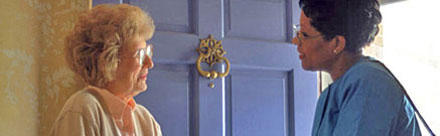
|
Day in the life of...

Cathy Gomez,
Deputy Director of Administrative Operations
For the majority of us, our career paths are never the same. Some may have a career path, which takes them into different jobs, while others may venture down a path that is somewhat steady in reaching their destination. For Cathy Gomez, Deputy Director of Administrative Operations and Service Section Manager of Finance & Administration, her career path has been one full of new educational and career stops. Gomez started her career path by attending North Iowa Area Community College, where she attained her Associate in Arts degree and furthered her path by receiving Bachelor of Arts degree from Buena Vista University in Business Management and Management Information Systems. Her educational journey took one last turn to Upper Iowa University where she obtained her MBA with an emphasis in Organizational Management.
Gomez's career path proceeded to Hamilton College, which later transformed into Kaplan University, where she was the Director of Finance for 16 years. Here, she held the responsibility for student tuition assistance utilizing state and federal funding opportunities. One of her greatest achievements at Kaplan was having a voice in working with Iowa College Aid Commission and state legislators to build and support state tuition aid programs for students. The best part of the job was working with the students, Gomez quotes; "I often met with lost kids that never thought college was an option for them, and together we creatively found ways to make a college education a reality." She also taught adjunct business and computer courses at Kaplan, and would incorporate 'real-life learning' games and experiences to help students understand their financial obligations and how today's choices impact their future goals.
In 2010, Gomez's career path took a new direction with a position at the Cerro Gordo County Department of Public Health as the Service Section Manager for Finance & Administration, and more recently, the Deputy Director for Administrative Operations. "Opportunity knocked and I was ready for a change," stated Gomez. "I am just thrilled to be a part of the CG Health team that does so much good for the community." At the Health Department, Gomez is responsible for monitoring the flow of revenue and expenses of all departmental entities, which includes resources from state and federal grant funds, tax dollar support, and fees. Gomez is also accountable for monitoring the annual departmental budget, fiscal year reporting, along with supervising the Information Technology and administrative teams. "Overseeing IT and Administration is the easy part of my job, the staff members are highly qualified, incredibly knowledgeable, and motivated individuals with years of experience that truly know and accomplish their tasks well. I feel so lucky to be part of an entity that does so much good, what we do at Public Health benefits so many." said Gomez.
Yet, Gomez sees the challenges as well. "Not everyone quite understands all the services and benefits we provide, so many more could be utilizing our programs," stated Gomez. She also notes the challenges faced financially. "We operate within a tight county budget, so to balance our fiscal financial responsibilities, and to keep our service programs available and operations, we count heavily on grant applications." However, with challenges there are still many opportunities to be seen. "My hope is that the Health Department continues to develop and expand service sections and strengthens the voice of Public Health to state and federal regulatory entities to insure program value so public need continues to be front and foremost," noted Gomez.
Sometimes a career path makes many career stops and others do not. Gomez's career journey took hers from the realm of education to the public health sphere. Her new journey has paved the way and produced many new and exciting changes at the Health Department and will continue to do so in future endeavors!
|
|
Department Quick Links...
|
 |
|
November is Home Care Month!
When we think of November, we normally associate the month with Thanksgiving, snow falling, starting Christmas shopping or even Diabetes Awareness month. Yet, we rarely or never associate November with National Home Care month. Home care nurses and aides have been an extensive contributor to home health in Cerro Gordo County since 1969.
In 1969, Cerro Gordo County Public Health Nursing began providing home care services to members of the county. The city nursing agency, Public Nursing Association of Mason City merged with Cerro Gordo County Public Health Nursing in 1977. Finally, in 1990 the Home Care Aides transferred from the Board of Supervisors to the Board of Health and the Cerro Gordo County Department of Public Health Family and Community Service Section was formed.
We have six registered nurses who are able to provide care to Cerro Gordo clients 24 hours a day, seven days a week. Public health nurses keep your physician updated on your recovery. They perform skilled tasks such as drawing blood for lab tests, giving medicine by injection, caring for a wound or teaching you and loved ones about medications and treatments. Our nurses are knowledgeable in the community that helps improve client's recovery and enhance their health conditions.
Our nursing team can provide the following skilled services:
- Evaluate client's nursing needs
- Initiate the physician ordered plan of care and necessary revisions.
- Provide any services requiring skilled nursing such as injections, blood draws, dressing changes, diabetic teaching and refilling of insulin syringes, etc.
- Coordinate all services required by the client.
- Participate in Continuing Care Project for the frail and elderly.
- Assist frail and elderly in long-term planning to stay in home or nursing home placement.
- Client and family health teaching.
- Provide for Department of Human Services (DHS)/court ordered child or adult protection services.
- Supervise home care aides providing service.
The trained nursing staff at the Health Department can provide many different types of therapy including occupational therapy to respiratory therapy.
Yet, the team would not be complete without the help of the department's home care aides. The Health Department home care aide team includes 11 aides, both part-time and full-time. Each aide must complete a 60-hour training course or a Certified Nursing Assistant course to be eligible for employment and must participate in continuing education classes.
Home care aides can provide a wide variety of services that include personal care services such as bathing and foot care to household chores such as laundry and dusting. These additional services are also provided:
- Provide personal care such as bathing, skin and hair care.
- Assistance with budgeting, home management and light housekeeping.
- Assistance with grocery shopping and laundry.
- Assistance with meal planning and preparation.
- Assistance in DHS/court ordered child or adult protection services.
- Assistance with rehabilitation and exercise therapy.
- Facilitate an in-home parenting program through Family Connections which is delivered in the family home. Education of developmental stages, appropriate parent-child interaction, and methods of discipline are discussed with the parents. Time is also set aside for the child and parent to interact.
Home care services are funded by Medicare, Medicaid, private insurances, grants, Elderbridge Agency on Aging and the Cerro Gordo County Board of Supervisors.
Our home care services are available to all members of the county, but you need to ask for it when you visit your physician or hospital.
The nurses and aides at the Cerro Gordo County Department of Public Health provide long term care to 180 plus clients each month. The next time home care is an option to you, try the Cerro Gordo County Department of Public Health!
|
|
|
|
|
Happy Thanksgiving!
The holiday season will be fast approaching and that means holiday parties and great food. This Thanksgiving, ward off the holiday weight by limiting yourself to single servings at the dinner line. Americans can consume an additional 3,000 calories on Thanksgiving Day by filling up their plates with more than one serving of mashed potatoes, gravy, dinner rolls, and dressing. With the choice between pumpkin and pecan pie, we usually end up trying both! Avoid the holiday weight gain and limit to one serving of each.
On October 7, 2011, Iowans across the state kicked off the Iowa Healthiest State Initiative with the Start Somewhere Walk. Those who participated were encouraged to walk 1 Kilometer as a symbol of their commitment to living healthier. The second project for the Healthiest State Initiative is the creation of 10 Blue Zone Communities. Blue Zones are locations around the world where residents have a higher life expectancy than the average population. Several North Iowa communities are competing to be selected as one of the 10 Blue Zone Transformation Communities. You can show your community support by pledging at www.bluezonesproject.com.
If you still haven't received your flu shot, the Immunization Clinic will be open Saturday, November 19 from 9:00 AM - Noon. The Health Department is now accepting and filing most major insurances, so don't forget your insurance card.
In this issue of the Public Health Communicator, we feature our home care services in honor of National Home Care Month. This issue also includes turkey tips to ensure your family has a safe and healthy Thanksgiving, our "Day in the Life of" column highlighting Cathy Gomez, winter weather safety and the Wellness Corner.
As always, like us on Facebook or follow us on Twitter to stay up-to-date on all the current information surrounding the Health Department.
For more information about Public Health, visit our website,
e-mail webmaster@cghealth.com or call 641-421-9300.
Best wishes,
Nola Aigner
Public Information Officer
Cerro Gordo County Department of Public Health |
|
IT'S TURKEY TIME!!

The Thanksgiving holiday will soon be upon us. Here are some helpful tips and suggestions from the United States Department of Agriculture and the Cerro Gordo County Department of Public Health to make sure your family has a healthy and happy Thanksgiving.
How to thaw your turkey
There are two ways to properly thaw your turkey: in the refrigerator or in cold water.
If you are thawing your turkey in the refrigerator, make sure the refrigerator is 41°F. Allow 24 hours for every four to five pounds. Here is a chart to give you a quick look at some examples:
|
4 to 12 pounds |
1 to 3 days | |
12 to 16 pounds |
3 to 4 days | |
16 to 20 pounds |
4 to 5 days | |
20 to 24 pounds |
5 to 6 days |
When thawing the turkey, it should be kept in its original wrapper. Place the turkey on a tray or in a container, so the juices of the turkey do not leak on to other food items. A turkey that is completely thawed may remain in the refrigerator up to one to two days.
Another option to thaw your turkey is to submerge it in cold water. A good rule of measure is a pound equals 30 minutes of thawing time.
|
4 to 12 pounds |
2 to 6 hours | |
12 to 16 pounds |
6 to 8 hours | |
16 to 20 pounds |
8 to 10 hours | |
20 to 24 pounds |
10 to 12 hours |
Make sure your turkey is tightly wrapped and water cannot leak into it. Immerse the wrapped turkey in the cold water and remember to change the water every 30 minutes. Cook the turkey immediately after it is thawed. NEVER thaw a turkey at room temperature.
It's also important to remember to remove the giblets from the turkey cavities after thawing. Cook the turkey and the giblets separately.
How to roast your turkey?
Set your oven temperature no lower than 325 °F. Put the turkey on a rack in a shallow roasting pan.
For maximum safety, stuffing a turkey is not advised. It is suggested you cook your stuffing outside the bird in a casserole. Use a stem thermometer to check the internal temperature of the stuffing. The stuffing must reach a safe minimum internal temperature of 165 °F.
If you choose to stuff your turkey, the ingredients should be prepared ahead of time; however, keep wet and dry ingredients separate. Refrigerate the wet ingredients (butter/margarine, cooked celery and onions, broth, etc.). Mix wet and dry ingredients just before filling the turkey cavities. Load the cavities loosely. Cook the turkey immediately. A turkey is safe when cooked to a minimum internal temperature of 165 °F as measured with a stem thermometer. Check the internal temperature in the innermost part of the thigh and wing and the thickest part of the breast.
For quality, let the turkey stand for 20 minutes before carving to allow juices to set. The turkey will carve more easily. Remove all stuffing from the turkey cavities.
Storing leftovers and reheating turkey
Discard any turkey, stuffing, and gravy left out at room temperature longer than two hours or one hour in temperatures above 90 °F. Divide leftovers into smaller containers. Refrigerate or freeze in covered shallow containers for quicker cooling. Use refrigerated turkey, stuffing, and gravy within three to four days. If you are considering freezing the leftovers, use within two to six months for best quality.
You can either reheat the turkey in the oven or in the microwave.
When reheating turkey leftovers in the oven, set to no lower than 325 °F. The internal temperature of the turkey needs to be 165 °F, which can be checked with a stem thermometer.
TIP: to keep the turkey moist, add a little broth or water and cover.
If you are reheating the turkey in the microwave, cover your food and rotate it for even heating. Allow for standing time. Check the internal temperature of your food with a stem thermometer to make sure it reaches 165 °F. Consult the microwave owner's manual for recommended times and power levels.
For additional turkey questions, call the Cerro Gordo County Department of Public Health at (641) 421-9336 or the United States Department of Agriculture Meat and Poultry Hotline at 1-888-674-6854. |
|
|
Public Health Recognizes Winter Weather Awareness Day

Iowa Department of Public Health recognized Thursday, November 10, 2011 as Winter Weather Awareness Day. Throughout the day, the National Weather Service issued informative public information statements about winter weather as well as safety recommendations. With winter fast approaching, officials at the Cerro Gordo County Department of Public Health want you to be prepared for Iowa's ever changing weather.
"We all know what's waiting just around the corner - snow, ice, wind and much colder temperatures," said Jodi Willemsen, Public Health Preparedness Service Manager. "We encourage residents to make severe weather safety and preparedness a priority to ensure their households are ready for winter related incidents to include things like power outages and difficult driving conditions."
The Health Department wants to remind you of a couple of preventative tips to ensure you and your family have a safe winter.
What causes winter weather hazards?
- Exposure to cold temperatures
- Vehicle accidents due to road conditions
- Fires due to dangerous use of heaters
- Being trapped at home or in your car without utilities or other assistance
Keep a winter weather travel kit in your vehicle that includes:
- Cell phone and charger or extra batteries
- Blankets and extra clothing such as a hat and mittens
- Flashlight
- First aid kit
- Container of sand or kitty litter and a shovel
- High calorie, non-perishable foods
- Ice scraper
- Battery booster cables
TIP: When traveling, make sure your gas tank is near full.
Make sure to prepare a winter weather kit for your house or office which contains: extra flashlights and batteries, battery powered radio, extra food and water, extra medicine and baby supplies, first aid supplies, heating fuel, emergency heat source and fire extinguisher/smoke detector.
If you are caught in a winter storm in a vehicle, remember to:
- Stay in the vehicle
- Run the engine about 10 minutes every hour for heat
- Crack a window while running the engine to avoid carbon monoxide poisoning
- Make sure exhaust isn't blocked by snow
- Be visible to rescuers by turning on dome light when running the engine
- Exercise to keep warm
When caught in a winter storm in your home, make sure to:
- Remain inside if possible and stay warm using an alternative heat source if needed
- Close off un-needed rooms if your heat is off
- Cover windows at night
- Wear layers of clothing
For more winter weather preparedness tips, visit our website at www.cghealth.com
|
|
Wellness Corner
Diabetes Awareness Month
Diabetes Mellitus is quickly becoming the most common chronic disease among Americans. Nearly 10% of the US population is living with Diabetes. What may be more startling is that another 25% of the population is at high risk for developing Type 2 Diabetes. And yet far too many individuals do not think Diabetes is a serious condition.
- Every 17 seconds someone is diagnosed with Diabetes.
- Diabetes kills more people each year than breast cancer and AIDS combined.
- It is projected that 1 in 3 American adults will have diabetes in 2050 unless we take steps to reduce our risks.
November marks American Diabetes Month and the multiple media campaigns help remind individuals, communities, and families about the risks, treatments, and prevention strategies that can be used to overcome Diabetes.
If you have a family history of diabetes or want to avoid being diabetic, now is the BEST time to make some lifestyle changes to reduce your risk for developing Diabetes. Here are some things you can do to help yourself:
Physical Activity
- 30 minutes a day of moderate physical activity
- Examples: walk, bike, swim, dance, etc.
Nutrition
- Include plenty of fruits and vegetables
- Focus on lean-meat choices
- Consume low-fat dairy products
- Limit high calorie-low nutrient foods (candy, soda, sweets)
- Emphasize whole-grain foods
Weight
- If you are overweight:
- Reduce your body weight by 5-10%
Current Weight Target Weight Pounds to Lose
180 167.4 12.6
200 186.0 14.0
220 204.6 15.4
250 232.5 17.5 |
Help us promote Public Health services. Forward this electronic newsletter to your friends, family, co-workers and associates. Thank you for choosing the Cerro Gordo County Department of Public Health! Our Mission Statement:
Dedicated to enhancing the health status of our communities through public health initiatives.
Our Vision Statement:
Driving public health system change through strong and directed leadership.
Our Value Statement:
We believe in human dignity, respect for individual choices, promotion for wellness and personal safety, protection of the environment, prevention of disease and access to quality health services.

|
|
|
|
|