The Fifth Annual Lahey Clinic 5K Cancer Walk
|
Saturday
June 5, 2010
| This year at two convenient locations:
- Lahey Clinic Medical Center, Burlington
For more information, click here. |
Benefits of Lahey Primary Care
|
 |
Guy Napolitana, MD, Chairman of the Department of General Internal Medicine at
Lahey Clinic, discusses the benefits of Lahey primary care.
-View Video
|
|
Growing Field of Hospital Medicine Provides Quality, Safety at Lahey
Hospital medicine has been available at Lahey Clinic since 1999. But today hospital medicine
is an official clinical department.
-Read More
|
Start a Regular Exercise Program
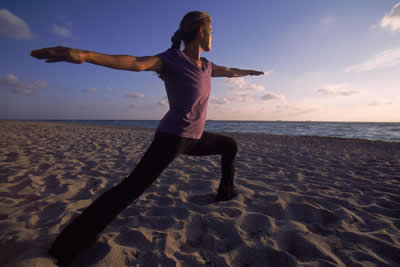
Exercise helps keep your body healthy and your tissues and
organs working properly.
In keeping your body in good working order, exercise
also helps ward off many diseases, such as heart disease, stroke, type 2
diabetes, osteoporosis, and many others.
It is recommended you do
moderately intense physical activity for at least 30 minutes on most
(preferably all) days of the week.
Your exercise program should include both aerobic and strength exercise such as: Walking Jogging Running Aerobics
Bicycling Swimming Hiking Weight lifting Calisthenics
Getting Started
If you're new to exercise, brisk walking is a great place to start. Over time you you can build up to more intense physical
activity.
Before starting an exercise program, check with your doctor
about any possible medical problems you may have.
|
|
Greetings!
In this issue, Guy Napolitana, MD, chairman of General Internal Medicine, discusses the benefits of
Lahey primary care. In, "Getting to Know Your Health Care
Providers" we sort out the various members of your health care team from MDs and DOs to NPs and PAs. We are also excited to let everyone know about Lahey's new Web service for patients and their family members - CarePages - as well as introduce our new Hospitalist Department. Lastly, a reminder, The Fifth Annual Lahey Clinic 5K Cancer Walk will be held Saturday, June 5, 2010. This year the walk will be held in two convenient locations: Lahey Clinic Medical Center in Burlington and at the Northshore Mall in Peabody. Please join us in our ongoing efforts to support cancer patients. |
|
Lahey Introduces CarePages
CarePages, sponsored by Lahey Clinic, allows patients and
families to create a free, private Web page that helps them stay in touch with
friends and family before, during and after hospitalization.

CarePages makes it easy to:
Share news or provide medical updates to patients, families
and friends before, during and after treatment Share photos Receive or post messages of support and encouragement Post contact information Relay the latest news with your entire circle of family and
friends in a matter of minutes Choose your preferred level of security and privacy
CarePages are fully secure, password protected and comply
with all patient privacy regulations.
To visit Lahey's CarePages Web site click here.
|
|
Getting to Know Your Health Care Providers
Most of us are familiar with MD after a doctor's name. This
stands for doctor of medicine and signifies that this person has completed four
years of medical school. But would you know if your doctor is a DO? And what
about the other people seeing you, checking vitals, writing prescriptions, and
filling in charts - PAs and NPs - what type of training do they have and what
services can they offer?
MDs and DOs
A DO is a doctor of osteopathic medicine. According to the
American Osteopathic Association, approximately 5% of physicians in the United States are DOs.
MDs and DOs are very similar and both must complete:
Medical school Residency programs, which involves three to six
years of additional training Pass state licensing exams (obtain licenses to prescribe
medicine and perform procedures) Practice in accredited hospitals and medical centers Earn continuing education units to remain certified
There are also some distinctions between these types of
physicians:
Osteopathic medical schools focus on primary care medicine. Therefore, the majority of DOs practice in areas of primary care, such as pediatrics,
family practice, obstetrics/gynecology, and internal medicine. DOs receive extra training in the musculoskeletal system. This system consists of interconnected muscles, tendons, ligaments and bones.
Physician Assistants
A physician assistant (PA) is a health professional who is
licensed to practice medicine under the supervision of a physician. A PA can do
the following:
Obtain a medical history and perform a physical exam Diagnose and treat illnesses Order and interpret tests such as lab work and x-rays Counsel on preventive health and lifestyle practices Prescribe medications in most states
A PA can work in any area of medicine, but the majority of
PAs work in primary care medicine (pediatrics, family practice, obstetrics/gynecology
and internal medicine).
Education for PAs
To become a PA, one must complete an accredited PA
educational program and pass a national certification exam. Once certified, PAs
take continuing medical education classes and are retested on their skills
regularly.
PA education is designed to complement physician training.
Education consists of classroom and laboratory instruction in the basic medical
and behavioral sciences as well as clinical rotations in primary care fields,
surgery, emergency medicine and geriatric medicine.
Nurse Practitioners
A nurse practitioner (NP) is a registered nurse (RN) with a
master's degree in nursing and clinical training in a health care specialty
area. The services an NP can provide vary depending on each state's regulations.
In general, NPs can do the following:
Obtain a medical history and perform a physical exam Diagnose, treat, and monitor illnesses and injuries Order and interpret tests such as lab work and X-rays Counsel on preventive health and lifestyle practices - Prescribe medications, in most states
Nurse practitioners can work in primary care (pediatrics,
family practice, obstetrics/gynecology and internal medicine) or specialty
areas of medicine, such as emergency medicine, oncology and psychiatry.
Education for NPs
The path to becoming an NP usually begins with nursing
school, followed by licensure as an RN. After a few years of work experience,
an RN can apply to a master's degree program in nursing (generally 1-2 years of
school and a supervised internship). Most NPs are nationally certified in their
specialty area.
Both Physician Assistants (PA) and Nurse Practitioners (NP) are
vital members of your health care team.
Return to top
|
|
For information about our wide range of services please visit us us on the Web at, www.lahey.org. From everyone at Lahey Clinic we wish you a happy spring!
Thanks for your interest,

Return to top
|
|
|


