Greetings!
Total Tree Care arborists are delighted to have this opportunity to share their knowledge and experience with you every month. |
 
Geoff Harris Tip of the Month

Avoid Springtime Tree Ailments
Choose wisely when buying new trees and you will be rewarded with less maintenance.
I receive many springtime emails when ornamental trees prematurely lose their leaves or birch leaves begin to yellow.
Continuous periods of cool, wet weather spell trouble for specimen trees. Fungus attacks many ornamental species such as hawthorns, purple-leaf plums, dogwoods and mountain laurel. Larger trees such as oaks, maples and sycamores suffer curling and distorting leaves from Anthracnose. Treatments need to be applied as leaves unfurl with several applications to follow every 10 days. By the time most people see the problem it's too late, so treatment should be considered for the following spring.
Although fungicide treatments may significantly lessen the impact on many crabapple cultivars that are susceptible to apple scab or cedar-apple rust defoliation and blackened or spotted orange leaves, it's more advantageous to select a well established nursery with knowledgeable associates who can direct you to cultivars of resistant crabapples.
|
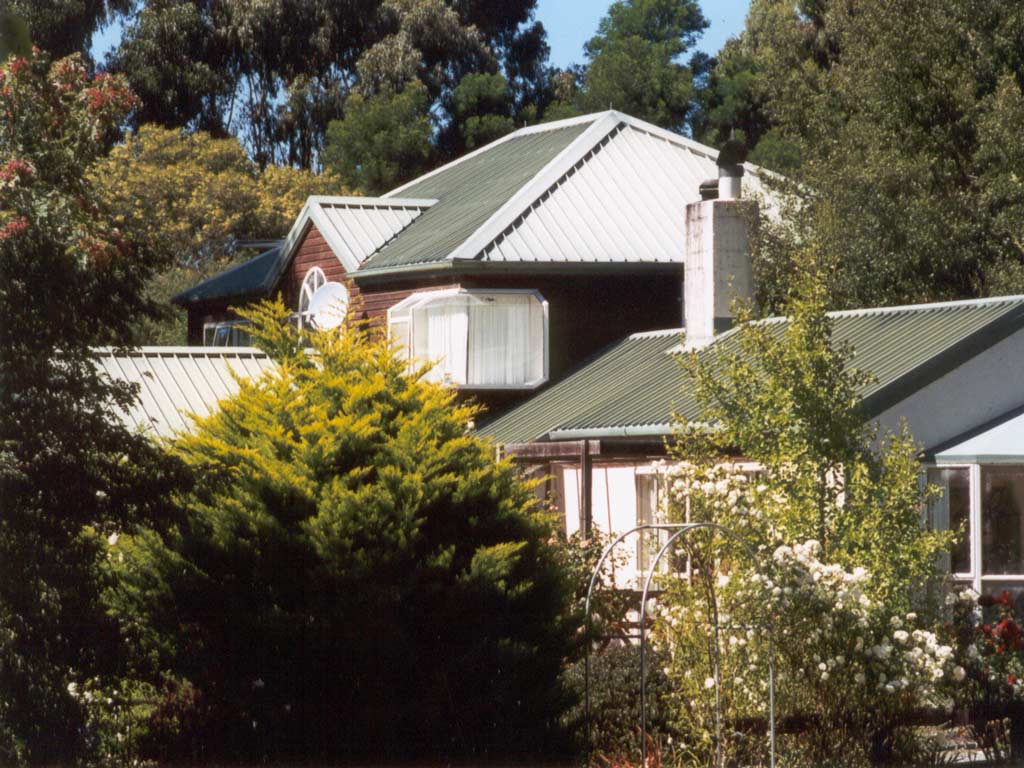
Springtime Tree Planting
- Things to Consider -
Your first step should be to determine what you want to achieve by planting trees. For example, do you need shade, privacy screening, a windbreak, or are you planting mainly for aesthetics? This will help to determine whether an evergreen or deciduous tree would be most beneficial.
Next consider hardiness, size at maturity, level of resistance to insects and disease, and cultural requirements (full sun, well drained soil, etc.)
Now you're ready for a trip to a nursery to select your tree. In most cases you should select a tree with a strong central leader without co-dominant leaders or V-shaped (weak) crotches.
 When planting, the soil level should be the same as when the tree was removed from the nursery. Be sure to cut or remove any twine or burlap that's wrapped around the base of the tree. Large trees should be guyed or staked so they don't shift in the soil after planting, which could disrupt the tiny root hairs as they are developing. When planting, the soil level should be the same as when the tree was removed from the nursery. Be sure to cut or remove any twine or burlap that's wrapped around the base of the tree. Large trees should be guyed or staked so they don't shift in the soil after planting, which could disrupt the tiny root hairs as they are developing.
Hope this has been helpful. Happy planting!
Be Well - Mike Kennedy |
Avoid Hazardous Tree Conditions due to Carpenter Ants
Carpenter ants can be a very destructive pest for your valuable trees. They continually enlarge cavities in the main trunk or stump of a large tree while expanding their nest. A weakened tree structure increases the hazard potential to people, property and possessions.
Properly timed foliar/trunk/cavity targeted applications will greatly reduce carpenter ant activity and hopefully cause death to the queen. Once the queen dies the nest activity will cease. |


How Much Carbon do your Trees Trap?
In a recent Total Tree Care survey, many of you expressed interest in a carbon sink calculator.
Carbon sources release more carbon than they absorb while carbon sinks soak up more carbon than they emit. Trees, a natural carbon sink, remove carbon dioxide from the atmosphere and store it as carbon in the plant material and in the surrounding soil. Their photosynthesis process combines carbon dioxide with sunlight to produce oxygen and water. On the other hand, automobiles are carbon sources that cause several thousand tons of carbon dioxide to be released into the atmosphere every year.
 Depending on the size of the trees on your property and their numbers, you may be trapping many tons of carbon from the atmosphere each year. Depending on the size of the trees on your property and their numbers, you may be trapping many tons of carbon from the atmosphere each year.
Click here to check out this neat carbon calculator that we link to through our website. [If you have many trees on your property, take your average size tree and multiply the results by the approximate number of trees you have.]
You may be that fortunate someone whose trees are trapping more carbon than you are releasing into the atmosphere each year. |



