|
SUMMER SAFETY SURVIVAL GUIDE:
10 TIPS TO KEEP YOUR FAMILY SAFE
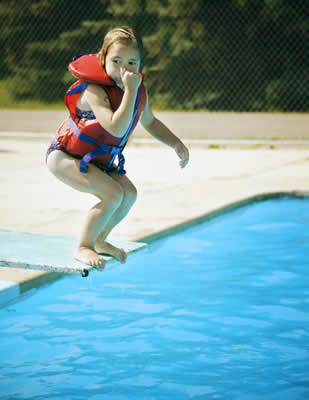 Summer is the time for outdoor cookouts, pool parties and backyard play dates--not a time for bandaging scrapes, nursing burns--or worse. Learn these important summer safety tips and make sure everyone in your family knows them by heart, too. That way, it will be a summer to remember, for all the right reasons. Summer is the time for outdoor cookouts, pool parties and backyard play dates--not a time for bandaging scrapes, nursing burns--or worse. Learn these important summer safety tips and make sure everyone in your family knows them by heart, too. That way, it will be a summer to remember, for all the right reasons.
Pool Safety
Supervise constantly: Good supervision means you are able to scan the pool area every 20 seconds and be able to reach the pool in 10 seconds.
Put multiple safety barriers between children and the pool: Install a four-foot fence with a self-closing, self-latching gate that has a locking mechanism beyond a child's reach. Also cut overhanging tree limbs and remove chairs or ladders from the pool area to prevent children from climbing over the fence surrounding the pool.
Always check the pool first if a child is missing: Child drowning is often a silent death that alerts no one with splashes or yells for help. Many drowning accidents happen when children have been missing for less than five minutes.
Empty small wading pools and remove all small toys after children are through playing: Infants can drown in just a few inches of water. Floats, balls and other toys may attract children to the pool when it is unattended.
Playground Safety
Carefully inspect backyard playground equipment: According to the Consumer Product Safety Commission, 70 percent of all playground-related deaths occur on home playground equipment. Make sure equipment is anchored safely in the ground, all equipment pieces are in good working order, S-hooks are entirely closed and bolts are not protruding.
Backyard Safety
Keep grills at least 10 feet from any structure: Grilling mishaps cause more than 8,300 fires and send 3,000 people to the emergency room each year. Never grill indoors or near garages or porches, even if it's raining. Have a spray bottle or fire extinguisher handy: An unexpected flare up can burn more than your burgers. Use a spray bottle to avoid flare ups and have a fire extinguisher nearby. Also, coals get hot--in some cases up to 1,000 degrees Fahrenheit--so dispose of charcoal away from kids and pets and cool it down with a hose. Never use gasoline or kerosene to light a charcoal fire: Both can cause an explosion. When grilling, use insulated, flame-retardant mitts and long-handled barbeque tongs and utensils to handle food and coals. Check gas grill hoses for cracking, brittleness, holes and leaks: If the tank valve or grill needs repair, do not attempt to do it yourself. Take it to your local home improvement store or qualified appliance repair person. Inspect outdoor decorative lights carefully: Some families add backyard ambience with outdoor decorative lighting. Do not connect more than three midget light string sets together. Light strings with screw-in bulbs should have a maximum of 50 bulbs connected together. Be sure to use light strings bearing the UL Mark, which means UL has tested samples of the product for risk of fire, electric shock and other hazards.
| 


 Summer is the perfect time to be outside. But have you ever taken a check of the plants in your yard to make sure they're safe for you, your kids and your pets to be around? Some everyday plants in your yard and in the surrounding woods may be dangerous if curious children touch the leaves or put them in their mouths. Here is a list of some of the most common plants that can be dangerous to adults, children and even pets!
 Outdoor fire pits have become all the rage in the last few years. While they are perfect for roasting marshmallows in the backyard and warming up a cool evening on the patio, keep in mind that their main ingredient is FIRE and that they must be handled with care! A recent study reports that fire pits, candles and tiki torches are the most hazardous outdoor items! Be sure you follow these fire pit safety rules before you light the first flame: