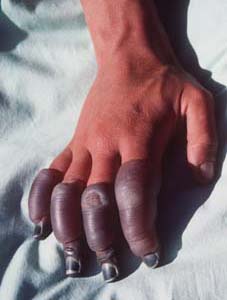
Though most of Wilderness Medicine involves a good
combination of problem solving and common sense,
frostbite treatment involves a few simple, yet counter-
intuitive techniques. In the early winter, when cold
takes alot of enthusiasts by surprise, help your
patients with this quick quiz:
True or False
- The first step in Frostbite treatment should
always be rapid re-warming.
A fire is not a good way to rewarm
frostbite injuries.
The only additional treatment that should take
place during rewarming is massaging the frostbitten
area.
Answers:
False - Though rapid rewarming
is used with frostbite as opposed to slow
warming (as in hypothermia), it is important in many
cases to evacuate a patient first since refreezing is
much more dangerous than long-term freezing. If
there is any chance that the limb will refreeze, do not
thaw until the patient has been evacuated.
True - Sources of dry heat like a fire are
dangerous because the temperature cannot be as
easily regulated and may result in burns, further
damaging the tissues. The best way to rewarm is
using circulated heated water at about 40-42 degrees
Celsius. In the absence of a thermometer, use your
own hand to make sure the water is not too hot.
False - Massaging frozen tissues can
greatly increase tissue necrosis. The injured person
may move the limb, but that should be the extent of the
motion. However, a good addition to rewarming is
ibuprofen or similar NSAIDs. A good dose is 400 mg
every 12 hours to decrease tissue damage.
As a prevention or once a limb has been thawed, be
sure to keep warm dry clothing on trouble areas like
hands, feet, ears or nose. Remember, prevention is
the best treatment. Keep warm in the outdoors this
winter!