|
We Need Your Help

It has taken me a few days to find a way to put my thoughts together -- a way to make you understand just how much we need you now.
Last week we had a dog test positive for parvovirus (Canine parvovirus type 2 (CPV2, colloquially parvo)) is a contagious virus mainly affecting dogs. The disease is highly contagious and is spread from dog to dog by direct or indirect contact with their feces. It can be especially severe in puppies that are not protected by maternal antibodies or vaccination. It has two distinct presentations, a cardiac and intestinal form. The common signs of the intestinal form are severe vomiting and dysentery. The cardiac form causes respiratory or cardiovascular failure in young puppies. Treatment often involves veterinary hospitalization. Vaccines can prevent this infection, but mortality can reach 91% in untreated cases. (Canine parvovirus will not infect humans.).
Because of this we have been under a two week quarantine and no dogs have been able to go to new homes. The quarantine is up on Thursday, as long as everyone stays healthy.
Then to make things even more unbearable, we had a litter of kittens test positive for panleukopenia (Feline panleukopenia virus (FPV), also known as Feline infectious enteritis, Feline distemper, feline ataxia, or cat plague), is a viral infection affecting cats, both domesticated and wild feline species. It is caused by feline parvovirus, a close relative of both type 2 canine parvovirus and mink enteritis. Once contracted, it is highly contagious and can be fatal to the affected cat. The name, panleukopenia, comes from the low white blood cell count (leukocytes) exhibited by affected animals.
Luckily we vaccinate the animals here, and do not let young kittens come in the shelter from foster homes without having at least two vaccinations.
The problem we have now is that we cannot keep any partially vaccinated cats in the shelter. It is so much easier to spread illness with cats because each of them need to be handled in order to clean their cages.
And here is where I ask for your help. We need people willing to open their homes for a few weeks to help us save more cats. The cats would be vaccinated and kept in a quarantine area to keep them healthy while they wait on foster homes. The hope is that we can keep new cats out of the shelter until they are fully vaccinated. In most cases this would be a 2 week stay at your place, but could be shorter or longer depending on each individual situation.
If you cannot foster, we could really use donations of wire crates, and disposable litter pans (soda flats work great for this).
Let the best gift you give this year be your open heart and temporary home for a cat that deserves the opportunity to be saved.
|
|
Animals of the Month
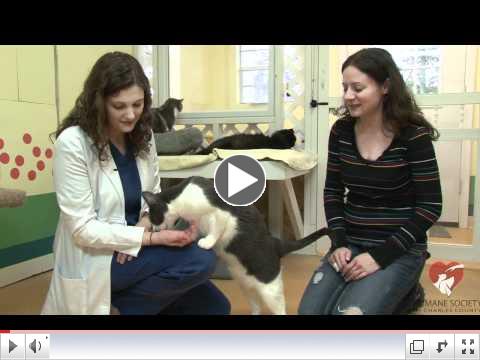 | | Humane Society of Charles County Maryland December Adoption Video |
Thanks to Waldorf Ford
and Dodge for filming our Animals of the Month!!
|
Humane Hero of the Year!

Do you know someone under the age of 18 who deserves the award for Humane Hero of the Year?
Sometimes there is a young person in our lives that deserves recognition, if you know of someone who has gone above and beyond please CLICK HERE to fill out the nomination form.
Some rules and restrictions do apply (but not many). For a copy of the rules please Click Here.
|



