|
What's Your Favorite Cookie?
Peanut Butter Chocolate Chip
Sugar Raisin
Oatmeal
We are interested to discover what the
most favorite kind of cookie is. Drop us an email and tell us your favorite kind of cookie.
Don't forget to include your first name and age in the email. Send in your email by May 20 to be include in the results. |
|
Sports Math
information@homeschoolingkidsmagazine.com
Make up some of your own sports math problems too for even more fun! |
Limericks
A limerick is a five-line poem in a specific meter, usually with a funny punch line or a humorous twist. The rhyme scheme is traditionally a-a-b-b-a. The first, second, and fifth lines have three stresses; the third and fourth lines have two stresses. Limericks often contain internal rhyme and alliteration.
1. A tutor who tooted the flute (a)
2. Tried to tutor two tooters to toot; (a)
3. Said the two to the tutor, (b)
4. "Is it easier to toot, Sir, (b)
5. Or to tutor two tooters to toot?" (a)
Edward Lear's "A Book of Nonsense," first published in 1846, popularized the limerick. You can read his limericks here:
Send your limericks and other poems to:
|
Happy Birthday to YOU!
May Birthdays
Molly will be 5 on May 3rd
Lexi will be 10 on May 3rd
Sean will be 12 on May 24th
Michael will be 10 on May 20
Jacob will be nine on May 24
We would like to celebrate your birthday too! Just send your first name only, age and birthday and we will include you here on your birthday month!
birthdays@homeschoolingkidsmagazine.com
|
|
Complete this story....
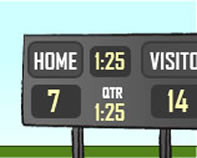
Do you like to write stories? Well, here is your chance! The score 7 to 14 you are the visitors... tell us what happens next! Send your short story to us and include your first name, age and state. You may see your short story here next month!
|

OR SCROLL DOWN TO THE VERY BOTTOM OF THE MAGAZINE AND CLICK ON UPDATE PROFILE/EMAIL ADDRESS (ONLY IF THIS IS YOUR OWN ISSUE). |
|
MAY IS...
· National Bike Month
· Physical Fitness & Sports Month
· National Scrapbooking Month
· Military Appreciation Month
· Teacher Appreciation Week
5 Cinco de Mayo (Mexico)
5 Children's Day (Japan)
7 National Day of Prayer
10 Mother's Day
12 Limerick Day
16 Biographers Day
19 Circus Day
20 Weights & Measures Day
23 World Turtle Day
25 Memorial Day
Information provided by our friends over at www.knowledgehouse.info
|
Book & Movie Reviews
Have you seen a good movie lately or read a good book?
Then send us a review about it
information@homeschoolingkidsmagazine.com
|
|
Ready... Set... GO
If You GO... are you visiting some place awesome in your home state or out of state soon? If so tell us about it! Send us a small article and some pictures too! You may see yourself here as a reporter next month!
information@homeschoolingkidsmagazine.com
|
rec·i·pe Pronunciation: \ˈre-sə-(ˌ)pē\ Function: noun - a set of instructions for making something from various ingredients.

Have a great recipe? Send it to us and you may see
your creation here! Don't forget to send a picture and list all ingredients as well as directions.
information@homeschoolingkidsmagazine.com
|
Tulsa Area Home Schoolers recently had their first Lego League, they meet twice a month. They team build all kinds of creations. This year's theme is climate, which fits in well with this years group theme of living green.
At the same time as the Jr Lego League we also have open free play for the siblings, when the other siblings are finished with the league the kids all go for free play. Building with the Lego's teaches the kids about team work, building, what it takes to make the project and then actually test it to see if it will stay together. They just love to build these detailed creations it is really amazing to watch the kids build and play.These are some of the pictures of the Lego's.
We love our Lego's!
The group also does Lego Challenges: These are really fun we give the kids a time limit to create pieces, or do something that is very creative, the kids really like the challenge! This was just building something in a two minute time limit with the blocks the kids had:

For information on this group contact them at:
Tulsa Area HomeSchoolers
Contact person: Cheryl
|
|
Scott MacIntyre Update:
Thank You from Scott and His Family
[Submitted by Doug MacIntyre]  T Thank you for your tremendous outpouring of support for Scott throughout his "American Idol" journey. We are truly saddened to see him go and feel his departure from the show is several weeks too early. However, Scott is doing great, and immediately started press interviews after the show and was up again this morning at 3am continuing media appearances. He will be on Access Hollywood, Idol Extra, Entertainment Tonight, Extra, E!, TV Guide, CNN, CTV, Fox affiliates across the nation, Good Day LA, Entertainment Weekly, LA Times, People, US Weekly, Newsweek, Idol Tonight. Next he flies to New York to appear on Regis and Kelly and the Today Show. Thanks to you who voted for him so faithfully, he truly feels blessed to have these opportunities. Many of you have asked where you can get Scott's original music. He released a CD last year called " Somewhere Else" which you can only get as noted below. The CD includes 12 original tracks and is 52+ minutes in length. Scott's web site at www.scottmacintyre.com and MySpace www.myspace.com/scottmacintyre are coming back up with the latest news and photos. You can also join Scott's mailing list and send fan mail. Scott is eagerly looking forward to meeting many of you while on the American Idol summer tour. Additionally he plans to continue writing and recording music, and he will be releasing a brand new CD immediately following the tour. COST: For a " Somewhere Else" CD - send $15 per CD + $3 shipping & handling (check or money order) to Scott MacIntyre, P.O. Box 26803, Scottsdale, AZ 85255 Visit Scott's official American Idol web page for interviews, photos, music videos, and live performances from the show:
http://www.americanidol.com/contestants/season
|
|
Mini & Max Meet The President
It was one hot summer day in Mini's back yard.
Mini & Max were playing fetch when they heard Savannah talking to her mom. She had tickets to The White House to meet the president. Max has always dreamed of meeting the president and she was leaving today.
"Max" Mini said "I know what you're thinking"
she said. "You want to go?". "Yes I do" he said in sadness. " "Why don't we sneak into the car and then we can meet him" Max said.
" No Max remember last time?" Mini said.
"Oh yeah, the birthday party" he said.
"But what does that have to do with this?"
Max said. Just then Savannah got in the car and was about to drive away. Then Max jumped into the car. "Max come down here now!" Mini said. " Come on, jump" Max said. The car started up and Mini jumped into the car.
Until next month, keep reading!
Max & Mini is based on a real dog named Mini, she is an important part of Savannah's family and lives with her in Arizona. Most days, you can find Mini and Savannah hanging out and writing stories.
|
Homeschooler of the Month

Biancah Angelina,age 6 For Recycling all she could! |
|
Parent's Box
Dear Parents,
Thank you for taking the time to view Homeschooling Kids Magazine. We hope that you and your Homeschooler enjoyed reading with us! That is our goal, to make reading and learning fun! It is also our goal to provide Homeschooling children a place of their own, to highlight their accomplishments, talents and thoughts. Here at Homeschooling Kids Magazine, our articles and information are written exclusively by Homeschoolers. We strive to make this a safe place for your child and will never share or sell your information with any 3rd party. Content is a top priority for us and articles will always be age appropriate. The opinions expressed in our magazine are not necessarily those of Homeschooling Kids Magazine. Our magazine will only allow sponsorship logos and links that are family friendly. Homeschooling Kids magazine cannot be held responsible for any information listed or actions from our sponsors, reporters or Parent Helpers. If you would like to have Homeschooling Kids Magazine sent directly to your inbox each month, just click on the box at the top of the magazine that says "Did You Receive This As A Sample?" box.
Our magazine is free to all Homeschoolers. If you know someone who would like to view a sample copy, please have them send us an email to request one. If you would like to forward this issue, please feel free to do so, however please advise the person you are sending it to that all the links may not work when forwarding. Please let us know if you have any questions or concerns.
If you have a business and would like to be included as a sponsor for Homeschooling Kids Magazine, please contact us for information.
Become a Parent Helper in your area and earn some extra income, contact us for information.
Copyright 2009 Homeschooling Kids Magazine | |
|
Welcome Homeschooling Friends!
Homeschooling Kids Magazine is published online monthly for Homeschooling Kids by Homeschooling Kids!
Some of the things we will be featuring:
articles, short stories, puzzles, poems, pictures, recipes, crafts and so much more! If you would like to receive your very own issue via email monthly, please ask your parents to subscribe today! Do you love to write? Consider becoming a Homeschooling Kids Reporter. Send a sample of your work to us at:
information@homeschoolingkidsmagazine.com
Include your first name only, age and state.
Enjoy reading and Happy Homeschooling!
Be sure to have a parent's permission before submitting articles, contest entries etc. |
Museum Fun for Everyone
May 18 is International Museum Day. The word museum comes from the Greek word "mouseion," meaning "Place of the Muses." The first museum in the world was established around 330 B.C. in Alexandria, a Greek city in Egypt. This museum was built to honor the Muses, nine daughters of Zeus who were believed to be protectors of the arts and sciences. The museum included temples, gardens, a zoo, and a library.
Museums have something for everyone - history, art, science, religion, anthropology, and more. All are storehouses of interesting things. Art museums feature paintings and sculptures. Natural history museums contain things like dinosaur skeletons and examples of animal and plant life. Museums of science and technology have many do-it-yourself exhibits. Creation science museums explain the origins of all things based on the Biblical account. Historical museums may cover the history of a region, city or town. Children's museums specialize in exhibits created for and sometimes even by children. Libraries are a special type of museum for books and writings. Many real museums have virtual exhibits... and there are also virtual museums that exist only in cyberspace.
To find a Children's museum in your area check this link www.childrensmuseums.org
If you have a computer and a digital camera or scanner, why not start putting your own collection online and then send us the link so we can see it!
|
When I Grow Up...
I want to be a reporter! 
By Homeschooling Kids Magazine Reporter Samantha, age 13 from Arizona
Not only is my Great Aunt Ruthie a great Aunt, she's also a well-known reporter! She worked for almost 40 years at the San Francisco Chronicle in California, meeting many famous people along the way. From all of this experience, she definitely knows the ropes to being a reporter.
"One of the great things about newspapers is that you get a chance to do all kinds of different things," she said when asked what a typical day was like at the San Francisco Chronicle.
Over the years, she had many different jobs at the newspaper including being a movie critic and a movie reporter. These jobs allowed her to go to the Sundance Movie Festival at least 8 years in a row and to interview the stars there. She also got to meet some very famous names such as Emma Roberts ("Hotel for Dogs"), George Clooney ("Ocean's Eleven"), Kristen Stewart ("Twilight"), Tom Hanks, Paul Newman, Madonna, and many more.
For Ruthie, the hardest part about being a reporter is, "asking personal questions." Sometimes the person she was interviewing would get upset if something was too personal. On the other hand, what she liked best about her job at the Chronicle was being given so many opportunities.
"There was one time, I was interviewing James Earl Jones, the voice of Darth Vader [from the Star Wars movies], and he actually fell asleep during the interview! I wasn't really sure what to do!" she laughed.
Ruthie always wanted to be a reporter. In fact, it even said so in her grammar school yearbook. She always liked being in the middle of things. Before she started working for the newspaper, she went to journalism school, but says she wouldn't recommend that to aspiring reporters these days. The newspaper industry has changed dramatically, and in today's society Television and online news sources have replaced the printed-paper in a way. For anyone who wants to become a reporter of any kind, however, it's important to have a few certain qualities.
"You do need to be curious and able to write quickly on a deadline," she said. "It's also important to be able to walk up to anyone and ask them anything. You can't be embarrassed."
Although newspapers aren't as popular as they used to be, Ruthie still believes that they will be around in the future. She thinks that they won't publish daily papers anymore, but instead the newspaper will be published a couple days a week, or just on Sundays. The more local papers will most likely be online.
"I think there will also still be one or two national papers like the New York Times," she said.
If there is one thing I've learned from this interview, it's that to be a reporter it's important to have a passion for what you do. Thanks to my interview with my Great Aunt Ruthie, I know what it's like to have her job and what it takes to be successful. Now when I grow up, I might just want to live the exciting life my Great Aunt had as a reporter!
Hold the presses! |
|
Do you want to be featured on Homeschooler Q & A? Send us an email to and put Homeschooler Q & A on the subject line.
information@homeschoolingkidsmagazine.com |
Arctic Fox
By Homeschooling Kids Magazine Reporter Kira, age 9 from Canada
The arctic fox, also known as the white fox, or the scientific name Alopex lagopus, has beautiful white (sometimes blue grey) fur in winter. Hunters want the arctic fox for their silky fur, but they can run fast and camouflage with the snow. In the summer they have a  brown coat. They weigh 6 to 10 pounds and live up to ten years. They have thick hair on their feet that makes it so that their feet don't freeze. Foxes are related to wolves and dogs. brown coat. They weigh 6 to 10 pounds and live up to ten years. They have thick hair on their feet that makes it so that their feet don't freeze. Foxes are related to wolves and dogs.
They are the most northerly fox, found in northern Canada, Alaska, Russia and Greenland. They can survive in arctic temperatures as low as -50°C. Families will connect their tunnels so that a couple of families can live together in the winter.
The gestation period is 51-57 days. A female can have four to fifteen pups. They have more babies than any other carnivore. The adults will hide the pups in the den so that they are safe. The babies are weaned at five to six weeks, and they leave the den at about 14 to 15 weeks.
The arctic fox is an omnivore, which means they eat both plants and meat. They eat sea birds, eggs, seal carcasses, berries, tundra voles and lemmings. They also eat vegetables, and will follow polar bears so that they can eat leftover scraps. When they are older the pups will eat up to one hundred lemmings a day! They hide their food in rocky places, and so that they remember were they have put it, they spray them with an odour like a skunk. To catch its prey, the arctic fox will walk across the snow and listen for noises. If it hears a small creature, it jumps up and down and breaks the snow with its paws to catch it.
|
|

Learning ASL with
Max & Molly
Mother's Day Signing!
Celebrate Mom by signing HAPPY MOTHER'S DAY. Sing a song, sign to your mom and also, check out the Mother's Day books you can find at the library or bookstore. Practice the signs while you read the books!
Tune:: "Are You Sleeping?"
I love Mommy, I love Mommy.
Yes I do; yes I do.
And my mommy loves me,
Yes, my mommy loves me,
Loves me too; loves me too.
MOTHER'S DAY BOOKS:
Mother's Day, Anne Rockwell
Mother's Day Mice, Eve Bunting
What is Mother's Day? Harriet Ziefert
|
|
5 ways to celebrate Mother's Day
on a kids budget.....
1. Make a homemade card,breakfast and
pick some fresh flowers from your yard or buy some.
Your mom with love it!
2. Do all the house work for her on Mother's Day and let her have a day of rest.
3. Spend the day with her doing stuff she likes to do for example visit her favorite museum or park. Maybe take her to see a movie she has been wanting to see.
4. Make a poem about what she dose for you!note:
Moms love homemade things.
5. Bake a cake and surprie your mom in the moring with it. Be sure to ask for a adults permission to work in the kitchen.
Give your mom a HUG and tell her you love her everyday!
|
|
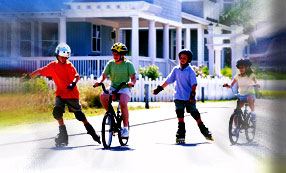
In celebration of May being National Bike Month, we thought you might enjoy this article on the history of bikes.
BIKES & BICYCLING Bicycling is a popular pastime for all ages, from preschoolers to seniors. Bikes are fun to ride, whether traveling around town, touring the countryside, participating in races, performing bike motocross stunts, or simply using them for exercise. Bicycling is a sport the whole family can do together. For youth, biking is the way to adventure; for older folks, it keeps them young in heart.
The world's first bicycle was made in France around the 1700's. It was made of two wheels joined by a wooden bar. The rider sat on a wooden rail and pushed the vehicle along the ground with his feet. This primitive vehicle had no pedals and could not be steered.
In Germany, Baron Karl von Drais built a similar vehicle in 1816. The big improvement of this bicycle over the first was that the front wheel could be turned for steering. A number of versions appeared, called walkalongs, hobby horses, or Draisines. Some had iron tires over the wooden wheels, padded chest supports, cushioned leather saddles or spring-mounted seats.
Over the years, the comfort and efficiency of these early bicycles continued to improve. A Scotsman used treadles to transmit power to the rear wheel to drive the vehicle. An English inventor attached a ratchet device to the front wheel, which was pumped with the arms. Others arrived at the idea of pedals that were attached directly to the front wheel.
However, it wasn't until after the American Civil War that the idea of a pedaled bicycle caught the public's fancy. In 1866, a French carriage maker named Pierre Lallement began manufacturing bicycles in Connecticut. His bicycle's front wheel was slightly larger than the rear wheel. Pedals were attached directly to the front wheel axle. It was called a "boneshaker" because it jolted the rider so much, especially on the cobblestone roads of the day.
New versions of Lallement's bicycle began to appear rapidly. In each, the front wheel became slightly larger and the rear wheel slightly smaller, since a higher front wheel achieved greater distance for each turn of the pedals. Other improvements included adjustable seats and the addition of rubber tires over the rims to reduce noise and prevent the wheels from slipping. By the 1870's, most wheels were fitted with wire spokes rather than heavy wooden spokes.
The high-wheeled bicycle, consisting of a small rear wheel and a huge front wheel with a seat mounted directly over it, came into vogue around 1875. In the most common models, the front wheel was from four to five feet tall, but a few were as high as eight feet. The high front wheel gave a rider the full advantage of his thrust in pedaling, as one turn of the pedals sent the big wheel on a complete revolution. This allowed bicyclists to achieve faster speeds, up to 25 mph.
Wheelmen, as these cyclists were called, were proud of their skill in handling the high-wheeled bicycles. Bicycle parades, exhibitions, and cross-country tours gave them an opportunity to sport their vehicles. However, a big disadvantage of high-wheelers was the difficulty in mounting them, and the danger of falling off from that height. Because the rider sat so high above the center of gravity, if the front wheel was stopped by a stone or rut in the road, the entire apparatus rotated forward on its front axle, and the rider hit the ground head-first. Thus, the term "taking a header."
A high-wheeled tricycle was first made in the 1880's for ladies who were afraid of the high bicycles, and for gentlemen such as doctors and clergymen who preferred to ride with more dignity. Then safety bicycles, much like today's bicycles, were invented. While the "highboys" remained in use for more than a decade, eventually the safety bicycle won out.
The safety bicycle returned to two wheels of the same size, but it could go as fast as the high-wheeled ones due to a major improvement. Pedals drove the rear wheel by a chain and sprocket, as they do today. The chain was arranged so that turning the pedals once made the back wheel turn more than once around. The rider sat lower and more comfortably, between the wheels. Rubber tires were filled with air, making for a softer ride. Coaster brakes were also added.
In the 1890's, bicycling became so popular that people went without other luxuries and even necessities so they could afford the best possible bicycle. At that time, bicycles were the fastest wheels on the road. Bicycles were used for recreation as well as transportation. Sunday afternoon rides became popular, with women participating as actively as the men. The tandem "bicycle built for two" became a fad. There were even some bicycles for four riders.
It has been said that the wheel was the single greatest invention in the history of mankind - and the most useful application of the wheel may well be the bicycle. Most people don't realize how bicycles influenced our present way of life. Bicycling was the first athletic activity to bring women out of the parlor. They stopped wearing hoopskirts, bustles, and cumbersome clothes and changed to shorter skirts, bloomers, culottes, and apparel more practical for bicycling.
In addition, the bicycle literally paved the way for the automobile. Many early automobile engineers and manufacturers started out as bicycle builders. The first automobiles had slim tires and spoked wheels just like bicycles. They were given their test runs on the smooth roads that had been demanded by bicyclists. The first motorcycle was a gasoline-powered bicycle. Even Wilbur and Orville Wright's historic flying machine was designed in their bicycle shop.
After the introduction of automobiles, bicycles slipped out of favor for more than half a century. Bicycle manufacturers resorted to selling two-wheelers and tricycles as toys for children. Then in the 1960's, biking enjoyed a revival as it once again gained popularity with adults. Circumstances that brought the bicycle back included the need for exercise, an increase in leisure time, interest in the outdoors, concern for the environment, and a desire to return to a simpler way of life.
Today's bicycles represent over two centuries of development. Gear shifts were added to modern bicycles for changing speeds and making pedaling easier. Space-age materials and engineering provide maximum performance and relatively low maintenance. Types of bikes include the English 3-speed of the 1960's, 10-speed derailleur bikes from the 1970's, and the mountain bike which has been around since the late 1980's. Among the many other variations are hybrid street bikes, BMX bikes, unicycles, folding bikes, exercise bikes, recumbent bikes, and even pedal cars.
For additional information about the history of bicycles, online exhibits, pictures and more, visit the Pedaling History Bicycle Museum at www.pedalinghistory.com. To catch the cycling spirit, watch Breaking Away (1979 - PG), about a high school graduate and skilled cyclist named Dave. His heroes are the Cinzano racing team from Italy, but everything changes after he meets the Italians - and he and his friends challenge the college fraternities in their town's annual bike race.
Courtesy of www.KnowledgeHouse.info |
|
A Visit to the
Pentagon 
A group of Fairplay, Maryland, Homeschoolers recently toured the Pentagon with a group of homeschoolers
from various areas such as Delaware, Virginia, Eastern Shore of Maryland, and other places.
Nathaniel Sorrells, 16, and his mother represented the Western Maryland area homeschoolers in the tour.
During the tour, Nathaniel asked why the building was built? The guide answered,
" to house all the officals of all branches of the military and defense units of the U.S."
He learned that inside the Pentagon building, there is what is called center court. This is the largest area in the U.S. designated as a no hat, no salute area for all military personnel. It is approximately 5 acres. Also discussed was the reason for the shape. The tour guide said that the area that the builders had to work with was shaped like a pentagon, so they just followed the shape of the land.
Nathaniel and the group also saw the area of the Pentagon where the hi-jacked American Airlines Flight 77 crashed into. There is now a private memorial inside the Pentagon in that area as well as a public memorial outside the Pentagon where all can visit. The group got to enter the private memorial and sign a rememberance/encouragement book if they choose to. All the names from the flight and those that were killed in the Pentagon are listed on the walls there.The military inside the Pentagon were all given the medal of honor and a special medal was specifically made for the people on the hi-jacked airplane that is the civilan equivilent to the medal of honor.
There are many displays inside the Pentagon that Nathaniel found interesting about the history of our country.
Most of what is inside are secured areas and the group was not allowed to enter these area. No photography was allowed to be taken inside the pentagon except for the area where the
podium stands.
After the Pentagon tour, they took the metro to the Pentagon City mall to eat. Then took the metro to
Chinatown to see the different culture there. The most interesting thing here was the writing on the store fronts done in Chinese and the entrance arch over the street here. Then it was off to the National Zoo. We saw many things that we haven't seen before and the Pandas were awesome.
The metro was an experience in itself and a wonderful transportation tool. It also is a great learning tool as well.
Sorrells said that the trip was very informative, educational, amid fun. "I saw many things
that I don't see everyday and many I won't see again." The Pentagon was cool and the zoo was fun. | |


 X 10
X 10  +1
+1 =
=
 + 22
+ 22  =
= x 2
x 2  =
= - 5
- 5  =
=