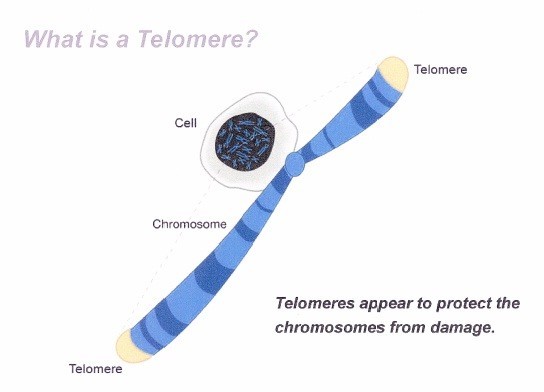
Telomeres are cell structures (like caps) that are attached to our chromosomes, and that appear to protect them from damage. Telomeres shorten through oxidation, which is associated with disease and aging. The enzyme telomerase serves to extend the length of the protective cap which protects the ends from fraying and degenerating. Further studies are being conducted to refine our understanding of aging process that results from the dysfunction of this system and of the mechanisms for reversing aging by turning the telomerase switch back on after it has been turned off.
Aging generally occurs when cellular DNA is so damaged that the cell cannot replicate and dies. Cells typically divide 50-60 times before they die, and research has shown that this can be extended by about 30%. Thus, it is estimated that life could be extended to about 125 years with healthy telomeres. It is interesting to note that cancer cells contain large amounts of telomerase, which perpetuates their survival and growth.
The condition of your telomeres is becoming an accepted measure of your overall health, and a much better predictor of health prognosis than cholesterol. Telomeres are tested with a simple blood test, which can be repeated annually to provide a clear picture of their evolution. The test evaluates the length and quality of the telomeres, and is predicted to become the most common and most accurate indicator of general health.
Causes of telomere shortening include oxidized LDL cholesterol, smoking, obesity, vitamin D deficiency, sleep deprivation, lack of estrogen for women, increased homocystine (an inflammatory marker), diabetes and insulin resistance, and oxidative stress. Diseases that are associated with shortened telomeres include hypertension, arterial stiffness, CHD/MI, aortic stenosis, cancer, vascular dementia, elevated CRP, increased IL6 (inflammatory and immune markers).
Who is at risk? All of us! Anyone who experiences stress. Yes, that's you and me! Then there those who are at higher risk. This includes people with the previously mentioned diseases, athletes (such as marathon runners and mountain climbers), menopausal women, business men and women in highly stressful positions, people who travel a lot, those with questionable autoimmune systems (increased IL6 and increased CRP), and anyone with poor sleep and high daily stress.
There are several things we can DO to improve our telomeres and slow the process of their decline. First, you can consider doing a TEST of your telomere levels and condition. You could also consider testing for lipid particles (inflammatory factors and types of fat particles) and for nutritional deficiencies to determine specific changes that would be helpful for you. Even though your cholesterol levels may appear to be normal on routine testing, fifty percent of such people will still have elevated risk of heart disease. At the microscopic level, their telomeres are being eroded, and their inflammatory factors and lipoproteins should be assessed.
Second, take a look at your DIET. Consider low glycemic eating and even caloric restriction. Caloric restriction has been shown to be the most effective way to extend life and minimize disease. It causes the body to feel mildly threatened, and triggers the body systems to strengthen our telomeres. Well-spaced meals and avoiding inflammatory foods is also important.
Third, use appropriate supplements. Healthy telomeres require ESSENTIAL MICRONUTRIENTS. In fact, we know that over 16 different nutrients are required for telomere support. Essential nutrients are those that the body cannot make for itself, and we thus must provide them through supplements and in some case foods. Sometimes even I can complain about taking so many supplements, but we can test levels of these nutrients by a blood test and determine what your specific deficiencies are. Antioxidants also play a role in the health of our telomeres.
Fourth, appropriate EXERCISE needs to be part of your daily routine. Strength training using peak intervals is a particularly great way to get what your telomeres need. Yoga and other stress management practices are also know to support telomere health and function.
Fifth, be sure your estrogen, ladies, is at an optimal level for your age. This acts as an antioxidant and anti-inflammatory and protects the telomeres. Only time will tell, but we will probably see the same kind of benefit from men keeping testosterone levels optimal.
Finally, there are two products that support healthy telomeres and that have been used since 2005 without any adverse effects. However, more studies need to be done to demonstrate the precise extent of their effectiveness. One of these, TA-65, is a proven telomerase activator that is made from a refined form of an ancient Chinese herb. Another product showing promise is a specially designed food powder called Product B available from the ISAGENX Company.
After your telomere testing, we can talk about which of these products might be worth trying as well as what lifestyle changes would support your telomeres and your health and longevity.
Once again, being proactive now can pay big dividends later. Telomeres are another piece of the picture!
To our optimal health in 2012!