|
 One of the comments we hear a lot at the Co-op is, "You have lots of interesting ingredients, but I don't know how to use them!" To help solve this issue, we're teaming up with the Village Book Store to bring you reviews of cookbooks worth a closer look! Each month they will review their favorite cookbooks for you, and of course you can head on down to the Village Book Store on Main Street to pick up your own copy! One of the comments we hear a lot at the Co-op is, "You have lots of interesting ingredients, but I don't know how to use them!" To help solve this issue, we're teaming up with the Village Book Store to bring you reviews of cookbooks worth a closer look! Each month they will review their favorite cookbooks for you, and of course you can head on down to the Village Book Store on Main Street to pick up your own copy!
 Aside from stealing cookies cooling on the table one morning, I don't have many strong food memories from childhood. My Mom had only two cookbooks, Betty Crocker and an old battered paperback from the local Rebekah Lodge, both strictly earmarked at the dessert section. In true 1970's fashion, my Mom worked and a lot of meals consisted of opening a can, pouring a mix or thawing a package. Aside from stealing cookies cooling on the table one morning, I don't have many strong food memories from childhood. My Mom had only two cookbooks, Betty Crocker and an old battered paperback from the local Rebekah Lodge, both strictly earmarked at the dessert section. In true 1970's fashion, my Mom worked and a lot of meals consisted of opening a can, pouring a mix or thawing a package.
My first real memory occurred as an adult and to this day, it makes me cringe. In my early twenties, on my own and in New York, I am in my boyfriend's kitchen making dinner with him. I see something on the shelf that intrigues me and ask him what it is. The answer: garlic. I had never seen real garlic. Chopped up and dried in a little bottle under my Mom's spice collection, yes, but the real thing had escaped me. His ability to keep a straight face and his sweet patience in showing me how to use garlic in cooking leads me to marry him later. But at that moment, I realized that, food wise at least, I was not prepared in any way for the life I wanted to live.
A few years later, I managed to get my hands on The Joy of Cooking. There are arguments as to which Joy of Cooking edition is the best, as there are currently three available to buy. The 1975 edition, written by Irma S. Rombauer and her daughter, Marion Rombauer Becker, is considered the standard of encyclopedic cookbooks. The 1997 edition updated by grandson Ethan Becker, is widely criticized for replacing the original folksy tone with a modern Martha Stewart-like efficiency. The 75th Anniversary edition, released in 2006, was an attempt to update the cookbook, but not lose the original spirit of the original authors. Mine is the 1997 edition, which is the year I bought it. Never knowing there was any alternative, it's become my handbook to making real food and is now a staple in my kitchen. I've become so emotionally attached to my book, with it's jacket long gone, spine broken and food stains along the pages, that I couldn't give up for another Joy, however wonderful they may be.
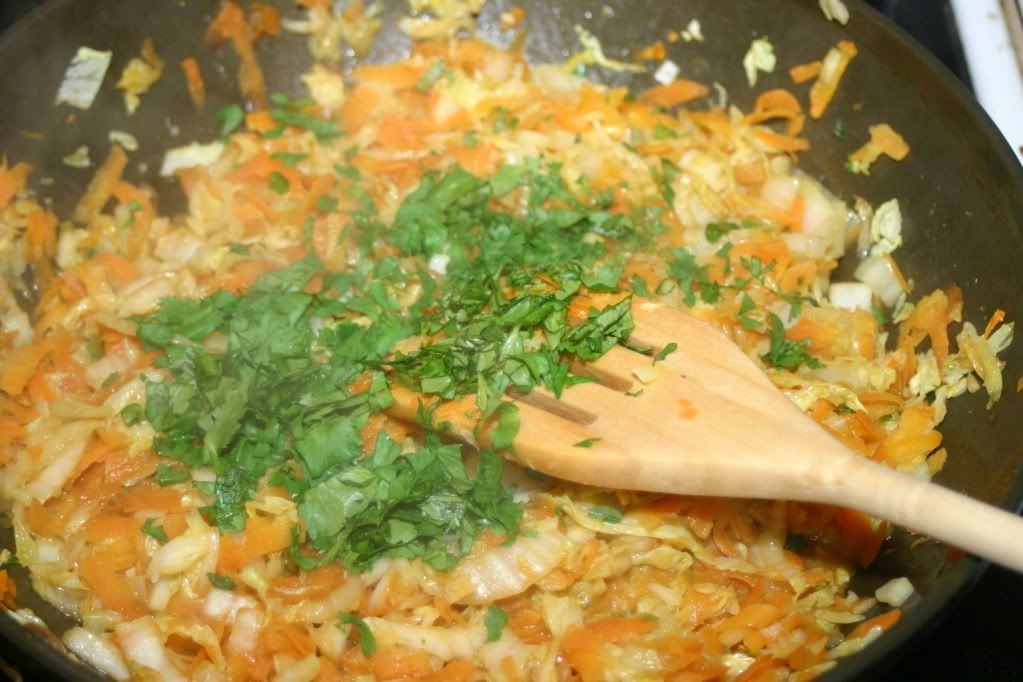 For a food novice like myself, who wants to move beyond the basics, Joy of Cooking is a revelation. More important than the recipes is the description of almost every food item imaginable and suggestions for how best to cook it. It gives you the confidence to try out new foods and to make the grocery store and the farmer's market an adventure instead of a chore. For example, once I picked up Napa Cabbage simply because it looked so wonderful. But I had no idea what to do with it once I got it home. So I opened up the Joy of Cooking to take a look and came up with a stir fry of Napa Cabbage and Carrots that has become a frequent dish in my house. I never tried homemade gravy until I had the Joy of Cooking by my side. Whenever a new cut of meat is purchased, out comes the Joy of Cooking to instruct me on the best way to prepare it. For a food novice like myself, who wants to move beyond the basics, Joy of Cooking is a revelation. More important than the recipes is the description of almost every food item imaginable and suggestions for how best to cook it. It gives you the confidence to try out new foods and to make the grocery store and the farmer's market an adventure instead of a chore. For example, once I picked up Napa Cabbage simply because it looked so wonderful. But I had no idea what to do with it once I got it home. So I opened up the Joy of Cooking to take a look and came up with a stir fry of Napa Cabbage and Carrots that has become a frequent dish in my house. I never tried homemade gravy until I had the Joy of Cooking by my side. Whenever a new cut of meat is purchased, out comes the Joy of Cooking to instruct me on the best way to prepare it.
Of course, I am my mother's daughter and the bread and sweets sections have seen quite a bit of use of the years as well. My weekend pancakes comes from the Joy of Cooking. And my holiday pumpkin cheesecake is from here too. (You can check it out here).
Many times, cookbooks are given as gifts, especially for weddings. I used to think that was old fashioned, but I now believe that, the gift of a cookbook can be an invitation to begin your food life as an adult. A good book, such as The Joy of Cooking, can be a way of forging your own path in the world and creating your own joyful food memories.
Review by Stacey Green Fish
Joy of Cooking Pumpkin Cheesecake
Crust: 1 cup graham cracker  crumbs crumbs 1/2 cup crushed ginger cookies, homemade or store bought 1 tablespoon white sugar 4-5 tablespoons melted butter
Pumpkin Cheesecake:
2/3 cup light brown sugar 1/2 teaspoon ground cinnamon 1/4 teaspoon ground ginger 1/8 teaspoon ground cloves 1/8 teaspoon ground nutmeg 1/4 teaspoon salt 2-8 ounce packages full fat cream cheese, room temperature 3 large eggs, room temperature 1 teaspoon pure vanilla extract 1 cup pure pumpkin puree (canned or homemade) Pumpkin Cheesecake: Preheat oven to 350 degrees F (177 degrees C) and place the oven rack in the center of the oven. Butter, or spray with a non stick spray, an 8 inch (20 cm) spring form pan.
Crust: In a medium sized bowl combine the graham cracker crumbs, crushed ginger cookies, sugar, and melted butter. Press the mixture evenly onto the bottom of the prepared pan. Bake 8-10 minutes or until set. Let cool.
Pumpkin Cheesecake: In a separate bowl, stir to combine the sugar, cinnamon, ginger, cloves, nutmeg, and salt.
In the bowl of your electric mixer (or with a hand mixer), on low speed, beat the cream cheese until smooth (about 2 minutes). Gradually add the sugar mixture and beat until creamy and smooth (1 to 2 minutes). Add the eggs, one at a time, beating well (about 30 seconds) after each addition. Scrape down the sides of the bowl and beat in the vanilla extract and pumpkin puree.
Pour the filling over the crust and place the spring form pan on a baking sheet to catch any drips. Place a cake pan, filled halfway with hot water, on the bottom shelf of your oven to moisten the air. Bake the cheesecake for 30 minutes and then reduce the oven temperature to 325 degrees C (160 degrees C) and continue to bake the cheesecake for another 10 - 20 minutes, or until the edges of the cheesecake are puffed but the center is still a little wet and jiggles when you gently shake the pan. Total baking time 40 - 60 minutes.
Meanwhile stir together 1 cup (240 ml) sour cream, 1 teaspoon pure vanilla extract and 1/4 cup (50 grams) white sugar. Spread the topping over the warm cheesecake and return the cheesecake to the oven and bake about 8 minutes to set the topping. Remove from oven and place on a wire rack to cool. Loosen the cake from the pan by running a sharp knife around the inside edge (this will help prevent the cake from cracking). Then place a piece of aluminum foil over the top of the pan so the cheesecake will cool slowly. When completely cooled, cover and refrigerate at least eight hours, preferably overnight, before serving.
Serves 10-12 people.
| 



 To kick off 2012, the Co-op is running a "New Year, New You" contest. Several of you responded to our invitation to submit a photo and brief story about your New Year's resolutions, and all entries are posted at the store. Co-op customers may select their favorite entries, with the winning resolutions earning exciting and healthy prizes from a slew of other local businesses to help get the New Year off to a healthy, happy start. Prize providers include Inner Truth Massage & the Healing Arts Studio, Nordic Naturals, Thyme to Learn Wellness, life coach Leah Carey, Evergreen Gym, and others! To view all the prizes or pick your favorite resolution, either visit us in the store or on


 This month we'd like to shine the Employee Spotlight on the Co-op's Grocery Manager, Jimmy Northrop. Jimmy has the grocery business in his blood and grew up working at his family's Northrop's Market in Lisbon. He also spent time at Riverview Market in Woodsville before coming to the Co-op as our store was getting started three years ago.
  As we begin the New Year, don't forget Co-op shoppers receive a 10 percent birthday discount on your special day - what a great excuse to get yourself something nice for your birthday! And our Senior Discount Day this month is January 11th.

 Journaler
 If you're longing for a sweet spoonful of summer, be sure to visit the store January 21st from 11 a.m.-2 p.m., when we'll offer free samples of Sweet Scoops Frozen Yogurt.
 February
 To help all the football fans recover from the Big Game, we'll have Tamar Smookler of Inner Truth Massage at the store February 6th giving a class on Self Massage Techniques. The relaxation begins at