STOP Obesity Alliance - Strategies To Overcome And Prevent
March 2012 Issue
IN THIS ISSUE
Alliance & Member News
News Round-Up

Greetings!

Addressing weight in the workplace - and what emerging research is showing about its effectiveness - continues to make news.  For example, the Washington Post just profiled the workplace wellness program at The Motley Fool that includes fitness classes, individual training sessions and healthy snacks.  We also saw recently an employee survey showed that nearly 43 percent of employees reported losing weight was their top health priority for 2012, a 10 percent jump from last year. 

It's good to see that we are moving in the direction of seeing weight as a health matter people are comfortable addressing in the workplace, and a priority matter at that.  But unfortunately, the focus is not always positive.  Yale's Rudd Center for Food Policy & Obesity has reported a 66 percent increase in "sizeism" or judging someone by their size in the workplace.  I'm actually participating in the Centers for Disease Control and Prevention's upcoming conference, Weight of the Nation, taking place in Washington in May where we'll explore this topic on a panel called, "Weight Bias and Discrimination: Treat Thy Neighbor as Thy Self."  I'll be discussing some research we conducted on wages - the differences are pretty astounding.

So, how can we balance the interest in addressing weight-related health issues in the workplace without penalizing employees or judging them on their appearance? 

For starters, we can help employers become better educated when it comes to how they can help their employees to both get and stay healthy.  Every year, we learn more about the factors that contribute to obesity - they're not as obvious as some might think.  We know that a combination of appropriate interventions from a healthcare perspective and a good preventive environment can go a long a way in overcoming these issues.  STOP Obesity Alliance research shows that employers know that weight-related issues are important to address and employees feel that the workplace is a good place to address them. 

One initiative that the Alliance sponsors each June is National Employee Wellness Month (NEWM), a program led by Virgin HealthMiles, which mission is to help business leaders develop successful strategies around prevention and good health.  NEWM underscores how supportive social communities such as the workplace can help improve employee health and productivity leading to lower healthcare costs and perhaps more importantly, sustain a workplace culture of health.  One of the benefits of NEWM is that it focuses on small changes such as forming a lunchtime walking group or adding healthy snack options in the cafeteria.  It is small, encouraging steps like these that can add up to make a big difference.

I encourage you to consider becoming a supporter of NEWM this June be a part of the movement to transform your workplace to an environment that makes the healthiest choice, the easiest choice.


Sincerely,


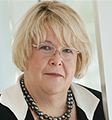
Christine C. Ferguson, J.D.
Director, STOP Obesity Alliance
Professor, School of Public Health and Health Services
Department of Health Policy
The George Washington University
Alliance & Member News

Several Alliance Steering Committee and Associate Members were featured in news stories this month including: 

 
New Report Examines Cost-Effectiveness of Preventing Obesity


The Campaign to End Obesity released a report, "Assessing the Economics of Obesity and Obesity Interventions," which argues that the costs of the obesity epidemic are not fully captured by the Congressional Budget Offices' current budgeting methodologies. Noting it may take much longer than 10 years for complications of obesity to manifest, the report advocates instead for a 25-year window for making policy decisions aimed at obesity and chronic disease.


Experts Discuss Approaches for Addressing Obesity in New Patient-Focused Resources


Experts from The Obesity Society, the American Society for Metabolic and Bariatric Surgery and Geisinger Obesity Institute discuss approaches for addressing obesity in new materials released by the American College of Physicians Foundation. The patient-focused educational materials and guides are available here.


Help OAC Collect 1,000 Signatures to Fight Obesity Stigma


The Obesity Action Coalition is asking Facebook to evaluate if pages that contain weight bias and discrimination against obese and overweight individuals are violating Facebook's abuse policy and guidelines regarding hate speech of a disease. Facebook pages in question include "Helping the Community by Chasing Fat Kids in Your Car to Fight Obesity," "Kidnapping Fat People with Forklifts" and others. Click here to sign the petition.


Joslin Diabetes Center Names New Executive Vice President


The Joslin Diabetes Center has named Dr. Rajni Aneja as its new executive vice president. Dr. Aneja will support initiatives including Joslin Everywhere, a web portal for doctors and patients to access Joslin research and educational tools, as well as Joslin Inside, an effort to provide other hospitals and health systems with guidance on their population of patients with diabetes. Click here for more information.


CRI to Present at Health Promotion Summit


The U.S. Department of Health and Human Services' Office of Disease Prevention and Health Promotion and the Association for Prevention Teaching and Research are hosting the 2012 National Health Promotion Summit: Prevention. Promotion. Progress. on April 10-11 in Washington, D.C. Canyon Ranch Institute's (CRI) Life Enhancement Program Manager Chuck Palm, MPH will present about the CRI Life Enhancement Program at the summit.


CCA Hosting First Capitol Caucus in April


The Care Continuum Alliance will host its first Capitol Caucus on April 18 in Washington, D.C. The caucus will bring together policymakers and population health management executives for a day of focused briefings on legislative and regulatory issues regarding wellness, prevention and care management. Click here for more information.

News Round-Up
News Round-Up

Which Doctors Are Happiest? Healthiest?

March 22, 2012
WebMD Health News
By Daniel J. DeNoon


According to Medscape/WebMD's 2012 Physician Lifestyle Report, more than one in three male doctors and over one in four female doctors report they are overweight.  Approximately five percent of male doctors and six percent of female doctors disclosed they were obese.  The survey conducted for this report was fielded to more than 29,000 doctors representing 25 specialties.


Parents Should Lead By Example in Weight Loss, Study Finds

March 22, 2012
HealthDay
By Robert Preidt


A study published in the journal Obesity found that parents' weight loss was the only significant predictor of children's weight loss.  The study's authors said the research confirmed the importance of parents setting an example and establishing healthy eating and exercise behaviors for their children.


More Obese People Have Joint Pain, Heart Conditions

March 20, 2012
USA Today
By Nanci Hellmich


Obese adults are significantly more likely to report having joint pain, heart conditions, high cholesterol and diabetes than people at a healthy weight, according to a survey conducted by the Agency for Healthcare Research and Quality.  Nearly 58 percent of adults who are obese said they suffered from joint pain, whereas only 40 percent of people at healthy weight reported pain.


Work Burnout Tied to "Emotional Eating" in Women: Study

March 13, 2012
Reuters
By Amy Norton


Women experiencing burnout from their jobs may be more likely to turn to food for comfort, according to a study published in the American Journal of Clinical Nutrition.  Study researchers reported these women were more prone to emotional eating or eating when stressed, anxious or depressed, even when they are not hungry.  Study researchers recommended these women address sources of stress first, followed by eating behavior counseling during obesity treatment.


Fat-Bashing: An Acceptable Prejudice?

March 12, 2012
The Huffington Post
By Kristen Houghton


Author Kristen Houghton writes about the prevalence of "fat-bashing" in society and provides examples of it in pop culture including television shows "Mike and Molly" and Kirstie Alley's "Fat Actress," as well as a recent Quizno's advertisement and a PETA billboard.  Houghton notes that while stereotypes related to racism and sexism seems to have decreased over time, there is little evidence that fat stigmatization has declined.  She questions why it is accepted and why little is done to fight it.


Gain Together, Lose Together: The Weight Loss 'Halo' Effect

March 12, 2012
NPR
By Patti Neighmond


Two recent studies suggest that support groups such as family members, friends and co-workers can help individuals lose weight.  A study published in the Archives of Surgery found that family members lost as much as five percent of their initial body weight after one member underwent bariatric surgery.  Another study published in the journal Obesity reported that among individuals enrolled in a team-based weight loss competition, those who lost the most weight were on the same team, suggesting the importance of support groups for weight loss.

The content on these web pages is intended for educational and informational purposes only and is not designed to replace medical advice or professional medical services. The information should not be used as a substitute for the medical care and advice of your physician. Medical decisions should be made in consultation with your qualified health care provider. There may be variations in treatment that your health provider may recommend based on individual facts and circumstances.
Twitter
FOLLOW US ON TWITTER
Facebook
VIEW OUR FACEBOOK PAGE
Copyright © 2012 STOP Obesity Alliance. All Rights Reserved.