|
|
 |
Greetings! This month marked the release of the F as in Fat report from Trust for America's Health and the Robert Wood Johnson Foundation. I wish I could say the numbers were surprising, but they weren't. What is it about this issue that has made it so intractable? Not long ago, Dr. Richard Carmona, our health and wellness chairperson, noted, "We've reached the tipping point on obesity in the United States. Obesity now impacts every aspect of our lives, including the future of our health care system." Few disagree. We are a nation of innovators, but there is something about obesity that has us stalled. Generally, the first step in confronting an issue is agreeing on the problem. In this case, the facts are clear. The annual F as in Fat report has helped establish the magnitude of obesity in America. Adult obesity rates increased in 16 states in the past year and did not decline in any state, according to the report. Added to this are the many reports that quantify the financial burden, as much as $147 billion a year in health care costs, according to some estimates. And last year, our team at George Washington University also calculated the annual personal cost of obesity at $4,879 for women and $2,446 for men. For women, much of that cost comes from lost wages. While it's critical to continue research on the prevalence, financial burden and impact on productivity of obesity, I feel confident that there is wide-scale acceptance of the problem and the magnitude of its impact on us individually and as a country. To many, America and innovation are synonymous. Our history is replete with examples of applying American ingenuity to tough challenges. We see it in technology, in education, in energy. Are we lacking innovation - or even innovative thinking - in solving our health and weight challenges? It may be that the biggest barrier to developing and adopting innovative solutions is the continued intense debate on why we reached the levels we have today and who is responsible - with a heavy emphasis on personal responsibility. I think we would be better off turning our attention to answers and approaches, focused on both prevention and treatment, that might finally help us turn the corner. Because, regardless of how we might answer the "why" and the "who," I think it is long past time to start thinking about "what" we are going to do. Certainly innovation is something we at the STOP Obesity Alliance have been thinking about since we first began our work. In fact, one of our foundational recommendations focuses specifically on encouraging innovation and the need to explore multi-factorial interventions to strengthen the system of care for overweight and obesity. We recommend: encouraging innovation around treatments, intervention and disease management with support from employers, insurers, and other payers; supporting efforts to train health professionals, in order to develop and disseminate best practices; identifying and disseminating successful or promising practices for interventions; and encouraging governmental and non-governmental entities to focus on translating the research on obesity management into recommendations for best practices in the care of obese and overweight individuals. And since we know that the work to stop obesity cannot end with personal responsibility, the Alliance also is dedicated to creating greater consensus that overcoming obesity requires environments where people have opportunities to make healthful choices. On this, I was very pleased to see the major announcement by the First Lady and the large retailers that are pledging to bring stores with healthful food options into neighborhoods that have historically lacked access to fresh groceries. This is innovative thinking. And we need more of it. |
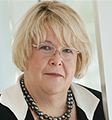 Sincerely, Christine C. Ferguson, J.D.
Director, STOP Obesity Alliance
Professor, School of Public Health and Health Services
Department of Health Policy
The George Washington University |
Alliance & Member News
|
|
|
|
|
| |
Several Alliance Steering Committee and Associate Members were featured in news stories this month including:
- Alliance Clinical Advisor Scott Kahan, M.D. and Trust for America's Health in Washington Examiner, "D.C. Adults 'Fitter' as Nation Plumps Up."
- American Diabetes Association in MedPage Today, "ADA: Public Knows about Diabetes, Takes No Action."
- American College of Sports Medicine in USA Today, "A Little Bit of Exercise Makes a Big Difference" and Fox Business, "Exercise: the New Doctor's Orders."
- American Heart Association in The Hill, "Research Funding at Top of Mind for New Heart Association President."
- Trust for America's Health in USA Today, "Americans Continue to Pack on the Pounds."
- Centers for Disease Control and Prevention in The Wall Street Journal, "New Govt Report on Child Welfare Presents Mixed Picture," and Bloomberg, Obesity Rate Is at Least 30% in 12 U.S. States Led by the South, CDC Says."
- Rebecca Puhl, Ph.D. in Prevention, "When Your Doctor Makes You Feel Fat," and The Boston Globe, "Weight of Public Opinion."
Alliance Leadership to Speak at Obesity and Wellness Congress
The 6th Annual Obesity and Wellness Congress, taking place September 21-23 in Vienna, VA, will include panel discussions, networking opportunities, and distinguished leaders in health and wellness, including STOP Obesity Alliance's Christine Ferguson and Scott Kahan, M.D. If interested in attending, register online or call 800-767-9499 with PROMO CODE STC998 to receive a discount. Click here for more information.
Aspen Institute Unveils Diet Documentary
On Monday August 8, in Aspen, Colo., The Aspen Institute will premiere Forks over Knives, a documentary examining the benefits of a whole foods, plant-based diet. Dr. T. Colin Campbell, a nutritional scientist from Cornell and Dr. Caldwell Esselstyn, a former top surgeon at the Cleveland Clinic will also be on hand to present their research which shows that eliminating animal-based products and processed foods can prevent heart disease, type 2 diabetes and some forms of cancer. Click here for more information.
2011 Rocky Mountain Eating Disorders Conference
The Binge Eating Disorder Association will host the 2011 Rocky Mountain Eating Disorders Conference in Denver, Colo. on August 19 and 20. Experts in the field of eating disorders treatment will discuss trends, developments, and best practices in the industry. Click here for more information.
Diabetes Sisters Quarterly Gathering
Diabetes Sisters will hold its Quarterly Gathering on August 20 in Raleigh, N.C. Attendees will hear from an educational speaker on gender-specific topics related to diabetes management and network with other women with diabetes. Click here for more information.
Martin Luther King, Jr. Health Equity Summit
The Institute for the Advancement of Multicultural & Minority Medicine will hold its "Martin Luther King, Jr. Health Equity Summit" in Washington, D.C. on August 22-23. Speakers will include leaders from HHS, the Robert Wood Johnson Foundation and prestigious universities. They will cover topics including health disparities, equity and progress, and health reform. Click here for more information.Martin Luther King, Jr. Health Equity Summit
IASO Re-Launches SCOPE
This fall, the International Association for the Study of Obesity (IASO) re-launches the Specialist Certification in Obesity Professional Education (SCOPE) program. SCOPE is IASO's official obesity education program designed for all health care professionals. The re-launch marks a change from the program's web-based textbook format to an interactive e-learning environment. Click here for more information and to try the SCOPE learning module on the Epidemiology of Obesity & Chronic Disease.
The Care Continuum Alliance Forum
The annual meeting of the Care Continuum Alliance will take place from September 7-9 in San Francisco, Calif. Keynote speakers include Ceci Connolly, Senior Advisor at the McKinsey Center for U.S. Health System Reform and former Washington Post health policy correspondent and David Lansky, Ph.D., President and CEO of Pacific Business Group on Health. Click here for more information. |
News Round-Up
|
|
|
|
|
Enough about Health Care, Focus on Health
July 20, 2011
The Hill
Chris Viehbacher
Chris Viehbacher, CEO of sanofi-aventis, writes that the costs of chronic diseases don't simply break down to dollars and cents, but patients with these conditions have a marked drop in quality of life.
Retailers to Bring Fresh Produce to 1,500 Places
July 20, 2011
Bloomberg Businessweek
Darlene Superville
Company executives, including those from Wal-Mart, Walgreens and Supervalu, are teaming up with the Obama administration to open or expand 1,500 stores in areas without broad access to fresh produce and other healthy foods.
Poll: Obesity Hits More Boomers Than Others in US
July 18, 2011
Associated Press (posted on Fox News.com)
Lauran Neergaard
A poll conducted by the Associated Press-LifeGoesStrong.com found that baby boomers say their biggest health fear is cancer. Though, heart disease should be of concern as well. The poll found that boomers are more obese than other generations, setting them up for unhealthy senior years ahead.
Should Parents Lose Custody of Super Obese Kids?
July 12, 2011
Associated Press (posted on NPR.org)
Lindsey Tanner
A controversial piece in the Journal of the American Medical Association said the government should be allowed to remove extremely obese children from their parents' homes and put them in state-based foster care on the basis that it is in the child's best interest. | |
City vs. Country: Who Is Healthier?
July 12, 2011
The Wall Street Journal
Melinda Beck
The County Health Rankings, a research project that issued its second annual report of state-by-state comparisons of health measures in every U.S. county, found that rural residents are more likely than other Americans to be obese, sedentary and smoke cigarettes. |
|
|
The content on these web pages is intended for educational and informational purposes only and is not designed to replace medical advice or professional medical services. The information should not be used as a substitute for the medical care and advice of your physician. Medical decisions should be made in consultation with your qualified health care provider. There may be variations in treatment that your health provider may recommend based on individual facts and circumstances.
|
|
 |
|
|
|
|
|
|
Copyright © 2011 STOP Obesity Alliance. All Rights Reserved.
|
|
|
|