Example Image
January, 2010

Letter From The Director
,
 
Earlier this month, those of us who follow public health, chronic disease and obesity news woke up to a startling announcement from the Centers for Disease Control and Prevention (CDC)The agency released new data showing that the growing obesity epidemic in America may have stopped, well, growing.  The data revealed that obesity rates remained constant for a long enough period of time for some experts to say that the percentage of obese people might have leveled off.
 
Is this cause for celebration?  Not quite.  Even if the numbers have leveled off, they have done so at very high rates - 34 percent of adults and half as many children are still considered obese.  This is more people than at any other time in our nation's history.  And as obesity rose, this chronic disease gateway gave way to increasing levels of diabetes and cardiovascular disease.  So, while this CDC report may seem promising, there is more work to do on a number of fronts.
 
Dr. William Dietz, Director of the CDC's Division of Nutrition, Physical Activity, and Obesity and member of the STOP Obesity Alliance, struck the right balance when he said that the nation is
"at the corner" but hasn't turned the corner on obesity.  He went on to say in a New York Times story that, "I don't think we have in place the kind of policy or environmental changes needed to reverse this epidemic just yet."
 
I couldn't agree more.  But as we look ahead, it's important to ask ourselves: If obesity rates have indeed reached a plateau, how do we avoid hitting a wall on progress? 
 
This is a tough question, with no single - or simple - answer.  While I believe that progress must start with the right policy and environmental changes, we must also change the way we talk about obesity - with policymakers, with our doctors, and with each other.  That's why the Alliance is taking on the challenge of shifting the dialogue surrounding overweight and obesity in ways that support these broad changes. 
 
As a first step, the Alliance is working to change the rhetoric that obesity is simply about appearance into the understanding that it is instead about health.  We are also dedicated to debunking the myth that overcoming obesity is solely a matter of good personal choices and moving toward an understanding that overcoming obesity requires good personal choices in environments where those choices are possible.  In other words, there is only so much that any one of us can do on our own.  As I read recently in the
Wall Street Journal, overcoming obesity might "take a village."
 
Thinking about the possibilities of changed policies and environments has helped kick-start my New Year's resolution of continuing to spread the word about the importance of approaching obesity from the perspective of better health. 
 
Already, we can see changes on Capitol Hill, in the media and in doctors' offices.  The new Surgeon General's Report on the health of the nation released just this week is another place where we see change.  But, we need more action and we need it now.  With our continued commitment and dedication to this cause, we can build the "villages" necessary to ensure that obesity doesn't just level off in America but that, at long last, it takes a real and sustained turn downward. 

 
Sincerely,

Christine C. Ferguson, J.D.
Director, STOP Obesity Alliance
Research Professor
School of Public Health and Health Services
Department of Health Policy
The George Washington University
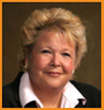
Christine Ferguson
In This Issue
Alliance & Member News

News Round-Up


Alliance & Member News

STOP Obesity Alliance Director Weighs In on "The Biggest Loser"
In response to the season premiere of "The Biggest Loser," Alliance Director Christine Ferguson compares the conflicting "reality" of the hit show to the much more complex experiences of obese Americans on the Alliance's blog "Weighing In."  She also explores the need to shift the view of obesity from a cosmetic issue to an important health issue that requires a community effort to see progress.  Click here to read her full commentary.
 
Alliance Welcomes New Associate Members
The STOP Obesity Alliance recently welcomed the Association of Clinicians for the Underserved, American Dietetic Association, and Society for Women's Health Research as its newest Associate Members.  Click here for more information on these and other Alliance Associate Members. 
 
Alliance Members in the News

Jeff Levi, executive director of Trust for America's Health, appeared on NPR: All Things Considered on January 14, 2010 to provide insight and commentary on the provisions in the Congressional health reform bills that address obesity.  William Dietz, Centers for Disease Control and Prevention(CDC), appeared in a New York Times article, "Obesity Rates Hit Plateau in U.S., Data Suggest" providing comments on a newly published CDC study that shows obesity rates are leveling off.  The American Society of Bariatric Physicians (ASBP) released a statement that appeared on Medical News Today that advises people trying to lose weight on how to communicate with their physician.  Among this advice are questions on conditions that prohibit weight loss, insulin resistance, hypothyroidism, vitamin D levels and readiness for exercise.
  
NQF to Host 2010 Spring Membership Meeting & Policy Conference
The National Quality Forum's (NQF) 2010 Spring Membership Meeting & Policy Conference, "Beyond Reform: Healthcare Quality's Next Chapter," will be held March 3-4, 2010 in Baltimore, Md.  Speakers will address, among other topics, the implications health reform will have on quality, cost and coverage, and the potential of healthcare IT to measure and improve quality and patient outcomes.  Click here for information about registration.
 
AHIP to Host 2010 National Policy Forum
America's Health Insurance Plans (AHIP) will host the 2010 National Policy Forum on March 9-10, 2010 in Washington, D.C.  The event will provide a forum to discuss major changes in the financing and delivery of health care, more specifically the issue of providing affordable coverage and quality care for all Americans.  Attendees will include health insurance plan leaders, health policy experts and opinion-shapers, as well as speakers from the medical, business and political arenas.  Click here for registration information.
 
NBGH to Hold Business Health Agenda 2010
The National Business Group on Health's (NBGH) annual corporate health benefits conference, Business Health Agenda 2010: Redesigning Benefits and Health Care in an Era of Reform, will be held March 10-12, 2010 in Washington, D.C.  Additionally, the NBGH's "Employers' Summit on Health Care Costs and Solutions" will immediately precede Business Health Agenda 2010 and will feature sessions focusing on the innovative practices that executives are using to control costs in 2011.  Click here for registration information about each event.
 
AMGA to Host 2010 Annual Conference in March

Leaders from various industries across the United States will gather in New Orleans, La. for the American Medical Group Association's (AMGA) 2010 Annual Conference March 17-20, 2010.  The conference is designed to help medical professionals meet the challenges of the potential health care reform bill.  Keynote speakers include Dr. Atul Gawande, a noted surgeon, professor and writer; Bill George and Dan Heath, two bestselling authors; and, Kenneth Novack, the retired vice chairman of Time Warner.  The conference will also feature peer-to-peer breakout sessions led by executives from the nation's top health care delivery systems, designed to help professionals better lead their organizations and provide the highest quality care to their patients.  Click here for the brochure and registration information.
 
NHMA to Host 14th Annual Conference in Washington, D.C.

The National Hispanic Medical Association (NHMA) is hosting its 14th Annual Conference "Health Care Transformation to Expand Prevention and Health Promotion for Hispanic Communities" on March 25-28, 2010 in Washington, D.C.  Workshops will cover everything from health professions education, health reform policy, Hispanic health research and clinical updates.  Click here for more information and to register for the event. 
 
AHA Launches National Campaign to Improve Heart Health
The American Heart Association (AHA) has launched a national campaign to improve heart health and lifestyle behaviors by defining an "ideal cardiovascular health."  The Association created the definition in efforts to achieve a new national goal of improving the cardiovascular health of Americans by 20 percent, with a corresponding 20 percent reduction in death from cardiovascular disease and stroke by 2020.  To help people improve their heart health, AHA has developed a new online resource, "My Life Check," that identifies seven goals for ideal health and additional tools and information that offer specific action steps to improve the measurements and track personal progress toward better health. 
 
DMAA Publishes Fourth Volume of Outcomes Guidelines Report
DMAA: The Care Continuum Alliance (DMAA) recently published a fourth volume of its industry-consensus guidelines for measuring wellness and population health management program outcomes.  Click here to download the guidelines from the DMAA Web site.

OAC Launches National Weight & Health Awareness Campaign
The Obesity Action Coalition (OAC) officially launched "Your Weight Matters," a national awareness campaign aimed to encourage the American public to assess and speak to their doctor about their weight.  The goal of the campaign is to get Americans to start looking at weight and its impact on their health and the health of their loved ones.  Click here for more information, including downloadable public service announcements.
 
SEIU Launches Online Ads Urging Congress to Pass Child Nutrition Act
The Service Employees International Union (SEIU) has launched online banner ads that urge reauthorization of the Child Nutrition Act, a federal law created to help meet the nutritional needs of children.  The ads, which can be found on Politico.com, RollCall.com and TheHill.com, will link to a site where users can learn more about child nutrition reauthorization and contact their members of Congress.  Click here to view the advertisement. 

News Round-Up
January 28, 2010
Associated Press
*Link goes to article pick-up by The New York Times

First Lady Michelle Obama framed her national campaign against childhood obesity in personal terms by relating that her own daughters were starting to get off-track before the family's pediatrician gave her a wake-up call.  The First Lady appeared with Surgeon General Regina Benjamin and Health and Human Services Secretary Kathleen Sebelius at an event to announce their plans to help Americans lead healthier lives through better nutrition, regular physical activity and by encouraging communities to support healthy choices.  Additionally, Surgeon General Benjamin released a report that serves as an update to a 2001 Surgeon General's report that was a call to action against obesity.  Click here to access the Surgeon General's 2010 report.
 
Reform Provision Would Require Providers to Buy Testing Equipment for Obese Patients
January 14, 2010
HealthLeaders Media
Cheryl Clark

 
Provisions in the latest version of the Senate's health reform bill could lead to an enormous increase in the cost of medical diagnostic equipment for physician's offices, clinics and hospitals, in part to accommodate the obese or morbidly obese.
 
Obesity Rates Hit Plateau in U.S., Data Suggest
January 13, 2010
The New York Times
Pam Belluck

 
According to data released by the Centers for Disease Control and Prevention and published in the Journal of the American Medical Association, Americans may have reached their peak of obesity. The numbers indicate that obesity rates have remained constant for at least five years among men and for closer to 10 years among women and children - long enough for experts to say the percentage of very overweight people has leveled off.  
 
Psychotherapy May Help Teen Girls Avoid Obesity
January 9, 2010
HealthDay
*Link goes to article pick-up by BusinessWeek

 
A psychotherapy program may work better than traditional health classes in preventing teenage girls at risk of obesity from gaining more weight, researchers report.  The study, published in the International Journal of Eating Disorders, shows that a program focused on improving interpersonal relationships by targeting the underlying social and interpersonal difficulties that influence individuals to engage in maladaptive behaviors might be beneficial to teen girls.  
 
January 7, 2010
Associated Press
*Link goes to article pick-up by USA Today

 
Scientists are developing wearable wireless sensors to monitor overweight and obese people as they go about their daily lives in efforts to get an inside look at eating and exercise habits.  The experimental devices are designed to keep track of how long people work out, how much food they consume and whether they are at a fast-food restaurant when they should be exercising.  
 
Obesity 'Now a Bigger Threat than Smoking'
January 5, 2010
The Independent
Jeremy Laurance
 
According to researchers from Columbia University and the City College of New York, obesity has surpassed smoking and is now a bigger threat to people's health.  Researchers have predicted for years that as the incidence of obesity increased, the damage done would outrank that of smoking.  
 
The Hidden Benefits of Exercise
January 5, 2010
The Wall Street Journal
Laura Landro

 
A growing body of research is showing that regular exercise-as simple as a brisk 30- to 45-minute walk five times a week-can boost the body's immune system, increasing the circulation of natural killer cells that fight off viruses and bacteria.  
 
How Childhood Trauma Can Cause Adult Obesity
January 5, 2010
TIME
Maia Szalavitz

 
A 2007 study of California women found that those who had been abused as children were 27 percent more likely to be obese as adults, compared with those who had not.  Another study conducted in 2009 among adolescents found that sexual abuse in childhood raised the risk of obesity 66 percent in males in adulthood.  These discoveries have helped give rise to broader work linking stressful experiences early in life to effects on health and behavior later on in life.
 
January 3, 2010
The Los Angeles Times
Shari Roan

 
Technological advancements are turning weight-loss surgery into a one-hour, incision-less procedure.  These advancements are making the surgery more attractive to moderately overweight adults, overweight and obese teenagers, and normal-weight people with difficult-to-control diabetes.  Physicians who perform the procedures say the surgery is a form of early intervention that can help prevent medical problems, such as diabetes, associated with carrying significant excess weight
Follow STOP Obesity Alliance on Twitter and Facebook.
GWU School of Public Health and Health Services

The Strategies to Overcome and Prevent (STOP) Obesity Alliance receives funding from sanofi-aventis U.S. LLC, founding sponsor, and Amylin Pharmaceuticals, Inc., supporting sponsor.

Footer Disclaimer