Views of the Vis
Supporting Your Quest for Optimal Health
April 2010
In This Issue
What is the Vis?
Looking Ahead
To Ponder...
2nd Tuesdays
Moving!
Odds 'n Ends
"Of the Month"
water drop

Continuing our discussion of the various modalities used in naturopathic medicine, this month we'll talk about hydrotherapy.  Like plants, water has long been used to assist in healing. 
  For what we would consider "modern" hydrotherapy, we trace history back to Europe in the 17th and 18th centuries.  Vincent Priessnitz was one of the first to use water as a healing method with stunning and widespread success.  Fr. Sebastian Kneipp was another who directly taught the American founders of naturopathy in the late 1800s.  Much of what was historically used was cold water treatments - including walking barefoot in early morning dew (still a great idea)!  But natural hot springs, saunas and alternating hot and cold all had their champions as the field developed. 
   Water has some unique characteristics that make it so helpful in stimulating the body's ability to heal.  Probably the most important is its ability to absorb and give off heat.  This is important in all three states of matter - liquid, ice and steam - and each form of water has something specific to offer.  Water is also a decent conductor of heat.  Another handy thing about water is that it's so bendy!  We can pretty much apply it wherever it's needed (with some exceptions for ice!)
   When we use hydrotherapy for the promotion of health, there are important considerations that must be made.  The application of hot and cold water have very different impacts on circulation and metabolism.  These must be understood in general, and in the specific context of a particular condition that hydrotherapy may be used for.  This allows for the maximum positive results - and prevents undesirable effects that may result from inappropriate temperature choices.
   Hydrotherapy lends itself well to home use and can play an important part in your home remedy arsenal!  Probably everyone has used an ice pack at some point.  Applied ice over 15-30 minutes ultimately restricts circulation, decreases metabolism and pain along with swelling and congestion. They may be helpful for sprains, toothaches, headaches, insect bites, bruises and acute joint inflammation.
   Hot foot baths are another application easy to do at home.   They may help congestion headaches and other congestion, fatigue, or chills.  Soaking the feet and ankles in hot water for 10-30 minutes changes circulation to favor blood in the feet so relieving congestion elsewhere.  It also tends to increase metabolism.
   In the WellSpring office, constitutional hydrotherapy is offered to promote an individual's overall vitality.  A series of alternating hot and cold applications stimulates circulation and the immune system, calms the nervous and digestive systems and promotes detoxification. 
   There are many other ways to use hydrotherapy - steams (inhalation or bath), cold or warming compresses, sitz baths, neutral baths, enemas, fomentations....  Sometimes the addition of herbs or minerals to the water packs an extra punch for a treatment. 
   Hydrotherapy is a simple, yet very powerful intervention.  I believe it is under-utilized, possibly because it takes time and who takes time in our society today?  Why mess with alternating hot/cold foot baths when an aspirin will take away the pain and I can keep doing my other tasks at the same time?  In my view, because it's healthier in the long run to support and encourage the body to heal itself.  And because quite possibly part of the problem is that we DON'T take time!  Slowing down and giving the body some time and attention will help resolve problems that are aggravated by ignoring and pressing onward. 
   And while this kind of hydrotherapy isn't really discussed in "hydrotherapy" texts, I'll take the chance here to remind us all to drink more water!  Many of us walk around in various states of dehydration.  Every time you walk by a drinking fountain, stop and take a drink.  Carry around a water bottle - and use it!  Drink a full glass right when you get up in the morning.  Drink water!
   J. S. Coulter was an advocate of hydrotherapy and other physical therapeutics in medicine in the early 1900s.  He said at that time, "The history of the use of water as a remedy serves to direct attention to an attitude of the medical profession which still persists, a simple agent such as water, which is cheap and easily available, is often neglected for a complicated system of therapy which is not so effective."  Amen! 
  

   * * * * *

What is
The Vis?

bumblebee

a) Latin word for power
b) A foundation of naturopathic medicine
c) Word rhyming with bees
d) All of the above

The correct answer is d!

"The Vis" is, in naturopathic medical circles, short for the Latin, "Vis Medicatrix Naturae," which translates to the Healing Power of Nature.  It is at the very core of naturopathic medicine and what sets it apart.  The Vis is our body's own innate intelligence that strives every minute of every day to keep the body in a perfect balance of health and function. 

Quick Links...

WellSpring Naturopathic

MANP

Vital Choice Salmon Source

Vis Newsletter Archive
Looking Ahead

Mon/Wed - Office closes at 2pm until May.

April 13, 2010
2nd Tuesday Program
"What's Age Got To Do With It?"
To Ponder....

We need men who can dream of things that never were, and ask why not.

- George Bernard Shaw

Greetings!

April marks WellSpring's 2nd anniversary in Midland!  When we left Michigan in 2003, we had no intention of returning.  But the pull of home was strong and we are so happy to be here.  I had intended to have an open house to celebrate, but instead I've bought a building and when the renovations are done, we'll celebrate 2 years and a new home together!  Stay tuned!
2nd Tuesdays Program

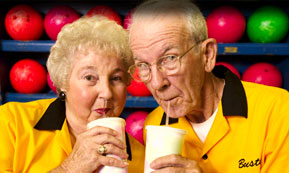
What's Age Got
To Do With It?

April 13, 7-9 p.m.


Anti-aging everything - including medicine - is big news and big money these days.  Our society in general has a real obsession with youth and beauty that is virtually impossible to ignore.  Is it really possible to slow down or reverse aging?  Does it have anything to do with our health? 

Join us to look at the biological theories and processes of aging, consider what's normal - or not - and for who, and what things might help as we tally up those birthdays!

Years Young

Classes are free, but space is limited, so please call or email to reserve your spot!  989-633-0025
WellSpring's Moving!

So here's the big news!!!  We are scheduled to close on a new property in the next couple days and we'll soon begin renovations to provide some really exciting new services in addition to the ones currently available.  You've probably driven by our new home at the corner of Washington and Ashman (now minus the snow!) 
Property
The WellSpring office will move into the larger house just off the corner.  An expanded natural pharmacy will offer excellent quality herbal medicines, supplements and other health-related products.  A library and tea area will provide information and inspiration.  Plans for an herb garden are on the horizon.  We plan to move this part of  the practice by May 1.

The building right on the corner that has been a barber shop for decades is being converted into classroom and yoga studio space.  No more squeezing into the little room for 2nd Tuesdays!  There are great things planned for this space - you'll want to keep watch for the schedule of events coming soon.

It's my goal to provide WellSpring patients and friends with the information and products they need to optimize their health and well-being in an environment that is comfortable, welcoming, and joyful.  I am confident this new space will work itself into just that! 
Odds 'n Ends

FEDERAL LEGISLATIVE UPDATE.  Good news!  The supplement legislation introduced by John McCain that I referenced last month has been withdrawn.  There was quite an uproar about it and it looks like we can settle down about that part for the time being anyway!
   Additionally, there are some positive things for the naturopathic profession in the recently passed Health Care Reform bill.  We won't see any direct change right now in Michigan because of it, but one important piece is a component that will not allow insurance companies to discriminate against health professions licensed in their state.  That is excellent news for those in licensed states, and will have an impact once Michigan joins that group.  There are also parts of the bill that encourage, and even fund, some programs that emphasize healthy lifestyles and prevention of disease.  Alternative and complementary medicine was included in language regarding WorkForce Development and Comparative Effectiveness Research.  We are far from where we need to be, but the profession continues to strive for better recognition - and better health for all.

NUTRITION CLARIFICATION. In the handout from Feb & March's 2nd Tuesday Nutrition 101 class, the suggestion for the amount of protein based on your body weight is per DAY, not per MEAL.  It IS important to have protein at every meal, but not that much!  
"Of the Month"
For April you get a chance to be inside my head and see how my free association logic runs sometimes.  I was thinking about a topic for this month and with April, April Fool's Day popped into my head.  That doesn't have much to do with health (although we have discussed the very healthy habit of laughing).  But next up popped Fool's Gold - also not a lot to do with health - but its "real" name is Iron pyrite and that led to thinking about just plain old iron which DOES have something to do with health!  At last!  Our "Of the Month" topic for April is iron!

IronIron is one of the most abundant elements on earth, although it is rarely found in a pure form there.  A little over 5% of the earth's crust is iron and nearly all of its core is iron.  It is found in the sun and stars and is a major component of a type of meteorite called a siderite.  In fact, the picture here is of a meteorite made primarily of iron.  We commonly know iron mostly as a hard metal in steel and other alloys and in our cast iron skillets.

That same iron, element number 26 on the periodic chart, is also a critical piece of human health.  Iron was first recognized as a constituent of the body in 1713 and then as a dietary essential in the 1860s.  There are only two oxidation states of iron that are stable in the body - the ferric (Fe3+) and ferrous (Fe2+) forms - which only matters to the chemistry buffs out there.  It comes in as Fe3+, but is quickly changed to Fe2+ for absorption.  There are between 2 and 4 grams of iron in us at any given time and in a healthy person, over 65% of the iron is traveling through the bloodstream in hemoglobin.

Functions of Iron.  The biochemistry of iron usage in the body is incredibly complex!  The biggest use of iron is in the bone marrow in the production of heme.  Iron in the central atom in this structure which is responsible for oxygen delivery to tissues (as hemoglobin), storage of oxygen in muscle (as myoglobin), and also the electron transfer in the cytochrome production of energy. 
   Additionally, iron is a component of several enzymes in the body that are responsible for a variety of functions including synthesis of  amino acids, conversion of Vitamins A and B3, liver function and functioning of the immune system. 
  
Sources & Availability of Iron.  Dietary iron is found in one of two forms - heme and non-heme.  Meat, fish and poultry contain a little over 50% of the heme form.  Plants only contain the non-heme form. some of the higher vegetable iron levels are found in tofu, Swiss chard, lentils and amaranth.  And black strap molasses!  Dairy also has the non-heme form and is not a good source of iron.  Both forms of iron are poorly absorbed, but the non-heme form is even less well absorbed.  This is partly because it is attached to other compounds and must be broken down further to become available.  In general, only 10-20% of dietary iron is absorbed by the body.  The rest you just flush away.  It is interesting that the absorption of iron is inversely related to the amount of iron stores in the body.  In other words, the more iron we have stored, the less iron will be absorbed - and vice versa.  All the intricacies of this feedback loop are not fully understood, but it is surely a protective mechanism.  Excess iron in the body is detrimental, sometimes life-threatening, so it makes sense that if we already have enough, we wouldn't want to take in any more!  However, it is IMPORTANT to know that excessive flooding the body with iron CAN overcome the resistance to absorption and result in very real problems.  More on that to come....
   Enhancing absorption.  Absorption of non-heme iron can be increased by being eaten with vitamin C.  Studies indicate that eating non-heme iron plain will result in 2-3% absorption.  If taken with 75mg of vitamin C (ascorbic acid), the rate goes up to about 8% in a person with adequate iron stores already.  In general, iron is better absorbed in a higher acidity environment.  This means that people taking over-the- counter or prescription acid-blockers for heartburn are reducing their ability to absorb iron.  Eating protein at the same time also appears to help.
   Copper doesn't affect the absorption of iron, but it is essential for the release of iron from storage.  Iron will get absorbed and stay in storage forever without copper and that doesn't do us much good! 
   Inhibiting absorption.  There are many more known dietary inhibitors of iron absorption than enhancers.  Various compounds found in tea, coffee, spinach, chard, chocolate, some berries, some grains and egg yolks may interfere to some degree.  The phenolic compounds in tea and coffee are the biggest culprits, reducing absorption 40-60% when consumed with or just after a meal.  Other minerals also interfere, including calcium, magnesium, zinc, manganese and nickel.  Multi-vitamins that contain a combination of these are, therefore, not likely to be adding any appreciable iron to your stores. 

Iron Deficiency.  Iron deficiency may be caused by lack of dietary intake and/or poor absorption.  Since most of the iron is being carried around in the bloodstream, a deficiency can also be caused by excessive blood loss.  Symptoms of iron deficiency include a certain kind of anemia, weakness, fatigue, lack of concentration, decreased immune system function, pale skin and possibly behavioral disturbances and learning difficulties in children.  Most cases of deficiency respond well to supplementation.

Iron Toxicity.  It is possible to have a toxic dose of iron all at once.  This has been recorded in children who take large amounts of adult iron supplements.  PLEASE KEEP THESE AND ALL SUPPLEMENTS AND MEDICATIONS OUT OF THE REACH OF CHILDREN!!!  There is also a genetic condition called hemochromatosis where iron absorption is heightened and perhaps misregulated.  Excess iron is stored in the heart, liver, pancreas and maybe other organs as well, causing permanent tissue damage.  The full-blown form of hemochromatosis is rare, but it's estimated that 8-15% of U.S. Caucasians may have a milder form called hemosiderosis which still absorbs and stores excess iron, but without the tissue damage.  Genetic testing is available to determine what form a person has.

Iron in Lab Tests.  Testing for iron in the blood isn't necessarily as simple as all that.  If you and your doctor suspect iron deficiency or overload, there will be a number of tests to give the most complete picture.  We can test for total iron, for total stored iron, for iron binding capacity and percent saturation.  Looking at the nature of the red blood cells - their size, shape, color and volume - is important.  And remember that other things may impact the state of iron in the blood including lowered levels from current menses, current infection, pregnancy, liver dysfunction, low stomach acid, low vitamin C status and increased levels from lead poisoning, some drugs and alcohol, and spleen dysfunction.

So How Much Iron Do You Need?  We certainly need to replace as much iron as we lose each day.  Calculating the normal lifespan of a red blood cell carrying around iron in hemoglobin, men and post-menopausal women lose between 0.7-1.0 mg of iron per day largely due to death of a certain number of those red blood cells.  In the RDA recommendations of 1989, an assumption was made of 10% dietary iron absorption and so set the goals at 10 mg/day.  The amount was higher, 15 mg/day, for pre-menopausal women.  A later Committee suggests 15 mg/day for men and women maintains stores at 300 mg, a level at which there is no evidence of deficiency. 
   That is certainly a good place to begin, but individual considerations may be necessary.  As we've seen, the assumption of 10% absorption may be generous, particularly in vegetarians.  In vegetarians who feel they may have problems with iron levels, having bloodwork done before supplementing is the safest route to go.   Healthy meat-eaters, in general, are probably getting all they need in their diet and should not have to supplement at all. 
   If you do decide to supplement with iron, be aware that some forms of iron can be very constipating.  It can also make your stools very dark, so don't be alarmed.  Some believe that supplementing with citrate, malate or fumerate forms of iron are best absorbed and have the least number of side effects.  You might need to experiment to find what works best for you.  You might also consider cooking in cast iron, which does provide small amounts of iron as well.  And for those with iron excess problems, avoid cooking in cast iron! 

Remember, with iron we need to be like Goldilocks - not too little, not too much, just the right amount!


Iron pan
Thanks to you all for your support these last 2 years.  I look forward to seeing everyone in our new home and continuing the journey!
Be Well,
 
Kim Palka, ND
WellSpring Naturopathic
The information contained in this newsletter is presented for educational purposes. Nothing contained in it should be construed nor is intended to be used for medical diagnosis or treatment. It should not be used in place of the advice of your physician or other qualified health care provider. Whenever you have any health care related questions, please call or see your physician or other qualified health care provider promptly. Always consult with your physician or other qualified health care provider before embarking on a new treatment, diet or fitness program. You should never disregard medical advice or delay in seeking it because of anything you have read in this newsletter.