FRAMEgram logo
In This Issue
Notes From the Field
Discussion Spotlight
Take A Look
Experts on FRAMEweb
Featured Member

Community Mapping_GatheredMaponFloor
Quick Links
Greetings!

This edition of FRAMEgram explores the topic of faith and conservation. Some of you may have seen or even contributed to a discussion that was held on this topic on FRAMEweb a year ago. The topic has become so popular that we decided to dedicate a FRAMEgram to it as well!
Sunrise over clouds
Photo Credit: Mike Messerli


You will read about two USAID-funded programs in the field and learn what resources are available!


Enjoy!


Engage
FRAMEweb on Twitter 
 FRAMEweb is on Twitter! 
 

Follow the FRAMEweb Blog! 
Check out the latest - 
"Post-Conflict Peace-Building and Natural Resource Management ConferenceYou'll find a new blog post every Thursday! Remember to log in to see the posts.

Notes From the Field

God-Centered Small Groups in Tanzania Lead to Global Certified Carbon Sequestration Program

by Amy Gambrill 


The International Small Group Tree Planting Program (TIST) was established at the end of 1999, based on God-centered small group best practices discerned at Anglican church seminars. TIST began by addressing the overwhelming deforestation, drought, and famine in Tanzania. TIST's small groups develop best practices and encourage other groups to adopt them. These groups are the foundation of TIST, providing organizational structure as well as providing TIST with the focus of serving needs of varied populations. The Anglican Church of Tanzania played an important role in connecting local parishes with international resources. 
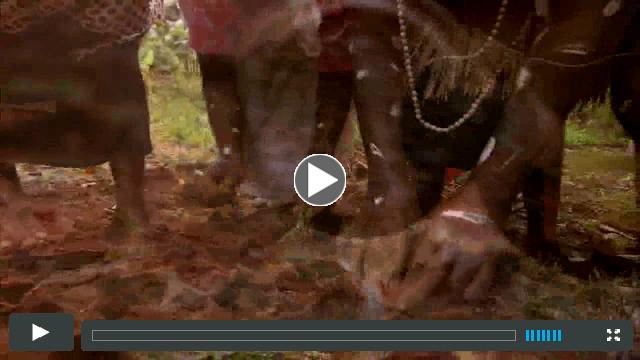
TIST Women Video
TIST Women Video


Today, TIST is an organization of more than 60,000 farmers in six countries taking local action with global impact. TIST now includes more than 9,000 small groups in Kenya, Tanzania, Uganda, Honduras, Nicaragua, and India, but church membership is not required. TIST farmers have planted and monitored more than 11 million trees. The farmers gain a new source of income from the carbon market as well as strengthen their social ties by working together to achieve shared goals. This strength and growth is founded on principles developed by faith communities sharing and acting on their vision of stewardship and action for the planet and servanthood to each other. Churches and other faith communities can serve as important entry points in outreach, in guiding principles, and in organizing for action.


TIST's monitoring system employs hand-held computers and GPS to track progress and results. Highly trained farmers visit TIST's  tree groves and record the location, baseline, perimeter, number, size, and species of live trees. In 2011, TIST was validated and verified for their work in Kenya through the  Verified Carbon Standard (VCS) and also by the  Climate, Community & Biodiversity Standards (CCB). TIST was the first carbon offset program in the world to have achieved dual certification.


Going green with Islam: Teachings from the Qur'an Promote Youth Action to Protect the Environment in Coastal Tanzania

By Amy Gambrill


Tanzania's population is 40 percent Christian, 35 percent Muslim, and 25 percent indigenous traditions, with the concentration of Muslim communities in the coastal region. In addition to government-run schools, madrasas - Islamic schools that provide supplemental religious instruction such as lessons on the Qu'ran - are concentrated in the coastal region. To increase the awareness of youth in Tanzania's coastal communities about coastal and marine ecosystems and engage them in addressing conservation issues through Roots & Shoots service learning programs, Jane Goodall Institute (JGI) launched an environmental education program in coastal Tanzania in 2006. JGI's conservation and education Roots & Shoots programs work to increase awareness of environmental problems and inspire youth action. One of the Roots & Shoots goals is to enhance understanding between people of different cultures, ethnic groups, religions, economic classes, and nations. Because the majority of the population in the area is Muslim, the project worked with 22 madrasas.


Students learning about envirnmetn in Madrassa
Roots & Shoots Program in Tanzanian Madrasa

From the beginning, JGI staff brought government officials and faith leaders together with communities. Staff worked closely with the Ministry of Education and Vocational Training on the mainland and in Zanzibar, the Vice President of the BAKWATA Environmental Office, and the Office of the Mufti (Muslim scholar) in Zanzibar to promote environmental stewardship with teachings from the Qur'an.  


The initial engagement between the Islamic community and the Tanzanian government, and the openness to incorporate key Islamic stakeholders led to a fruitful partnership. Roots & Shoots trained 1,539 teachers in environmental education, reached 217,537 students (67,518 from madrasas), and supported implementation of Tanzania's education policy. Two hundred eighty-six madrasas participated in the Community Environmental Education Awards Scheme. The program also developed a Madrasa Environmental Education Teacher's Guide that was approved by the Muslim Council of Tanzania, led by the Mufti, and was printed for distribution. The Roots & Shoots program built relationships between Tanzania's formal education system and the madrasa network.


Discussion Spotlight
Here are some of the issues FRAMEweb members are talking about:

How important is monitoring and evaluation for advancing and promoting CBNRM?
The Philippines consultative workshop on the CBNRM stocktaking exercise considered the question of monitoring and evaluation (M&E). At present, much information on CBNRM in the Philippines is anecdotal and data is not standardized. An associated geo-spatial data base is also lacking, making it difficult to know where CBNRM is happening (and also making it difficult to calculate the area under which it is practiced). However, it will be costly (both in terms of time and money) to establish a more systematic and comprehensive M&E system for CBNRM. Is such a systematic and comprehensive system necessary to advance and promote CBNRM? Why or why not? Click here to add your thoughts. 

How can agricultural expansion -- one of the main threats to the Miombo woodlands -- be addressed?
Agricultural expansion or conversion of natural woodland to cropland has been identified as one of the major threats to conserving the Miombo ecoregion. (Do you agree that this is one of the major threats? Why or why not?) Techniques or approaches such as conservation agriculture have been promoted to mitigate the negative environmental impacts of agricultural expansion and to alleviate poverty and improve livelihoods. Has this approach/technique been working in the Miombo woodlands? Why or why not? Related to this, some would argue that agriculture is not a viable activity in many areas of the Miombo woodlands due to low soil fertility. (Do you agree? Why or why not?) What viable livelihood alternatives to agriculture can be proposed to local people? Click here to reply now.

 Do you have a question or comment you want to post on FRAMEweb?

Sign-in, click on a Community Topic or Partner Page and click on the:  

Ask buttonBox for asking questions or icon.

Need help? Send us an e-mail and we will walk you through it!   


Take A Look

Expand your knowledge on Faith and Conservation with these helpful resources

Beoynd Belief Report Cover Beyond Belief: Linking faiths and protected areas for biodiversity conservation

Most people in the world follow some kind of spiritual faith, and faiths have enormous impacts on the way that we think and behave, including how we relate to the natural world. This reports looks at how faiths interact with one of the main tools of conservation - protected areas. WWF and the Alliance for Religion and Conservation (ARC) look at two topics in their report: Spiritual places and integrating faiths. They also go into depth with 14 case studies from Kenya, Tanzania, Egypt, Lebanon, India, Sri Lanka, Indonesia, China, Mongolia, Europe, Finland, Australia and Colombia.

Click here to read the report.


From Practice to Policy to Practice: Connecting Faith and Conservation in Africa - a white Paper

USAID white paper cover This paper explores some of the current practices of connecting faith and conservation, provides information on some of the faith groups doing conservation work, and presents several case studies on faith-based conservation. Given all the activity that faith communities and conservation organizations are doing to connect faith and conservation, it is an effort to discuss and learn how best to partner with faith communities on biodiversity conservation in sub-Saharan Africa.

 Click here to read the report.  


Sacred Natural Sites: Guidelines for Protected Area ManagersIUCN report cover

This IUCN publication focuses on the sacred natural sites of indigenous and local communities. These communities, ofwhich there are many thousands across the globe, usually hold deep sacred values in regard to nature, values that are often focused on and rooted in specific locations. The guidelines were developed to be broadly applicable to the sacred natural sites of all faiths, and are provided primarily to assist protected area managers, especially those with sacred sites located within the boundaries of their legally established protected areas. 

Click here to read the guidelines.   


Society for Conservation Biology: Religion and Conservation Biology Working GroupWorking group logo

The Society for Conservation Biology is a treasure trove of resources for faith and conservation. There are working groups spanning every major religion, and a long list of journal articles, related organizations, and their own listserv.Here is the link to the Page of resources.See below for a sample list:

To visit the main site for the working group, click here. 


New on FRAMEweb

New FRAMEweb homepage Come see the FRAMEweb Facelift!
If you haven't been to the FRAMEweb.org homepage recently, you may want to come see the new look and feel. We've added a lot more visuals and cut down on all the text to help point you in the direction of interesting communities and discussions faster!
  • Check out a new community or discussion from the moving images at the top
  • Log in to see the featured member
  • Watch a highlighted video
  • See the 5 most recent resources added to the site
  • Browse the GeoExplorer or the FRAMEgram Archives 

To see the new changes, visit www.frameweb.org !

Experts on FRAMEweb
List of faith experts on FRAMEweb
Find a colleague who shares an interest in faith and conservation.

Log-in to FRAMEweb and click on the link below to find almost 20 experts on FRAMEweb related to faith and conservation.

FRAMEweb Faith and Conservation Experts

Note: you won't see the results until you are logged in!


Featured Member

FRAMEgram features a member in the newsletter who has been exceptionally active! profile picThis section will also give you a chance to learn more about other FRAMEweb members.

This Edition's Featured Member is...


Photo of Kamweti Kamweti wa Mutu 
I have a particular interested in community-based wildlife and natural resource conservation as part of an adaptive and integrated economic development model that is especially suited for rural African communities. My master's thesis at Clark University focused on the impacts of community-based conservation initiatives on the state of wildlife populations in Kenya.


I recently joined the Africa Biodiversity Collaborative Group (ABCG) as a Program Officer, having worked for several years in the environmental policy and program non-profit world. My role at the ABCG is about convening, communicating and catalyzing people, ideas, issues and opportunities, to maximize the impact of progress in the conservation field in Africa. Previously, I worked as a Research Associate with the National Research Council's Board on Agriculture and Natural Resources at The National Academies. Prior to that, I was a Project Coordinator with the grassroots Anacostia Watershed Society working on urban river restoration and advocacy.  


I am excited to play a part in facilitating a collaborative approach to regional and thematic conservational challenges, not just with individual field specialists, but synergizing capacities across several institutions to tackle common issues and pursue opportunities.


* To see Kamweti's profile, login at the prompt when you click his name.


You Have a Say Let us know what you care about; what do you want to see on FRAMEweb and in future issues of FRAMEgram? We want to know!   


Contact us at sarah_schmidt@dai.com.

Don't forget to visit FRAME at www.frameweb.org!


About this newsletter:

The FRAMEgram is a periodic newsletter with news and resources for the global Natural Resource Management (NRM) community. It is connected to FRAMEweb, a network website designed to facilitate knowledge sharing among NRM professionals through online discussions and the sharing of documents and other resources.

The information provided in this newsletter is not official U.S. government information and does not represent the views or positions of the U.S. Agency for International Development or the U.S. Government.