|
|
|
|
|
|
|
|
|
|
|
The Silent Victims
"Children are often the silent victims of drug abuse. "
--Rick Larsen
|
| |
|
|
|
|
Dear Friends,
 We hope you are enjoying spending time with your family and friends this summer. We had a terrific response to our spring appeal and are just $14 shy of our goal. Many people donated in honor or memory of a "father" in their life. If you would like to help us reach our goal, please send a check to NHCTF or go on line to make a donation. We hope you are enjoying spending time with your family and friends this summer. We had a terrific response to our spring appeal and are just $14 shy of our goal. Many people donated in honor or memory of a "father" in their life. If you would like to help us reach our goal, please send a check to NHCTF or go on line to make a donation.
I also want to thank the Governor's Inn in Rochester for hosting the Taylor River Band outdoor concert on July 26th and the generous attendees. We raised about $200 for child abuse prevention efforts. Among the crowd was one of our Unsung Hero award winners and her adopted grandchild, a CASA volunteer, some nurses, a substance abuse counselor, childcare professional, guidance counselor and many others who know about the impact of child abuse and neglect and the importance of supporting families. Thank you all for the work you do to support children and families in our community.
In this issue you will get to meet another Unsung Hero award winner, Terri. Terri and her husband are raising their grandson. Her story is similar to other families in New Hampshire who's lives are affected by substance abuse and mental health issues. Our board chair, Dr. Peirce Hunter, a pediatrician, shared with me some stories of infants born addicted to heroine and cocaine, detoxing alone in the hospital because their parents are using substances and unable to care for them.
According to research done by SAMHSA and reported in the NSDUH Report, April 16, 2009, "over 8.3 million children under age 18 lived with at least one parent who was dependent on or abused alcohol or an illicit drug during the past year."
Dr. Hunter has also shared stories about parents who have adopted these children affected by substance abuse, and the patience they have to have to manage the learning, behavioral and developmental challenges many of the children face.
You will also be introduced to one of the many wonderful family support programs we have in NH, Early Childhood Adventures. This is the program that supported Terri. There are many like Terri in New Hampshire who are relatives raising children whose parents can't care for them. The UNH Cooperative Extension offers support to these "RAP" families and programs. Check out the NH RAPP site for more information.
In addition to parent and family groups, NH also offers home visiting services to families. Several of the home visiting programs, with the support of Child and Family Services, provide pregnancy alcohol use education and screening for fetal alcohol syndrome and other substance use. If you have any questions about where to find information about substance abuse and mental health, contact your local family support program. A list can be found by contacting the NH information line at 2-1-1 or by visiting the 211 New Hampshire website.
The NHCTF staff will be increasing our training and technical assistance services this year. We offer training and technical assistance in parent engagement and advocacy, risk and protective factors, evaluating family support outcomes, peer review and more.
You can contact us to schedule a training at your site or event, or sign up for our workshop at one of these statewide conferences:
Parenting Revisited: Life on a Trampoline October 8, 2009, Fireside Inn, West Lebanon, New Hampshire, Featuring Dr. Joseph Crumbley Author of Relatives Raising Children: an Overview of Kinship Care and an expert on the issues facing relative caregivers. Click here to view the conference brochure.
Early Learning NH Annual Conference ♦ October 17, 2009 ♦ Southern NH University, Manchester, NH. To view the brochure, go to the Early Learning NH website and click on the Online Conference Registration on the homepage.
With gratitude,
Keryn
Keryn Bernard-Kriegl, MS Executive Director
|
|
|
"Kids who learn a lot about the risks of drug abuse from their parents are half as likely as their peers to try or use drugs."
--Partnership for a Drug-free America
|
| |
|
|
2009
Board of Trustees
Deborah Chase, Gilmanton
Melissa Correia, Vice Chair, Manchester
Senator Peggy Gilmour,RN, Hollis
Representative Anne Grassie, Rochester
Courtney H.G. Herz, Esq., Secretary, Hopkinton
Peirce Hunter, M.D., Chair, Bow
Kristina Ickes, MBA, Candia
Audrey Knight, MSN,RN, Hopkinton
Senator Bette Lasky, Nashua
Representative Betsy McKinney, Treasurer, Londonderry
Lauren Noether, Senior Assistant Attorney General,
Concord
Malcolm Smith, PhD, CFLE, Durham
Brenda Tibbetts, Colebrook
Staff
Keryn Bernard-Kriegl, MS,
Executive Director
Diane Hastings, MS,
Special Projects Director
Karen Ryan, MEd,
Program Director
Julie Day, BA,
Parent Advocacy Director
Valerie Quinn, BA,
Administrative Assistant
|
|
|
|
A Focus on a Parent:
Terri Clyde, Unsung Hero
"There is something terribly wrong with the system..." by Julie Day, NHCTF Parent Advocacy Director |
|
I recently interviewed Terri Clyde, one of the NHCTF 2008 recipients of the Unsung Hero Award.
 Terri, along with her husband John, adopted their grandson, John Ross, through a very difficult and long process. John 's primary diagnosis is Fetal Alcohol Syndrome (FAS). Children with fetal alcohol syndrome tend to have multiple mental health issues from ADHD to psychosis. Unfortunately, John Ross has these. He also has aggressive behaviors which are common in FAS kids. John's aggressive behaviors are intensified by his developmental delays which are as much as 3-4 years behind his chronological age. The overall consensus is that Terri Clyde is an inspiration to us all. She is an amazing woman, mother, grandmother and friend. She is looked upon as a role model and teacher. While we might say, "I wish I could do something about ...," Terri gets up and does it. Terri has written to Governor Lynch and had other professionals and parents write to him as well, about the lack of pediatric mental health care in the state of New Hampshire. When asked "What have you done to advocate for your family?" Terri states, " Every child's mental and physical health matters. I have been advocating for this now seriously for the past 3 years. My son, John, has been through a lot in his very short life and finding mental health care for him has not been easy. It is very hard to find anything for children in the state of NH, let alone for a child under the age of 6 years. When a child is having psychotic breaks and you can find no one to help you, there is something terribly wrong with the system. I have written to Governor Lynch about my concerns and frustration over this matter and continue to follow what is happening in NH with mental health care for children; attending when I can conferences. Continuity and integration of mental health and physical health are very important and I feel they should not be separated from each other. Providers need to communicate better with each other and there is a lack of pediatric mental health care providers in the state of NH. Unfortunately as I talk with you now the 10 Community Mental Health Centers are looking at severe budget cuts for 2010 and 2011 even though the state is looking at an increase in mental health needs. "
Terri recently attended a press conference and briefing of the Mental Health Services for NH's Young Children and their Families report at the Legislative Office Building and spoke as a parent of a young child with mental illness. It took real courage to do this in a room full of professionals. One of the five protective factors promoted by Strengthening Families is Social Connections. Terri finds this support in the Early Childhood Adventures Family Support Group at the Adult Learning Center in Nashua. She says, "I have been involved with the Early Childhood Adventures/Adult Learning Center Family Support Group since it began about 5 years ago. It has been an integral part of my life and my son's life. We both have made friends there and learned from the people we have met. It is truly a support group. We learn from each other's accomplishments and mistakes, we have wept with each other over difficult situations and terrible losses. We have laughed over many things and celebrated wonderful things." She goes on to speak about the transition they will be going through soon: " My son will be moving on to public school next year as he starts full time kindergarten in special education and we will no longer be able to attend this program. It will be a loss for both of us. When you have been a part of something for so long it is hard to say goodbye." I believe this says a lot about the need for and importance of support groups for parents of children throughout all developmental stages.
 Terri has gone beyond what most people would do to fight for her family and yet, when asked what it meant to her to receive the Unsung Hero Award in 2008 she states, "It was a humbling honor to be recognized among so many other wonderful people."
When I asked Terri if there was something she could teach other parents that she had learned from her own experience, she stated "Never give up. When it looks like the light will never come at the end of that long tunnel, your child will do something or say something totally amazing that will illuminate the darkness you are feeling!"
|
|
|
|
A Spotlight on a Family Support Program
Early Childhood Adventures |
|
 One of 10 early care and education sites statewide to be named as an Exemplar Site for the Center of the Study of Social Policy's Strengthening Families Pilot project, the Early Childhood Adventures Program of the Adult Learning Center in Nashua offers a family support group that meets bi-weekly in the evening. All parents that have children enrolled in the Early Childhood Adventure Program are welcome to attend the group. There are also opportunities to attend various workshops on how to advocate for their families and community. This universal access and interest helps to underline the childcare program's motto, "A Community of Quality and Joy." Enhancing a sense of community and belonging in the childcare program can only have positive outcomes. One of 10 early care and education sites statewide to be named as an Exemplar Site for the Center of the Study of Social Policy's Strengthening Families Pilot project, the Early Childhood Adventures Program of the Adult Learning Center in Nashua offers a family support group that meets bi-weekly in the evening. All parents that have children enrolled in the Early Childhood Adventure Program are welcome to attend the group. There are also opportunities to attend various workshops on how to advocate for their families and community. This universal access and interest helps to underline the childcare program's motto, "A Community of Quality and Joy." Enhancing a sense of community and belonging in the childcare program can only have positive outcomes.
The roles of the parents in the support group meetings vary. They are sometimes facilitators or sometimes good listeners, often cheerleaders for each other and always recipients of information and support.
Jane Marquis and her staff teach families to navigate the maze of local and state agencies. The variety of parenting education materials includes notices on workshops, articles on child development, parenting magazines and notices of upcoming state legislation affecting families. The center has earned a "license plus" status, indicating that its programs exceed all NH licensing requirements. While the adult group meets on Tuesday nights, children are provided free on-site childcare and dinner. Meetings may be emergent or theme-based, such as "Bedtime Rituals."
A recent group shared a home cooked meal with psychologist Ben Garber, PhD facilitating the meeting and providing professional advice. State Representative Tony Matarazzo explained the state legislature, demystifying the process for parents and guardians. Children happily played across the hall as the challenges of raising children who suffer from mental illness were discussed.
The Family Support Group receives funding from the New Hampshire Children's Trust Fund and the Hillsborough County Incentive Funds grant.
(excerpted from The Open Door, a newsletter of the Adult Learning Center) |
|
|
|
Fetal Alcohol Spectrum Disorders
|
|
|
From the Centers for Disease Control and Prevention website:
 When a pregnant woman drinks alcohol, so does her unborn baby. There is no known safe amount of alcohol to drink while pregnant and there also does not appear to be a safe time to drink during pregnancy either.
Prenatal exposure to alcohol can cause a range of disorders, known as fetal alcohol spectrum disorders (FASDs). One of the most severe effects of drinking during pregnancy is fetal alcohol syndrome (FAS). FAS is one of the leading known preventable causes of mental retardation and birth defects. If a woman drinks alcohol during her pregnancy, her baby can be born with FAS, a lifelong condition that causes physical and mental disabilities.
Children with FASDs are at risk for psychiatric problems, criminal behavior, unemployment, and incomplete education. To learn more about fetal alcohol spectrum disorders and resources for prevention and support go to the Centers for Disease Control and Prevention website.
Protective Factors for Children with Fetal Alcohol Syndrome
Several positive factors have been identified that might help reduce secondary conditions that result from fetal alcohol syndrome:
Early Diagnosis - A child who is identified early in life with FAS has an improved prognosis and can be placed in appropriate educational classes and given access to social services that can help the child and his or her family. Early diagnosis helps families and school personnel understand why the child might act or react differently from other children in some situations.
Involvement in Special Education and Social Services - Children who receive special education geared towards their specific needs and learning style are more likely to achieve their developmental and educational potential. Special education allows for individualized educational programs. Families of children with FAS who receive social services, such as respite care or stress and behavioral management training, have more positive outcomes than families who do not receive such services.
Loving, Nurturing, and Stable Caretaking Environment - Children with FAS can be particularly sensitive to disruptions, transient lifestyles, or harmful relationships compared to children who do not have FAS. Community and family support are needed to prevent secondary conditions in individuals with FAS.
Absence of Violence - Individuals with FAS who live in stable or non-abusive households or who do not become involved in youth violence are much less likely to develop secondary conditions than children who have been exposed to violence in their lives. Children with FAS need to learn and be taught other ways of showing their anger or frustration. (Excerpted from the Centers for Disease Control and Prevention website |
|
|
|
Protective Factors for Promoting Healthy Families
|
|
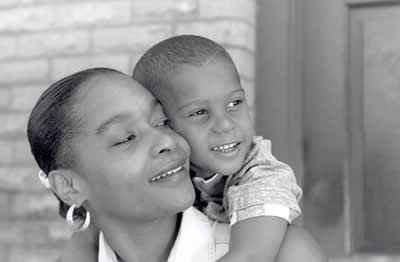 Protective factors are conditions in families and communities that, when present, increase the health and well-being of children and families. These attributes serve as buffers, helping parents to find resources, supports, or coping strategies that allow them to parent effectively, even under stress. Protective factors are conditions in families and communities that, when present, increase the health and well-being of children and families. These attributes serve as buffers, helping parents to find resources, supports, or coping strategies that allow them to parent effectively, even under stress.
Research has shown that the following protective factors are linked to a lower incidence of child abuse and neglect:
- Nurturing and Attachment. A child's early experience of being nurtured and developing a bond with a caring adult affects all aspects of behavior and development.
- Knowledge of Parenting and of Child Development. Parents who understand how children grow and develop can provide an environment where children can live up to their potential
- Parental Resilience. Resilience is the ability to handle everyday stressors and recover from occasional crises. Parents who are emotionally resilient have a positive attitude, creatively problem solve, effectively address challenges and are less likely to direct anger and frustration at their children.
- Social Connections. Evidence links social isolation and perceived lack of support to child maltreatment. Trusted and caring family and friends provide emotional support to parents by offering encouragement and assistance in facing the daily challenges of raising a family.
- Concrete Supports for Parents. Parents need basic resources such as food, clothing, housing, transportation, and access to essential services that address family specific needs (such as childcare, health and mental health care) to ensure the health and well-being of their children.
All of these factors work together to reinforce each other - for example parents are more likely to be resilient in times of stress when they have social connections and a strong attachment to their child.
|

Help us reach our Spring Appeal Goal...
...by making a donation to the New Hampshire Children's Trust Fund.
We gratefully accept one-time and ongoing donations by check or through Paypal. Your donation will be used to strengthen families and keep children safe.
Click the one of the links to make a donation through PayPal or by check. Send it in honor of a special person in your life and we will send a card to that special someone acknowledging your gift.
|
|
Give the Gift that Gives Twice!
An FTD Promotion to Prevent Child Abuse
|
|
Birthdays, Anniversarys, Bereavement...
  Remember the loved ones in your life by ordering flowers or gift baskets through an ongoing FTD promotion that will give 15% of your purchase to Prevent Child Abuse New Hampshire. Remember the loved ones in your life by ordering flowers or gift baskets through an ongoing FTD promotion that will give 15% of your purchase to Prevent Child Abuse New Hampshire.
Click here to go directly to the FTD promotional website and support child abuse prevention in New Hampshire. The NH Children's Trust Fund is the Prevent Child Abuse NH chapter |
|
Who We Are
|
|
The New Hampshire Children's Trust Fund was established in 1987 by legislative statute RSA 169-C:39 to support programs in New Hampshire that work to prevent child abuse and neglect. Our focus is primary prevention initiatives that keep children safe and families strong.
The New Hampshire Children's Trust Fund believes that the most effective way to keep our children safe from abuse and neglect is to foster the development of strong families. The New Hampshire Children's Trust Fund advocates for positive change in both state and federal policies that effect children and families.
The New Hampshire Children's Trust Fund is the New Hampshire chapter of Prevent Child Abuse America.
To find out more about our programs and partners, go to our website.
 |
|
|
|
New Hamphire Children's Trust Fund Prevent Child Abuse New Hampshire
10 Ferry Street, Suite 315
Concord, New Hampshire 03301
(603) 224-1279 | |
|
|
|