|
NAMI CAN!
| | |
Advocacy Update
Since the purpose of the NAMI CAN! column is to keep you informed about advocacy issues, this week's piece addresses several current fronts.
Legislation
- We are continuing to follow two-year bills that we have already told you about. You should have enough background to be ready when we call "action."
- We are reviewing new bills as legislators introduce them. The process is:
- Judith Wolen, NAMI CA lobbyist, uses key word search to pull any bills that might fall in our bailiwick,
- Executive Director and NAMI CAN! Coordinator read the bills and pull the ones that fit the categories that NAMI CA addresses,
- The Legislative Workgroup further reviews and assigns to workgroup members to analyze and draft a position if warranted - NAMI CAN! Liaisons get a heads up about these bills, and
- The NAMI California Board of Directors makes the final determination about the position and the action priority. We share Support and Oppose positions with all of you. Be sure to check the Legislation section of the new website that should be operating later this week.
- Legislative action on all bills must be completed no later than August 31.
Budget
- The Governor's budget is addressed in Senate and Assembly hearings separate from the usual policy committees such as Health and Public Safety.
- Hearings this month are on February 21st and February 23rd. Calls will go out for speakers as soon as we receive the agendas for the hearings.
Duals Demonstration Project
- See this month's NAMI CA newsletter for information about this project to provide seamless access to the full continuum of Medicare and Medi-Cal medical, behavioral, social, and long-term care services for dual eligible beneficiaries in selected counties.
- Check out www.calduals.org for more information.
1115 Medicaid Waiver Assessment
- Ideally, each of you would have had the opportunity to review and comment on this assessment of California's mental health and substance use treatment needs and capabilities (what we called a "gap analysis" during MHSA planning).
- The assessment is very long (close to two reams of paper when printed) and very dense. The response period was approximately 10 days.
- However, based on the size of the bones that mental health and substance use treatment providers have had to pick with the assessment, it is possible that we will yet have an opportunity to weigh in. You might want to start reading it at this link now.
Regional Conferences
- Two conferences will be held in March for the Sacramento and the Redding regions. Information has gone out to those affiliates and their counties' mental health directors.
- If you want a conference to come, or not come, to your region during a certain month, please let Margot at margot.carmassi@namicalifornia.org know as soon as possible.
- The purpose of the conferences is to facilitate good advocacy skills at all levels of NAMI but especially at the local level. Please come ready to share your best practices.
- Kathleen Derby, MHSA Policy Coordinator, and Bettie Reinhardt, NAMI CAN! Coordinator, will facilitate and train.
|
|
Introducing NAMI California's New Website
| |
 The new NAMI California website will launch February 15. The streamlined, attractive design makes information more easily available to visitors, and the home page features quick access to top stories about our programs and state issues that concern our audience. News will be right on top, where you need it. The new NAMI California website will launch February 15. The streamlined, attractive design makes information more easily available to visitors, and the home page features quick access to top stories about our programs and state issues that concern our audience. News will be right on top, where you need it.
You won't have to change your bookmarks.The new site will open in the same web location. Look for it!
|
|
Assembly Budget Committee's Annual Preliminary Budget Review Released
| | |
The Governor's Budget is now in the hands of the Legislature to review, analyze, debate, revise, and return to the Governor. Assembly Bill 1463 (Blumenfield) and Senate Bill 957 (Leno) will serve as the budget bills for the Assembly and the Senate, respectively. Multiple "Trailer Bills" have also been introduced in both houses as vehicles for statutory changes necessary to implement the final budget agreement.
Click here to read the preliminary review.
The Health Services section starts on page 43of the report.Topics include:
- Medi-Cal
- Children's Meedical Services
- Mental Health & Substance Abuse
- Primary and Rural Health
- and New Programs.
|
|
Obama Administration Rejects California's Medi-Cal Copays
| | |
From the Sacramento Bee -- Federal health officials rejected California's bid to charge Medi-Cal copayments for everything from drugs to hospital visits, dealing a new blow to the state budget but relief to low-income patients and their providers.
Gov. Jerry Brown and lawmakers relied on mandatory Medi-Cal copayments to save $511 million in last year's state budget and presumed that the state would continue saving in future years.
The governor's latest budget, which estimates a $9.2 billion deficit, acknowledges the lost savings in 2011-12. But it is relying on $575 million to help balance next year's budget, according to Department of Finance spokesman H.D. Palmer.
The plan to charge low-income Medi-Cal patients and allow doctors to refuse care for nonpayment was unprecedented for a state on such a wide scale. The charges ranged from $3 for "preferred" drug prescriptions to $5 for doctor visits and a maximum $200 on hospital visits. Medi-Cal serves about 8 million Californians, though patients also eligible for Medicare were exempt from the copays.
Read the full report at The Bee.
|
|
Latino Strategic Plan Workgroup California Reducing Disparities Project -- Population Report
| | |
The UC Davis Center for Reducing Health Disparities (CRHD), has released Latino Mental Health Concilio's DRAFT report titled, Community-Defined Solutions for Latino Mental Health Care Disparities for public review and comment.
Focusing on prevention and early intervention (PEI) services, the center developed and implemented a community outreach and engagement process for identifying community-defined, strength-based promising practices, models, resources, and approaches that may be used as strategies to reduce disparities in mental health among Latinos in California.
Click here to open a DRAFT copy of the report for a 15-day public review starting February 7, 2012 and ending on February 21, 2012.
To access our DRAFT online, please go to the Latino Mental Health Concilio website and click on REPORT.
Please send your comments to CRDH@ucdmc.ucdavis.edu no later than Tuesday, February 21, 2012.
The final report will be available in printed and electronic format by the end of March 2012. To request the final report please visit the Latino Mental Health Concilio website, www.latinomentalhealthconcilio.org.
|
|
Family to Family Trainings
| | |
We are excited to be offering three family program trainings in the next two months.
Please see the schedule below:
Northern California
NAMI Basics Training
Date: March 9-11, 2012
City: Santa Clara
Southern California
Spanish de Familia a Familia Teacher Training
Date: March 30 - April 1, 2012
City: Santa Ana
Interested in volunteering? Please contact your local affiliate for an application.
--Lynn Cathy
Director of Family Programs
Lynn.Cathy@namicalifornia.org
|
|
Working Well Together Newsletter
| |
Funded by the Mental Health Services Act (MHSA), the primary goal of Working Well Together is to ensure public mental health agencies are prepared to recruit, hire, train, support and retain multicultural clients, family members and parents/caregivers as employees.
Click to read their winter newsletter
Or en espanol
Visit the WWT website.
|
|
The Peer Recovery Art Project
| | |
The Peer Recovery Art Project, is a continuous campaign to end stigma, revitalize downtown areas, while implementing new strategies for an all inclusive and therefore healthier community.
The Project is a work of passion started by Modesto, California resident and concert promoter John Black. Mr. Black started this nonprofit organization 3 years ago in an effort to help local artists of all types to network and showcase their original creations.
Now after a long grass routes effort the Peer Recovery Art Project has an official home right in the heart of Downtown Modesto, California on the corner of J St. and 13th St.
Click on the image below to view a report by The Modesto News:
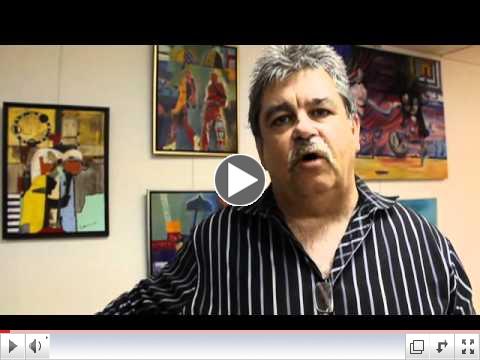 | | New Non-Profit Art Gallery In Downtown Modesto, California - Peer Recovery Art Project |
Visit the non-profit's website at www.peerrecoveryartproject.org
|
|
NAMI Award Nominations
| | |
The 2012 Convention Committee invites you to submit nominations for awards to be announced and presented at our 2012 NAMI National Convention, scheduled for June 27-30 at the Seattle Sheraton Hotel. (Convention information can be found at www.nami.org/convention.)
There are two attachments to this memo:
This year, award nominations must be submitted online at:
2012 Award Nomination
Please be certain to answer each question fully and to include all relevant contact information for both the nominee and for the person submitting the nomination.
An important note: you may nominate a person or organization for ONLY one award.
Award nominations must be complete and submitted by February 15, 2012.
|
|
Save the Date!
| | 2012 NAMI CA Annual Statewide Conference
When: Friday, August 17th & Saturday, August 18th
Where: Marriot Hotel, Irvine, CA
More information to come!
Hope to see you there!
|
|
|
Contact Information
| | |
Weekly Report
NAMI California
1010 Hurley Way
Suite 195
Sacramento, CA, 95825
Phone: 916-567-0163 Fax: 916-567-1757
www.namicalifornia.org
|
|



