|
Greetings!

We hope you and your pet enjoyed St. Patrick's Day. We also hope you are enjoying the warmer weather. Read below about fleas and what to do help you pet stay flea free. Also read about thunderstorm and noise phobias. Dr. Foote will be holding a seminar about storm and noise phobias at Prairieland Feeds. Get more info about it by reading the note near the bottom of this letter.
Let us know what you would like to see in future newsletters.
Sincerely,
The Okaw Vet Clinic Staff |
A New Way to Greet - Four on the Floor
Dogs of all breeds jump up to greet each other and their humans. Veterinarians and trainers both will have clients complain about the big dogs jumping up most. The little toy breeds are not felt as a problem because their nails are not a painful on our legs and they don't knock you down! It is best and possible for all dogs to learn to sit for a greeting with their human, or at least not to jump up.
Corrections like yelling, jerking on the collar, swatting or knee in the chest don't work. Why? Because these are all ways of responding back to the dog (even in a negative way) that is returning the greeting in the dog's mind. It may not make sense to us humans, but remember we are talking about dogs. Especially physical shoving or touching is the return of the greeting to the dog.
Start by touching your dog only when all 4 paws are on the ground. As soon as they start to jump up take a huge step back, turn your back to them and stand still for a count of 15. No talking, no looking no nothing. The dog is not getting what they want, which is some kind of return of attention from you so they will stop jumping up. As soon as they are standing or have all 4 paws on the ground, verbally praise them. If they keep all 4 on the floor, then pet them calmly. Keep your greeting calm to help them keep calm. If they are leaping in the air away from you still ignore them. Remember 4 on the floor.
As your dog gets better about not jumping up teach to sit for petting, and greeting. Do not allow some family members to allow jumping up. This just confuses your dog as to what to do.
Be sure your dog is getting at least 15 minute breaks of walks or other high activity. This should happen 2-4 times a day depending on your dog. The more activity the less likely you will have rowdy behavior.
|
Fear of Thunderstorms
Many dogs in the Midwest are afraid of thunderstorms. How dogs become afraid may be hard for us to understand, but to the dog big booming thunder and high winds can really be frightening. Maybe a dog was left alone during a bad storm and did not know where to go or what to do. It may be genetic, or it may be something that has been increasing over the years. Whatever the cause, thunderstorm phobia is very common and can range from mild to severe. There is help for your dog. It may not completely cure the fear, but make it more manageable for you and your pet.
Thunderstorms have a lot of different cues going on hours before they come that we humans do not sense. Our pets do. Sensing the change in air pressure, wind speed, smell, humidity, temperature and other changes begins to stimulate fear and anxiety in the dog because they associate these changes with the impeding storm. It is really difficult to mimic these events to train the dog to be calm during them. A dog may learn to be less anxious to the sound of thunder by using a recording, but all the other things cause as much fear as the noise. So the dog may be a little less fearful, but not much by training alone.
When your pet is young do train them to be rewarded for calm non anxious behavior during a storm. Have a tornado drill on non storm days running into the bathroom, calling your pet in quickly and give them a yummy treat. Teach them to go down the basement stairs on command and reward them. Give them a bed, crate or in the bath tub to lie on and reward them for going there fast and lying calmly.
For the dogs that are pacing, panting, drooling, circling, howling, pawing at their owners, climbing on to furniture, hiding under the bed, in the closet, digging out of doors or windows there is help for them. There are different levels of fear, and each level causes some physical pain. It may be impossible to reach no fear in a dog with thunderstorm phobia, but decreasing their fear is possible.
Ways to do this is first with medication through the storm season. There are a few combinations of medications that can be safely given to your pet prescribed by a veterinarian that help to decrease the anxiety. These medications are not sedatives, although sedatives may be a part of combination treatment in severe cases. Your dog will not be constantly drugged out. A check up and blood check are needed before starting treatment. Many dogs that have been on medications through a storm season needed significantly less meds or even none at all the next season.
A plan to help your pet have a better storm season is possible with the help of a veterinarian and staff offering behavioral help. Contact us at 253-3221 or or visit our web site for more help.
|
|
We are starting to have warmer weather again. You and your pet can enjoy the warm weather together by taking walks or playing in the yard. Unfortunately, we are not the only ones who enjoy the warmer weather. Fleas are starting to pop up again.
Your pet can get fleas after being around another animal with fleas. Fleas can jump from that pet onto your pet. Your pet can also get fleas after being in an area where an animal with fleas has been. Fleas and immature fleas can be found in your home or yard after they jump or fall off of other dogs, cats and wildlife.
How can you tell if your pet has fleas? Look for "flea dirt." Flea dirt is small and brownish colored. Flea dirt is actually blood that has been digested by the adult fleas. Use a flea comb and brush it through your pet's coat, especially at the base of their tail. Wipe off the debris and fur with a wet kleenex. If your pet has flea dirt the "dirt" will start to turn the kleenex red. The kleenex turns red because of the blood in the flea poop.
What do you do if your pet has fleas? Treat your pet and your home. Purchase Frontline Plus or Revolution from us and apply it to your pet. These products will kills fleas that jump onto your pet for 1 month. You will need to treat your home as well. Siphotrol is a flea spray that can be sprayed everywhere in your house. Fleas can live in concrete, tile, wood and linoleum floors. You will need to retreat your house in 10 - 14 days, to kill the new adults that hatched from their protective cocoons. You can also purchase a flea collar and place it in your vacuum bag. This will kill fleas that you suck up into the vacuum. Wash your family's bedding and your pet's bedding too.
How do you keep your pet flea free? Keep him or her on flea prevention year round and keep stray and wild animals out of your yard. Flea preventatives are recommended for year round use because fleas can survive the cold weather by living in basements, crawl spaces and garages.
Fast Flea Facts:
One female flea can lay up to 50 eggs a day or about 2,000 eggs in her lifetime.
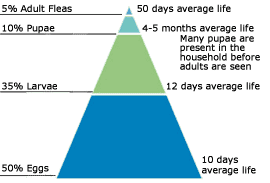
The fleas that you see are only 5% of the total flea population in your home. The rest are eggs, larva and pupae.
Flea pupa can stay in their protective cocoon for years waiting for a host to live on as adult. They can detect shadows, carbon dioxide, heat and vibrations which let them know a host is near.
Fleas can often cause itching, anemia, allergic reaction, and tapeworm infection. Fleas can also cause Rickettsiosis, Plague, Cat Scratch Disease.
For more info about fleas visit our website or Frontline's website. Watch a cute video about fleas here.(Turn your speakers on) |
Purchasing Pet Drugs Online: Buyer Beware
"Discount pet drugs-no prescription required" may appeal to pet owners surfing the Web, but FDA experts say it can be risky to buy drugs online from sites that tout this message and others like it.
Some of the Internet sites that sell pet drugs represent legitimate, reputable pharmacies, says Martine Hartogensis, D.V.M., deputy director of the Office of Surveillance and Compliance in FDA's Center for Veterinary Medicine (CVM). But others are fronts for unscrupulous businesses operating against the law.
FDA has found companies that sell unapproved pet drugs and counterfeit pet products, make fraudulent claims, dispense prescription drugs without requiring a prescription, and sell expired drugs.
Pet owners who purchase drugs from these companies may think they are saving money, says Hartogensis, but in reality, they may be short-changing their pet's health and putting its life at risk.
CVM regulates the manufacture and distribution of animal drugs, while individual state pharmacy boards regulate the dispensing of prescription veterinary products.
Red Flags
Some foreign Internet pharmacies advertise that veterinary prescription drugs are available to U.S. citizens without a prescription. But, says Hartogensis, "There is a risk of the drugs not being FDA-approved."
A foreign or domestic pharmacy may claim that one of its veterinarians on staff will "evaluate" the pet after looking over a form filled out by the pet owner, and then prescribe the drug. "A veterinarian should physically examine an animal prior to making a diagnosis to determine the appropriate therapy," says Hartogensis.
CVM is especially concerned that pet owners are going online to buy two types of commonly used prescription veterinary drugs-nonsteroidal anti-inflammatory drugs (NSAIDs) and heartworm preventives.
"Both drugs can be dangerous if there is no professional involvement," says Hartogensis. "It's not generally a concern if the owner uses a legitimate online pharmacy and mails in a prescription from their veterinarian, who is monitoring the animal. But if there is no veterinarian-client-patient relationship, it's a dangerous practice."
NSAIDS and Heartworm Preventives
Veterinarians often prescribe NSAIDs to relieve pain in dogs. NSAIDs should not be purchased on the Internet without a veterinarian's involvement because
- dogs should undergo blood testing and a thorough physical examination before starting NSAIDs
- dogs should be monitored by a veterinarian while they are taking NSAIDs
- veterinarians should discuss possible side effects of NSAIDs with the owner
- the prescription should be accompanied by a Client Information Sheet that explains important safety information to the owner
Heartworm disease is a potentially fatal condition transmitted by the bite of a mosquito that is carrying infected larvae of the heartworm parasite. Dogs, cats, and ferrets can get heartworm. Heartworm preventives, given daily, monthly, or semiannually, depending on the product, kill the larvae before they become adult worms.
The American Heartworm Society recommends
-using heartworm medication for dogs year-round, no matter where you live in the United States
-getting dogs tested yearly to make sure they're not infected with heartworm
"Testing is important even in dogs regularly treated with heartworm preventive products due to the occasional reports of product ineffectiveness," says Hartogensis. An Internet pharmacy veterinarian cannot draw blood from the animal to perform the test. If the test isn't done, a pet owner could be giving heartworm preventives to a dog that has heartworms, potentially leading to severe reactions.
Tips for Buying Pet Drugs Online
Order from a Web site that belongs to a VIPPS-accredited pharmacy. VIPPS-the Verified Internet Pharmacy Practice Sites-is a voluntary certification program of the National Association of Boards of Pharmacy (NABP). NABP gives the VIPPS seal to online pharmacies that comply with stringent licensing and inspection requirements. Only pharmacies that sell human drugs are VIPPS-certified at this time, but sometimes veterinarians will prescribe human drugs to pets when there is no animal drug approved for the pet's illness. Check with NABP at www.nabp.net to find out if a pharmacy is VIPPS-accredited.
Order from an outsourced prescription management service that your veterinarian uses. These state-licensed Internet pharmacy services work directly with the veterinarian, require that a prescription be written by the veterinarian, and support the veterinarian-client-patient relationship. Ask your veterinary hospital if it uses an Internet pharmacy service.
This article appears on FDA's Consumer Health Information Web page3, which features the latest on all FDA-regulated products.
Updated: February 20, 2009
|
Thunderstorm and Noise Phobias
During storms, fireworks and other loud noises, does your dog:
- run and hide
- pace around the house and pant
- restless and try to hide
- climb all over you
- shake
- keep you up all night
Dr. Foote will be talking about Thunderstorm and Noise Phobias on Sunday April 18th from 2 - 3 pm. Join her at Prairieland Feeds in Savoy.
Please RSVP by April 17th by calling Prairieland Feeds at 217-352-2232 or emailing us at okawvetstaff@mchsi.com.
This seminar is for people only. Please do not bring any pets to the seminar. |
Easter Bunny Pictures
Join Hands 4 Paws on Saturday March 27th from 1 - 4 pm for pictures with the Easter Bunny. Children and Pets can have their picture taken with the Easter Bunny. Each photo is $5.00. There will be a Doggie Easter Egg Hunt at 4:10 pm. Photos and Egg Hunt will be at Jarman Center in Tuscola. Enter the door under the blue striped awning, off Parke Street.
The money raised from this event will go toward funding a Pet Wellness Program to be held later this year. If you have any questions, please email us at hands4pawsinc@yahoo.com or call 217-253-3221.
|
|
About Okaw Veterinary Clinic
Thank you for reading our newsletter. We strive to make our pet parents informed about pet healthcare. If you have any concerns or questions, please let us know.
140 W. Sale St.
Tuscola, Illinois 61953
Okaw Veterinary Clinic
217-253-3221
|
|
|
Nature's Variety Food Recalled
Recalled raw frozen chicken diets for dogs and cats may contain Salmonella. If you have an affected package, please return it to the store where you purchased it. Best Buy dates affected are on or before 2/5/11. UPC and Sizes affected are listed below:
- UPC#7 69949 60131 9 Chicken Formula 0.75 lb trial size medallions
- UPC#7 69949 60130 2 Chicken Formula 3 lb medallions
- UPC#7 69949 60120 3 Chicken Formula 6 lb patties
- UPC#7 69949 60121 0 Chicken Formula 2 lb single chubs
- UPC#7 69949 50121 3 Chicken Formula 12 lb case of chubs
- UPC#7 69949 60137 1 Organic Chicken Formula 3 lb medallions
- UPC#7 69949 60127 2 Organic Chicken Formula 6 lb patties
|
Do you have Small Stuffed Animals?
Do you have small stuffed animals laying around your house taking up space? We are looking for small stuffed animals. They will be donated to clients who have pets that need a playmate for rough play. These pets will attack their owners' feet or other pets in the house.
The stuffed animals should be about the size of a rabbit. If you have any to donate, please bring them into the clinic. If you have any questions, please call 253-3221 or email okawvetstaff@mchsi.com |
|
What's Buggin' Your Pet? A Primer About Parasites
Learn about the common parasites of your pet, such as roundworms, hookworms, whipworms, heartworms, fleas, ticks, and more. You'll also learn how to prevent you and your pet from getting these potentially deadly parasites. Class will be held on April 12 at 6 pm. Early Reg. Deadline: Wednesday, March 31.
The Class fee is $8.00 if you register by the early register date. If you register after the date, the fee is $13.00.
American Red Cross Cat and Dog First Aid and CPR
Learn how to be prepared for emergencies that involve your pet (cat or dog) and how to protect yourself and the animal from further harm, injury, or suffering during emergencies by teaching prompt, effective first aid actions and care. The class will teach the immediate and temporary care for the pet until it can be taken to a veterinarian for attention.
Participants will receive their choice of either a cat or dog first aid book and DVD set. The other set can be purchased for an additional fee following the course. Participants will also receive information about pets and disasters, breathing barriers, a course certificate, and participant packet.
The class will be held on May 10 at 6 pm. This class is approximately 3 hours and 20 minutes in length.
Early registration deadline is April 28.
The class fee is $30 if you register by the early register date. If you register after the date, the class fee is $40.00.
Please visit the U of I's website to register or for more information. If you have questions, please call 217-333-2907. |
|
Remind My Pet
Sign up for this free service to get reminders of when your pet is due for their heartworm, flea or other medication. You can have the reminder sent as an email or text message.
| |
|