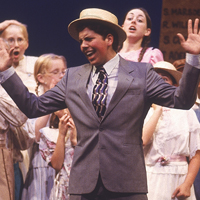
By Dexter Fidler, PYT Artistic Director
While the theatre can be magical, a lot of hard work
goes into making the "magic" part happen. The same
goes for a great audition. Let's be clear about
auditions: the artistic staff wants the actors to do well.
The idea behind the audition is to see where a young
actor is in their development, and an actor who does
their best then gets cast in the right spot for the show.
Especially in youth theatre, casting is something like a
jigsaw puzzle where we are trying to figure out where
the best place is for each actor. Now let's look at the
steps involved in a good audition.
Selection: This can be one of the toughest
elements of an audition: picking your monologue and
song. Ideally you want something age-appropriate,
similar to the show you're auditioning for, and pieces
that interest you. You'll be spending a lot of time on
these pieces, so it's best if they truly excite you and
you enjoy performing them. The pieces should be a
challenge without being overwhelming. Songs should
not be so challenging that you have to worry about
hitting that high note. If you're auditioning for a
romantic comedy, try to find something similar -- no
one will want to see your darkest doom-and-gloom
piece. At the same time, try to find a song that shows
something different than your monologue. Show us
as much emotional range as possible.
Preparation: Much like taking a test, the better
prepared you are, the more relaxed you will be. If you
walk into the room unsure if you're going to remember
your monologue, you're setting yourself up for
disaster. Know your monologue so well that if you flub
up, you'll automatically know how to fix it. While
perfection may be nice, you can equally impress a
director by how gracefully you deal with a mistake.
Look at the rhythms of the piece and know who you
are talking to and why. While some monologues do
have characters who talk to themselves, you should
imagine someone else that you're talking to. Make
sure to "raise the stakes," which simply means
making it important to your character. If it's not
important to you, why should anyone else care?
Delivery: Auditions give you the chance to
show the director three different people: you, the
character in the monologue, and the character in the
song. Practice introducing yourself and your pieces.
Always tell us where your monologue is from, and
know who wrote it. If it's from a monologue book, have
a title ready for it. After you introduce yourself, find your
focus point (center but above the head of the director)
and visualize that person your character is talking to.
When you deliver the last line of your monologue,
sustain the emotional energy behind that last line for
three seconds before you drop character. And
remember: it's theatre -- it's life amplified, so don't be
afraid to have lots of energy and volume.
And of course, have fun! We know auditions can be
stressful, but if you enjoy doing theatre, there's no
reason you can't have fun auditioning as well. Good
luck!
Auditions for The Music Man take place Jan. 3
& 4; Auditions for our performance workshop of
Rosalynde take place Jan. 19.