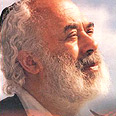
Weekday Shiur on
Likutei Moharan -
presented by
Reb Yedidyah Blanton
|
Our own Reb Yedidyah Blanton teaches lessons from Likutei Moharan,
the teachings of
Rebbe Nachman of Breslov
Every Sunday night
8:00pm - 9:30pm
at Reb Shalom Yakov /
Jeff Mann's home:
1037 South Sherbourne Dr.
LA 90035
(between Olympic & Whitworth)
(There's no charge for this class!)
|
Awesome Phone Shiur
|
Listen to the deepest Torahs and stories from the teachings of Reb Shlomo Carlebach and the Izshbitzer, from the book "Lev HaShamayim" - given over by Rabbi Nossen and Rebbetzin Channah Schafer in Boston
Live: Sunday Night
9 pm - 10:00 pm EST
Call (641) 715-3300
Conf code: 818022#.
Recorded: Listen anytime! Each class is recorded and available until the next shiur, which will replace it.
Playback Number: (641) 715-3412
Access Code: 818022#
|
Always in Our Prayers
|
|
Please daven for the immediate
safe return of
Gilad (ben Aviva) Shalit;
Zachary (ben Miriam) Baumel;
Tzvi (ben Penina) Feldman;
Yehuda (ben Sarah) Katz;
Ron (ben Batya) Arad
and
Guy (ben Rina) Hever
as well as for the safety and success
of all of Israel's soldiers,
and the immediate release of Yehonatan (ben Malka) Pollard.
|
|
|
|
|
|
|
Happy Minyan Newsletter - Kol Sasson
Parshas VaEschanan, Shabbas Nachamu
| July 2010 |
Greetings!
This coming Sunday night - Monday is Tu B'av, the 15th of Av. The Mishna in Ta'anis 4:8 states: "Rabi Shimon ban Gamliel said 'Israel has no days as festive as the 15th of Av and Yom Kippur.'" That is to say that Tu B'Av and Yom Kippur are the happiest days of the year for Jews. (Did you know that?!) Since Yom Kippur is the day of Divine mercy and forgiveness, we can understand why it is a happy day. But what makes Tu B'Av such a happy occasion?
The Gemora in Ta'anis lists six reasons why the 15th of Av is such a festive day. It begins with the reason given by Rabi Yehudah in the name of Shmuel. The Torah tells us in Bamidbar 36:8-9 that "any unmarried woman who inherits property... shall marry one from a family of the tribe of her father's, so that... an inheritance will not pass from one tribe to another." This restriction prevented the transfer of the inheritance a woman received from her father to her husband's tribe permanently upon her death. On the 15th of Av, the Sages arrived at the conclusion, based on an understanding of a verse, that this restriction only applied to the generation that entered the Land of Israel with Joshua. The lifting of this restriction was a cause of great joy, especially among women. Previously, if a woman was an heiress, she could only marry someone from within her tribe. Now, all women were free to marry any man from any tribe. Because of the joy that was experienced in that time, this date, the anniversary of that lifting of the restriction, is also a day of great joy.
The next reason the Gemora offers is that of Rav Yosef in the name of Rav Nachman. In Shoftim (Judges) 19-20, we find the incident of the "Pilegesh in Giv'ah." A man was traveling with his concubine (Pilegesh, in Hebrew) and servant back to his home. As evening approached, the group of travelers arrived in the city of Giv'ah, in the territory of the tribe of Benjamin, hoping to find a place to stay. Only one old man offered to put the group up. He brought them to his home, and offered them and their donkeys food and drink.
As the guests were refreshing themselves, wicked people from the city began banging on the door of the house, demanding that the old man send out the male guests from his house. The old man went out to the crowd, and tried to appease them by offering his own daughter and the man's concubine. He pleaded with them not to do anything disgraceful. The crowd took away the concubine.
When she returned the next morning, after being assaulted, she collapsed and died on the old man's doorstep. In the morning, the man discovered his concubine was dead. He took her body with him back home. He then cut her body into 12 pieces, sending each tribe of Israel a piece, to inform them of the abomination that occurred.
The whole nation was in an uproar and disgusted by what had happened. Over 400,000 warriors from all tribes gathered to eradicate this evil. The group demanded from the tribe of Benjamin that the evil men of Giv'ah be turned over, but the tribe refused and joined with the inhabitants of Giv'ah to battle against the rest of the nation.
On the first two days of the battle, the unified tribes suffered severe casualties. The tribes then offered sacrifices, prayed, cried, and fasted, asking Hashem for His assistance. They asked the Kohen Gadol what should be done. He responded that on the next day, the tribe of Benjamin would be delivered into the hands of the rest of the nation. That is what happened.
After this incident, the tribes swore that they would not let any man from the tribe of Benjamin to marry their daughters. The people who made the oath felt much remorse over having to take such an action, as they were in essence cutting off a tribe from Israel. On the 15th of Av, it was established that the oath-takers had only intended for the oath to apply to themselves, and not to their children. Hence, on the 15th of Av, the tribe of Benjamin was permitted to "re-enter" the nation of Israel, and to have its sons' marry the daughters of any tribe. This was a cause for great happiness.
The third reason the Gemora gives is that of Rabi bar Bar Chana in the name of Rabi Yochanan: The adult Jews who departed from Egypt had a decree placed on them that they were to die before their children entered the Land of Israel. The nation knew that the deaths related to this decree occurred annually on the 9th of Av. Each year, every man in the age group destined to die would dig a grave for himself and lie down in it on the eve on the 9th of Av. All those who remained alive come the close of the 9th of Av would get up, and repeat the same actions the next year. In the 40th year, everyone arose. Seeing that no one had died, they thought that they might have erred in their calculation of the date, so they returned to their graves every night until the night of the 15th. On the 15th, they saw the full moon which indicated that their calculations were correct, and still no one had died. The decree was over, and there was cause for celebration.
Furthermore, the Gemora tells us that as long as those destined to die were still alive, the Divine Communication between Hashem and Moshe was on a lower and less personal level, to the extent that the Gemora considers it "no Divine Communication." Once the 15th of Av passed and it was confirmed that the decree was no longer, Hashem resumed speaking to Moshe as he had before the enactment of the decree. As this communication was for the benefit of Israel, the day it returned was a day of rejoicing and celebration.
The fourth reason the Gemora mentions is that of Ula. He said that the wicked king Yerovom ben Nevat (the first king of the Kingdom of Israel, [as opposed to the kingdom of Judah,] after King Sh'lomo) had placed sentries on the road leading to the Holy Temple, to prevent the Jews from going to the Temple on the holidays. This was an attempt to get the Jews to worship idols. On the 15thof Av, the king Hoshea ben Elah (a king from the Kingdom of Israel, approximately the 18th after Yerovom), removed these sentries, allowing the Jews to once again have access to the Temple and to serve Hashem - hence, a cause for celebration.
The fifth reason is that offered by Rav Masnah. On the 9th of Av in the year 135 CE, the inhabitants of the city of Betar were killed by the Romans and this was the tragic end of the Bar Kochba rebellion. Throughout the entire reign of Hadrian, the burial of some 500,000 people killed in Beter was forbidden. The corpses, although they all lay exposed, miraculously did not decompose. Finally, years later on the 15th of Av, the bodies were buried, and given the proper respect due to them.
The final reason mentioned is that of Rabba and Rav Yosef. In the time of the Temple, wood was collected throughout the year for use on the altar. The wood used had to be free of worms. One way of ensuring that the wood was "worm-free" was to let the wood dry out, and worms only inhabit moist wood. The wood that was collected for the altar was sun dried, to assure that it would be fit for use. On the 15th of Av each year, they stopped gathering wood. This is because as of this date, the heat of the sun is inadequate to sufficiently dry out freshly cut wood, and therefore it would be difficult to assure that the wood would be fit for use on the altar. As the 15th of Av marked the completion of the performance of this Mitzvah, it was proclaimed a festive occasion.
Beyond the Gemara's six reasons, (or arguably an extension of the Gemara's reasons) there is another significance related to Tu B'Av as well. Tu B'Av, along with Yom Kippur, are two auspicious days for a person to find their soulmate. The single women in the times of the Temple would dress in white on both days, go out to the hilltops and vineyards in Jerusalem, and dance - singing out to the men who came to find their true "besherts" - "Young man, lift up your eyes and choose wisely. Don't look only at physical beauty, look rather at the family. 'For charm is false, and beauty is vanity. A G-d-fearing woman is the one to be praised.'(Proverbs 31:30)" And miraculously, each man would recognize his soulmate, and they would marry. Perhaps the miracle came in the spirit of unity at that time. The women didn't wear their own dresses - they borrowed from one another so no one felt less than and no one was ashamed for lack of money for a nice dress. Unity, kindness and compassion for our fellowJew is the spiritual remedy for what led to the destrcution of the Temple and our exile from the Land which we have been mourning for the past three weeks. These qualities are also what become evident as our greatest personal aspiration to achieve during the time of sel-reflection leading up to Yom Kippur.
Lastly, Reb Stuie also likes to point out something so sweet from the Bnei Yisasschar- that 40 days before a person is born, the Gemara teaches, a Heavenly voice calls out "so-and-so" is destined to marry "such-and-such" - every person has a Heavenly Decreed soulmate that is announced at that point. Tu B'Av is 40 days before Rosh HaShana, the Creation of the World. As such, it's like the headquarters of the Divine matching of soulmates. I say (in our minyan's fine tradition of add-ons) that it's the anniversary of the first matching of soulmates, that of us and HaShem. The Sages say the purpose of the Creation of the world was for the giving of the Torah and the fulfillment of G-d's Will. When we are part of that, we are wed to HaShem, so to speak.
May we be blessed this Tu B'Av with deep happiness. For those who are blessed to have found their soulmates, remember what a Divine gift it is. For those who are waiting - may the modern day equivalent of the dancing in Yerushalayim happen for you this year!
Good Shabbos, Good Yomtov!
Rachel |
|
|
Happy Minyan News & Upcoming Events
* JConnect LoveFest 2010 - Sunday 7/25:
 Love. Most songs that have ever been written are either about having it, losing it, or wanting it. Tu B'Av is a day of Jewish romance and celebrating the love in our lives.
LoveFest is produced in honor of an ancient day of joy and matchmaking on the Jewish calender, Tu B'Av, when eligible maidens and bachelors would meet out in the fields on a full moon night.
LoveFest 2010 will take place July 25 at the Stone Rose Lounge | Sofitel Hotel 8555 Beverly Blvd. Los Angeles from 8PM-1AM.
18+ admitted before 10 PM, 21+ 10 PM - 1 AM
The amorous evening features:
· Live performance by LA house music specialists DJ Eric Rosen & Co.
· Under-the-stars Acoustic Show with legendary guitarist Evyn Charles
· Plush decor
· Fire-pit & fountains
· Well & draft specials
JconnectLA's LoveFest is sponsored by Birthright Israel NEXT, ModernTribe, Jewish World Watch, Jewish Agency for Israel, Jewlicious Festival, and supported by Sephardic Mizrahi Young Leaders, JewC, Moishe House OC and Jews for Judaism.
$10 if prepaid, $15 at the door
TICKETS: http://jconnectlovefest.eventbrite.com/ JconnectLA organizes programs geared towards Jews in their 20's and 30's.
No one will be denied entry; please attend at your own discretion.
(If your organization would like to co-sponsor or partner with LoveFest please contact Eric@JConnectLA.com for details)
* Come Celebrate 2 Tu B'Av Weddings!
Baruch HaShem! We have two weddings in our community to celebrate and share in the joy - all are welcome for the chuppah and dancing (the meals, however, are by invitation) :
1) The Wedding of Alona Jasik and Aharon Aba Monroe - Get ready to dance on one of the most joyous days in the Jewish calendar, Tu B'Av! It will be at
Chabad of Malibu
22933 Pacific Coast Highway
Mincha at 7, Bedeken at 8 Chuppah at sunset. Dancing to follow. We hope it will be so high that it will lift us all to Jerusalem!
2) The Wedding of Arielle and Noah - With much happiness and gratitude to Hashem, the Mendelsohn & Cain and Gross families would be honored to have the Minyan join in their simcha following the wedding of Arielle and Noah. All are invited on Monday July 26, Tu b'Av, @ 9:30pm for dancing and dessert at
The Vista Del Mar
3200 Motor Avenue LA 90034
Additionally, all are invited to the Aufruf at the Happy Minyan on Shabbos Nachmu with kiddush to follow.
* Friday Night Davening Schedule for the Summer:
Mincha starts now at 7:30pm until time catches up to 10 minutes after candle lighting... Kabballat Shabbat Follows Mincha.
* Mazel Tov: Alona and Aharon Aba on their upcoming marriage; Arielle and Noah on their upcoming marriage, Sara Fletcher upon her graduation from Shalhevet High School; David Levy and Yitzy Rohatiner upon their graduation from YULA High School; Rachel Espana (Yay! That's me!) and Yehuda Landsman on their engagement.... and I'm sure there are many more to post that will be added next week, please G-d. Just trying to catch up after my hiatus!
* Tzeischem L'Shalom:
Moti and Devorah Leah Cohen - we will miss you and your leining every week!- good luck in Crown Heights; Meir and Sarit Sabo - we will miss you and your speed davening on yomtov and your sweet smiling kids! - good luck in Dallas!
* Happy Birthday: Enny Wax, Ken Blaker, Barb Heller, Sarah Gordon, Julie Boyer and Leora Tofler
* Refuah Shlaimah: Shalom ben Elisheva (Sacha Shalom Louza), Yedidya ben Chana (Yedidya Blanton), Shaindel Feiga bat Baila Eeta(Sharon Asher) |
Reb Shlomo zt"l: On The
Relationship Between Tisha B'Av And Tu B'Av
(Transcribed from a teaching in Jerusalem,
translated from the book L'Maan Achi V'Rei'ai)
Every body knows that in a few
days it's already Chamisha Asar b'Av (Tu B'Av). Gevalt! You know what the
holiness of us Yidden is? - that we can get up from the floor (from mourning on
Tisha B'Av) and expect Moshiach to come the next second! The holiness of us
Yidden is that immediately after Tisha b'Av, we are ready for the highest! -
for Tu B'av.
You know some people when they are ill it takes them so long till they get back
on their feet, but "Hein Am K'lavi Yakum" ("They are a nation that arises like
a young lion." Bamidbar 23:24) Gevalt!
We can lie down on the floor and be in the lowest lowest places, but the next
minute, what do you think?! - we get up! From Auschwitz
we walked straight to Eretz Yisrael, straight to Yerushalayim Ir Hakodesh, straight
to the Holy Wall. So I want to bless you and all of us, whenever any of us is a
little bit down, don't wait ten years till you're back on your feet. The
next second - "Ki Shocha L'afar Nafsheinu Dovko L'aretz Bitneinu Kumoh
Ezrosah Lonu" ("Even when we are lying in the dust, even when our stomachs
are attached to the earth, [we don't give up] we still pray to Hashem: 'Arise
[Hashem] deliver our help!'" Psalms 44:26). The holiness of us Yidden is the very
moment it's over, we're already getting up.
Sometimes we see our children doing something wrong, and then we think we have
to let loose, to punish them - even if they're just making one mistake. Maybe at
that very instant when they did something wrong, they really were a little bit low....
But maybe they did it ten minutes ago - Do you know where your children can
reach in ten minutes? Do you know what a Jew can do in ten minutes? So why are
you kvetching now about something that happened ten minutes ago, instead of
telling your child "Gevalt! - Right now you have a chance to reach the highest
place!" He's coming a little bit from a low place, and we just push him right
back down. We don't even give him a chance. So I want to bless you and me that
we should never forget Chamisha Asar b'Av is right after Tisha b'Av. We should
never forget Moshiach is born right on Tisha b'Av itself at the same time that
we are rolling in the ashes of the Churban (Destruction, of the Holy
Temple).
Do we need more proof? You know if someone would have told a Roman soldier 2,000
years ago, "You know. Listen, brother, I'm going back to Israel." he'd slap
him on the face and he'd say, "You're crazy!" But who remembers that
Roman soldier?! But we came back! Mammish ... unbelievable!
I know there are some people here, some
of us who have to go back to New York,
to England, all
different places outside of Israel.
I want to bless you with something very special. I always tell it to my friends.
Do you know the way you walk back from the Holy Wall? - You don't turn around
and walk away. You walk backwards. When you meet the king, you don't turn around
and walk away when you leave. I bless you to walk away backwards and keep your
eyes on the Holy Wall, keep your eyes on Yerushalayim Ir Hakodesh!
Also when your children grow up and they walk out of your house and they build
their own house - sadly enough, a lot children turn around and walk away, they
don't build a Jewish house anymore - I want to bless you [that] your children
should walk away backwards from your home. "Tzeischem L'Shalom Malachei HaShalom" ("Go in peace, angels of peace." - from Friday
night prayers.) I want to bless you and me and all of us our children should
build homes which will be connected to Yerushalayim to the Holy Wall to the
Beis Hamikdash and we should see each other again with great joy and thank you
so much.
Good Shabbos, Good Yom Tov!
|

Shabbos Nachamu - Reb Shlomo on the Difference Between Tisha B'Av and Yom Kippur - Connection
- Rav Sholom Brodt, Rosh Yeshiva of Simchas Shlomo
The Difference Between Tisha B'Av & Yom Kippur - Connection
I learned this week a teaching of Reb
Shlomo zt"l that presents a concept in a manner that is
close to our hearts. The following is my translation and paraphrasing from a
Hebrew text.
Reb Shlomo was teaching about the
difference between Yom Kippur and Tisha b'Av. On Yom Kippur we ask Hashem for
forgiveness, but we don't sit in mourning on the floor. Whereas, on Tisha b'Av
we sit on the floor in mourning, but we aren't asking for atonement! What's the
difference?
Reb Shlomo explains with an example.
Suppose if I were to offend and hurt someone I love very much and I ask for
forgiveness - 'slicha'- please forgive me. Okay, they forgive me. But what
happened as a result? We are now somewhat apart; we are not as close as we were
before.
The deep question my friend is
asking inside is, "If you love me so much, how could you have done this to
me? Yes, I forgive you, but how could you have..?"
"Now, here I want you to open
your hearts, in the deepest way," said Reb Shlomo. So we have these two
days: Tisha b'Av and Yom Kippur. On
Yom Kippur, I am asking Hashem for atonement. On Tisha b'Av I'm simply sitting
on the floor. I'm not asking for atonement. On Yom Kippur I'm in touch with the
wrong-doings that I have done, and I say, "Hashem, I'm sorry, I've done
such and such, please forgive me." On Tisha b'Av, I'm in touch with
"How could I have.... how could I have done this?" ("Eicha" - how?)
When someone does something that is
bad, the necessary 'fixing' is not for the bad deed itself. That wrong-doing
was only the symptom, it was the external act. But what happened inside? So
Hashem says, "Okay, I forgive you for what you 'did', but Woe! Woe, you are
so far! How could you have...?" On Yom Kippur I'm aware of the wrong-doings
and I'm asking for atonement. On Tisha b'Av I'm aware of how alone, how
separated I've become, and I sit alone in mourning over the great loss-
"Eicha yashvah bodod?"- Woe! How she sits alone? How she sits
isolated?!
What does it mean to be alone? It
means to be disconnected from the 'nekudah elyonah'- from the 'supernal point'.
It's not my feet that are alone, it's not my skin that's alone. It's my inside -
my 'pnimiut'- the essence of my being that is so alone when it is not connected
to its 'nekudah elyonah'- 'supernal point'. I need to be connected to
something, with someone!
Connection - it is so deep, it is so deep. Much of the
services in the Beis Hamikdash were about 'fixing' the wrong-doings. But on the
deepest level, the Beit Hamikdash is about healing! Healing the separation and
re-establishing the connection.
Reb Shlomo further explains:
Pesach, Shavuos and all the holidays we celebrate are "down here",
even Purim is connected to "down here". But Tisha b'Av is all about
connecting with the 'nekudah elyonah' - 'supernal point'. I'm sitting on the
floor and I'm crying, "Master of the World, please let me know what's
going on 'up there' - and then when I can't hold out any more, I come back to
this world and Moshiach arrives.
Being connected is of course much
more than talking with one another. We can talk for two hundred years and still
not be connected; on the other hand, it's possible to just have met someone a few
minutes ago and be so connected with them - to be connected is a gift from Heaven. This is very deep - the depth of the depths.
On Tisha b'Av when we sincerely cry
over the severed connection, that is when we are most connected! On Tisha b'Av we feel
our deepest connection to Eretz Yisrael when we cry over it.
According to our deepest tradition,
it is customary that a moment before the 'chuppah' (at a Jewish wedding) we place some dust/ashes
of Yerushalayim on the chosson's (groom's) forehead. Why? To remind the chosson of Tisha
b'Av. Because, says Reb Shlomo, if you really want to be connected with another
person, you have to be able cry over the (seeming) disconnection, just like you have to cry over Yerushalayim.
This is awesome!
"I want you to know one more
thing, [the day] before the wedding, is considered Yom Kippur. But a moment
before the chuppah, when we place the ashes on the chosson's forehead, it is
Tisha b'Av!" At that moment the chosson really begins to cry - Master of
the World!... [I don't want to be disconnected! I really want to be connected to
You and to my holy wife!] If you truly care about connection, you cry over it,
you cry for it. Yom Kippur you can manage without crying, but Tisha b'Av, if
it's mammish real, you cry over the great loss!
Have
a wonderful Shabbos,
B'ahavah
ubivracha
Sholom
|

Moshe was our greatest leader. In fact, we are taught that there will never
be another leader as great as he is. He
stood up to Pharaoh in Egypt
and demanded "Let my people go."
He led us out of Egypt
and into the Wilderness - from the splitting of the sea to the daily pouring
down of sustenance of manna; from winning wars against mighty enemies to
resolving in-fighting and rebellion among our own. And of course the most pivotal event in
Jewish history - the revelation on Mt.
Sinai, the receiving of the
Torah. It was Moshe who was the
intermediary between G-d and His Chosen People.
Forty years of incredible leadership.
After all that, you'd think G-d could just overlook the
incident with the rock, (when Moshe got frustrated and hit it instead of
speaking to it), and maybe sneak Moshe into the Holy Land,
right?
Nope.
Or at least, that is not even what Moshe was hoping
for.
True, the opening of this week's parsha, V'etchanan, has
Moshe requesting, actually begging, of G-d to please let him go into the Land
of Israel
with everyone else. As we all know, the Divine answer was "no".
Moshe's request is still quite amazing to consider. From the word "V'etchanan" -
"and Moshe prayed" we learn that Moshe was asking G-d for a favor,
not based on all his merits, but just a free gift of G-d's generosity.
Rashi teaches us that Moshe was actually requesting a gift
from the Divine Treasury of Free Gifts.
According to our tradition, there is such a treasury that we all can
draw from. It is full of every
imaginable blessing, all the time, for all people. Not because we necessarily deserve the
blessing, but because G-d desires to bestow goodness upon us, unrelated to our
merits.
Moshe certainly earned endless reward for all he did for the
Jewish People. Nevertheless, the real
blessing he yearned for was the free gift.
Earned blessings are rewarding in their own way, but there might be a
certain sense of entitlement, like we receive something as a payment of sorts
for our good deeds. That's more of a
reward or one's due than a blessing, though. The point here is possibly that,
by definition, we really don't deserve any blessing. Let's not confuse being
deserving with one's self worth. Feeling unworthy is related to low
self-esteem. Undeserving doesn't mean unworthy, it simply means that nothing is
coming to you or nothing was earned. Whatever you have is free, or at least
unrelated to anything you have done. The highest experience of any blessing in
our lives is realizing it is all a gift.
Speaking In Them In V'etchanan
(Yay! This week I finally get to explain why I title all my
pieces the way I do!)
After the Shema comes the famous paragraph of
"VeAhavta" - "And you shall love the L-rd Your G-d..." (Devarim 6:5-8) In this paragraph it says "And these
words that I command you today shall be on your heart... and you shall speak in them when you rest in your home and when you go on your way, when you lie
down and when you get up."
Regarding G-d's words to us, we are first of all meant to
experience them as relevant to us today.
Also, it says we are to speak in these words. Not about them, but in them. It's kind of like the difference between
talking about swimming, and getting in the water and swimming. G-d tells us to live the Divine Word in our
words, really be in them.
Hence, I title my pieces according to the relevant messages
found in the words of the parsha. Of
course all the words are completely relevant to each of us, the trick is
seeking that out and finding that for ourselves, in the words.
As long as I am explaining things, I will also mention that
Rebbe Nachman of Breslov encouraged that we turn our Torah study into
prayer. That's why I always conclude
with a prayer, and will do so now, as follows:
Please HaShem bless us with all the goodness we truly yearn
for - not because we necessarily earned or deserve the goodness, but bless us
from the Divine Treasury of Free Gifts.
May we realize that all we have been blessed with is really a generous
gift from You.
And allow us to be fully in Your Words when we speak
them. Let us experience them as real and
relevant today.
Shabbat Shalom,
Rachel
|
 David Sacks teaches every Shabbos morning at 8:30am at the Happy Minyan, and every Sunday morning at 10:30 am at Mogen David, 9717 W. Pico Blvd David Sacks teaches every Shabbos morning at 8:30am at the Happy Minyan, and every Sunday morning at 10:30 am at Mogen David, 9717 W. Pico Blvd
You can also listen to David Sacks online anytime by down- loading his Torah on iTunes, or you can read some of his best articles - check out his fantastic site Spiritual Tools for an Outrageous World.
A How To Guide for Rebuilding the Temple

Dear Friends,
This is a time of fixing, of knocking down walls we've put up without even knowing it, of ridding ourselves of contradictions and manifesting on the outside what we truly are on the inside. We also discuss transforming the letter Bais into the letter Aleph, and what the "Apocalypse" is according to the Torah and how we can avoid it.
Have a Great Week,
David Sacks
www.torahonitunes.com
A How To Guide for Rebuilding the Temple
**********************************************************
Reversal of Fortune - From Tisha B'Av to Tu B'Av
Just days after the saddest day on the Jewish calendar comes one of the happiest! It comes to teach that Hashem's salvations can arrive in the blink of an eye. We explore this concept and the role that the giving of the Torah at Mount Sinai plays in this process as well in this week's talk.
|
|
About Happy Minyan - Los Angeles
Please join us for davening every Shabbat!
Friday night: (Summer time) Mincha services begin at 7:30 pm, (Regularly, Mincha begins around candle-lighting time), followed by Kabballat Shabbat and Maariv for Shabbat.
Saturday morning: David Sacks' class begins at 8:30am, followed by Shacharit for Shabbat at 9am, then Torah reading and Musaf. There is a Kiddush after davening at around 12pm.
Saturday afternoon: Mincha for Shabbat and Seudah Shlishit are usually around an hour and a half before Shabbat ends and followed by Maariv and Havdallah at the conclusion of Shabbat.
We also meet for davening on all major Jewish holidays.
The Happy Minyan is located at
the Karate Academy
9218 West Pico Blvd (at Glenville)
Los Angeles, California90035

Good Shabbos! Good Shabbos!
The Happy Minyan
|
|
|
|
|