Top Tax Tip
Utilise capital gains tax allowances, worth £10,100 per person, by transferring assets between spouse/civil partner as necessary.
|
|
|
Quote Of The Week
|
Business, more than any other occupation, is a
continual dealing with the future; it is a continual calculation, an
instinctive exercise in foresight.
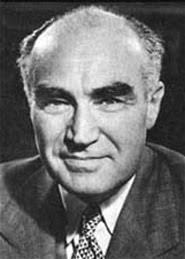
Henry R. Luce
|
|
|
If you found this information valuable, please forward this email onto a friend or colleague.
If you were forwarded this email, you can subscribe here
|
|
|
|
Greetings!

Midsussex District Council decided on the 24th February to increase Council Tax by 2.5%, with the average increase in England of 3%. To read the full article, click here
|
Using Tax Losses effectively
There is a difference
between a trading loss and a tax loss. There are times when you may turn in a
trading profit which is converted to a tax loss by claiming capital allowance,
particularly the Annual Investment Allowance.
Having arrived at the tax loss
there are then a number of choices;
Carry the losses forwards to set off
against future profits of the trade
Carry the losses sideways in the same
tax year and set off against other income
or carry the losses back (how far
back depends on individual circumstances).
There is a temptation to
go for options 2 or 3 as there is a real opportunity to recover tax already paid
and positively impact cash flow.
Unfortunately this may
not be the best option. The two main circumstances when option 1 may be a better
choice are set out below.
1.
Sometimes you will be required to
carry losses back or sideways until all of your taxable income is covered. In
some cases this may mean that you get no benefit for your personal allowance
which would be wasted.
2.
An immediate set off of losses may
reduce taxable earnings that were subject to basic rate tax in prior or current
tax years when you may be predicting earning in forthcoming years at higher
rates.
With the advent of the
50% income tax rate from 6 April 2010 and the gradual loss of personal tax
allowances for high income earners, carrying losses forwards may be a better
strategic choice - rather than a quick set off at lower rates use the losses in
the following year.
Please note that the
comments above are a simplification of a complex process. If you are presently
in a loss making position but can see profitable times ahead, careful tax
planning to maximise the benefit of the losses is essential - give us a
call or drop us an email to see how we can help.
|
Changes to the State Pension Age
At present the state
pension age (SPA) for men is 65 and women 60 years.
To qualify for a full basic
state pension men currently need 44 years of National Insurance contribution and
women 39 years.
Thanks to a piece of
legislation passed way back in 1995 this is about to
change; from April 2010 you will
only need to evidence 30 years of contributions to qualify for a full basic
state pension - the same for both men and women.
Between April 2010 and
2020 the SPA for women will gradually rise until in April 2020 the SPA for men
and women will be the same, 65 years.
Between April 2024 and
April 2046 the SPA for both men and women will gradually rise to 68
years.
So the good news is in
future you will have to prove 30 years of contributions, not 39 or 44 years; the
bad news you may have to wait longer to start drawing your
pension.
The changes will also
have an impact on National Insurance contributions. Up to 5 April 2010 65 year
old men and 60 year old women do not have to pay National Insurance. As the
state retirement age increases from 6 April 2010 so will the date on which you
will be exempt from making further contributions.
Men and women who have
already reached retirement age and are in receipt of a state pension at 5 April
2010 will not be affected by these changes. They will continue to be exempt from
making National Insurance contributions and continue to draw their
pension.
|
Hi, My name is Andy Richmond
Thomas, very cleverly named by my parents, I was destined to form A.R.T
photography from a very early age. I was destined to form A.R.T
photography from a very early age.
We have a studio in Worthing and specialise in
Corporate Photography, Brochures, Weddings, Parties and Family Portraits. In
fact we provide all types professional photography so if you need anything in
particular from a picture of the girls all together to the family dog, just
ask.
We are finding photo restoration very popular at the moment as we
have the technology to digitally enhance even the most torn and battered old
pictures to looking as good as new.
Please see our website for some examples of our work and wedding
packages.
www.a-r-t-photography.co.uk
To anyone who comes to us via Keepers, we are offering a 15%
discount on your first order.
We hope to hear from you soon.
All the staff at A.R.T. Photography
01903 694530
9 Offington Lane, Offington, Worthing, West Sussex BN14 9RY
|
14 Questions you should ask your Accountant
Trying to compare anything can be difficult, but when it comes to
your personal finances, you need to make sure that you have made the
right choice.
An Accountant can save you a lot of time and money, which you may
needlessly spend on the Taxman. But, more than that, a good Accountant
can oblige you, for your own benefit, to face up to issues which you
may otherwise have been tempted to ignore. That's another reason to
find one you like.
Whatever you do, ensure that you interview several. You can start by
asking family, friends or colleagues if they know of a good Accountant.
Failing this, you will also find lots of ads on the Internet, in Yellow
Pages, or in your local newspaper. Never forget though; a personal
recommendation from someone you trust carries a lot more weight than an
ad from someone you've never heard of.
It is vital that your Accountant understands all of
your goals; short, medium and long-term, so outline any ideas or dreams
you have for the future. For example, if you are planning to buy new
office premises, or set up a new company in the near future, make sure
you say so. The reason for this is that your Accountant may be able to
save you a lot of money. They may also have good advice to offer based
on previous experiences of other clients.
So; let's get to the point of this post; I want to help you choose
your Accountant, and to do that, I am going to give you 14 questions
that you should ask before you hire.
Question 1 → What are your professional qualifications?
Astonishingly, anyone can call themselves an Accountant. Accountancy
is not like being a Doctor; to call yourself an Accountant, you do not
have to have any qualifications. Only consider an Accountant with a
recognised professional qualification, such as the Association of
Chartered Certified Accountants, or a Chartered Tax Adviser. At the
very least, this gives you some protection or an avenue for complaints
if needed.
Question 2 → Can I speak to a couple of your Clients about you?
Ask the Accountant if you can speak to someone in a similar position
to yourself. When you speak to this Client, you want to know things
like how reliable, prompt and proactive your potential Accountant has
been; whether they explain things clearly, seem good value for money,
and have produced any good ideas. Keep in mind though; you are only
likely to get the names of friendly Clients!
Click here to read the rest of this post
|
|
Thanks for reading. You can find us on our website, Facebook, Twitter or
LinkedIn; just click the relevant link at the top of the Newsletter.
Ben
& Chris
|
|
|


